 Ferndale Window
 Windows Built for the Semiahmoo Environment
Semiahmoo sits close enough to the water that homes there deal with a different set of stresses than a house ten miles inland. Salt-laden air moves in off the bay, wind-driven rain hits siding and window assemblies at an angle instead of straight down, and the long gray stretch of fall through spring keeps everything damp for weeks at a time. None of that is unusual for Whatcom County, but it adds up faster on homes closer to the water, and it shows up first in the windows — corroded hardware, soft trim, fogged glass, and finishes that chalk out years before they should.
Custom windows for this area aren't about a fancier look. They're about picking materials, glazing, and installation details that actually hold up to salt exposure and constant moisture cycling, then installing them in a way that keeps water out of the wall assembly for good. That's the whole job, and it's worth doing right the first time because redoing a window job on a home exposed to salt air is a lot more disruptive than doing it correctly up front.
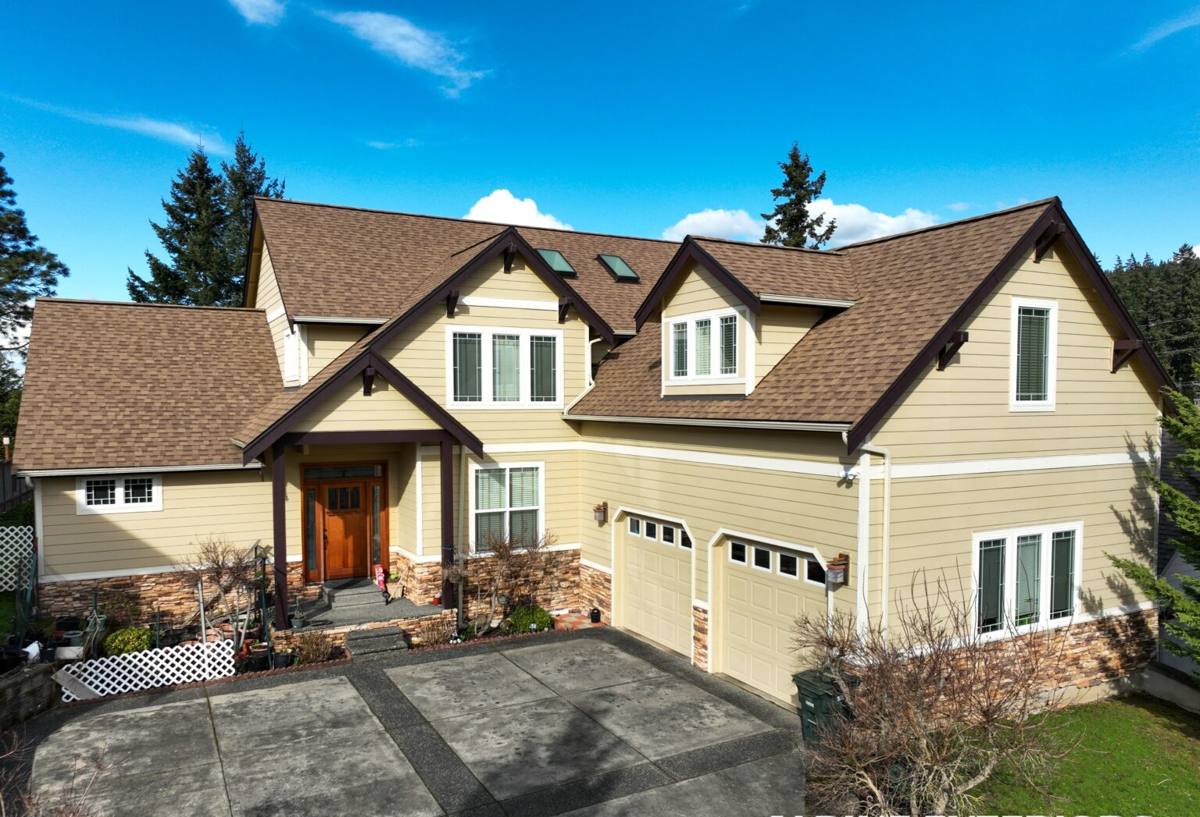
What "Custom" Actually Means for a Semiahmoo Home
Custom doesn't mean expensive for its own sake — it means the window is built to fit your actual opening, your actual exposure, and your actual house, instead of being forced to fit a stock size. On older or unique construction, which is common around Ferndale and the surrounding coastal neighborhoods, openings are rarely perfectly square or a catalog-standard dimension. A custom window is measured and built to that exact opening, which matters for two reasons:
- A properly sized unit seals tighter, with less reliance on shims, foam, and caulk to make up the difference.
- It performs the way it's rated to perform — a window that's packed into an undersized rough opening or shimmed heavily to fill an oversized one won't hit its stated air and water infiltration numbers, no matter how good the window itself is.
Custom sizing also opens up options that stock replacement windows don't: taller units to bring in more light on a wooded lot, matched sightlines across a whole elevation, or a specific configuration (picture window flanked by casements, for example) that fits how a room is actually used.
Material and Glazing Choices That Make Sense Here
Given the salt air and rain exposure, we steer homeowners toward materials and hardware finishes that are known to hold up in coastal-adjacent conditions rather than whatever is cheapest to stock. That mostly comes down to three things: frame material, hardware finish, and glass package.
| Factor | What to Look For in This Climate | Why It Matters Here |
|---|---|---|
| Frame material | Vinyl with UV-stable, marine-grade compounding, or clad wood/fiberglass with a durable exterior finish | Resists chalking and brittleness from constant damp-to-dry cycling and salt exposure |
| Hardware & locks | Corrosion-resistant finishes rated for coastal or high-humidity use | Standard hardware can pit and stick within a few seasons this close to the water |
| Glass package | Dual-pane with low-E coating; argon fill for added performance | Cuts condensation risk during the long damp season and improves comfort near the window |
| Weatherstripping | Quality compression seals, properly compressed at install | Wind-driven rain finds any gap — seal quality matters as much as the seal material |
| Sill design | Sloped sill with a clear drainage path | Water that gets past the outer seal needs somewhere to go besides your wall cavity |
Where Window Failures Actually Start
Most window "failures" we get called out for aren't really about the window unit — they're about what's behind it. Flashing that was skipped or installed backwards, house wrap that wasn't lapped correctly over the flashing, or a sill pan that was never installed in the first place. Water finds its way behind the trim, gets into the framing, and by the time it shows up as a stain on the interior wall or soft trim on the exterior, there's often been damage happening for a while.
This is the part of the job that doesn't show up in a sales brochure but matters more than the glass or the frame:
- Sill pan flashing under every opening, sloped to drain outward, not just caulk and hope.
- Proper flashing sequencing — each layer lapped over the one below it, so water sheds outward like shingles, never trapped behind a layer.
- Correct integration with house wrap or building paper, so the window becomes part of a continuous drainage plane instead of an interruption in it.
- Backer rod and quality sealant at the trim joints, sized and installed correctly rather than just gunned into a gap.
- Insulation around the frame that's filled without over-compressing, which can bow the frame and cause the sash to bind.
On a home exposed to driving rain off the water, cutting corners on any one of these is what turns into rot, mold, or a failed window years earlier than it should.
Our Process for a Semiahmoo Window Project
1. On-Site Assessment
We walk the exterior and interior of each opening, check for existing moisture damage, and talk through what's actually driving the replacement — comfort, drafts, condensation, appearance, or all of the above. This also tells us if there's hidden rot or flashing issues that need to be addressed before new windows go in, which is common on older coastal-adjacent homes.
2. Measuring and Material Selection
Each opening is measured individually — we don't assume they match, even in a home built with matching windows originally. We go over frame material, glass package, and hardware options based on your home's specific exposure (a window facing the prevailing wind and rain direction may warrant a different spec than one on a sheltered side of the house).
3. Removal and Inspection
When the old window comes out, we check the rough opening and sheathing for water damage before anything new goes in. If there's rot or compromised framing, we flag it and address it — installing a new window over a damaged opening just locks the problem inside the wall.
4. Installation with Proper Flashing and Sealing
This is where the moisture-management details above get executed — sill pan, flashing sequence, insulation, and sealant, done in the right order, not shortcuts.
5. Final Check and Walkthrough
We test operation, check that seals are tight, and walk the job with you before we call it done. Any questions about maintenance or warranty coverage get answered on the spot.
Signs Your Current Windows Are Already Losing the Fight
Not every window needs replacing, but in this climate, certain signs are worth taking seriously before they turn into a bigger repair:
- Fogging or moisture between panes on a dual-pane window (a sign the seal has failed)
- Soft, discolored, or bubbling trim or sill material
- Hardware that's stiff, corroded, or won't lock cleanly
- A noticeable draft near the frame even with the window closed and locked
- Visible gaps between the frame and siding or trim
- Moss or persistent green staining building up on the sill or surrounding trim
- Interior condensation on the glass that wasn't there a few years ago
Any one of these on its own isn't necessarily urgent. Several at once, especially on a home with direct water exposure, usually means it's worth getting a look before the next wet season.
Living With Windows in a Salt-Air, Moss-Prone Climate
Even a well-installed, well-built window benefits from basic upkeep in this environment. Salt residue and organic buildup (moss, algae, general grime from the damp season) accelerate wear if left alone. A simple annual rinse of frames and hardware, keeping weep holes and drainage paths clear of debris, and a quick check of exterior caulking each spring go a long way toward getting the full lifespan out of a new window investment. We're happy to walk homeowners through what to check and how often — it takes a few minutes and it's not something that requires a service call.
Why It Matters That We Already Work in Semiahmoo
A crew that's worked this specific area knows which side of a house typically takes the worst weather, what kind of moisture damage tends to show up on homes with this level of coastal exposure, and which material choices are worth the upgrade versus which ones are overkill for a given home. That's not something you can fully substitute with a general contractor unfamiliar with Whatcom County's coastal conditions — it comes from having done the work here repeatedly and seen what holds up and what doesn't.
It also means straightforward logistics: local scheduling, familiarity with permitting through Whatcom County where it applies, and a crew that isn't learning the area's quirks on your project.
Get a Straightforward Estimate
If you're weighing whether to repair, replace, or just keep an eye on your current windows, we're glad to take a look and give you an honest read — no pressure, no inflated scare tactics. Fill out the form below for a free estimate on custom windows for your Semiahmoo home.