 Ferndale Window
 Semiahmoo's Coastal Exposure Is Harder on Siding Than Most of Whatcom County
Homes around Semiahmoo sit closer to open water than most of the rest of Ferndale and Whatcom County, and that changes what siding has to deal with year-round. Salt-laden air off Semiahmoo Bay and the Strait of Georgia settles on exterior surfaces constantly, not just during storms. Add wind-driven rain that comes in sideways during winter systems, and siding here takes on moisture from angles that inland siding rarely sees — up under laps, around trim, and into any gap that wasn't sealed correctly the first time.
Then there's the shade and dampness that keeps moss and algae active for a good chunk of the year in this part of Washington. On siding that stays damp longer because of tree cover, north-facing exposure, or proximity to the water, moss and mildew get a real foothold. None of this is exotic — it's just a more demanding version of what every siding product on the Washington coast has to survive. The question isn't whether a material can handle a dry summer. It's whether it holds its shape, its finish, and its seal through repeated wet-dry cycles, salt exposure, and shaded dampness, year after year.
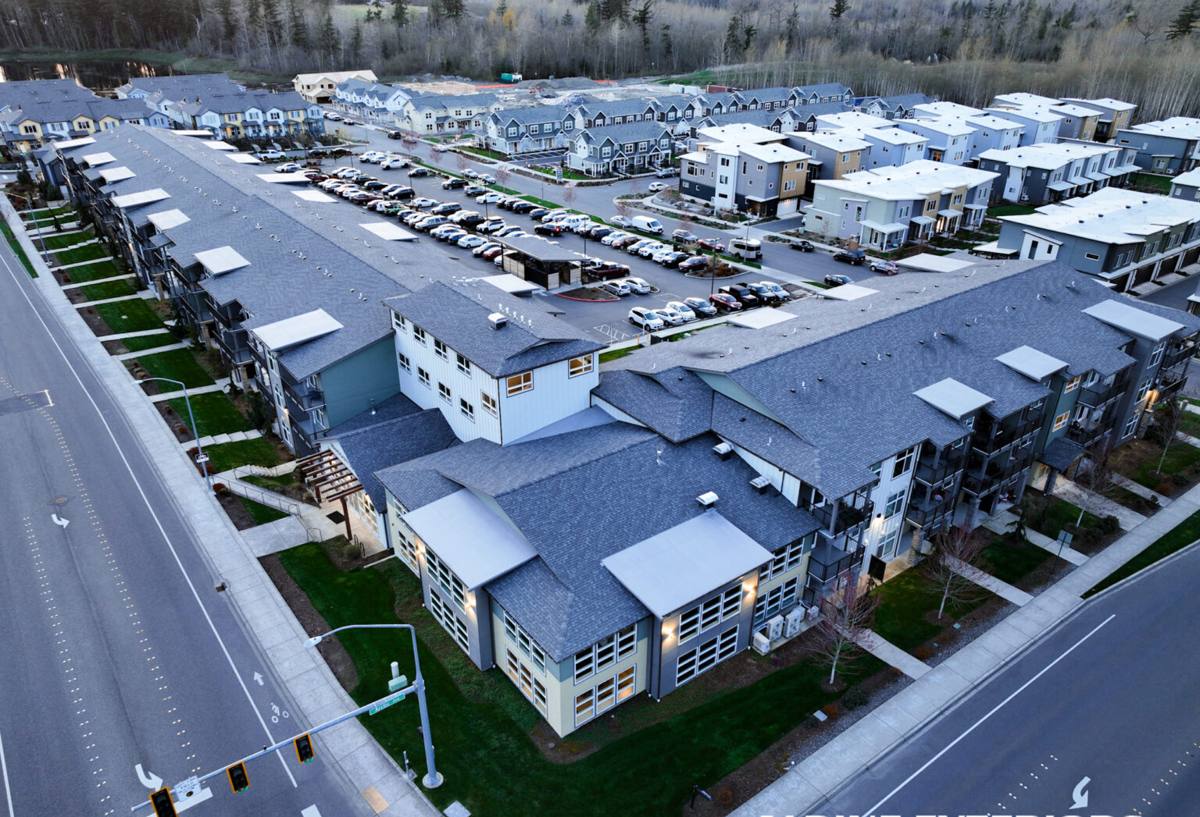
Why Fiber Cement Is the Right Answer for This Environment
Dimensionally Stable, Non-Combustible
James Hardie fiber cement is made from cement, sand, and cellulose fiber. It doesn't absorb and release moisture the way wood-based products do, so it doesn't swell, cup, or warp when it goes through the wet winters and drier summers typical of this region. It's also non-combustible, which matters more each year as wildfire smoke and dry-season fire risk become a bigger part of Pacific Northwest summers, even on the wet side of the Cascades.
ColorPlus Factory Finish vs. Field-Applied Paint
A lot of the maintenance problems homeowners associate with siding actually come from the paint, not the substrate underneath. James Hardie's ColorPlus finish is baked on in a controlled factory process, which gives it better adhesion and more consistent coverage than paint rolled or sprayed on-site after installation. In a salt-air environment, where paint failure shows up first as chalking and fading on the weather-facing side of a house, that factory-applied finish is a meaningful advantage — it's simply a more durable coating than field-applied paint, and it comes backed by its own finish warranty separate from the product warranty.
What a Correct Installation Actually Involves
Fiber cement siding is only as good as the installation behind it. James Hardie's product performance depends on the crew following the manufacturer's installation instructions to the letter — this is not a product where "close enough" holds up over time, especially in a wet, salt-exposed location like Semiahmoo.
Moisture Management Behind the Siding
Correct installation starts with a drainage plane — typically a weather-resistive barrier with a rainscreen gap that lets any moisture that gets behind the siding drain out and lets the wall assembly breathe. Flashing has to be installed above windows, doors, and any horizontal trim so water is directed out and away from the wall rather than behind it. Butt joints between siding boards need to be flashed or caulked per manufacturer spec, not just butted tight and hoped for. In a location that sees regular driving rain, skipping or shortcutting this step is where siding failures actually start — usually invisibly, behind the cladding, long before a homeowner sees a problem on the surface.
Fastening, Clearances, and Sealant
Fasteners need to be the correct type and driven to the correct depth — overdriven nails crack the board's fiber cement edge and create a moisture entry point that's easy to miss. Siding needs proper clearance from grade, roofing, and decks so it isn't sitting in standing water or splashback. And every joint, corner, and penetration needs the right sealant, applied correctly, because in a salt-air environment a failed bead of caulk is an open door for both moisture and salt to get behind the cladding.
Comparing Materials for a Salt-Air, High-Moisture Site
Every siding material handles this kind of environment differently. Here's an honest comparison of how the common options perform against the specific stresses Semiahmoo homes deal with:
| Factor | James Hardie Fiber Cement | Vinyl | Wood / LP SmartSide |
|---|---|---|---|
| Salt air / corrosion resistance | Not affected by salt; cement-based | Doesn't corrode, but can become brittle and discolor over time | Vulnerable if finish or edge sealing fails |
| Moisture behavior | Doesn't swell or rot; engineered for wet climates | Doesn't absorb water, but traps moisture behind it if installed wrong | Wood-based core can swell, delaminate, or rot at damaged spots |
| Moss / algae resistance | Cement surface resists organic growth; factory finish sheds it more easily | Can host moss/algae in shaded, damp spots | Porous surface gives moss and algae more to grip |
| Finish durability | Factory-baked ColorPlus finish, separate warranty | Color molded in, but fades and chalks with UV/salt exposure | Field-applied paint or factory coating, both need repainting over time |
| Fire rating | Non-combustible | Combustible, can melt or deform near heat | Combustible |
Our Process for a Semiahmoo Siding Project
Whether we're re-siding an older home or working on a project near new construction, the process for a coastal Whatcom County home follows the same core sequence:
- On-site assessment of the existing wall assembly, current siding condition, and moisture exposure from wind, water proximity, and shading
- Removal of old siding and inspection of the sheathing underneath for any hidden rot or damage that needs to be addressed before new siding goes on
- Installation of a weather-resistive barrier and rainscreen system sized for the home's exposure
- Flashing at every window, door, and horizontal transition, installed per manufacturer detail
- James Hardie panel or plank installation with correct fastening, clearances, and joint treatment
- Final inspection of caulking, trim, and flashing details before the job is called complete
We don't skip the tear-off inspection step, even when it slows a project down. On a home that's absorbed years of salt air and driving rain, what's happening behind the old siding often tells us more than what we can see on the surface.
Living With Fiber Cement in a Salty, Moss-Prone Environment
Fiber cement is low-maintenance compared to wood, but "low-maintenance" doesn't mean "no maintenance," especially this close to the water. A few habits go a long way toward getting the full lifespan out of the product:
- Rinse lower courses and areas near the ground periodically to clear salt residue and road grime buildup
- Keep shrubs and trees trimmed back from the siding so air can move and surfaces dry out between rain events
- Check caulking at trim, corners, and penetrations annually and have any cracked or missing sealant redone promptly
- Clean moss and algae gently with a soft brush and mild cleaner rather than a pressure washer aimed directly at seams and joints
- Watch gutters and downspouts near the siding — overflow and splashback are a common source of localized moisture problems
- Touch up any chips or scratches with matched ColorPlus touch-up product before bare fiber cement is exposed to weather
Why Hiring a Crew That Already Works This Area Matters
A crew that regularly works Semiahmoo and the surrounding Ferndale coastline already knows how wind and rain typically hit a given orientation, how long moss tends to linger on shaded walls in this area, and how much clearance and flashing detail a home this close to the water actually needs versus what's adequate a few miles inland. That local pattern recognition shows up in small decisions — where to add extra flashing, which elevations need the most attention to sealant, how to sequence a project around the wetter months — that a crew without local experience might not think to make.
It also matters for something more practical: local crews are positioned to actually show up for warranty callbacks and follow-up work. A siding job is a long-term investment, and a contractor based in the area is accountable to that job for years, not just for the week the crew is on-site.
What Affects the Cost of a Semiahmoo Siding Project
We won't quote a number without seeing the house, but a few factors consistently move the price on projects in this area:
- Whether it's a full tear-off with sheathing repair or a straightforward re-side over sound sheathing
- Total square footage and the home's number of stories and roof lines
- How much trim, corner detail, and cutting around windows and doors the design requires
- Whether HZ5 zone-engineered product is specified for maximum moisture and impact resistance versus standard product
- Accessibility of the site, including how close the home sits to the water or a slope
If you'd like an honest look at what your home needs and what it would cost to do it right, we offer a free, no-pressure estimate — use the form below to get started.