 Ferndale Window
 Why Semiahmoo Roofs Take a Different Kind of Beating
Homes along the Semiahmoo shoreline and the surrounding Ferndale area deal with a roofing environment that's genuinely tougher than what you'll find a few miles inland. The combination of salt-laden air coming off the water, wind-driven rain that gets pushed sideways under shingle edges and flashing, and a moss season that can run eight or nine months out of the year means roofs here age differently than they do in drier parts of Whatcom County. A storm doesn't have to be dramatic to cause real damage — a sustained blow off the water with gusts in the 40-50 mph range, combined with heavy rain, is often enough to lift shingle tabs, force water past flashing, or drive moisture into a roof deck that's already softened by months of moss and shade.
We're not describing a hypothetical. This is the normal weather pattern for anyone roofing near open water in this part of the state, and it's why a storm damage repair here needs to account for more than just the visible damage from the last windstorm.
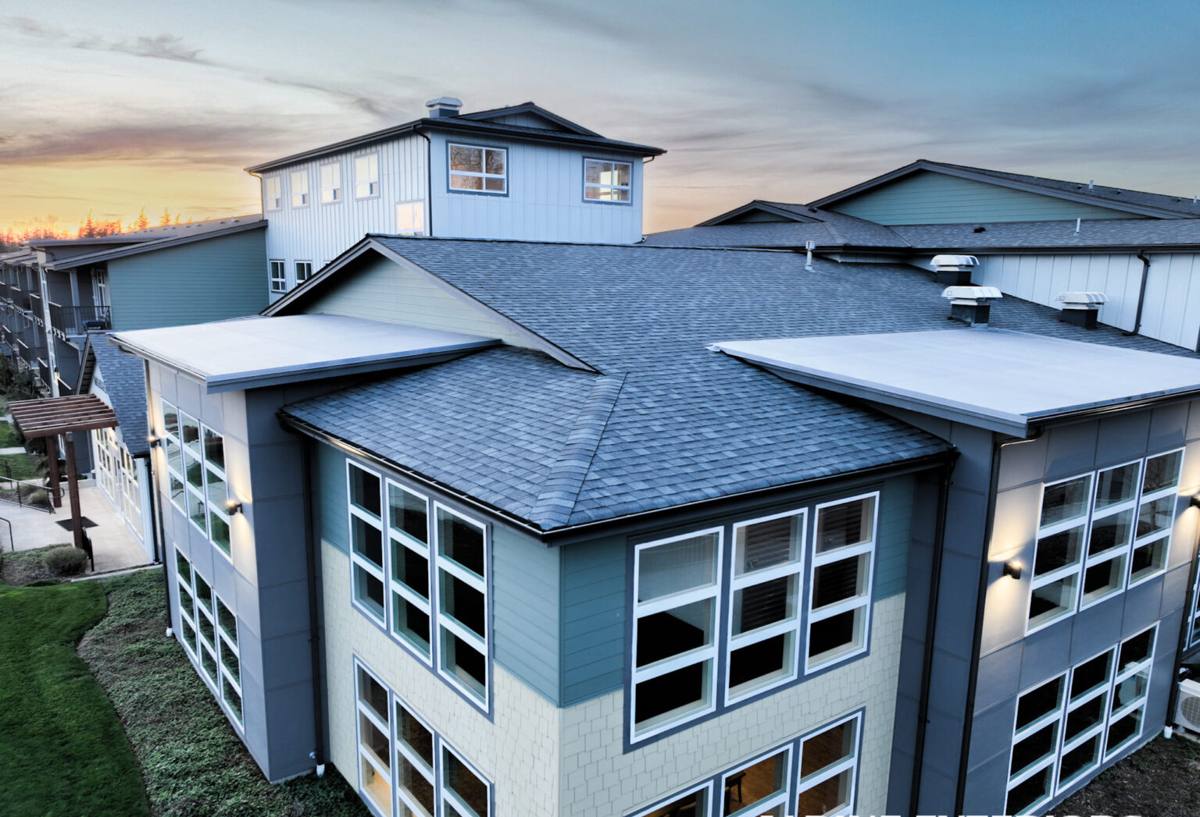
Signs Your Roof Took Storm Damage
Storm damage isn't always obvious from the ground, especially on a roof that already has moss growth or algae staining that can hide fresh problems. After any significant wind or rain event, it's worth checking for:
- Shingles that are lifted, cracked, curled at the edges, or missing outright
- Granules collecting in gutters or at the base of downspouts
- Soft or discolored spots on ceilings or in the attic after heavy rain
- Flashing that's bent, pulled loose, or separated around chimneys, vents, and skylights
- Debris — branches, needles, moss mats — pooled in valleys or against the roof-to-wall transitions
- Gutters pulling away from the fascia or overflowing during rain
- Daylight visible through the roof deck from inside the attic
Any one of these on its own might not be urgent. Several together, especially after a named windstorm or a stretch of heavy rain off the Strait, usually means it's time for a proper inspection rather than a wait-and-see approach.
What a Correct Storm Damage Repair Actually Involves
Stopping active water first
If a storm has opened up the roof, the first job is stopping water intrusion, not doing a full permanent repair on the spot. That usually means a tarp or temporary patch over the affected area, done in a way that won't itself cause damage (no nails through good shingles, no plastic sheeting that traps moisture underneath). This buys time to do the real repair correctly instead of rushing it in bad weather.
A full inspection, not just a spot check
Wind and rain damage rarely stays contained to one obvious spot. A correct repair means checking the whole roof plane — not just where the leak showed up inside — because wind can lift shingles several feet from where water eventually finds its way in. We also check the decking underneath any damaged area, since prolonged moisture exposure in a marine climate can soften plywood or OSB in ways that aren't visible until you pull the shingles back.
Matching materials, not improvising
A patch that doesn't match the existing shingle profile, color, or granule type stands out and, more importantly, can create a weak seam where two different materials meet. On an older roof this sometimes means sourcing a close match rather than an exact one — we'll tell you honestly when that's the case rather than pretending it's a perfect match.
Flashing and transition points get real attention
Most storm-related leaks in this area trace back to flashing, not the shingle field itself — chimney flashing, valley flashing, and the transitions where a roof meets a wall or dormer. Wind-driven rain finds these weak points long before it works its way through intact shingles. A repair that replaces shingles but ignores compromised flashing underneath is a repair that's going to leak again in the next storm.
Common Storm Damage Types Near Semiahmoo
| Damage Type | Typical Cause Here | Repair Approach |
|---|---|---|
| Lifted or missing shingle tabs | Sustained wind off the water catching an edge | Re-seal or replace affected shingles, check adjacent courses for loosened seal strips |
| Granule loss / bald patches | Wind-driven rain and hail-like debris impact | Assess remaining shingle life; spot-replace if isolated, discuss full section if widespread |
| Flashing separation | Wind flexing the roof deck, aging sealant failing in salt air | Remove and re-flash with corrosion-resistant material and fresh sealant |
| Soft or delaminated decking | Prolonged moisture intrusion, often from an older undetected leak | Cut out and replace affected decking before re-covering |
| Moss-driven lifting | Moss mats holding moisture against shingles through the wet months | Careful moss removal, treatment, and shingle repair where lifting occurred |
| Gutter and fascia damage | Wind load and debris impact during storms | Re-secure or replace hardware, confirm proper roof edge drainage |
The Moss Factor: Why It's Not a Cosmetic Issue Here
In a lot of the country, moss on a roof is treated as a cosmetic annoyance. In Whatcom County, and especially on shaded or north-facing roof sections common around Semiahmoo's tree-lined properties, moss holds moisture against the shingle surface for months at a stretch. That constant dampness accelerates granule loss, softens the shingle mat over time, and can work its way under tabs that a storm has already loosened — turning a minor storm repair into a bigger decking issue if it's ignored. Any honest storm damage repair in this area should include a look at moss growth and drainage, not just the storm-specific damage, because the two are usually connected.
Materials: What We Use and Why
Coastal exposure changes what's worth using for repairs, not just what's cheapest. A few standards we hold to:
- Fasteners: Corrosion-resistant nails and flashing hardware rather than standard galvanized, given the salt content in the air near the water
- Algae-resistant shingles: When a repair section is large enough to warrant it, we favor algae-resistant shingle lines for better long-term appearance in a climate that grows moss and algae readily
- Sealants rated for wet climates: Not every roofing sealant holds up to months of near-constant moisture; we use products rated for sustained wet exposure, not just general-purpose sealant
- Underlayment upgrades where it makes sense: On repairs that open up larger sections of roof, a synthetic or self-adhering underlayment in vulnerable spots (valleys, eaves) adds a real margin against wind-driven rain
We won't upsell a full underlayment upgrade on a small, contained repair where it isn't needed — but we'll tell you when the scope of the damage makes it worth doing right rather than patching around a weak point.
Our Process for Storm Damage Repairs
- Emergency response, if needed: Temporary tarping to stop active water intrusion
- Full roof assessment: Not just the damaged section — the whole roof, flashing, and visible decking condition
- Photo documentation: Useful for your own records and for insurance if you're filing a claim
- Written scope and estimate: What's damaged, what needs repair versus what's just cosmetic, and honest pricing
- Repair: Matching materials, correct flashing work, and decking replacement if the inspection found soft spots
- Final walkthrough: We show you what was done and what to watch for going forward
Insurance and Documentation
Most homeowners insurance policies cover sudden storm damage — wind, falling debris, hail — though coverage details and deductibles vary by policy and carrier, so we can't speak for yours. What we can do is document the damage clearly with photos and a written scope before and during the repair, which gives you something concrete to work with if you choose to file a claim. We're happy to work alongside your adjuster and answer questions about the scope of work, but the claim itself and coverage decisions are between you and your insurance company.
Why It Matters to Hire a Crew That Already Works This Area
Storm damage repair isn't uniform across Whatcom County. A crew that mostly works drier, more inland roofs may not think twice about moss buildup, salt-air corrosion on fasteners, or the way wind off Semiahmoo Bay tends to drive rain into flashing joints that would stay dry elsewhere. Knowing the local pattern — which roof orientations take the worst of the weather, which flashing details fail first in this climate, what a normal amount of moss growth looks like versus a problem — means less guesswork and fewer repeat visits. It also means honest advice about when a repair makes sense versus when a section of roof has aged out and a larger conversation is worth having.
A Few Things Worth Doing Between Storms
Storm damage repair fixes what already happened. A little maintenance reduces how much damage the next storm causes:
- Keep gutters and downspouts clear, especially heading into the fall rains
- Have moss treated or removed before it mats up and holds moisture through winter
- Trim back branches that overhang the roof — falling limbs are a common cause of storm damage here
- Have flashing checked every couple of years, since sealant and metal both age faster in salt air
- Address small leaks early — a soft spot caught early is a patch; ignored, it's a decking replacement
If a recent windstorm or heavy rain has you wondering about the condition of your roof, we're glad to come take a look. We offer free, no-pressure estimates for Semiahmoo and Ferndale homeowners — a straightforward assessment of what's actually going on up there and what it would take to fix it right.