 Ferndale Window
 Roofs in Kendall Work Harder Than Most
Kendall sits a little further inland and up in elevation than the coastal parts of Whatcom County, which changes what a roof deals with day to day. You still get the salt-laden marine air pushing in off the Strait of Georgia and Bellingham Bay, but you also get more tree cover, more shade, and more standing moisture on the roof deck for longer stretches of the year. That combination is tough on shingles, flashing, and fasteners in ways that a roof in a more open, sun-exposed part of town simply doesn't experience.
Driving rain off Pacific storm systems finds every weak seam, every lifted shingle tab, and every place where flashing has pulled away even a little. And the long moss season here — often eight months or more of conditions damp enough for moss and moss spores to take hold — means a roof that looks fine from the ground can already have moisture working its way under the shingles. Roof repair in Kendall isn't just patching a leak. It's understanding how this specific environment ages a roof and fixing the problem at the layer where it actually starts.
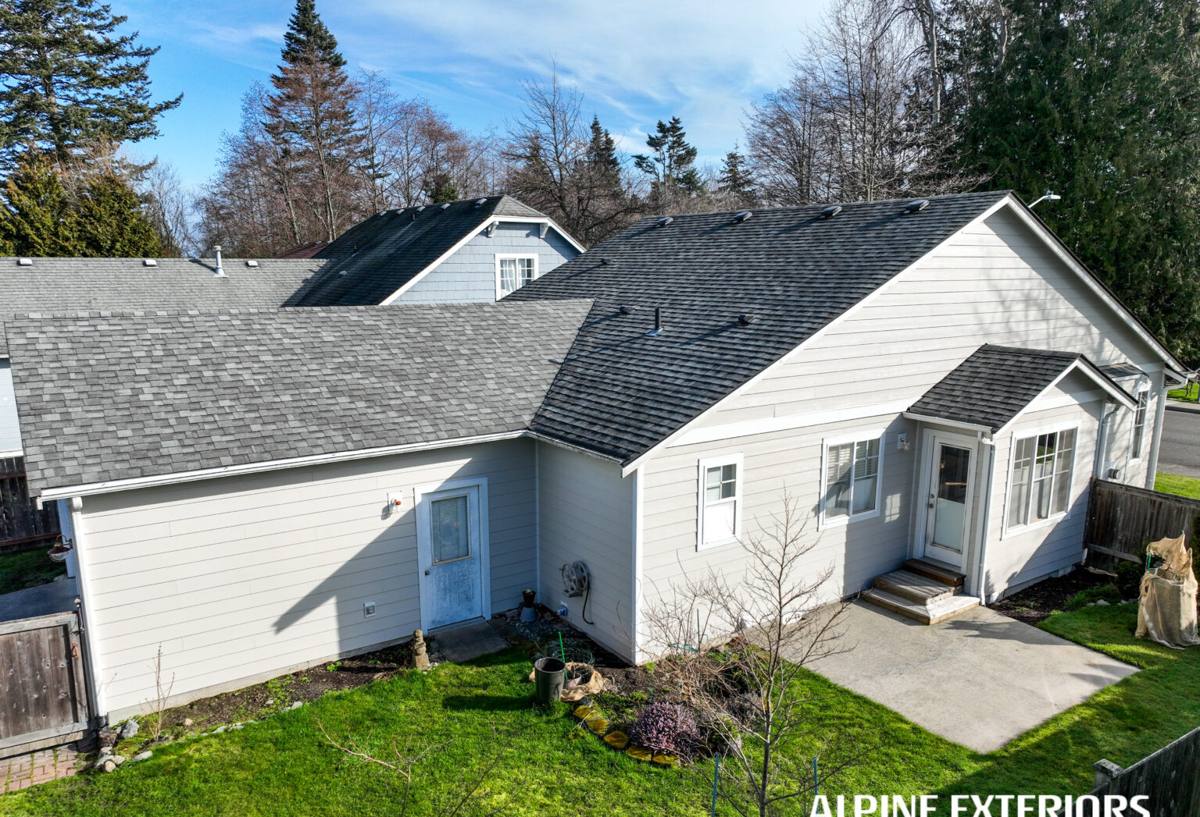
Signs a Kendall Roof Needs Repair
Most roof problems we get called out for in this area didn't start as emergencies. They started small and got worse over a wet winter or two. Homeowners in Kendall should watch for:
- Dark streaking or green-black patches on north-facing or shaded slopes — early moss and algae growth
- Granules collecting in gutters or at the base of downspouts
- Shingle tabs that look curled, lifted, or cupped at the edges
- Soft spots or slight sagging when walked on (a job for a professional, not a DIY check)
- Water stains on interior ceilings, especially near chimneys, skylights, or where two roof planes meet
- Daylight visible through the attic roof deck
- Rust streaks or gaps at flashing around vents, chimneys, and valleys
Any one of these on its own might not mean a full replacement is coming. But left alone through another wet season, they compound — moss holds moisture against the shingle, the shingle degrades faster, water finds the fastener holes, and what was a $400 repair becomes a $4,000 deck replacement.
What a Correct Repair Actually Involves
It Starts With a Real Inspection, Not a Guess
A roof repair that only addresses the spot where water is showing up inside the house often misses the actual entry point. Water travels along the underlayment and roof deck before it drips through drywall, so a leak over your kitchen might trace back to a flashing gap ten feet away. We get on the roof, check the attic side where accessible, and trace the path before we touch anything.
Matching Materials, Not Just Covering the Hole
Shingles fade and wear unevenly, so a patch using mismatched material or the wrong nailing pattern can fail faster than the surrounding roof and stand out visually. We use materials and fastening methods that match the existing roof's manufacturer specifications wherever possible, which also matters if a warranty claim is ever involved.
Flashing Gets the Same Attention as Shingles
In our experience, the majority of "roof leaks" in this climate are actually flashing failures — around chimneys, skylights, dormers, and valleys — not failed shingle fields. Flashing repair requires removing surrounding shingles correctly, not just caulking over a gap, which is a shortcut that fails within a season or two once the caulk shrinks and cracks under sun and rain cycling.
Moss and Moisture: The Real Cost of Doing Nothing
Why Moss Is More Than a Cosmetic Problem
Moss doesn't just look bad. Its root structure holds water against the shingle surface long after rain has stopped, which accelerates granule loss and can lift shingle edges as the moss grows and thickens. In a climate with a moss season as long as this county's, an untreated roof can lose years of service life to moss damage alone.
How We Handle Moss Removal
Moss needs to come off carefully. Aggressive pressure washing can strip granules and shorten shingle life just as much as the moss itself. We use low-pressure methods and treatments suited to the roofing material, followed by a look at whether zinc or copper strips make sense for your roof to slow regrowth going forward.
Ventilation's Role in Preventing Repeat Problems
A roof that traps heat and moisture in the attic accelerates deck rot and ice formation risk from below, in addition to whatever is happening on the surface from above. Where we find inadequate ridge or soffit ventilation during a repair, we'll flag it — it's often the difference between a repair that lasts and one you're calling us back about in two years.
Our Repair Process in Kendall
- Inspection and diagnosis — we identify the actual source of the problem, not just the visible symptom
- Honest assessment — we tell you plainly whether this is a repair, or whether the roof's age and condition mean a repair would be money spent delaying a replacement you'll need soon anyway
- Written scope and estimate — clear about materials, areas addressed, and cost before work starts
- Repair work — matched materials, correct flashing technique, proper fastening for wind and rain exposure
- Cleanup and gutter check — since moss and granule debris in gutters is often part of the original problem
- Follow-up recommendations — what to watch for and, if relevant, a maintenance timeline suited to your specific roof and tree cover
Repair vs. Replacement: How We Help You Decide
| Factor | Leans Toward Repair | Leans Toward Replacement |
|---|---|---|
| Roof age | Under 15 years, standard asphalt shingle | Approaching or past manufacturer's rated lifespan |
| Extent of damage | Isolated area — one valley, one flashing point, a few shingles | Multiple areas failing, widespread granule loss |
| Roof deck condition | Solid, no soft spots or rot | Soft decking, visible sagging, or rot found during inspection |
| Moss/algae history | Recent, surface-level growth | Long-term moss damage already lifted or degraded shingles broadly |
| Underlying cause | A single fixable issue (one flashing detail, one ventilation gap) | Systemic issue — age, poor original installation, or repeated leak locations |
We'd rather do an honest $500 repair that buys you several more years than sell you a premature full replacement — and we'd rather tell you a repair isn't worth it than patch a roof that's going to fail again in a year. That call should be based on what we actually find on your roof, not a sales script.
Materials and Methods We Rely On
For repairs in this climate, we favor materials with strong moisture and algae resistance, and we're careful about matching new shingle lines to old ones so the repair blends and performs consistently with the rest of the roof. On flashing, we prefer step flashing and counter-flashing done correctly over sealant-heavy shortcuts, since sealant is a maintenance item, not a permanent fix, and it's the first thing to fail when it's asked to do a flashing detail's job. Where a repair touches ventilation, we size and place vents to match the roof's actual attic volume rather than guessing.
Why a Crew That Already Works in Kendall Matters
Roofing crews that mostly work in drier, more open parts of the region don't always account for how much longer moisture sits on a shaded, tree-covered roof in this part of the county, or how aggressively moss establishes itself here compared to elsewhere. A crew that regularly works Kendall and the surrounding Whatcom County terrain has already seen how local tree cover, elevation, and storm exposure play out on real roofs over multiple seasons — not just in a training manual. That local pattern recognition is what keeps a repair from becoming a callback.
It also means faster response. Roof leaks that show up during a heavy rain event don't wait for a convenient scheduling window, and a crew already working in the area can typically get eyes on the problem sooner than one dispatching from farther away.
Simple Maintenance Checklist Between Professional Inspections
- Clear gutters and downspouts at least twice a year, more often under heavy tree cover
- Look for moss or dark streaking on shaded slopes each fall before the rains set in
- Check attic for daylight, damp insulation, or musty odor once or twice a year
- Trim back overhanging branches that keep sections of the roof shaded and damp
- Have flashing around chimneys and skylights checked after any major windstorm
A roof in the Kendall area is never going to be maintenance-free — the climate here doesn't allow for that. But a roof that's repaired correctly, with the right materials and attention to moss and moisture, can go the distance if it's looked after with a bit of regular attention.
If you're seeing moss buildup, a stain on the ceiling, or just want a second, honest opinion on whether that spot on your roof is a quick fix or a bigger issue, we're happy to take a look. Fill out the form below for a free, no-pressure estimate — we'll tell you what we actually find, not just what's easiest to sell.