 Ferndale Window
 Siding Replacement Built for Sumas' Corner of Whatcom County
Homes in and around Sumas deal with a specific combination of weather that most siding was never designed to handle well over the long haul: damp, marine-influenced air moving through Whatcom County, driving rain that comes in sideways during winter storms, and long stretches of gray, humid weather that give moss and mildew months at a time to take hold. Siding replacement out here isn't just a cosmetic upgrade — it's an opportunity to correct water management problems that older siding systems were never built to solve in the first place.
A siding replacement done right for a Sumas home accounts for how water moves across and behind the wall, how much shade and moisture the site collects, and how the assembly will hold up through another twenty or thirty winters of the same pattern repeating. Done wrong, new siding can look good for a season or two and then start showing the same rot, staining, and paint failure that got the old siding replaced in the first place.
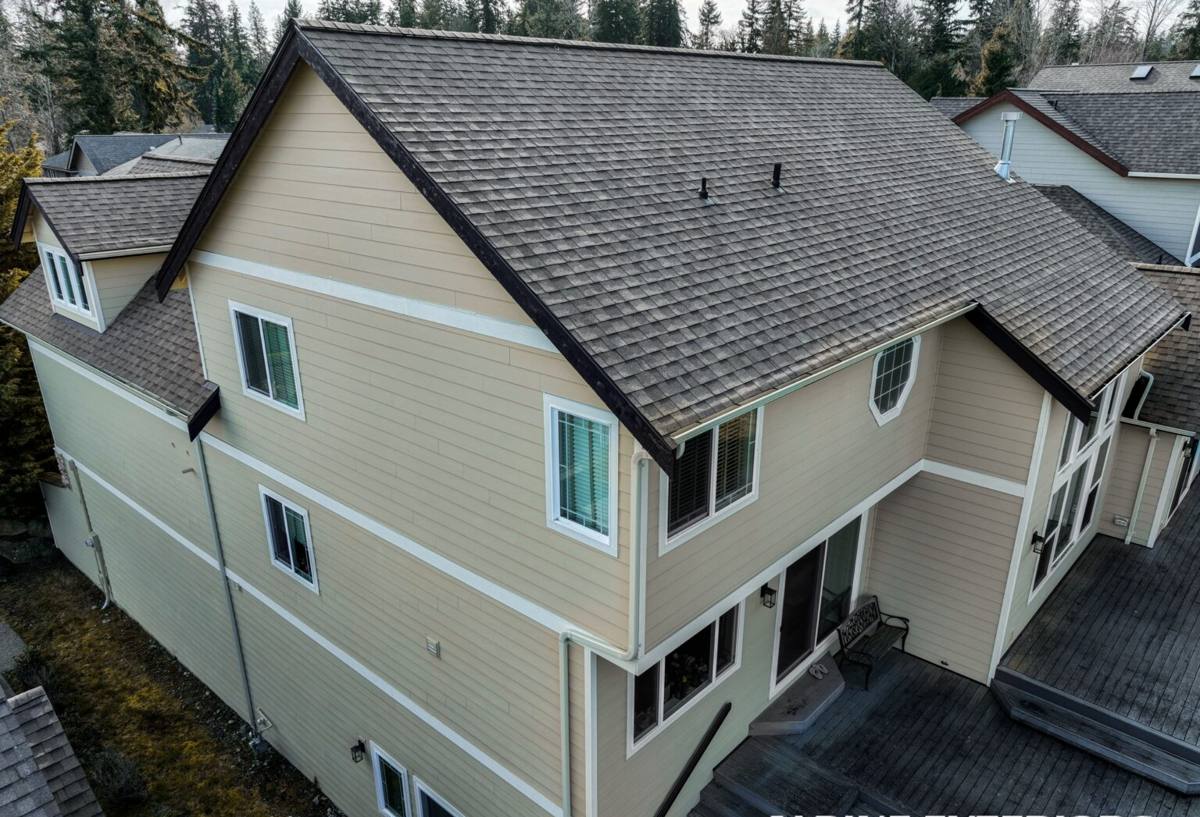
What Whatcom County's Climate Actually Does to Siding
Driving Rain and Wind-Driven Moisture
Storms moving through this part of Washington don't just drop rain straight down — wind pushes it sideways into walls, corners, and anywhere flashing or caulking has started to fail. Over years, that wind-driven moisture finds every weak seam in a siding system: gaps at trim, nail holes that were never sealed, and butt joints that were caulked instead of properly flashed. Once water gets behind the cladding, it doesn't dry out quickly in a climate this humid.
Moss, Mildew, and the Long Wet Season
Whatcom County's siding season is long and damp. Moss doesn't need direct rain to spread — it just needs shade, moisture, and time, and north-facing walls or siding tucked under overhangs get plenty of both. On wood-based products, moss and mildew hold moisture against the surface and accelerate rot from the outside in. On a well-built fiber cement wall, the same growth is mostly a surface and appearance issue, not a structural one — which is a meaningful difference over a 20-30 year ownership horizon.
Temperature Swings and Material Movement
Sumas sees a wider swing between summer heat and winter cold than the immediate coastline, which means siding materials expand and contract more over the course of a year. Products that aren't dimensionally stable — or that weren't installed with the right gaps and fasteners for that movement — end up with cracked caulk lines, popped nails, and warping at the joints within a handful of years.
Signs a Sumas Home Needs Siding Replacement, Not Just Repair
Some siding problems are patchable. Others are a sign the whole wall assembly needs to come off and be redone correctly. Before we recommend full replacement, we look for:
- Soft, spongy, or crumbling spots when you press on the siding, especially near the bottom courses and around windows
- Paint that won't hold anymore, even after a fresh coat — usually a sign moisture is moving through the material from behind
- Persistent moss or algae staining that comes back within a season of cleaning
- Visible warping, cupping, or buckling boards, particularly on shaded or north-facing walls
- Gaps opening up at seams, corners, and trim that weren't there when the siding was newer
- Rising energy bills or drafty rooms that point to a compromised weather barrier behind the siding
- Multiple past repairs to the same wall sections — a sign the underlying water management, not just the siding, has failed
If you're only seeing one or two of these in a small area, targeted repair can make sense. Once several of these show up across multiple walls, patch repairs usually just delay a full replacement while the sheathing and framing underneath keep absorbing damage.
What a Correct Siding Replacement Job Actually Involves
Tear-Off and Inspection
Replacement starts with removing the old siding down to the sheathing, not siding over it. That step matters here more than in drier climates, because it's the only chance to find hidden rot, compromised sheathing, or past water intrusion before it gets sealed behind a new wall. Any damaged sheathing or framing gets addressed before anything new goes up — new siding over a wet or rotted substrate just hides the problem for a while.
Water-Resistive Barrier and Flashing
This is the step that determines whether a siding job survives Whatcom County winters. A correctly lapped water-resistive barrier, properly integrated window and door flashing, and drip caps that actually shed water away from the wall are what keep wind-driven rain from ever reaching the sheathing, even if some moisture gets past the siding itself. Skipping or rushing this step is the single most common reason siding fails early in this climate — the cladding can be excellent and the wall will still fail if the flashing behind it isn't right.
Installation to Manufacturer Specification
Fiber cement siding has specific requirements for fastener type, spacing, gapping at joints, and clearance from grade, decks, and rooflines — all of which affect both performance and warranty coverage. Installing it like standard lap siding, without following those specifications, is a common shortcut that shows up years later as cracking, moisture intrusion at joints, or a manufacturer warranty that no longer applies.
Trim, Caulking, and Finish Work
The last step is where a lot of jobs are won or lost on appearance — clean trim lines, properly caulked joints where caulk is actually appropriate (not as a substitute for flashing), and touch-up of any factory-finished edges that were cut on site.
Why We Only Install James Hardie Fiber Cement
We standardized on James Hardie fiber cement siding, and we don't install vinyl, engineered wood products like LP SmartSide, or bare cedar and primed spruce. That's a deliberate professional standard, not a sales pitch, and it comes directly from what this climate does to siding over time.
Non-Combustible and Dimensionally Stable
Fiber cement doesn't burn, doesn't rot the way wood-based products can, and holds its shape through the temperature and humidity swings this region sees. That stability is what keeps paint and caulk lines intact for years instead of cracking open every winter.
Climate-Engineered Product Lines
James Hardie makes different HZ (HardieZone) formulations engineered for different climate zones — a product tuned for a moist, moderate Pacific Northwest climate performs differently than one built for a hot, dry region. That engineering matters in a place where moss, humidity, and driving rain are a year-round consideration rather than an occasional storm.
Factory-Applied ColorPlus Finish
Hardie's ColorPlus finish is baked on at the factory under controlled conditions, rather than field-painted after installation. In a climate where wet weather can interrupt a paint schedule and compromise cure time, a factory finish removes that variable and holds its color longer with less touch-up maintenance.
A Warranty Backed by the Manufacturer
James Hardie's transferable limited warranty is a meaningful part of the value — it protects the material itself, and a transferable warranty is worth something if you sell the home. That warranty is also part of why correct installation to spec matters so much: cutting corners on flashing or fastening can put warranty coverage at risk regardless of how good the siding material itself is.
How Fiber Cement Compares to Other Siding Options
Homeowners considering siding replacement often ask us to walk through the trade-offs plainly. Here's how the common options compare for a home in this climate:
| Material | Moisture & Moss Resistance | Maintenance | Typical Lifespan |
|---|---|---|---|
| James Hardie fiber cement | Strong — non-combustible, dimensionally stable, holds up to sustained damp conditions | Occasional washing; factory finish reduces repainting | 30+ years with correct installation |
| Vinyl siding | Sheds water but can warp, crack, or fade; seams can allow moisture behind panels | Low, but damage often means panel replacement, not repair | 15-25 years, varies widely by product grade |
| Engineered wood (e.g. LP SmartSide) | Treated to resist moisture, but wood-based core is still vulnerable if the finish or flashing fails | Regular inspection of edges and seams; repainting over time | 15-30 years, heavily dependent on installation and upkeep |
| Cedar or primed spruce | Natural material, most vulnerable to moss, rot, and moisture in a wet climate without diligent upkeep | High — regular sealing, painting, and moss treatment | Highly variable; often 10-20 years before major repair in wet climates |
Every one of these products has legitimate uses and reasonable advocates. Our decision to install only James Hardie comes down to how each of these performs specifically in Whatcom County's combination of sustained moisture, moss pressure, and temperature swings, with the least ongoing maintenance burden for the homeowner.
Our Siding Replacement Process for Sumas Homes
- Free on-site estimate — we walk the exterior, check for moisture and rot indicators, and talk through what your home actually needs.
- Detailed written scope — product line, color, trim details, and a clear breakdown of what's included, so there's no ambiguity before work starts.
- Tear-off and sheathing inspection — old siding comes off, any hidden damage gets identified and addressed before new material goes up.
- Water-resistive barrier and flashing installation — the step that determines long-term performance, done to manufacturer and code requirements.
- Hardie siding installation to spec — correct fastening, gapping, and clearances, not shortcuts that void warranty coverage.
- Trim, caulking, and final walkthrough — finish details completed and reviewed with you before we consider the job done.
Why It Matters That We Already Work in Sumas
A crew that regularly works Whatcom County homes already knows how local wall assemblies tend to fail, which orientations collect the most moss, and what flashing details actually hold up through a wet winter here — versus a crew that installs mostly in a different climate and treats every wet-region detail as an afterthought. That local pattern recognition shows up in small decisions during the job: where to add extra flashing attention, which trim details need more sealant care, and which shaded wall sections deserve extra scrutiny during tear-off.
It also matters for accountability. A local, established crew is easy to reach if a question comes up after the job is done, and has a reputation in the area worth protecting — which is a real incentive to do the flashing and water management right the first time, not just the parts that are visible.
What Affects Siding Replacement Cost in Sumas
Every home is different, so we don't publish blanket pricing, but the main factors that drive cost on most Sumas siding replacement projects are:
- Total square footage of exterior wall area and the home's overall complexity (corners, gables, dormers)
- Condition of the sheathing and framing underneath the existing siding — hidden repairs add cost but are far cheaper to fix now than after new siding is up
- Siding profile and Hardie product line selected, including trim and accent details
- Color selection — factory ColorPlus finishes versus site-applied finishing on trim elements
- Access and site conditions, including height, landscaping, and how the home sits on the lot
The only way to get an accurate number is a walk-through of the actual home, which is exactly what a free estimate is for.
If your Sumas home is showing signs of aging siding — soft spots, recurring moss staining, paint that won't hold, or drafts that weren't there before — we're happy to take a look and walk you through what we're seeing, with no pressure and no obligation. Use the form below to request a free estimate.