 Ferndale Window
 Siding Repair in Sumas: A Different Kind of Wear Pattern
Sumas sits out in the Nooksack River valley near the Canadian border, a short drive from our home base in Ferndale, and homes out here take a different kind of beating than you might expect. The Salish Sea's marine weather systems don't stop at the coastline — they push inland across Whatcom County, and Sumas gets driving rain off the same storm tracks, along with a lighter dose of the salt-tinged air that hits harder along the water. Add in shaded lots, agricultural fog that settles into the valley overnight, and a moss season that can run eight months or longer, and you have a recipe for siding that fails faster than it should if it wasn't installed or maintained correctly.
We're not talking about cosmetic wear. Repeated wetting-and-drying cycles, trapped moisture behind panels, and organic growth eating into a finish are structural issues in slow motion. A siding repair call in Sumas isn't just about matching a color or patching a hole — it's about understanding why that section failed in the first place and making sure the repair doesn't fail the same way again in two years.
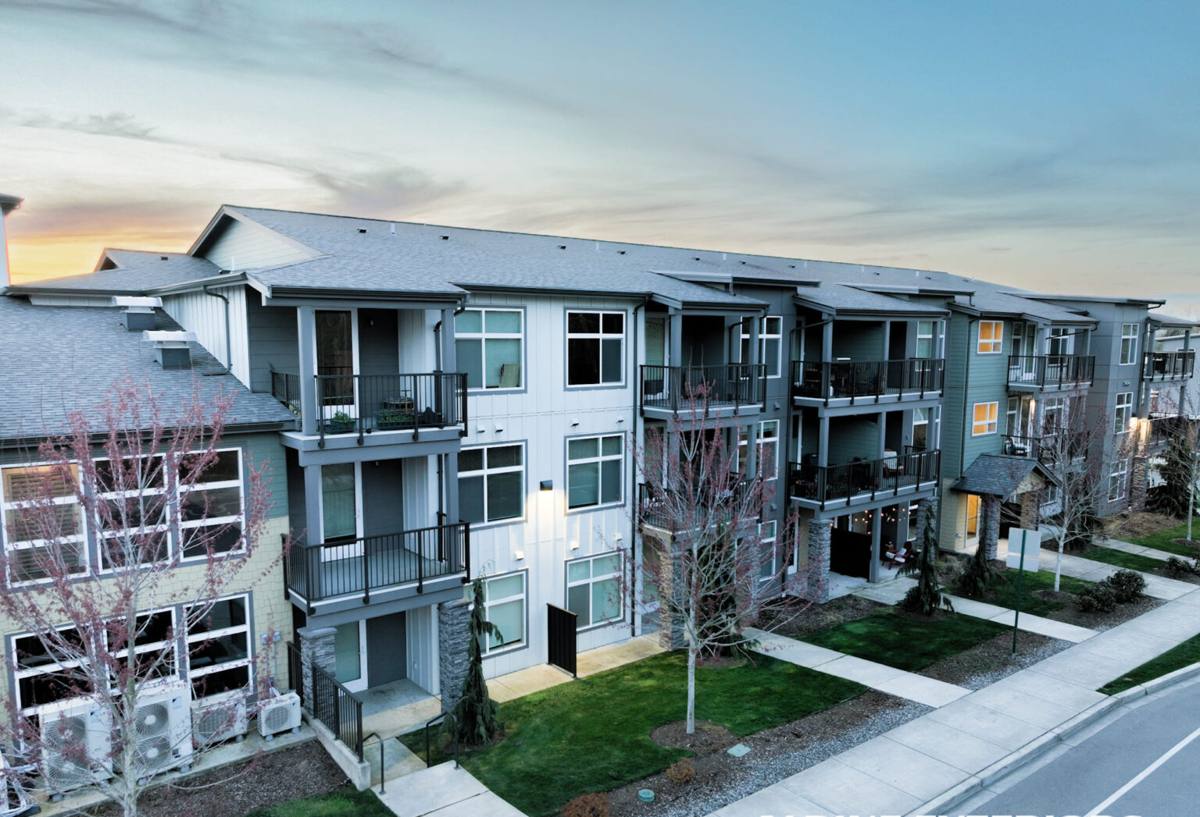
Signs Your Sumas Home Needs Siding Repair
Most siding problems don't announce themselves. They show up as small, easy-to-dismiss details long before there's a hole in the wall. Here's what we tell homeowners to walk their exterior and look for, especially on north- and west-facing walls where rain and shade linger longest:
- Dark green or black staining that keeps coming back after cleaning — a sign moss or mildew has a permanent foothold, not just a surface issue
- Soft, spongy spots when you press on a panel, especially near the bottom courses or around window trim
- Visible gaps, buckling, or panels that have pulled away slightly from the wall
- Paint or finish that's bubbling, peeling, or chalking unevenly across a wall
- Cracked or split boards, particularly around corners and butt joints
- A musty smell or visible staining on interior walls that back up to an exterior siding section
- Caulk lines that have shrunk, cracked, or pulled away from trim and window edges
Any one of these on its own might just mean a maintenance visit. Several at once, especially clustered on one wall, usually means water has been getting behind the siding for a while.
What a Correct Siding Repair Actually Involves
It starts behind the panel, not on top of it
A repair that only addresses what's visible from the driveway is a repair that's going to need doing again. Before we touch the siding itself, we pull back the damaged section and look at the water-resistive barrier, the flashing at windows and penetrations, and the framing underneath. If the barrier is torn, the flashing was installed short, or there's rot in the sheathing, patching over that with new boards just buries the same problem under fresh paint.
Matching materials and reveal
Siding installed even a few years apart can have a slightly different reveal, thickness, or factory finish, and a mismatched patch stands out immediately, especially in the low-angle winter light common here. We match plank width, exposure, and fastening pattern so a repaired section reads as part of the wall, not a patch on it.
Sealing and flashing details
Most siding failures we open up trace back to a flashing or sealant detail that was done wrong — or skipped — the first time. Getting this right on the repair matters more than the cosmetic patch itself, because it determines whether the repair lasts five years or fifteen.
Repair vs. Replacement: How We Make the Call
Not every damaged wall needs full replacement, and not every problem area is worth repeatedly patching. We walk homeowners through this honestly rather than defaulting to whichever job is bigger.
| Situation | Usually a Repair | Usually Replacement |
|---|---|---|
| Damage location | Isolated to one or two wall sections | Spread across multiple walls or elevations |
| Cause | Impact damage, a single failed flashing detail, isolated moss/mildew staining | Systemic moisture intrusion, widespread rot in sheathing, original install defects |
| Age and material of existing siding | Newer siding, or material still performing well elsewhere on the home | Original siding at or past its useful life, or a product we no longer stand behind |
| Underlying structure | Sheathing and framing test sound once opened up | Soft or delaminated sheathing found behind multiple panels |
| Cost over time | Lower upfront cost, targeted fix | Higher upfront cost, resets the clock on the whole exterior |
When we find a home where every repair call turns into another repair call two years later, that's usually a sign the underlying material or original installation is the real problem, and we'll tell you that plainly instead of billing you for the same patch on repeat.
Why the Repair Material Matters, Not Just the Repair Itself
We only install James Hardie fiber cement siding, and that standard doesn't disappear when we're doing repair work. When we're patching into an existing wall of a different material — vinyl, engineered wood, or an older fiber cement product — we'll tell you honestly what your options are: a like-for-like patch to keep costs down now, or a transition plan toward Hardie on that wall or elevation when a larger repair or eventual full replacement makes sense.
The reason we standardized on Hardie is directly relevant to a place like Sumas. It's non-combustible fiber cement that doesn't feed moss the way some cellulose-based products can, it holds a factory-applied ColorPlus finish that resists the fading and chalking we see on field-painted siding after a few Whatcom County winters, and Hardie's HZ5 product line is engineered for exactly this kind of freeze-thaw, moisture-heavy climate. A repair patched in with Hardie holds up under the same conditions the rest of the wall is facing — it isn't a weaker link waiting to fail again.
Our Siding Repair Process for Sumas Homes
- On-site inspection. We look at the visible damage, but also check adjacent sections, flashing, and trim for early signs of the same issue spreading.
- Diagnosis, not just a quote. We tell you what caused the failure, not just what it'll cost to cover it up.
- Honest repair-or-replace recommendation. If a repair is the right call, we say so. If it isn't, we explain why before you spend money on a short-term fix.
- Repair scope and materials. We confirm matching material, finish, and fastening approach so the finished wall reads as one continuous job.
- Correct the underlying cause. Flashing, sealant, or barrier issues get fixed as part of the repair, not left for the next visit.
- Final walkthrough. We show you what was found, what was done, and what to keep an eye on going forward.
Why a Crew That Already Works in Sumas Makes a Difference
Siding repair is a job where local experience actually changes the outcome. A crew that regularly works Whatcom County knows which wall orientations take the worst of the driving rain, how fast moss reestablishes itself on a shaded north wall out in the valley versus a more open lot, and what a normal amount of weathering looks like on a five-year-old wall here versus a sign that something's actually wrong. That context shapes the diagnosis before a single panel comes off.
It also matters for follow-through. A local crew is the one that answers the phone if a repair needs a second look after the next big storm, not a company that did one job in the area and moved on. For a border community like Sumas, having a contractor who's a short drive away and familiar with the area's building stock is worth more than it sounds like on paper.
Keeping Repairs From Becoming a Pattern
A well-done repair should be close to a one-time fix, not the start of a maintenance cycle. Between repairs, a few habits go a long way in this climate:
- Rinse siding and gently clear moss buildup at least once a year, more often on shaded or north-facing walls
- Keep gutters clear so water isn't sheeting down the wall face during heavy rain
- Trim back vegetation and tree cover that keeps a wall section damp and shaded longer than the rest of the house
- Recheck and re-caulk trim and penetration points every couple of years, since sealant is the first thing to fail
- Walk the exterior after any major wind or storm event and note anything that looks different
None of this replaces a professional inspection when something looks off, but it does stretch the time between repair calls and helps catch small issues before they become wall-opening ones.
Get an Honest Look at Your Sumas Home's Siding
If you're seeing staining, soft spots, gaps, or damage on your Sumas home's siding, it's worth having someone look before it spreads further into the wall. We'll give you a straight answer on whether it's a repair or something bigger, with no pressure either way. Request a free estimate below and we'll get a look scheduled.