 Ferndale Window
 Board & Batten Siding Built for Sumas Weather
Board and batten has become one of the most requested looks in Whatcom County — the clean vertical lines read as modern on a new build and as classic farmhouse on an older property, which is part of why it works so well out here. But the look is only half the story. In Sumas, a vertical siding profile has to survive driving rain off the Pacific storm track, long stretches of gray, damp weather that feed moss growth, and the kind of freeze-thaw swings that show up whenever cold air pools in the low ground near the border. A board and batten wall that isn't detailed correctly for that environment will show problems years before a well-built one does.
We install board and batten exclusively in James Hardie fiber cement, and this page walks through what that means specifically for a Sumas home — not board and batten in general, but the version of it that holds up here.
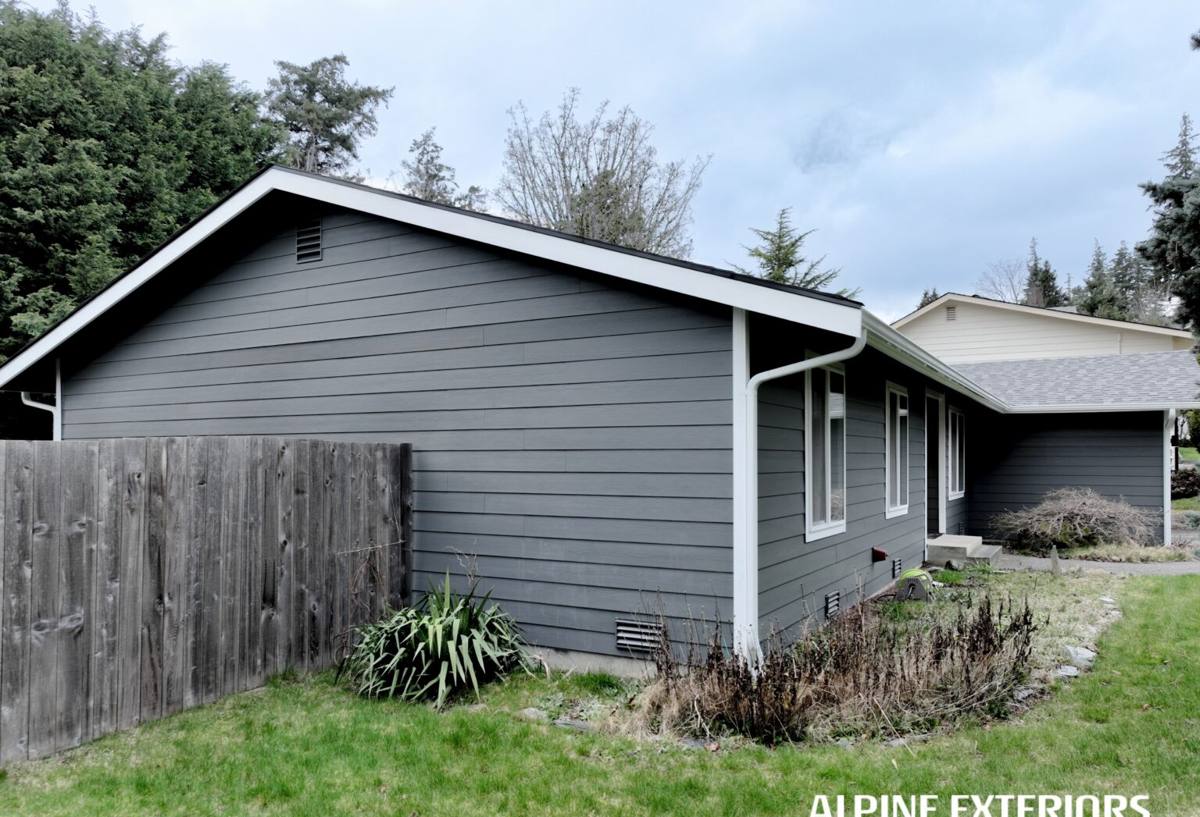
What This Climate Actually Does to a Vertical Siding Wall
Every siding profile fails in its own particular way when the installation is wrong. Board and batten's failure points are specific to its shape, and they line up closely with what this region throws at a house.
Driving Rain and Wind-Driven Moisture
Vertical joints and battens create more seams than a horizontal lap profile, and in windier weather rain doesn't just fall straight down — it gets pushed sideways into those seams. If the panels behind the battens aren't gapped and flashed correctly, that moisture has a direct path to the wall sheathing. This matters more here than in a drier climate, simply because of how many wet, wind-driven weeks the wall has to shed water in a given year.
Moss and Sustained Dampness
A long moss season is normal for this part of Washington. Moss itself doesn't damage fiber cement, but it holds moisture against a surface for extended periods, and any siding installed tight to the wall without an airflow gap behind it will stay damp longer than it should. That prolonged dampness is what eventually causes trouble at fastener points and trim intersections — not the moss, but the moisture it traps.
Freeze-Thaw Cycling
Sumas sees more cold snaps than the immediate coast, and any water that does get trapped behind or within a wall assembly expands when it freezes. Fiber cement itself tolerates this well, but caulked joints, fastener heads, and any organic trim material nearby do not — which is exactly why detailing at those transition points matters as much as the field of the wall.
The James Hardie Board & Batten System We Install
"Board and batten" describes a look, not a single product, and Hardie offers more than one way to build it correctly. We choose the system based on the home, not on what's easiest to install.
HardiePanel Vertical Siding with Battens
This is the workhorse approach: large fiber cement panels installed vertically, with wood or fiber cement battens fastened over the panel seams to create the classic board and batten rhythm. It's durable, cost-effective, and gives us flexibility on batten spacing and reveal to match the home's proportions.
Hardie Artisan Board & Batten Collection
For homes where the owner wants a more refined, dimensional look — deeper shadow lines, a more authentic board profile — Hardie's Artisan line is built specifically for that. It costs more than standard panel-and-batten and is worth discussing case by case, but it's a genuine step up in appearance rather than a marketing label.
ColorPlus Factory Finish
Whichever system we use, we specify ColorPlus finish whenever the project allows it. The color is baked on at the factory under controlled conditions rather than field-applied, which matters directly in a climate like this one — field-applied paint has to cure properly between rain events, and Sumas doesn't always offer a generous dry window. A factory finish removes that variable entirely and carries its own multi-year finish warranty.
What Correct Installation Actually Involves
Board and batten is unforgiving of shortcuts because every seam and batten is a potential water path. The difference between a wall that lasts decades and one that causes problems in five years comes down to details most homeowners never see once the siding is up.
- A drainable rainscreen gap behind the panels, so any moisture that does get past the surface can drain and dry instead of sitting against the sheathing
- Correct panel-to-panel and panel-to-trim gaps, sized and caulked per Hardie's published specifications — not just "tight enough to look good"
- Battens fastened into structural framing at the specified spacing, not just into the panel itself
- Proper flashing and kick-out details at every roofline, window head, and deck ledger intersection
- Fasteners set to the correct depth — overdriven nails crack the fiber cement edge and create a future leak point that's invisible until it fails
- A weather-resistant barrier installed and lapped correctly underneath everything, before the first panel ever goes up
Any one of these skipped doesn't necessarily cause an immediate problem. But skip two or three, on a wall that faces the prevailing wind and rain, and the wall is now working against itself in a climate that gives it very little margin for error.
How Board & Batten Options Compare
| Material | How It Handles Driving Rain | How It Handles Moss/Damp Seasons | Long-Term Maintenance |
|---|---|---|---|
| James Hardie fiber cement | Excellent when rainscreen-installed and correctly gapped | Non-organic; won't rot or feed decay from trapped moisture | Occasional wash; ColorPlus finish holds color for years |
| Vinyl board & batten | Prone to water tracking behind panels at seams | Can trap moisture behind panel with limited drainage | Can warp or fade; difficult to color-match repairs |
| Cedar or primed wood | Absorbs moisture at end grain and batten edges | Most vulnerable to sustained damp — rot risk over time | Requires ongoing sealing/painting maintenance |
| LP SmartSide (engineered wood) | Performs reasonably if edges are sealed and maintained | Edge and cut-end treatment is critical and easy to miss | Depends heavily on maintaining factory seal at every cut |
This is why we standardized on James Hardie: it's the option that performs consistently in this exact climate profile without asking the homeowner to maintain a sealing schedule to keep water out.
What Drives the Cost of a Board & Batten Job
| Factor | Why It Matters |
|---|---|
| Panel system chosen | Standard HardiePanel-and-batten vs. the Artisan collection carries a real material cost difference |
| Existing wall condition | Sheathing repair or replacement adds time and material before the first panel goes up |
| Batten spacing and reveal | Tighter batten spacing means more material and more fastening labor per square foot |
| Trim and transition complexity | Dormers, multiple rooflines, and deck intersections all add flashing and detail work |
| Finish choice | Factory ColorPlus finish vs. field-primed-and-painted changes both cost and long-term maintenance |
We walk through these factors on-site rather than quoting from a photo, because two homes that look similar from the street can have very different wall conditions underneath.
Our Process, Start to Finish
- On-site inspection of the existing wall, sheathing, and moisture history before any product is recommended
- A written scope covering panel system, batten layout, flashing plan, and finish — no vague allowances
- Careful removal of existing siding with attention to what the tear-off reveals about the wall behind it
- Correct weather-resistant barrier and rainscreen installation before a single Hardie panel is hung
- Panel and batten installation to Hardie's fastening and gap specifications, with flashing detailed at every penetration
- Final inspection walkthrough with the homeowner before the job is called complete
Why Hiring a Crew That Already Works in Sumas Matters
Board and batten installation isn't regionally different in its basic mechanics, but the margin for error is. A crew that mostly installs in a milder, drier climate can get away with looser gapping or a skipped rainscreen for years before it shows. A crew that works Whatcom County's wet season year-round doesn't have that luxury — the consequences of a shortcut show up faster here, so the habits that hold up here are the ones we've built the process around. Familiarity with how the local weather actually behaves against a wall, not just general siding experience, is what separates a job that lasts from one that doesn't.
Living With Board & Batten Siding in Sumas
Once installed correctly, James Hardie board and batten asks very little of the homeowner. A rinse with a garden hose once or twice a year knocks down surface dust and slows moss from taking hold in shaded, damp-prone areas. Because the material itself doesn't absorb water or feed rot, there's no sealing schedule to keep up with the way there is with wood-based products. The main thing worth watching over time is caulking at trim joints and penetrations — like any exterior wall, those are the points worth a visual check every year or two, particularly after a hard winter.
If you're weighing board and batten for a home in the Sumas area, we're glad to walk the property with you, look at what's there now, and put together a straightforward, no-pressure estimate for what correct installation would look like on your specific house.