 Ferndale Window
 Windows Built for Sudden Valley's Weather, Not Just Any Weather
Sudden Valley sits in a pocket of Whatcom County where the weather does more damage to a house than most homeowners realize until they're standing at a window that won't latch, won't seal, or has gone soft in the frame. Between the moisture coming off Lake Whatcom, the salt-laden air that drifts inland from Bellingham Bay, and driving rain that comes in sideways for weeks at a stretch in the fall and winter, windows here take a beating that a house in a drier climate simply doesn't see. Add a moss season that runs longer than most homeowners expect, and you've got a recipe for frames, sills, and seals that fail years before their rated lifespan.
We replace windows specifically with this climate in mind. That means paying attention to details that don't matter much in Phoenix or Denver but matter a great deal here: how a frame material handles constant moisture cycling, how well a unit resists wind-driven rain intrusion, and how the installation itself is flashed and sealed so water has nowhere to go but away from the house.
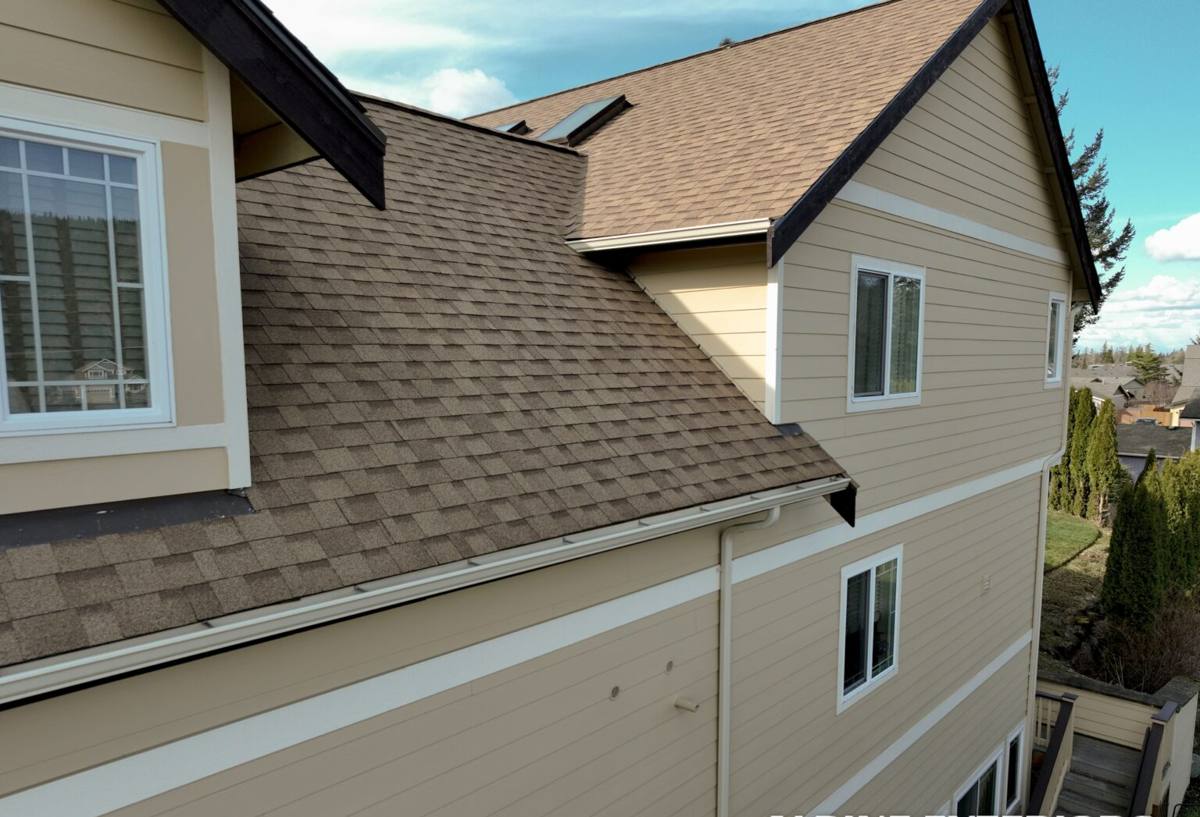
What Sudden Valley's Climate Actually Does to Windows
Salt Air and Metal Fatigue
Homes closer to the water catch airborne salt that settles on hardware, screens, and exposed metal components. Over years, this accelerates corrosion on lower-quality hinges, locks, and cranks, and it can pit aluminum cladding that isn't properly finished. It's not dramatic — it's slow, and it's the kind of wear that shows up as a window that used to close smoothly but now sticks or won't latch flush.
Driving Rain and Wind-Driven Intrusion
Storms coming off the Sound don't just fall straight down — wind pushes rain sideways into wall assemblies, and older or poorly installed windows let water past the sash and into the wall cavity long before anyone sees a stain on the drywall. By the time you notice it, the sheathing and framing around the opening have often already been wet for a season or more.
Moss, Shade, and Prolonged Dampness
Sudden Valley's tree cover and lake proximity mean many homes sit in shade for large parts of the day, especially in the wetter months. That shade keeps siding, trim, and window sills damp longer after a storm than a home in full sun. Wood sills and frames that don't fully dry between rain events are exactly where rot and moss growth get a foothold, and once moss establishes on a sill or exterior trim, it holds moisture against the wood continuously.
Signs Your Windows Are Losing the Fight
- Sashes that stick, drag, or won't latch flush anymore
- Visible gaps or daylight around the frame when the window is closed
- Fogging or a hazy film between double-pane glass — the seal has failed
- Soft, spongy, or discolored wood at the sill or bottom corners of the frame
- Noticeable draft or cold spot near the window even with it fully closed
- Paint that bubbles or peels repeatedly at the same spot on the frame
- Moss or dark streaking building up on the exterior sill or trim
- A jump in heating bills without any other obvious explanation
What a Correct Window Replacement Involves
Swapping in a new window is only part of the job. Most of the long-term performance of a replacement window comes from what happens around it, not the glass itself.
Removing the Old Unit Without Damaging the Opening
We pull the old sash and frame carefully so we can see the condition of the rough opening underneath — the studs, sill plate, and sheathing that the window sits in. This is often the first real look anyone's had at that framing in years, and on older homes it's common to find some degree of moisture damage that wasn't visible from outside.
Addressing Rot or Damage Before It's Covered Back Up
If we find soft wood, water staining, or rot in the framing, we deal with it before the new window goes in. Installing a new window over a compromised opening just hides the problem for a while — it doesn't fix it, and it usually voids the performance you're paying for.
Flashing and Sealing for Wind-Driven Rain
This is the step that matters most in our climate and the one that gets skipped or rushed most often. Proper flashing tape, a correctly lapped weather-resistive barrier, and sealant placed in the right locations (and not in the wrong ones — some spots need to stay open to drain) are what actually keep wind-driven rain out of the wall. A window can be excellent and still leak if it's flashed wrong.
Setting, Shimming, and Squaring the Unit
A window that isn't square in its opening won't operate correctly no matter how good it is — sashes will bind, locks won't align, and weatherstripping won't compress evenly. We shim and level every unit so it operates the way it's supposed to for the life of the window.
Interior and Exterior Finish Work
Once the window is set and sealed, we finish the interior trim and exterior cladding detail to match the rest of the house as closely as possible, so the replacement doesn't look like a patch job.
Choosing the Right Window for a Sudden Valley Home
There's no single "best" window material — the right choice depends on the home's exposure, your maintenance appetite, and your budget. Here's how the common options actually perform in this climate, in plain terms.
| Frame Material | Moisture Performance | Maintenance | Typical Fit for Sudden Valley |
|---|---|---|---|
| Vinyl | Excellent — won't rot, resists moisture cycling well | Low — occasional cleaning | Strong all-around choice for shaded, damp, or salt-exposed sites |
| Fiberglass | Excellent — very stable, minimal expansion/contraction | Low | Good for homes wanting a stiffer frame or larger openings, higher upfront cost |
| Wood (clad exterior) | Good if the exterior cladding is intact; interior wood still needs protection | Moderate to high — exterior cladding protects, but seams need monitoring | Works for homes wanting a wood interior look, best on covered or less-exposed elevations |
| Aluminum | Fair — conducts cold, can corrode near salt air over time if not properly finished | Moderate | Less common as our default recommendation for full window replacements in this area |
We're upfront when a material isn't the right call for a given wall. On a shaded, north-facing elevation near the lake that stays damp for days after a storm, we'll steer you toward a frame material and finish that shrugs off that moisture rather than one that needs regular upkeep to hold up.
Glass Packages Worth Considering Here
Double-pane, low-E glass with an argon fill is the standard baseline for this climate and handles our temperature swings and heat retention needs well. For homes with more direct wind exposure or road noise, a triple-pane or laminated glass option adds meaningful sound dampening and a bit more thermal performance, at a higher cost. We'll walk through whether that upgrade makes sense for your specific exposure rather than upselling it across the board.
Our Process, Start to Finish
- On-site assessment — We look at each window from both inside and out, check for existing moisture damage, and note sun/shade exposure and wind direction for the house.
- Honest recommendation — We tell you which windows need replacing now, which can wait, and which frame/glass combination fits your budget and exposure — no pressure to replace more than makes sense.
- Written estimate — Clear scope, materials, and pricing before any work starts.
- Installation — Careful removal, framing repair if needed, correct flashing and sealing, and squared installation.
- Finish and cleanup — Interior and exterior trim finished to match, site cleaned, and old units hauled off.
- Walkthrough — We test operation and locks on every window with you before we call the job done.
Why Hiring a Crew That Already Works This Area Matters
A crew that only occasionally works in Whatcom County treats every job like a generic install. A crew that regularly works Ferndale, the Lake Whatcom area, and the surrounding communities knows what to check for before the tape measure even comes out — where moisture tends to collect on shaded elevations, how far salt air travels inland here, and which frame materials hold up versus which ones become a maintenance chore within a few years. That familiarity translates directly into fewer surprises during the job and a window system that's actually matched to the house it's going into, rather than whatever's easiest to install.
It also matters for warranty follow-through. If a seal ever needs adjustment or a question comes up two years down the road, you want a contractor who's still working in your area and easy to reach — not one who did a single job in the neighborhood and moved on.
Maintaining New Windows in a Wet, Shaded Climate
A correctly installed window still benefits from some basic upkeep in this environment:
- Rinse salt residue and grime off exterior glass and hardware a couple of times a year, more often on lake-facing or wind-exposed sides
- Keep gutters and downspouts clear so water isn't sheeting down past window heads
- Trim back vegetation that keeps a window in constant shade and dampness where possible
- Check and clean weep holes (the small drainage openings at the base of the frame) so they aren't clogged with debris or moss
- Lubricate locks and cranks annually to keep salt air from seizing them up
- Watch for any new gaps, sticking, or condensation between panes — catching a failing seal early is far cheaper than a full replacement
Cost Factors to Expect
Every home is different, but a few factors consistently move the price on a Sudden Valley window replacement project: the number of openings, frame material chosen, whether framing repair is needed once the old window comes out, window size and shape (custom or unusual openings cost more than standard sizes), and access — some elevations near steep lots or dense landscaping take longer to work safely. We won't know your real numbers until we've looked at the house, but we'll give you a straightforward written estimate with no vague allowances buried in it.
If your windows are sticking, drafting, fogging, or just showing their age, it's worth having someone who knows this climate take a look before another wet season adds to the damage. We offer free, no-pressure estimates for Sudden Valley homeowners — fill out the form below and we'll get you scheduled.