 Ferndale Window
 Siding Built for Where Sudden Valley Actually Sits
Sudden Valley homes deal with a specific combination of weather that a lot of siding products simply weren't designed for. You've got moisture off the lake, salt-laden air moving in from the Strait of Georgia and Bellingham Bay, long stretches of driving rain through fall and winter, and shaded, tree-lined lots that stay damp long after a storm passes. That combination is exactly what accelerates rot, delamination, and moss growth on siding that isn't built to shed water and resist organic growth on its own.
We work Whatcom County homes regularly, and Sudden Valley's mix of wooded lots, elevation changes, and proximity to water puts it near the top of the list for siding stress. A replacement here isn't just a cosmetic upgrade — it's a chance to correct whatever original material and detailing let moisture in over the years, and to put something on the house that's actually engineered for this climate.
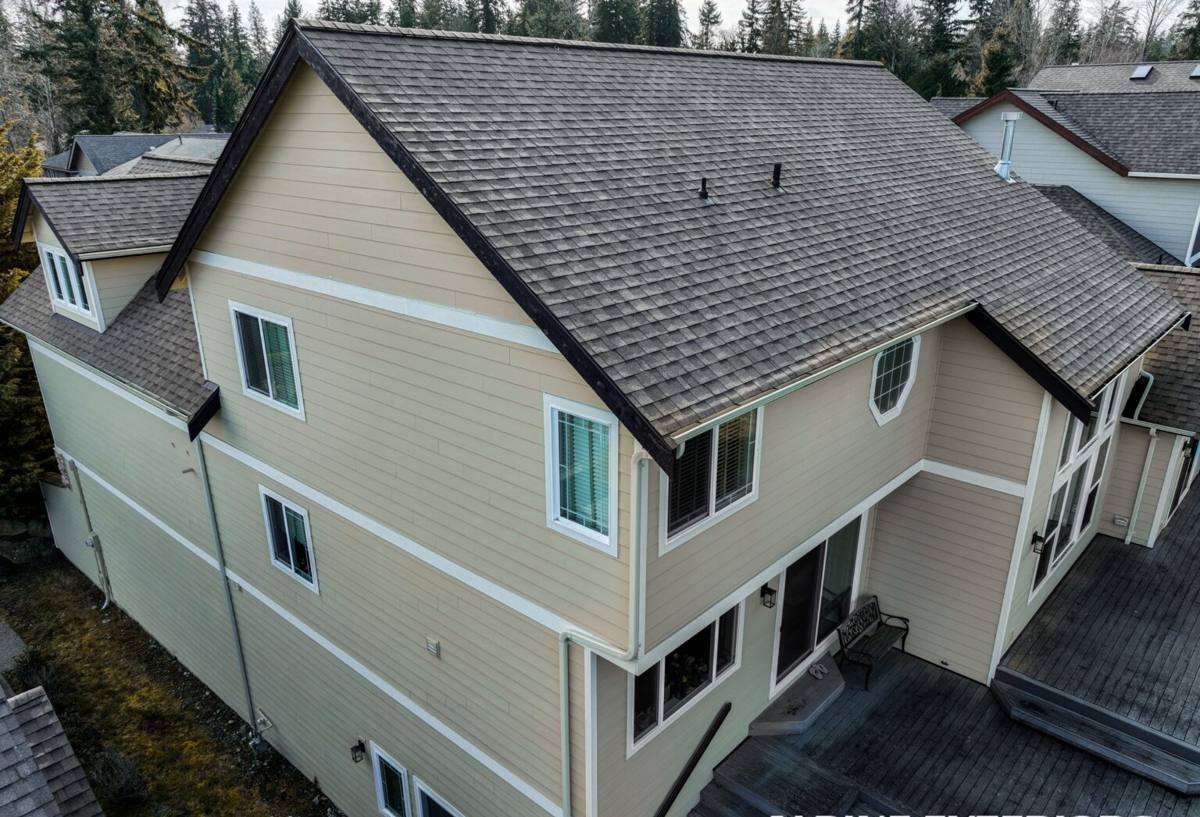
What This Climate Does to the Wrong Siding
Before we talk about the fix, it's worth being clear about the problem. Three things drive siding failure in this part of Whatcom County:
- Salt air — corrodes fasteners and trim, and accelerates the breakdown of finishes not rated for coastal exposure.
- Driving rain — wind-driven moisture gets pushed sideways into laps, seams, and butt joints, not just straight down the wall.
- Moss and algae season — shaded, damp siding surfaces stay wet longer, which is exactly the environment moss and mildew need to take hold and spread.
Wood-based products (cedar, primed spruce) absorb that moisture and start to swell, cup, or rot from the inside out, often before it's visible from the ground. Vinyl doesn't rot, but it doesn't hold paint well if you ever want to change the color, and it becomes brittle and prone to cracking in cold snaps. Engineered wood products like LP SmartSide are more moisture-resistant than raw wood, but they're still a wood-strand product at the core — if water gets past a compromised seal at a cut edge or fastener, that core can swell. In a climate that stays wet for months at a time, the margin for error on caulking, flashing, and paint maintenance is thin.
Why We Only Install James Hardie Fiber Cement
We standardized on James Hardie fiber cement siding for every home we side, and Sudden Valley is a good example of why. Fiber cement is made from cement, sand, and cellulose fibers — there's no wood core to swell, no organic material for moss to feed on, and no vinyl to go brittle in a cold snap. It's non-combustible, which matters more every year as wildfire smoke seasons stretch longer in the Pacific Northwest, and it holds a factory-applied ColorPlus finish that's baked on under controlled conditions rather than painted on-site.
That factory finish matters specifically for salt air and driving rain. Field-applied paint on wood or engineered wood siding is only as good as the weather conditions on the day it was applied and the maintenance schedule after that. ColorPlus finish is engineered and tested for UV and moisture exposure before it ever reaches the truck, and it carries its own finish warranty separate from the substrate warranty. For a wall that's going to take on salt-laden rain sideways for the next few decades, that's the difference that shows up ten and twenty years down the road, not in the first year.
The HZ5 Line for This Region
James Hardie engineers its siding by climate zone. Whatcom County — including Sudden Valley and the rest of the Ferndale area — falls into the HZ5 zone, which Hardie builds for wetter, colder Pacific Northwest and northern climates. HZ5 panels and lap siding are formulated for freeze-thaw cycling and sustained moisture exposure, which is a more relevant spec here than a generic siding product built for a national average climate.
What a Correct Siding Replacement Actually Involves
Replacing siding is not just pulling off old boards and nailing up new ones. Done right, a replacement addresses the whole wall assembly, not just the visible surface. Here's what we look at on every Sudden Valley project:
1. Tear-Off and Inspection
Once the old siding comes off, we inspect the sheathing underneath for rot, soft spots, or prior water damage — this is often the first time anyone has actually seen the condition of the wall in years. On older homes in wooded, damp lots, this step regularly turns up moisture damage that wasn't visible from outside.
2. Repair Before Cover-Up
Any compromised sheathing gets replaced before new siding goes on. Covering rotten sheathing with new siding just hides the problem and guarantees a shorter service life for the new material — we don't do that.
3. Weather-Resistive Barrier and Flashing
A correctly installed weather-resistive barrier (WRB) and properly integrated flashing at windows, doors, and penetrations is what actually keeps driving rain out of the wall assembly. This detailing matters more in high-wind-driven-rain areas than the siding material itself — even the best siding fails early if the water management behind it is wrong.
4. Correct Fastening and Clearances
Fiber cement has specific fastening patterns, gaps, and ground clearance requirements from the manufacturer. Getting these wrong is the single most common cause of premature siding failure and can also void the manufacturer's warranty — regardless of how good the siding itself is.
5. Trim, Caulking, and Finish Details
Proper trim details and Hardie-approved caulking at seams and transitions close out the job and keep water from finding a way in at the joints — the places driving rain actually targets.
Siding Material Comparison for This Climate
| Material | Moisture Behavior | Salt Air / Coastal Exposure | Moss/Algae Resistance | Maintenance |
|---|---|---|---|---|
| James Hardie Fiber Cement | No organic core; won't rot or swell | Factory ColorPlus finish rated for coastal UV/moisture | Non-organic surface resists growth better than wood | Occasional wash; no repainting on ColorPlus finish for years |
| Cedar / Primed Spruce | Absorbs moisture; prone to rot and cupping | Finish breaks down faster; frequent recoating needed | Organic surface, more susceptible to moss/mildew | Regular repainting/staining and caulk maintenance |
| LP SmartSide / Engineered Wood | More resistant than raw wood, but wood-strand core can swell if seal is compromised | Field or factory finish; edge sealing is critical | Better than raw wood; still an organic core | Watch cut edges and fastener points closely |
| Vinyl | Won't rot, but not water-managed — traps moisture behind it | Can fade and become brittle over time | Non-organic, but seams and laps can trap grime and organics | Low, but cracks and warps in temperature swings; hard to repaint |
Why Local Experience in Sudden Valley Matters
A siding crew that's worked this specific area knows things a generalist crew won't: how the tree cover and terrain affect where moisture sits longest on a house, which exposures take the worst of the driving rain, and where moss tends to establish first on a given roofline and wall orientation. That local pattern recognition changes decisions on the job — where we pay extra attention to flashing, which walls get prioritized in the tear-off order, and what clearance and drainage details matter most on a given lot.
It also means a crew that's accountable locally. We're a Ferndale-based operation working Whatcom County homes, not a crew passing through the region for a single job. If a detail needs a second look after the fact, we're not far away.
What to Expect From Our Process
- On-site assessment of your current siding, sheathing condition, and problem areas specific to your lot's exposure
- A written estimate that spells out material, labor, and any sheathing repair contingencies
- Full tear-off with sheathing inspection before anything new goes up
- Correct WRB and flashing installation at every window, door, and penetration
- James Hardie HZ5 fiber cement installed to manufacturer fastening and clearance specs
- Final trim and caulking detail work, plus a walkthrough before we call the job done
Timing a Siding Replacement Around Whatcom County Weather
Siding installation goes best in drier stretches of the year, but the real driver of timing should be the condition of your current siding, not the calendar. If you're already seeing soft spots, visible moss buildup on the surface, or paint failure on wood siding, waiting through another wet season generally makes the underlying sheathing damage worse, not better. We can assess condition and give you a straight answer on whether it's a wait-and-watch situation or one worth moving on before the next round of driving rain.
If you're weighing a siding replacement for a Sudden Valley home, we're happy to take a look and give you a straightforward, no-pressure estimate — what we'd recommend, what it would involve, and what it would cost. Use the form below to get started.