 Ferndale Window
 Siding Built for the Way Weather Actually Hits Sudden Valley Homes
Homes in Sudden Valley deal with a specific combination of punishment that a lot of siding products simply weren't engineered for: salt-laden air moving in off the water, wind-driven rain that gets pushed sideways into wall assemblies, and a moss and algae season that can stretch for most of the year in the shaded, moisture-heavy pockets common to this part of Whatcom County. Siding here isn't just a cosmetic choice — it's the first line of defense against a climate that never really lets a house dry out completely between storms.
We install James Hardie fiber cement siding exclusively, and we do it because we've watched what this specific stretch of Pacific Northwest weather does to lesser products over time. This page walks through what a correct siding installation looks like for a Sudden Valley home, what the climate demands from the material and the install, and how our process is built around getting it right the first time.
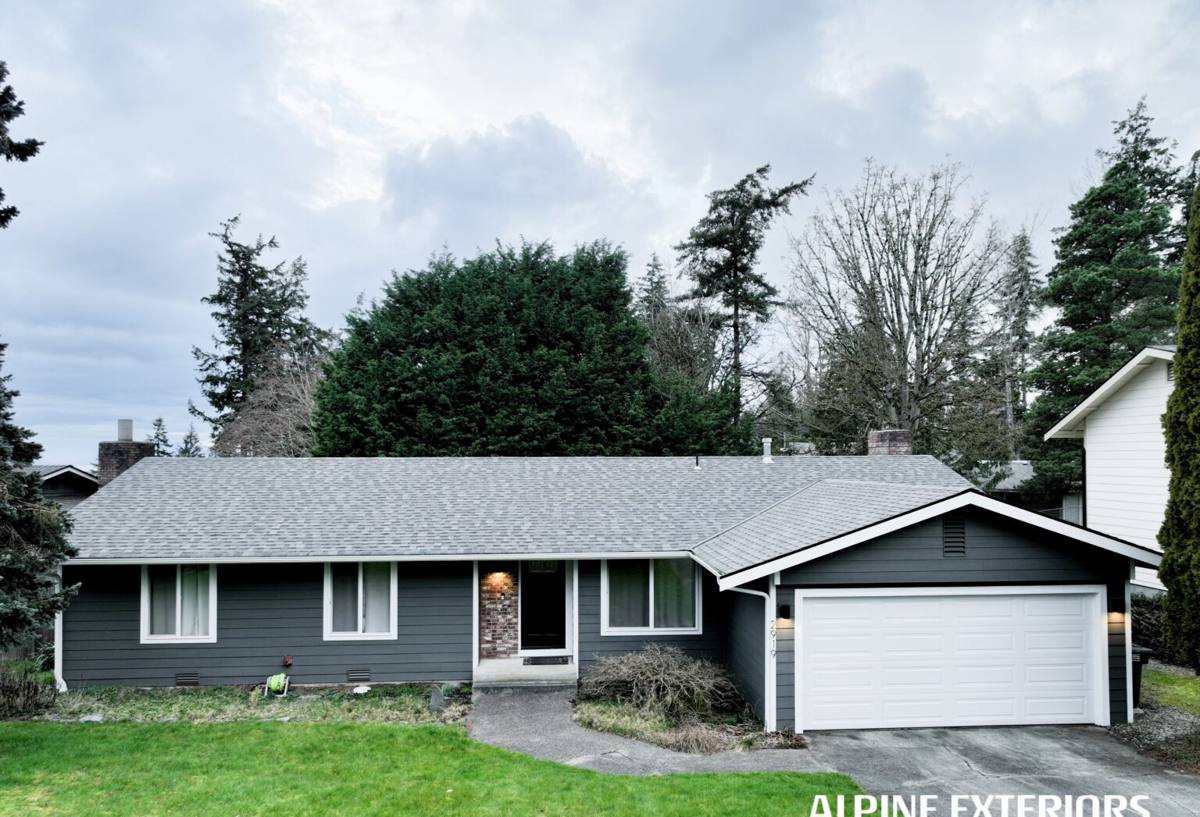
What Sudden Valley's Climate Actually Does to Siding
Salt Air and Corrosion
Proximity to Puget Sound and the Strait of Georgia means airborne salt is a real factor for siding, fasteners, and trim throughout this region. Salt accelerates corrosion in exposed metal fasteners, degrades cheap coatings faster than manufacturers' lab tests usually predict, and works its way into seams and joints that aren't properly sealed or flashed. Over years, that steady low-level exposure is what separates siding systems that hold up from ones that start showing rust streaks, swelling, or fastener failure well before their expected lifespan.
Driving Rain and Wind-Loaded Moisture
This isn't gentle, straight-down rain. Storms coming off the water push moisture sideways, forcing water into laps, corners, and butt joints that would stay dry in a calmer climate. Any siding installation here has to assume water will find its way behind the cladding at some point — the question is whether the wall assembly is built to shed that water back out, or whether it traps it against sheathing and framing.
Moss, Algae, and Extended Dampness
Shaded lots, tree cover, and the sheer number of overcast, damp days each year create ideal conditions for moss and algae growth on north-facing and shaded wall sections. Porous or absorbent siding materials hold onto that moisture, which feeds organic growth and, over time, softens the material itself. A siding product's ability to resist moisture absorption isn't a minor spec sheet detail out here — it's one of the biggest predictors of how the wall looks and performs a decade in.
Why We Install Only James Hardie Fiber Cement
James Hardie fiber cement is engineered specifically to resist the failure modes this climate creates. It's non-combustible, dimensionally stable in swings of moisture and temperature, and finished with a factory-applied ColorPlus coating that's baked on and warranted against fading and peeling — a real advantage over field-applied paint, which is the first thing to fail on lesser products exposed to constant damp-dry cycling. Hardie's HZ5 product line is specifically formulated for climates like ours, with moisture and freeze-thaw performance built into the material itself rather than relied upon a coating alone.
We don't install vinyl, LP SmartSide, Cemplank, Allura, or primed wood siding, and that's a deliberate standard, not a matter of what's cheapest to stock. Each of those products has legitimate strengths in the right application, but each also carries a trade-off — moisture sensitivity, coating longevity, installation tolerance, or warranty structure — that we've decided isn't worth the risk on homes exposed to this region's combination of salt air, driving rain, and prolonged dampness. Fiber cement, installed correctly, is the product we're willing to put our name behind here.
What a Correct Siding Installation Actually Involves
Fiber cement siding performs exactly as well as the wall assembly underneath it and the install quality above it — the material alone doesn't guarantee a dry, long-lasting wall. A correct job includes:
- Weather-resistive barrier installed and lapped correctly, with no gaps or reverse laps that let water track behind the sheathing
- Proper flashing at every window, door, and penetration, integrated with the water-resistive barrier rather than just caulked over the top
- Correct fastener type and placement — stainless or coated fasteners driven to Hardie's specified depth and location, not just whatever was on hand
- Manufacturer-specified clearances from grade, roofing, and decks, so siding isn't sitting in a moisture trap from day one
- Proper joint treatment at butt joints and corners, sealed and shimmed per Hardie's installation instructions
- Ventilation behind the cladding where the assembly calls for it, so incidental moisture can dry out instead of sitting against the sheathing
Skipping or shortcutting any one of these doesn't show up as a problem on install day. It shows up two, five, or ten years later as staining, soft spots, or premature paint and caulk failure — usually right around the areas most exposed to wind-driven rain.
Our Process for Sudden Valley Siding Projects
1. On-Site Assessment
We walk the home in person, checking the condition of the existing siding, the state of the sheathing and framing underneath where accessible, and which elevations take the worst of the wind and rain exposure. This tells us where extra attention to flashing and water management is warranted.
2. Product and Line Selection
We talk through which Hardie product line and profile fits the home — lap siding, panel, shingle-style, or a mix with trim and soffit — along with ColorPlus color options that hold up to UV and salt exposure without relying on field-applied paint.
3. Tear-Off and Substrate Check
Old siding comes off and we inspect the sheathing underneath for rot, moisture damage, or prior water intrusion before anything new goes up. Problems found here get addressed, not covered over.
4. Weather Barrier and Flashing
This is the step that determines how the wall performs in a real storm, not just how it looks on a dry day. We install the weather-resistive barrier and flashing to manufacturer spec at every opening and penetration.
5. Installation to Manufacturer Spec
Fasteners, clearances, joint treatment, and ventilation are all installed per James Hardie's published instructions — the details that determine whether the warranty is actually valid and whether the wall holds up long-term.
6. Final Walkthrough
We review the finished work with the homeowner, covering basic care and what to expect from ColorPlus finishes over time.
Comparing Siding Options for This Climate
| Factor | James Hardie Fiber Cement | Vinyl | Untreated/Primed Wood |
|---|---|---|---|
| Moisture absorption | Very low | Doesn't absorb, but seams and gaps allow water behind it | High — prone to swelling and rot |
| Salt air / corrosion resistance | Material itself is inert; use corrosion-resistant fasteners | Fasteners and trim can still corrode | Fasteners and fungal growth both accelerated by salt-damp cycling |
| Moss/algae resistance | Good — low porosity limits organic growth | Fair, but seams and J-channels trap debris and moisture | Poor — absorbs moisture that feeds growth |
| Finish durability | Factory ColorPlus, warranted against fading/peeling | Color molded in, but can fade and become brittle over time | Field-applied paint, needs repainting on a recurring cycle |
| Fire resistance | Non-combustible | Combustible | Combustible |
Maintenance Expectations After Installation
Even the right product needs a small amount of upkeep. For Sudden Valley homes, that generally means:
- Periodic rinsing of shaded, north-facing sections to keep moss and algae from establishing
- Checking caulking at joints and trim every year or two, since caulk is the first thing to wear regardless of the siding material behind it
- Keeping vegetation and irrigation spray away from wall surfaces to reduce constant dampness
- Visual checks after major windstorms for any loosened trim or flashing
None of this is heavy maintenance — it's the same kind of basic exterior care any home in this climate needs — but it matters more on a home exposed to driving rain and salt air than it would somewhere drier and more sheltered.
Why Local Installation Experience Matters
Fiber cement siding is not a forgiving product to install poorly. Cut edges need to be sealed, fasteners need to hit the right depth and substrate, and flashing details have to account for the direction rain actually comes from at a given site — not just a generic install manual. A crew that regularly works Whatcom County homes has already seen how wind-driven rain behaves against different exposures in this area, which shaded elevations tend to hold onto moss longest, and where salt exposure has caused problems on other installations over time. That on-the-ground pattern recognition is what keeps a siding job performing correctly for decades instead of just looking right on installation day.
If you're weighing a siding replacement or new installation for a Sudden Valley home, we're happy to walk the property, look at what the current siding and substrate are telling us, and put together a straightforward, no-pressure estimate for a James Hardie installation built for this specific climate.