 Ferndale Window
 Why Sudden Valley Homes Need a Different Approach to Windows
Sudden Valley sits in a pocket of Whatcom County where the weather does more work on a house than most homeowners realize. Tree cover keeps a lot of homes shaded for large parts of the day, moisture off the lake lingers in the air longer than it would on an open lot, and the same weather systems that bring salt-laden air and driving rain through Ferndale and the rest of the county reach in here too. None of that is a problem for windows that are built and installed correctly. It becomes a problem fast when a window is installed the way it would be in a drier, more open climate.
We install custom windows in Sudden Valley the way we'd want them installed in our own homes — sized to the actual opening, flashed to shed water instead of trap it, and finished with materials that won't corrode, swell, or grow mildew in a shaded, moisture-heavy setting. That's the whole job. Get those things right and a window will perform for decades. Get any one of them wrong and you'll be dealing with fogged glass, soft trim, or a stuck sash well before its time.
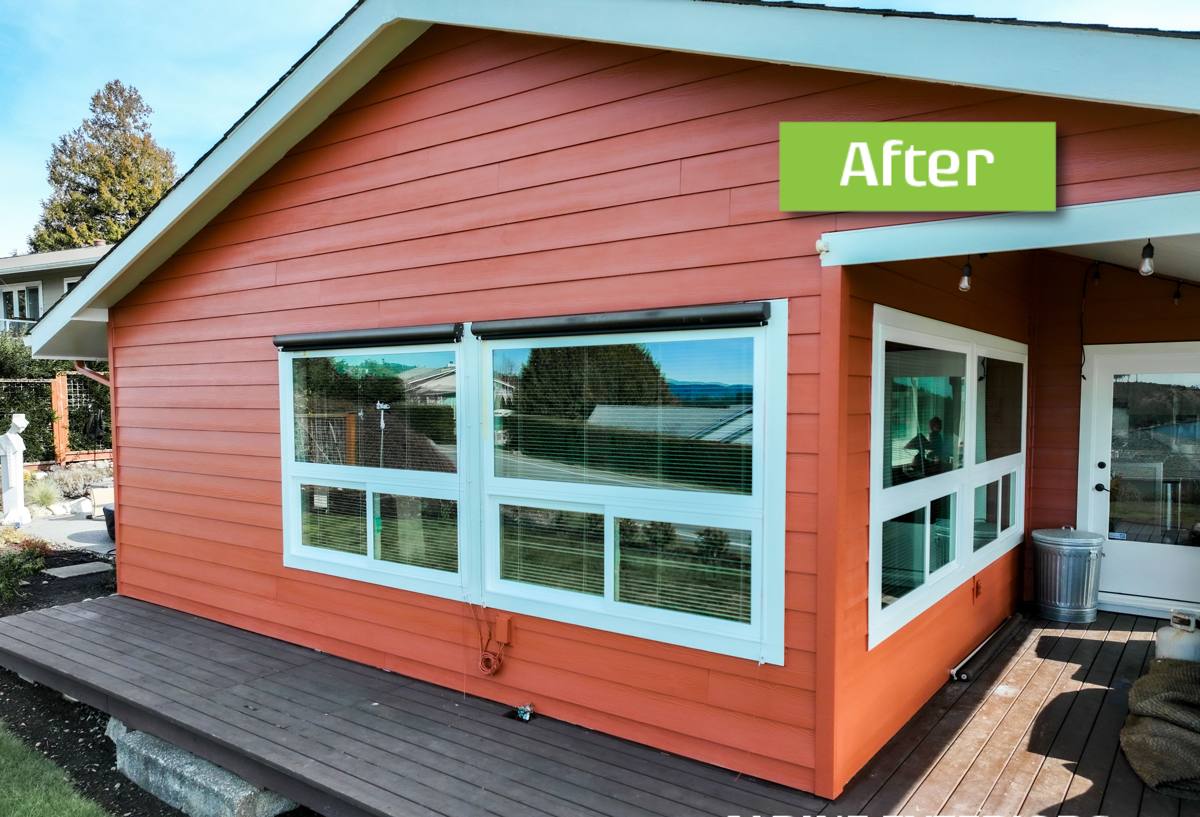
What the Local Climate Actually Does to Windows Over Time
Salt Air and Hardware Corrosion
Whatcom County sits close enough to Puget Sound that salt-carrying air reaches inland on a regular basis, and it doesn't stop at the coastline. Over years, that air attacks unprotected metal — hinges, cranks, screws, and cheap cladding — long before the glass or frame itself fails. Homeowners often notice it first as a window that gets harder to open and close, or hardware that starts to pit and discolor.
Driving Rain and Wind-Driven Moisture
Rain that falls straight down is easy to manage. Rain that's being pushed sideways by wind — which is a normal fall and winter event here — finds every gap in a poorly flashed installation. Water doesn't need a big opening to get behind a window frame; it needs a path, and a rushed installation almost always leaves one. Once water gets behind the frame, it can sit there for months before it shows up as a stain, a soft spot, or a musty smell.
Moss, Shade, and Trapped Moisture
The long moss season that defines this part of Washington isn't just a roof and siding issue. Shaded window trim, north-facing frames, and sills that don't get much direct sun stay damp longer, and that's exactly the environment moss and mildew need to take hold. Wood trim and low-quality composite sills are especially vulnerable if they aren't sealed and detailed correctly at installation.
What a Correct Custom Window Installation Actually Involves
Accurate Measurement and True Custom Sizing
"Custom" should mean the window is built to fit the actual opening, not that a stock size gets shimmed and caulked until it's close enough. Older homes in this area often have openings that have shifted slightly over time or were never perfectly square to begin with. Measuring for a true custom fit — width, height, and depth, at multiple points — is the difference between a window that seals cleanly and one that needs a bead of caulk doing the job flashing should be doing.
Flashing and Weather Barrier Detail
This is the part of the job nobody sees once it's finished, and it's the part that matters most in a wet, wind-driven climate. Proper flashing directs water down and out and away from the wall assembly, integrated correctly with the house wrap or weather barrier that's already there. Skipping or shortcutting this step is the single biggest cause of the rot and water damage we get called to fix.
Sealant, Insulation, and Air Sealing
Once the window is set and flashed, the gap between the frame and the rough opening needs to be insulated — not just caulked at the exterior. A gap packed with the wrong material, or left empty, is both an energy loss point and a place for condensation to form inside the wall.
Choosing Materials That Actually Hold Up in This Climate
Material choice matters more here than in a drier region, because the frame is fighting moisture and salt exposure year-round, not just during a few storms a year. Here's how the common options compare for a home in a shaded, damp setting like Sudden Valley:
| Material | Moisture & Salt Resistance | Maintenance | Typical Lifespan |
|---|---|---|---|
| Vinyl | Good — won't rot or corrode, but low-grade vinyl can warp under heat/cold cycling | Low — occasional cleaning | 20–30 years, quality-dependent |
| Fiberglass | Excellent — dimensionally stable, doesn't absorb moisture | Low | 30–40+ years |
| Wood-clad (metal or vinyl exterior, wood interior) | Good on the exterior face; interior wood needs protection from any interior moisture | Moderate — interior finish upkeep | 20–30+ years with maintenance |
| Bare wood | Poor in shaded, damp exposures without diligent upkeep | High — regular painting/sealing | Highly variable |
We don't push one material on every job. A sun-exposed wall and a shaded, moss-prone wall on the same house can reasonably call for different products. What we won't do is put bare or lightly protected wood on a north-facing, shaded elevation and call it a long-term solution — the maintenance burden in that exposure is more than most homeowners want to sign up for, and we'd rather say so upfront than sell a product that's going to disappoint in this specific climate.
Glass and Hardware Worth Paying For
The glass package and hardware matter as much as the frame material. In this climate we typically point homeowners toward:
- Low-E coated, argon-filled insulated glass units for energy performance and reduced condensation risk
- Corrosion-resistant hardware (stainless or coated steel components rather than bare mild steel) for anything exposed to salt-carrying air
- Warm-edge spacer systems, which hold up better long-term than older aluminum spacers that conduct cold and encourage interior condensation on the glass edge
- Multi-point locking hardware on larger sashes, which also helps keep the sash compressed against the weatherstripping in wind
None of these are exotic upgrades — they're standard-grade choices for a climate that's harder on windows than most, and the cost difference over a builder-grade package is modest relative to the life of the window.
Our Process for a Sudden Valley Project
The process is the same whether it's two windows or a whole house, just scaled:
- On-site assessment. We look at each opening individually — sun exposure, current condition of the trim and sheathing, and any signs of existing water intrusion — before we talk products.
- Accurate measurement. Every opening is measured on-site; nothing is ordered off assumed stock sizes.
- Product and material selection. We walk through the honest trade-offs for each elevation of the house, not a one-size-fits-all recommendation.
- Removal and inspection. When we pull the old window, we check the rough opening and sheathing underneath for hidden rot or moisture damage before anything new goes in.
- Installation, flashing, and air sealing. This is where most of the long-term performance is decided, and it's not a step we rush.
- Interior and exterior finish work. Trim, caulking, and touch-up so the job looks finished, not patched.
- Walkthrough. We show you the operation of each window and flag anything we found during removal that you should know about.
Common Problems We Find in Older Replacement Jobs
A lot of our Sudden Valley calls start as a homeowner noticing something small — a drafty room, a foggy pane, a window that's hard to latch. When we open things up, the same handful of issues show up again and again from past installations that cut corners:
- Caulk used as the primary water barrier instead of proper flashing behind the trim
- No inspection of the sheathing or rough opening before the new window went in, hiding existing rot
- Foam insulation packed too tightly around the frame, which can bow the sash and cause operation problems
- Standard hardware used on a shaded or exposed elevation where corrosion-resistant hardware would have lasted much longer
- Gaps left where the window flashing meets the house wrap, giving water a direct path behind the siding
- Wood trim left unprimed on cut edges, which is often where rot starts first
If any of these sound familiar from your own home, it's worth having someone take a look before the damage spreads further into the wall.
Caring for Custom Windows After They're Installed
A well-installed window in this climate still benefits from a little seasonal attention. Rinse salt residue and pollen off frames and glass periodically, especially on elevations that catch prevailing weather. Keep weep holes at the bottom of the frame clear of debris and moss so water can drain as designed. Check exterior caulking once a year for cracking or separation, particularly after a hard winter. And keep an eye on any shaded trim for early moss growth — catching it early with a simple cleaning is a lot easier than dealing with trapped moisture later.
Why Hiring a Crew That Already Works in Sudden Valley Matters
Window installation isn't identical everywhere. A crew that mostly works drier, more open sites can do a technically fine job and still leave a house under-prepared for what a shaded, damp, salt-influenced Whatcom County property will throw at it over the next twenty years. Working in this area regularly means we've seen how these specific conditions — moss, driving rain, salt air, tree-shaded exposures — actually play out on real houses, not just in a product brochure. That shows up in the small decisions: which elevation gets fiberglass instead of wood, how tight the flashing lap needs to be, which hardware is worth the upgrade. Those are the details that separate a window that looks right on installation day from one that's still performing well a decade later.
If you're planning a custom window project in Sudden Valley — whether it's a couple of problem windows or a full-house replacement — we're glad to come take a look, walk the property with you, and put together a straightforward, no-pressure estimate. Use the form below to get started.