 Ferndale Window
 Composite Decking Built for Sudden Valley's Conditions
Sudden Valley sits in a part of Whatcom County where weather doesn't take a season off. Homes here deal with driving rain for months at a stretch, marine air that carries salt and moisture well inland, and enough shade and dampness in the right spots to grow moss on almost anything that sits still long enough. A deck built without that reality in mind will show it within a few years — soft spots, mildew streaks, fasteners popping, boards cupping. A deck built for it can go decades with nothing more than a seasonal cleaning.
We install composite decking specifically with this climate in mind, not as a generic product dropped onto a generic frame. That distinction matters more here than it does in drier parts of the state.
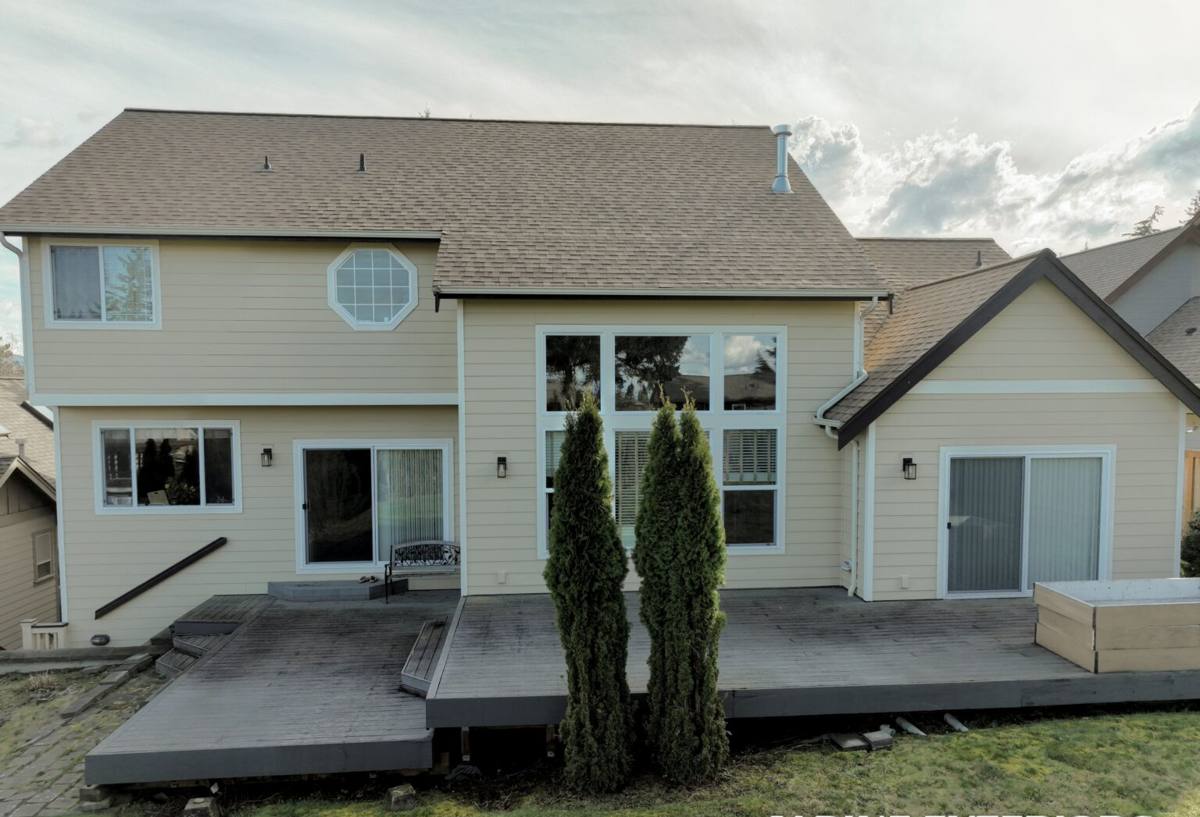
What the Local Climate Actually Does to a Deck
Moisture That Doesn't Let Up
Whatcom County gets long stretches of steady, low-intensity rain rather than short heavy downpours. That means wood and lesser composite products stay damp for days at a time instead of drying out between storms. Any weak point in the build — a poorly flashed ledger board, tight board spacing, or a substructure without airflow underneath — turns into a slow rot or mold problem instead of a fast, obvious one.
Salt-Laden Air
Even away from the immediate waterfront, marine air moves inland across this part of the county and carries salt with it. Salt accelerates corrosion in fasteners, brackets, and any exposed metal hardware. Cheap or mismatched fasteners are one of the first things to fail on a deck out here, long before the decking boards themselves show wear.
Moss and Shade
Mature trees and long overcast stretches mean a lot of decks in this area sit in partial shade for much of the year. That's exactly the environment moss and algae need. On a deck, that's not just a cosmetic issue — a mossy surface is a slick surface, and trapped organic growth between boards holds moisture against the structure underneath.
What a Correctly Built Composite Deck Involves
Composite boards themselves are only part of a good deck. Most of the problems we get called out to fix on other people's composite decks trace back to the substructure and details underneath, not the decking material itself.
The Substructure Comes First
Composite boards are heavier than wood decking and behave differently under load and temperature swings, so joist spacing needs to match the manufacturer's span tables for composite specifically — not whatever spacing was convenient for a wood deck. We use pressure-treated or otherwise rated lumber for the frame, proper joist tape or flashing to keep the tops of the joists dry, and hardware rated for the moisture and salt exposure this area sees.
Ledger Attachment and Flashing
Where a deck attaches to the house is the single most common failure point we see, especially on older decks. If the ledger board isn't properly flashed and sealed against the wall, water works its way behind the siding and into the rim joist over time — and in a climate with this much sustained rain, "over time" is a lot shorter than homeowners expect. This gets done right the first time or it becomes an expensive interior repair later.
Airflow and Drainage Underneath
A composite deck built low to the ground, or over a patio slab, needs a real plan for water to get out from underneath — proper slope, gaps, or a drainage system depending on the layout. Decks that trap moisture underneath develop odor, mold, and premature hardware failure even when the visible boards look fine.
Fastening and Board Spacing
Hidden fastener systems are worth using here — they avoid the face-screw holes that collect water and dirt, and they let boards expand and contract with temperature and moisture without splitting. Board gapping has to account for this region's humidity swings; too tight and boards buckle when they swell, too loose and debris collects in the gaps.
Our Process for a Sudden Valley Composite Deck
- On-site assessment — we look at drainage, sun/shade exposure, existing structure (if replacing a deck), and how the deck ties into the house.
- Design and material selection — board style, color, and railing system based on your home and budget, plus substructure plan sized to the actual load and span.
- Permitting — most deck work in this area requires a permit, especially anything attached to the house or above a certain height; we handle that paperwork rather than skip it.
- Demolition (if replacing) — old decking and, if compromised, the substructure and ledger connection are removed and inspected.
- Framing and flashing — joists, ledger board, flashing, and drainage details go in first, and this is where we don't cut corners regardless of what's hidden once decking goes down.
- Decking installation — boards installed with proper gapping, hidden fasteners where applicable, and attention to board direction and drainage flow.
- Railing, trim, and final walkthrough — railing system installed to code, edges finished, and a walkthrough so you know what maintenance (if any) the product needs.
Composite vs. Other Decking Materials
| Material | Moisture/Rot Resistance | Maintenance | Typical Lifespan |
|---|---|---|---|
| Pressure-treated wood | Moderate — needs sealing to hold up in this climate | Annual cleaning, periodic staining/sealing | 10–15 years before major repair |
| Cedar | Good natural resistance, but surface still weathers | Regular sealing to prevent graying and moss | 15–20 years with upkeep |
| Composite (capped) | High — engineered to resist moisture and staining | Occasional washing, no sealing or staining | 25–30+ years, manufacturer-warrantied |
| PVC decking | Very high — no wood content to absorb moisture | Low, similar to composite | 25–30+ years, higher upfront cost |
We install capped composite decking from established manufacturers such as Trex, TimberTech, and Fiberon. We steer clients away from uncapped or lower-tier composite boards for this climate specifically — older uncapped composite formulations absorb more moisture at the surface and are more prone to mold staining in shaded, damp settings like much of Sudden Valley. That's a maintenance and appearance trade-off worth knowing before you buy, not a knock on any single product line.
What Drives the Cost of a Composite Deck Here
| Factor | Why It Matters Locally |
|---|---|
| Deck size and shape | More linear footage of framing, fascia, and board cuts |
| Height off the ground | Taller decks need engineered footings and railings, which adds labor and permit scrutiny |
| Ledger/house attachment complexity | Proper flashing takes more time than a simple bolt-on, but it's what prevents water intrusion |
| Board tier | Mid-tier vs. premium capped composite changes material cost significantly |
| Railing system | Composite/aluminum railing costs more than basic wood but matches the low-maintenance goal |
| Site access and grading | Sloped lots or limited equipment access add labor time |
Maintaining a Composite Deck in a Wet, Mossy Climate
One of the reasons homeowners choose composite here is the reduced maintenance, but "reduced" isn't "none." A few habits go a long way in this environment:
- Sweep debris (leaves, needles, seed pods) out of gaps before it decomposes and holds moisture
- Wash the surface once or twice a year with a soft-bristle brush and mild soap to prevent moss and algae from getting a foothold
- Keep gutters and downspouts near the deck clear so water isn't dumping directly onto or under it
- Trim back overhanging branches to reduce shade and speed up drying time after rain
- Check railing posts and fasteners annually for looseness, especially after the first winter
- Address any standing water or slow drainage underneath the deck before it becomes a bigger structural issue
Why Local Experience Matters for This Job
Composite decking is sold and installed all over the country, but the details that make it last vary a lot by climate. A crew used to building in a dry region can install the boards correctly and still miss the flashing, drainage, and hardware choices that matter in Whatcom County's rain and salt-air exposure. We work in this area regularly, which means we're not guessing at span tables, fastener grades, or drainage details — we're applying what actually holds up through a Sudden Valley winter and the long wet stretch that follows it.
It also means we're realistic with clients about trade-offs — where a lower-tier board will save money up front but cost more in appearance or maintenance over ten years, and where spending more on flashing or footings isn't optional even though it's invisible once the deck is finished.
Permits and Structural Basics
Most attached decks and any deck above a modest height require a building permit in Whatcom County jurisdictions, along with inspections at the framing stage before decking goes down. This isn't paperwork for its own sake — the inspection catches ledger attachment, footing depth, and joist sizing issues before they're covered up. We pull permits and schedule inspections as part of the job rather than treating it as an extra step, because a deck that skips this process can create real problems at resale or insurance time down the road.
If you're planning a new composite deck or replacing one that's showing its age in the Sudden Valley area, we're happy to take a look and give you a straightforward, no-pressure estimate — just fill out the form below.