 Ferndale Window
 Storm Damage Roof Repair for Marietta Homes
Marietta sits close enough to Bellingham Bay and the Nooksack River delta that homes here take a different kind of weather beating than roofs a few miles inland in Ferndale proper. The salt-laden air off the water accelerates the wear on fasteners, flashing, and shingle granules, while winter storms bring driving rain sideways off the water and wind gusts that find every loose shingle tab or lifted ridge cap. Add in Whatcom County's long, damp moss season, and a roof that looks fine from the ground can be hiding real damage underneath. Storm damage roof repair here isn't a one-size-fits-all job — it has to account for what this specific stretch of coastline does to a roof over time.
This page covers what storm damage actually looks like on a Marietta roof, what a correct repair involves, and how our process works from first call to finished job.
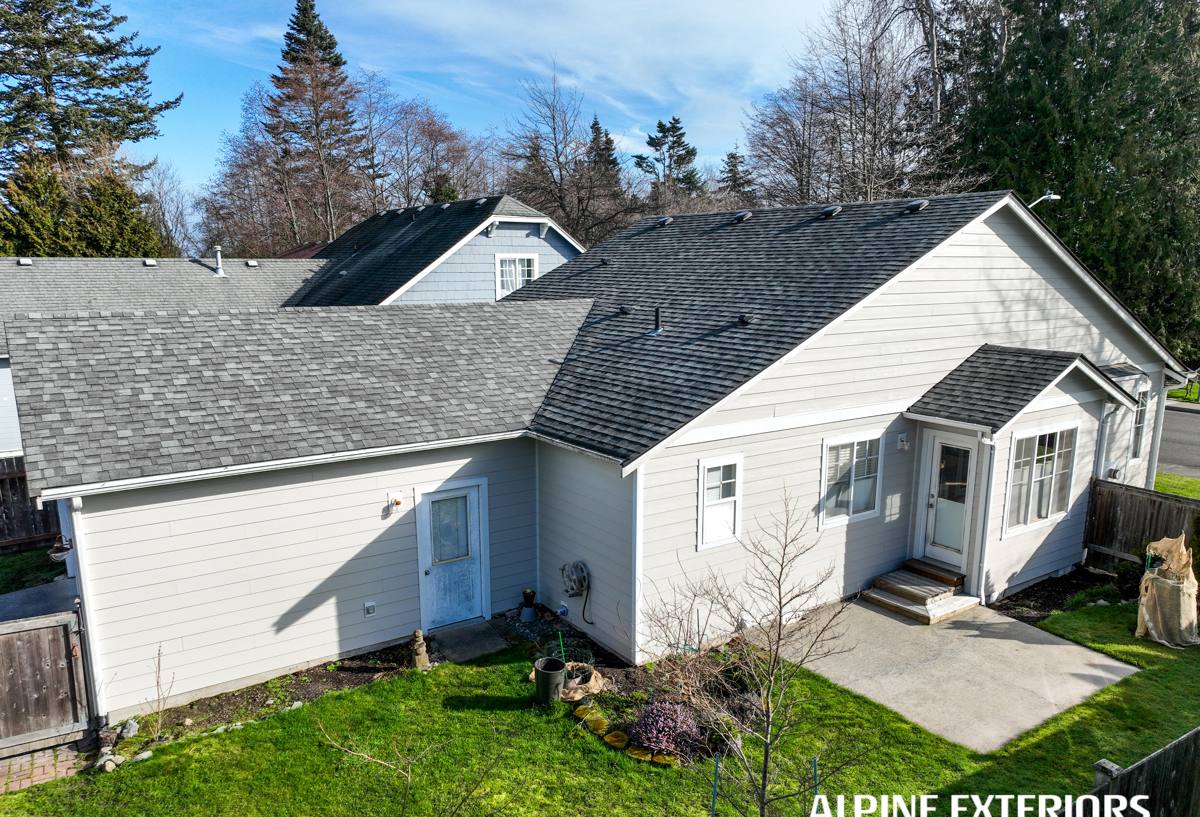
What Marietta's Climate Does to a Roof
Three things drive most of the storm-related roof calls we get in this part of Whatcom County:
Salt Air and Corrosion
Proximity to the bay means airborne salt settles on roofing metal — flashing, vent caps, gutter fasteners, nail heads — faster than it would further inland. Corroded fasteners lose their grip on shingles and flashing long before the shingles themselves wear out, which is often the real reason a roof starts leaking after a storm even though the shingles look serviceable.
Driving Rain
Storms moving in off the water tend to push rain at an angle rather than straight down. That matters because it drives water up under shingle tabs, into flashing laps, and through any gap that a straight-down rain would never find. A roof that's watertight in a normal shower can still leak in a wind-driven storm if the underlying laps and seals aren't in good shape.
Moss and Moisture Retention
Whatcom County's moss season runs long — shaded, north-facing slopes and anything under overhanging trees can stay damp for months at a stretch. Moss holds moisture against the roofing material, works its way under shingle edges, and lifts tabs just enough for wind and rain to get underneath. A storm doesn't have to be severe to finish the job moss already started.
Signs of Storm Damage to Watch For
Not all storm damage announces itself with an obvious leak. Homeowners in Marietta should check for these signs after any significant wind or rain event:
- Shingles that are cracked, curled, or missing entirely, especially on the side of the roof facing prevailing wind
- Granules collecting in gutters or at the base of downspouts — a sign of accelerated shingle wear
- Lifted or separated flashing around chimneys, vent pipes, and skylights
- Soft spots or discoloration on interior ceilings, especially after a storm
- Visible gaps or daylight in the attic where there shouldn't be any
- Debris — branches, needles, moss clumps — pooled in valleys where water should be draining freely
- Gutters pulling away from the fascia or sagging under debris weight
Any one of these on its own might not mean much. Two or three together, especially after a storm, usually mean it's worth a closer look before the next round of weather.
What a Correct Storm Damage Repair Involves
A repair that only patches the visible symptom tends to fail again in the next storm. A repair done right starts with finding out how far the damage actually extends, then addressing it in the right order.
Inspection Before Anything Else
We check the roof surface, the flashing, the underlayment where it's exposed, and the attic from the inside. Water doesn't always show up where it enters — a leak at a ceiling stain can trace back to a flashing failure several feet away. Skipping this step is how homeowners end up paying for a repair that doesn't fix the actual problem.
Addressing the Cause, Not Just the Leak
If shingles are missing because a fastener corroded and let go, replacing just the shingle without addressing the fastener and the flashing underneath it means the same spot fails again in the next storm. Correct repair work replaces damaged material back to sound decking and reseals or replaces flashing rather than caulking over it.
Matching Materials and Techniques
Repairs should match the existing roofing system in material weight and installation method wherever possible, so the patched area weathers at the same rate as the rest of the roof instead of standing out or failing early.
Our Process From Call to Finished Repair
- Initial contact and scheduling — we get basic details about the damage and roof age, then schedule an on-site look.
- On-site inspection — roof surface, flashing points, attic interior, and gutter/drainage condition.
- Written scope and estimate — what we found, what needs to happen, and an honest cost range before any work starts.
- Repair work — removal of damaged material, repair or replacement of decking if needed, new flashing and shingles matched to the existing roof, and cleanup of debris and old material.
- Final walkthrough — we show you what was done and what to watch for going forward.
We don't upsell a full re-roof when a targeted repair will hold. We also won't tell you a patch is fine when the underlying decking or flashing is compromised — that's how small storm damage turns into a much bigger bill two winters later.
Repair or Replacement: What Actually Drives the Decision
Storm damage doesn't automatically mean a full roof replacement, but it's worth understanding what tips the decision one way or the other.
| Factor | Leans Toward Repair | Leans Toward Replacement |
|---|---|---|
| Roof age | Under 12-15 years, otherwise sound | Nearing or past expected service life |
| Damage extent | Isolated to one section or slope | Widespread across multiple slopes |
| Decking condition | Dry, solid where exposed | Soft, rotted, or repeatedly repaired |
| Moss/moisture history | Recently treated or well-ventilated | Long-term moss buildup, chronic damp spots |
| Prior repairs | First significant repair | Multiple past patches in different areas |
We walk through these factors with you directly rather than defaulting to the more expensive option. Plenty of storm damage in Marietta is genuinely fixable with a targeted repair.
Materials That Hold Up on This Coastline
Given the salt air and long wet season, we favor corrosion-resistant fasteners and flashing metals for repair work in Marietta rather than standard-grade hardware that's fine further inland. On the shingle side, we match what's already on the roof when the existing material is in good general condition, and we discuss upgrade options when a section needs enough replacement that it makes sense to improve durability at the same time. We're straightforward about trade-offs — a heavier-grade material costs more up front but typically means fewer callbacks in a climate that's harder on roofing than most.
A Note on Insurance Claims
Many storm damage repairs in this area are at least partially covered by homeowner's insurance, particularly when the damage is tied to a specific wind or storm event rather than gradual wear. We can provide a written inspection report and photos documenting the damage, which is typically what an adjuster needs. We're not a public adjuster and won't promise a claim outcome, but we'll give you an honest, documented assessment of what's damaged and why, which is the foundation of any claim.
Why a Crew That Already Works Marietta Matters
A roofer who mainly works dry, inland neighborhoods may not think twice about standard fasteners or a quick shingle patch — and in a lot of places, that's fine. On a Marietta roof exposed to salt air and driving rain off the bay, those shortcuts show up again within a season or two. Working this area regularly means we've seen how flashing corrodes here, how moss builds up on shaded northern slopes, and which repair shortcuts hold up and which ones don't. That's not something you can fully substitute with a general roofing background — it comes from doing the work on this specific stretch of Whatcom County, storm after storm.
Keeping Storm Damage From Coming Back
After a repair, a few habits go a long way toward keeping the next storm from causing the same problem:
- Clear gutters and downspouts before the fall storm season, not after the first big rain
- Trim back branches that shade the roof and feed moss growth
- Have moss treated or removed on a regular schedule rather than waiting until it's thick
- Do a visual check after any major windstorm, especially looking for lifted or missing shingles
- Address small flashing issues promptly — they're inexpensive to fix early and expensive to ignore
None of this eliminates storm risk entirely — Whatcom County weather is what it is — but it meaningfully reduces how often storm damage turns into an interior leak.
Get an Honest Look at Your Roof
If a recent storm has left you with missing shingles, a new ceiling stain, or just a nagging feeling that your roof took a hit, we're happy to take a look. We'll give you a straight assessment of what's actually damaged, what it needs, and a realistic cost range — no pressure, no upsell. Reach out using the form below to schedule a free estimate.