 Ferndale Window
 Siding Repair in Sandy Point: What This Job Actually Requires
Sandy Point sits close to open water on the Whatcom County coastline, and that changes what "siding repair" means compared to a job a few miles inland in Ferndale or Bellingham. Homes here take a steadier beating from salt-laden air, wind-driven rain, and shade-grown moss than most of the surrounding area. A repair that only addresses what's visible on the surface tends to fail again within a season or two. A repair that starts by figuring out why the siding failed in the first place is the only kind worth paying for.
This page is specifically about repairing existing siding on Sandy Point homes — not a full re-side. If your siding is sound overall but has a damaged section, a soft spot, a failed seam, or storm damage, this is the service you need. We'll also cover how to tell when a "repair" area is actually a sign the whole wall system needs to come off.
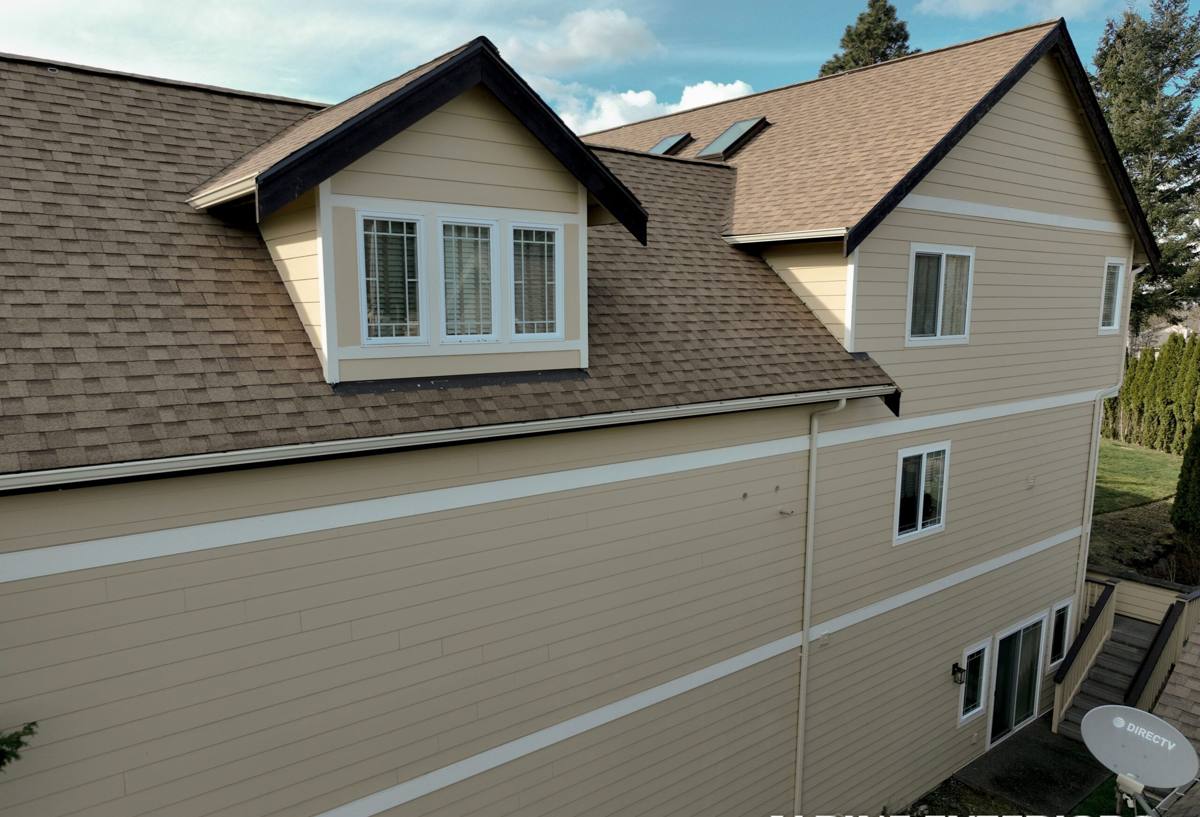
Why Sandy Point's Climate Wears Siding Down Faster
Salt Air and Corrosion
Homes near the water pick up airborne salt that settles on siding, trim, and — critically — the fasteners and flashing behind it. Salt accelerates corrosion in exposed nail heads, metal flashing, and hardware. Once a fastener starts to corrode, it loses its grip, and a siding panel that was fine for years can start working loose. This is one of the most common root causes we find when we open up a "small" repair area on a shoreline property and discover the damage goes deeper than the homeowner expected.
Wind-Driven Rain
Open exposure means rain doesn't just fall on Sandy Point homes — it's driven sideways into them during winter storms. Wind-driven rain finds every gap in caulking, every under-lapped seam, and every place where flashing was cut short. Siding that would shed a straight-down rain just fine can still let water in when it's coming at an angle, which is exactly the condition Sandy Point sees more than most inland neighborhoods in the area.
Moss and Trapped Moisture
Whatcom County's long wet season means moss and algae growth on siding is common wherever a wall stays shaded and damp — north-facing walls, areas under trees, and spots where landscaping sits close to the house. Moss itself doesn't destroy siding directly, but it holds moisture against the surface far longer than open air would, which is exactly what accelerates rot in wood-based products and paint failure on painted materials.
Signs Your Siding Needs Repair
Most homeowners call us after noticing one obvious problem, but a proper inspection usually turns up a few related issues nearby. Common signs worth a call include:
- Soft, spongy, or crumbling spots when you press on the siding
- Visible cracks, splits, or holes in individual panels or boards
- Paint that's bubbling, peeling, or flaking in a localized area rather than evenly across the wall
- Persistent moss, algae, or dark staining that keeps coming back after cleaning
- Gaps opening up at seams, corners, or around windows and doors
- Siding that's visibly warped, bowed, or pulling away from the wall
- Interior clues — a musty smell, discolored drywall, or peeling interior paint on an exterior wall
- Storm damage: cracked or missing panels after high wind or a falling branch
What a Correct Repair Actually Involves
Diagnosing the Cause Before Touching the Siding
Cutting out a damaged panel and screwing in a new one without figuring out why the old one failed is how the same repair ends up needed again in two years. Before we replace anything, we check the sheathing and framing underneath for rot, confirm whether water is entering from a seam, a flashing detail, or a penetration (a hose bib, vent, or light fixture), and look at whether the damage is isolated or a symptom of a wider moisture problem on that wall.
Matching Materials and Fasteners
Repairs on shoreline homes need corrosion-resistant fasteners, full stop. Using standard fasteners on a Sandy Point repair is a shortcut that shows up as rust streaks and loosening panels within a couple of years. We also match reveal, profile, and coursing to the surrounding siding so a repaired section doesn't stand out or create a new water path where old and new material meet.
Sealing and Flashing Details
Most siding failures near the water trace back to a flashing or sealant detail, not the siding material itself. A correct repair re-flashes any penetration or seam in the repair zone, uses sealants rated for the exposure, and re-establishes proper water-shedding laps rather than relying on caulk to do a flashing's job.
Repair vs. Replace: How We Help You Decide
Not every damaged area needs a full re-side, but not every repair request should end with just a patch, either. We walk through this with every Sandy Point homeowner before we quote anything:
| What We Find | Usually Points To | Why |
|---|---|---|
| Isolated impact damage, sound wall otherwise | Targeted repair | Rest of the siding and sheathing are unaffected |
| Rot limited to one wall or corner | Repair of that section | Problem is localized, likely tied to one flashing or drainage issue |
| Rot or soft sheathing found in multiple areas | Broader replacement | Suggests a systemic moisture problem, not a one-off failure |
| Siding is failing material-wide (chalking, delamination, widespread cracking) | Full re-side | The material itself is at end of life; patching won't hold |
| Repairs needed in 2+ prior years on the same wall | Full re-side of that elevation | Recurring failure means the underlying cause hasn't been fixed |
We'll tell you honestly which category your home falls into. Recommending a full re-side when a repair would genuinely hold isn't how we want to earn your business.
Why We Repair and Rebuild Only in James Hardie Fiber Cement
When existing siding needs to come off during a repair — a damaged section, a rotted corner, storm-damaged panels — we replace it with James Hardie fiber cement rather than patching in whatever material is already on the house. That's a deliberate standard, not an upsell, and here's the honest reasoning behind it:
Vinyl is inexpensive and low-maintenance in mild conditions, but it's difficult to color-match after years of UV fading, and it doesn't handle direct wind-driven impact or extreme temperature swings as well as fiber cement. Patching in new vinyl next to sun-faded panels almost always looks mismatched.
LP SmartSide is a solid engineered-wood product, but any wood-based siding depends on intact edge sealing and paint film to keep moisture out — exactly the conditions that are hardest to guarantee in a repair patch on a salt-air, high-moisture site like Sandy Point. A compromised edge on a wood-based product is where rot starts.
Primed spruce and cedar both require an ongoing repainting and caulking schedule to perform, and a shoreline property will need that maintenance more often than an inland one. That's a real, recurring cost we'd rather be upfront about than gloss over.
James Hardie fiber cement is non-combustible, dimensionally stable, and engineered specifically for wet climates through its HZ5 product line. Its factory-applied ColorPlus finish resists fading and doesn't rely on job-site paint holding up against salt air. When we replace a damaged section in Hardie, that patch is built to outlast a like-for-like repair in most other materials — which matters more here than almost anywhere else in our service area.
Our Siding Repair Process
- Inspection. We assess the damaged area and check surrounding wall sections, sheathing, and flashing for related issues before quoting anything.
- Honest scope. You get a clear recommendation — repair this section, repair a larger area, or consider a re-side — with the reasoning explained, not just a price.
- Removal. Damaged siding and any compromised sheathing or framing come out cleanly, without disturbing sound material beyond what's necessary.
- Repair of what's underneath. Rotted sheathing or framing gets replaced before anything new goes back on — new siding over a bad substrate just hides the problem.
- Re-flashing and sealing. Any penetration, seam, or transition in the repair area is properly flashed and sealed for the exposure this site actually gets.
- Installation. New James Hardie material is installed to match reveal and coursing, with corrosion-resistant fasteners appropriate for a shoreline property.
- Final check. We walk the repair with you and confirm it blends with the surrounding siding and sheds water the way it should.
Why Hire a Crew That Already Works Sandy Point
Siding repair on a shoreline home isn't the same job as siding repair three miles inland, and a crew that hasn't worked near the water can miss things that matter here. We know to check fasteners and flashing for salt corrosion even when the visible siding damage looks minor. We know a north-facing wall under tree cover is going to hold moss and moisture longer than the rest of the house, and we plan the repair accordingly. We also know the driving-rain exposure this area gets and don't rely on caulk alone to keep water out.
Just as important: we show up. A repair crew that treats Sandy Point as a quick side trip is more likely to rush the diagnosis and less likely to come back if something needs adjusting. We work this part of Whatcom County regularly, so a callback isn't a hassle for us or for you.
Get an Honest Look at Your Siding
If you've got a damaged section, a recurring trouble spot, or storm damage on your Sandy Point home, we'll come take a look and tell you plainly what we find — repair, larger repair, or something more. There's no pressure and no charge for the estimate; use the form below to get started.