 Ferndale Window
 Window Replacement Built for Sandy Point's Waterfront Exposure
Sandy Point sits right on the water along the Whatcom County coastline, and that location shapes almost everything about how windows perform there. Much of the community was built on low, diked land laced with canals, originally as summer cottages rather than year-round residences, and a lot of that older housing stock has since been upgraded, added onto, or converted for full-time living. Whatever the vintage of the house, the windows in it are dealing with direct exposure to marine air, wind coming straight off the water, and a wet season that runs long even by Pacific Northwest standards.
We work on siding, roofing, windows, and decks throughout the Ferndale area, and Sandy Point is one of the more demanding stretches we cover specifically because of that direct waterfront exposure. A window replacement here isn't just about swapping an old unit for a new one — it's about making sure the installation itself can stand up to conditions that are noticeably harsher than what a house a few miles inland has to deal with.
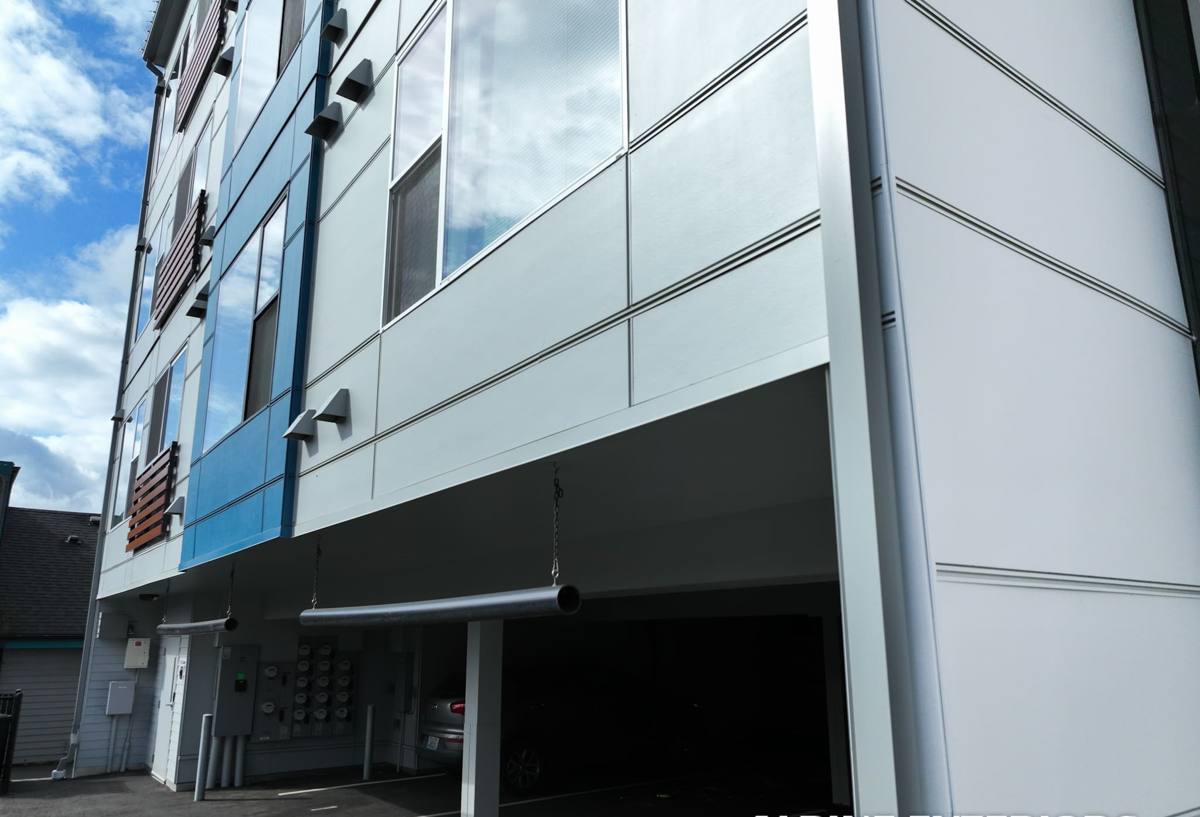
What Salt Air, Driving Rain, and Moss Season Do to Sandy Point Windows
Salt Air and Hardware Corrosion
Being this close to the water means salt-laden air is a constant, not an occasional storm event. Over years, that air works on anything metal — window hardware, fasteners, hinges, and lower-grade frame components all corrode faster here than they would inland. It's usually the hardware that shows problems first: a lock that used to turn smoothly starts binding, a crank mechanism gets stiff, or fasteners start showing rust stains bleeding down onto the sill.
Wind-Driven Rain Off the Water
Sandy Point doesn't have much in the way of terrain or tree cover to break wind coming off the water, so storms tend to push rain sideways into the wall rather than letting it fall straight down. That matters enormously for windows, because sideways rain finds gaps and seams that would stay dry in a calmer setting. It's a flashing and sealing problem more than a window-quality problem — even a good window will leak if the flashing behind it wasn't lapped and sealed correctly for that kind of exposure.
A Long Moss and Mildew Season
Mild temperatures and near-constant dampness give moss and mildew a long growing season across Whatcom County, and low-lying, water-adjacent properties like the ones in Sandy Point tend to see it even earlier and heavier than homes set back from the coast. Window sills, trim, and the wood framing around older single-pane or original-vintage windows are common places it takes hold, especially on shaded or north-facing walls where things stay damp longest.
Signs a Sandy Point Home Needs Window Replacement
- Fogging or trapped moisture between the panes of a double-pane window — a sign the seal has failed
- Hardware that's stiff, corroded, or difficult to lock and unlock compared to how it used to operate
- Wood sills or trim that feel soft, look discolored, or show visible rot or moss growth
- Drafts or cold spots near the frame even with the window fully closed and locked
- Visible gaps, cracked caulk, or daylight showing where the frame meets the siding
- Single-pane glass with no meaningful weather seal, common in original cottage-era construction
What a Correct Window Replacement Job Involves
Removing Old Windows Without Damaging the Opening
On older Sandy Point homes especially, careful removal matters — a lot of the original framing around cottage-era windows wasn't built to modern standards, and rough handling during demolition can widen gaps or damage framing that was still structurally sound. We take the time to remove the old unit cleanly and assess what the opening actually looks like once it's exposed, before assuming the new window can just drop in.
Flashing and Sealing for Direct Water Exposure
This is the step that matters most in a location like this. Flashing has to lap correctly with the surrounding weather-resistive barrier and siding, water has to be directed out and away from the rough opening rather than trapped behind it, and every seam needs sealant rated for sustained moisture and salt exposure — not just standard caulk. On a waterfront property, we treat this as the part of the job that determines whether the window is still performing in fifteen years or leaking within a couple of wet winters, and it's standard on every window we install, not an upgrade.
Setting, Shimming, and Insulating the New Unit
Once the opening is prepped and flashed, the new window gets shimmed square and level, fastened per the manufacturer's specification, and insulated around the perimeter with a product that won't compress or lose R-value over time. Rushed installs skip or shortcut this step, and it shows up later as drafts or uneven operation even when the window itself is a good product.
Choosing Frame Materials and Glass for This Exposure
Frame material matters more on a direct-waterfront property than it does a few miles inland, since the salt air and moisture load are simply heavier here. We walk through the real trade-offs for each option rather than defaulting to whatever's fastest to install.
| Frame Material | Corrosion Resistance | Maintenance | Typical Cost |
|---|---|---|---|
| Vinyl | Good — no rust, resists salt exposure well | Low — occasional cleaning | Lower |
| Fiberglass | Very good — dimensionally stable, holds paint if a custom color is wanted | Low | Mid to higher |
| Wood-clad (exterior clad) | Depends entirely on the cladding and how well it's sealed at joints | Higher — cladding seams need periodic inspection | Higher |
| Uncladded wood | Poor in this exposure without constant upkeep | High — regular refinishing needed | Varies |
Glass Packages Worth Asking About
Double or triple-pane glazing with a low-E coating helps on two fronts here — it cuts down on heat loss during cold, damp stretches, and it reduces the interior condensation that shows up on cold glass during Whatcom County winters. Argon or krypton gas fill between panes adds a modest efficiency bump. For any opening near grade or close to a walking surface, tempered or laminated safety glass may also be required by code, which is worth confirming during the assessment rather than after ordering.
Our Process for Window Replacement in Sandy Point
- On-site assessment — we look at frame condition, hardware function, seal integrity, and how the existing flashing ties into the siding around each opening
- Honest recommendation — a clear read on which windows are reasonable to keep, which need replacement, and why, without pushing replacement as a default
- Written scope and timeline — including realistic lead time, since ordering sized units can take several weeks depending on configuration
- Careful removal and opening prep — old units come out without damaging surrounding framing, and any hidden rot or flashing issues get addressed before the new window goes in
- Installation and flashing — set, shimmed, flashed, and sealed to standards built for direct waterfront exposure
- Trim and finish — exterior trim matched to the surrounding siding so the finished result looks intentional
Why a Crew That Already Works in Sandy Point Matters
Sandy Point has its own logistics — private roads, community access, and lot layouts that differ from a typical inland subdivision — and a crew that's worked in the neighborhood before knows how to plan around that instead of losing time figuring it out on day one. More importantly, we've seen firsthand how the combination of salt air, wind-driven rain, and a long wet season plays out on windows here specifically, which shapes decisions that never come up in a sales conversation: how much lap a flashing detail needs on a direct-exposure wall, which hardware grade actually holds up long-term, and where extra sealant attention is worth it even when a manufacturer's generic installation guidance doesn't call for it.
Manufacturer specs are written for average conditions. A property sitting right on the water in Whatcom County isn't average conditions, and treating it like it is tends to show up as call-backs a year or two down the line.
Keeping New Windows Performing Through Moss Season
- Rinse salt residue off frames and glass periodically, especially after storms
- Clear moss or debris from sills and tracks before it holds moisture against the frame
- Check that weep holes on the exterior sill stay clear so water can drain out
- Inspect exterior caulk lines annually and have any cracking resealed before the wet season sets in
- Operate hardware periodically through the year so corrosion doesn't get a chance to seize it
If windows on your Sandy Point property are drafty, foggy, hard to operate, or you're just not sure whether repair or full replacement makes more sense, we're glad to take a look and give a straightforward answer. Use the form below for a free, no-pressure estimate.