 Ferndale Window
 Sandy Point Roofs Work Harder Than Most
Sandy Point sits right up against the water, and that location is exactly why roofs out here take more punishment than a roof three miles inland in Ferndale proper. Homes in this waterfront community get the full effect of wind coming off the Strait of Georgia, driving rain that hits shingles at an angle instead of straight down, and salt-laden air that settles on every exposed surface. None of that is a design flaw in your roof — it's just the environment, and it means storm damage here often looks different, and spreads faster, than storm damage on a roof tucked into a more sheltered part of Whatcom County.
We've worked on enough Sandy Point roofs to know what to look for first, and what tends to get missed by a general inspection that isn't used to waterfront exposure. This page is about one thing specifically: repairing storm damage on Sandy Point roofs, correctly, in a way that accounts for the salt air and moss season instead of ignoring them.
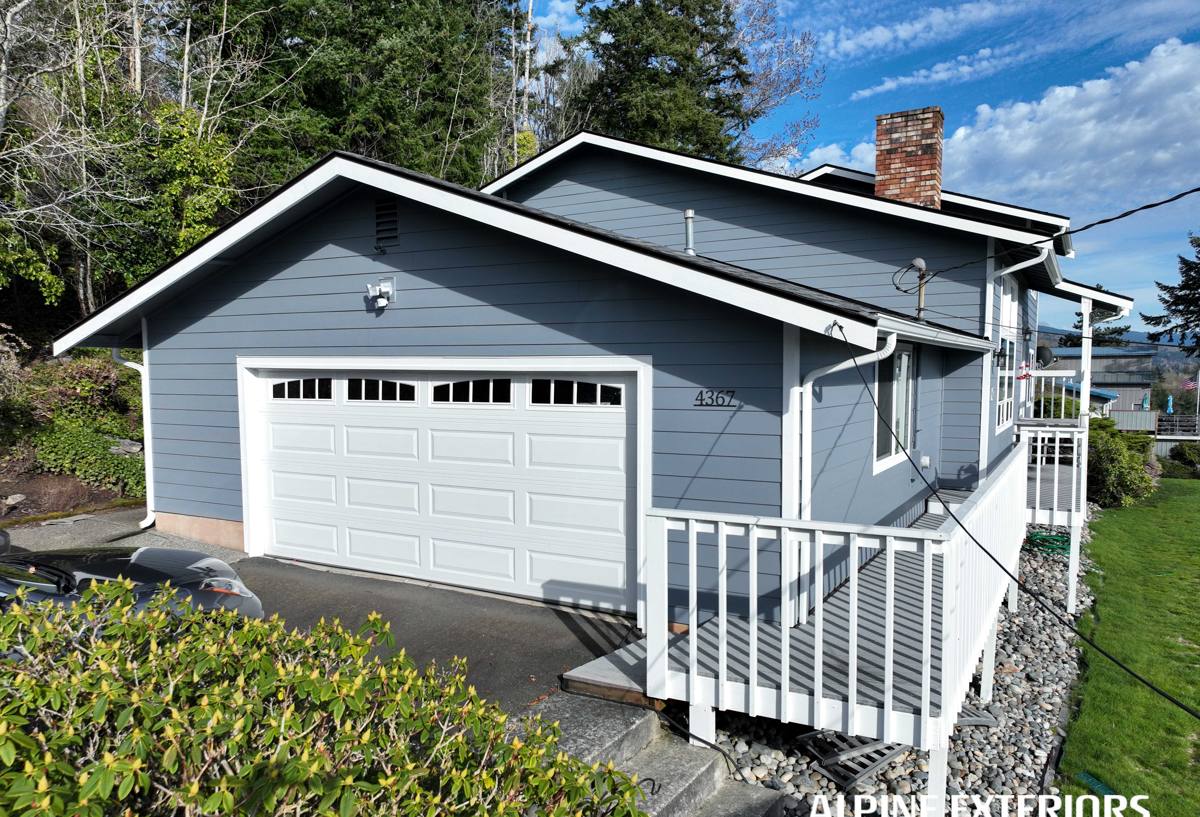
What Storm Damage Actually Looks Like Out Here
After a windstorm or a heavy rain event, the damage isn't always obvious from the ground. On a Sandy Point roof, we typically find a mix of the following:
- Wind-lifted or creased shingles along the edges and ridges, where gusts off the water grab first
- Granule loss from driving rain and wind-blown grit, which shows up as bald patches or granules collecting in gutters
- Flashing that's worked loose around chimneys, vents, and skylights — often the actual entry point for a leak, even when the shingles nearby look fine
- Fastener corrosion or backing-out nails, sped up by salt air, which lets shingles shift more than they should in the next storm
- Moss and organic buildup trapping moisture against the roof deck, softening the material underneath before you ever see a stain on the ceiling
The tricky part is that these often combine. A storm loosens a shingle, salt air has already weakened the fastener holding it, and moss has been quietly holding moisture against that spot for months. By the time a homeowner sees a water stain inside, the roof has usually been dealing with more than one problem at once.
Why Waterfront Exposure Changes How We Repair It
A storm repair on a Sandy Point roof isn't just "replace what's missing and move on." Salt air corrodes exposed metal faster than it does further inland, so flashing, fasteners, and any exposed hardware need to be rated for that kind of exposure or they'll fail again in a year or two instead of lasting. We also pay closer attention to how a repair ties into the surrounding roofing — a patch that isn't properly integrated with existing shingles and flashing becomes its own weak point the next time wind gets underneath it.
Whatcom County's long wet season and the moss growth that comes with living this close to the water mean we also look at ventilation and moisture drainage around any repair area, not just the damaged section itself. Fixing the hole without addressing why moisture is sitting there in the first place is a short-term patch, not a real repair.
Materials That Hold Up in This Environment
Where possible, we use corrosion-resistant flashing and fasteners on Sandy Point repairs rather than standard-grade hardware. It costs a little more up front, but replacing rusted flashing again in three years costs more than that difference. We'll always explain the trade-off honestly — sometimes matching your existing roof material means using what's already there, and we'll tell you plainly if that's a compromise worth knowing about.
Our Storm Damage Repair Process
Whether you call us right after a storm or you've noticed a slow leak that's been building for a while, the process looks like this:
1. Inspection First, Before Any Talk of Repair
We get on the roof (or use a close visual inspection when conditions don't allow it safely) and document what we actually find — not just the obvious damage, but flashing, fasteners, and moss buildup nearby that could turn into the next problem. You get a straight answer about what's storm damage versus what's ongoing wear.
2. Temporary Protection If Needed
If there's active water intrusion or exposed decking, we get it covered and protected first. A roof open to the weather for even a few days near the water can go from a repair job to a much bigger one.
3. Documentation for Insurance
If you're filing a storm damage claim, we provide clear photos and a written description of the damage that you can hand to your insurance company or adjuster. We don't inflate scope to pad a claim, and we don't downplay real damage to make a job look smaller — you get an honest record either way.
4. The Actual Repair
We match materials as closely as we reasonably can, tie new flashing and shingles properly into the existing roof, and use hardware suited to salt air exposure. We check that surrounding areas — vents, valleys, adjacent flashing — aren't the next thing to fail.
5. Cleanup and Walkthrough
We clear debris and old material, then walk the repair with you so you know exactly what was done and why.
What a Correct Storm Repair Should Include
It's easy to patch the visible hole and call it done. A repair that's actually going to hold up on a Sandy Point roof through the next storm season should cover more ground:
- Full inspection of the area surrounding the damage, not just the damaged spot itself
- Flashing checked and resealed or replaced where it's compromised, not just caulked over
- Fasteners and hardware suited for salt air and coastal wind exposure
- Moss and debris cleared from the repair area and nearby valleys before new material goes down
- Underlayment checked where accessible, since a damaged shingle often means water has already reached it
- Proper integration with existing roofing so the patch doesn't become its own weak seam
- Clear documentation you can keep for insurance or for the next time you sell the home
Repair or Replace? How We Help You Decide
Not every storm-damaged roof needs full replacement, and not every roof that looks fine on the surface is actually a good repair candidate. We walk through this with every Sandy Point homeowner honestly, based on what the roof's overall condition looks like, not just the storm damage in front of us.
| Factor | Usually Points to Repair | Usually Points to Replacement |
|---|---|---|
| Age of roof | Roof is well within its expected service life | Roof is already near or past the end of its typical lifespan |
| Extent of damage | Damage is localized to one section or slope | Damage is spread across multiple sections or the whole roof |
| Underlying condition | Decking and underlayment are sound where inspected | Widespread moisture damage or soft decking found during inspection |
| Moss and organic buildup | Isolated, manageable with cleaning and a spot repair | Long-term buildup has already compromised large areas |
| Prior repair history | This is a first or isolated repair | Roof has needed repeated patchwork in recent years |
When repair makes sense, we'll say so — we're not in the business of selling a full roof to someone who needs a targeted fix. When replacement is genuinely the better long-term value, we'll explain why, in plain terms, with the actual condition of your roof as the reason.
Storm Claims: What's Worth Knowing
Homeowners filing an insurance claim for storm damage often ask us what to expect. We're not insurance adjusters and won't pretend to speak for your policy, but a few things are consistently true: clear photo documentation taken close to the time of the storm helps your claim, a written scope of damage from a local contractor who inspected the roof in person carries more weight than a vague description, and getting temporary protection in place quickly can matter for both your home and your claim. Beyond that, we recommend reading your policy's specific language on wind and water damage, since coverage details vary by carrier.
Why It Matters That We Already Work in Sandy Point
A roofing crew that's never worked a waterfront property before is guessing at how salt air and coastal wind exposure change a repair. We're not guessing — we've seen how these roofs age differently from roofs further inland, which parts of a repair are worth the extra cost in materials, and which shortcuts show up as failures two winters later. That familiarity also means a faster, more accurate inspection: we know what to check first instead of working through a generic checklist.
Sandy Point is also a community where many homes have gate or access arrangements typical of waterfront neighborhoods, and being a crew that's already familiar with the area means fewer logistics to sort out before we can get to your roof — which matters when there's active water getting in.
Moss Season and What Comes After the Repair
Whatcom County's wet stretch of the year is long, and Sandy Point's proximity to the water only extends the conditions moss needs to take hold — shade, moisture, and mild temperatures for much of the year. A storm repair is a good moment to also deal with moss growth nearby, since moss holding moisture against a roof is one of the most common reasons a small storm-damaged area turns into a bigger underlying problem. We'll flag moss buildup when we see it during a repair, even if it's outside the immediate scope of the storm damage, so you know what you're looking at going forward.
If a recent storm has left you with missing shingles, a new leak, or just a nagging feeling something's not right up there, we're glad to come take a look. The estimate is free, there's no pressure to sign anything on the spot, and you'll get a straight answer about what actually needs fixing — just fill out the form below to get started.