 Ferndale Window
 Sandy Point's Roof Is Working Harder Than You Think
Sandy Point sits close enough to the water that salt air is a daily fact of life, not an occasional nuisance. Add Whatcom County's long wet season, driving rain that comes in sideways off the Strait during winter storms, and the shade from mature conifers that keeps moss growing nearly year-round, and you've got a roofing environment that's noticeably tougher than what a roof faces twenty miles inland. Metal roofing can handle all of that extremely well — but only when it's specified and installed with those specific conditions in mind. A metal roof detailed the same way you'd detail one in a dry inland climate will underperform here, sometimes badly, within a few years.
This page is about what a correct metal roofing job looks like specifically for a Sandy Point home, and why the details matter more here than they do almost anywhere else in the county.
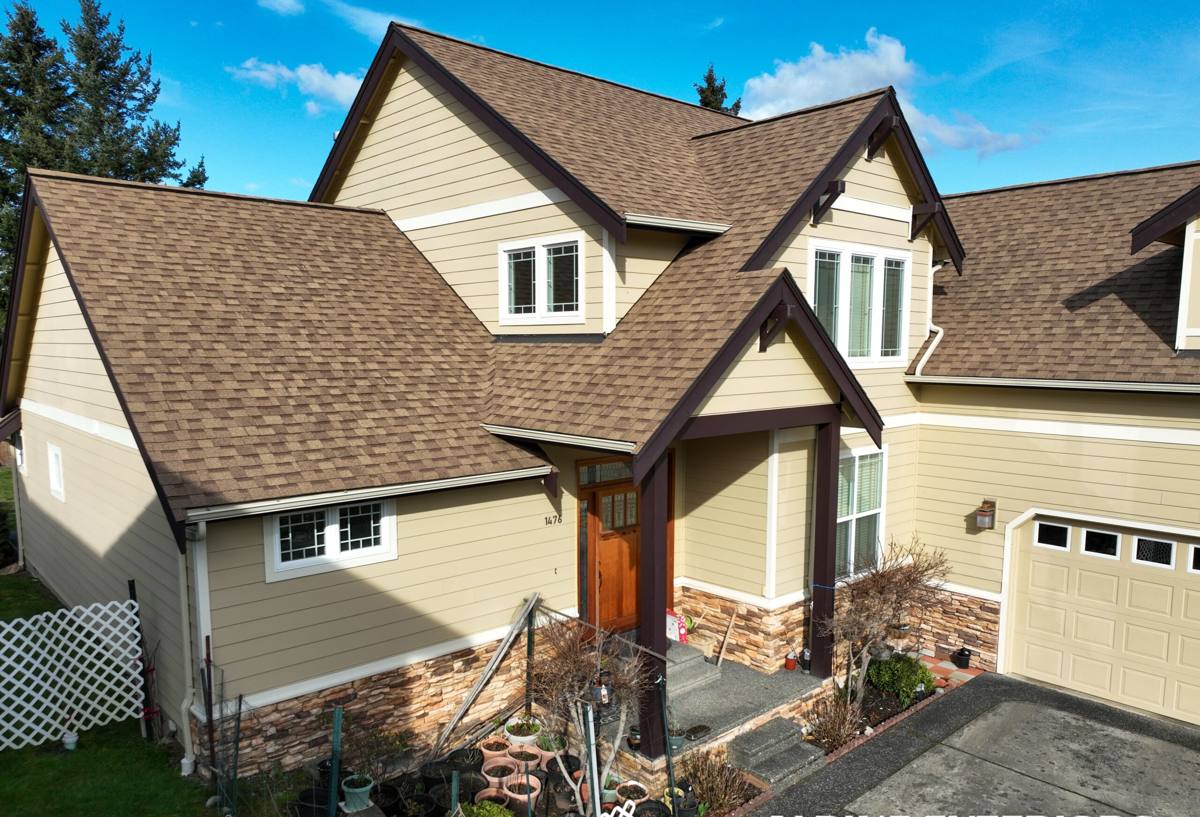
What Salt Air, Rain, and Moss Actually Do to a Roof
Salt Air and Corrosion
Airborne salt accelerates corrosion on any exposed metal — fasteners, flashing, cut edges, and the panel finish itself. Cheap or mismatched fasteners are usually the first thing to fail on a coastal roof, showing rust streaks long before the panels themselves show any wear. The fix isn't complicated, but it does require choosing the right hardware and finish from the start rather than substituting standard parts to save a few dollars.
Driving, Wind-Driven Rain
Storms coming off the water don't just drop rain straight down — they push it sideways and up under laps, at ridge caps, and around any penetration in the roof. A metal roof's water resistance depends almost entirely on how the seams, laps, and flashing details are built, not just on the panel material. This is where a lot of the difference between a roof that performs for decades and one that leaks within a few winters actually comes from.
Moss and Shade
Tree cover common around Sandy Point keeps roof surfaces damp and shaded longer after a rain than an open, sunny roof would be. Moss and algae take hold in that moisture, and on the wrong roofing material that growth traps water against the surface and works into seams over time. Metal is naturally more moss-resistant than asphalt shingles because there's no rough, porous surface for spores to grip — but valleys, low-slope sections, and areas that stay shaded can still collect debris and need attention.
What a Correct Metal Roof Involves in This Climate
- Fasteners and flashing rated for coastal/marine exposure, not standard-grade hardware
- A properly lapped, storm-detailed seam system at ridges, valleys, and panel overlaps
- A high-quality synthetic or self-adhered underlayment as a genuine water-resistant backup layer
- Balanced intake and exhaust ventilation to keep moisture from condensing under the panels
- Panel finishes and coatings suited to salt exposure, not just standard residential-grade coatings
- Clean, correctly flashed penetrations for vents, chimneys, and skylights — the most common leak points on any roof
None of this is exotic. It's standard, correct metal roofing practice — but it only gets applied consistently when the crew doing the work understands why it matters for this specific location, not just for metal roofing in general.
Comparing Metal Roofing Options for a Coastal Whatcom County Home
| Option | Coastal/Salt Air Fit | Moss Resistance | Maintenance |
|---|---|---|---|
| Standing seam steel, quality coating | Strong — concealed fasteners reduce corrosion points | High | Low, periodic debris clearing |
| Exposed-fastener metal panels | Moderate — fasteners need periodic inspection | High | Moderate — fastener checks over time |
| Metal shingles/shakes | Moderate to strong, depending on finish | High | Low to moderate |
| Standard steel, budget coating | Weaker — more prone to premature corrosion near salt air | High | Higher long-term, earlier touch-ups |
We don't push one product line as the only answer. The right choice depends on your roof's slope, how exposed it is to wind and salt air, your budget, and how the roof reads with the rest of the house. What we do insist on is a coastal-appropriate coating and fastener system, regardless of which panel style you land on — that's the part that actually determines how the roof ages in a place like Sandy Point.
How We Approach a Sandy Point Metal Roofing Project
1. On-Site Assessment
We look at the existing roof structure, slope, current ventilation, and how exposed the home is to prevailing wind and salt air off the water. We also check tree cover and shading, since that affects both moss risk and long-term maintenance needs.
2. Tear-Off and Deck Inspection
Once the old roofing is off, we inspect the decking for any moisture damage or rot that's been hiding underneath — a common finding on older roofs that have been dealing with driving rain for years. Any soft or compromised decking gets replaced before anything new goes down; installing a new roof over a damaged deck just hides the problem.
3. Underlayment and Flashing
This is the layer that does the real waterproofing work under wind-driven rain conditions. We install a water-resistant underlayment and detail all flashing — valleys, ridges, penetrations, wall-to-roof transitions — before a single panel goes on.
4. Panel Installation
Panels are installed with coastal-rated fasteners and correct lap direction relative to prevailing wind and water flow. Seams and laps are set up to shed driving rain rather than just vertical rainfall.
5. Ventilation Check
We confirm intake and exhaust ventilation is balanced so moist air isn't trapped against the underside of the panels, which is a common cause of hidden condensation problems in humid coastal climates.
6. Final Walkthrough
We walk the finished roof with you, point out anything you should watch for seasonally, and explain what routine maintenance actually looks like for your specific roof and setting.
Ventilation and Moisture: The Part Homeowners Rarely See
A metal roof that leaks from the top down is rare. Far more common — especially in a humid, shaded, coastal setting like Sandy Point — is moisture that forms on the underside of the roof from trapped, humid air with nowhere to go. Poor ventilation lets that moisture condense against the decking and framing, which can cause rot and mold long before it ever shows up as a visible leak inside the house. Getting intake and exhaust ventilation right isn't an upsell; it's a core part of doing a metal roof correctly in this climate, and it's one of the details that gets skipped most often by crews that don't work coastal properties regularly.
Maintaining a Metal Roof in Sandy Point's Conditions
Metal roofing is genuinely low-maintenance compared to asphalt shingles, but "low-maintenance" doesn't mean "no attention needed" in a salt-air, moss-prone environment. A short seasonal routine goes a long way:
- Clear needles, leaves, and debris from valleys and low-slope areas where moss is most likely to establish
- Rinse off salt residue periodically if the home is close to the water and heavily exposed to onshore wind
- Check and clear gutters so water isn't backing up under roof edges during heavy rain
- Watch for any rust streaking around fasteners or flashing, which is often the earliest visible sign of a coastal corrosion issue
- Trim back overhanging branches where practical to reduce shading and debris buildup
None of this requires special equipment or a professional visit every time — most of it is the kind of upkeep any homeowner can do a couple of times a year.
Cost Factors for a Sandy Point Metal Roof
| Factor | Why It Matters Here |
|---|---|
| Roof size and complexity | More valleys, penetrations, and transitions mean more flashing work, which is where coastal performance is won or lost |
| Panel and coating grade | Coastal-rated finishes cost more upfront but hold up far better against salt air over time |
| Existing deck condition | Rain-related deck damage found during tear-off can affect project cost and timeline |
| Ventilation upgrades | Bringing older ventilation up to standard is sometimes needed and worth budgeting for |
| Access and site conditions | Tree cover, roof pitch, and site access around Sandy Point properties can affect labor |
We'll always walk you through where your specific costs are coming from rather than handing over a number with no explanation behind it.
Why Local Experience in Sandy Point Matters
A roofing crew that regularly works properties along the Whatcom County coastline already knows how prevailing wind and rain behave in this specific area, which fastener grades actually hold up nearby, and which shaded, tree-heavy lots need extra attention to moss and debris. That local knowledge shows up in the small decisions made throughout a project — which direction laps are set, how much attention flashing gets, what ventilation upgrades are worth recommending — long before any of it becomes a visible problem. It's the difference between a roof that's simply installed and one that's installed correctly for where it actually sits.
If you're weighing a metal roof for your Sandy Point home, we're happy to take a look and walk you through what makes sense for your roof, your budget, and this stretch of coastline. Reach out for a free, no-pressure estimate using the form below.