 Ferndale Window
 Deck Building Built for Sandy Point, Not a Catalog Photo
Sandy Point sits right up against the water, which means every deck out here takes a different kind of beating than a deck built inland in Ferndale proper or further into Whatcom County. Salt air corrodes hardware that would last decades somewhere drier. Driving rain off the strait finds every gap in a poorly flashed ledger board. And the long, damp moss season coats anything horizontal that doesn't drain or dry out fast. A deck built to a generic set of plans can look fine for a year or two and then start showing problems that are expensive to fix because they're hidden under the decking, not on top of it.
We build decks specifically with this exposure in mind — material selection, fastener grade, framing details, and drainage design all get chosen for a waterfront-adjacent, high-moisture site, not a one-size-fits-all approach.
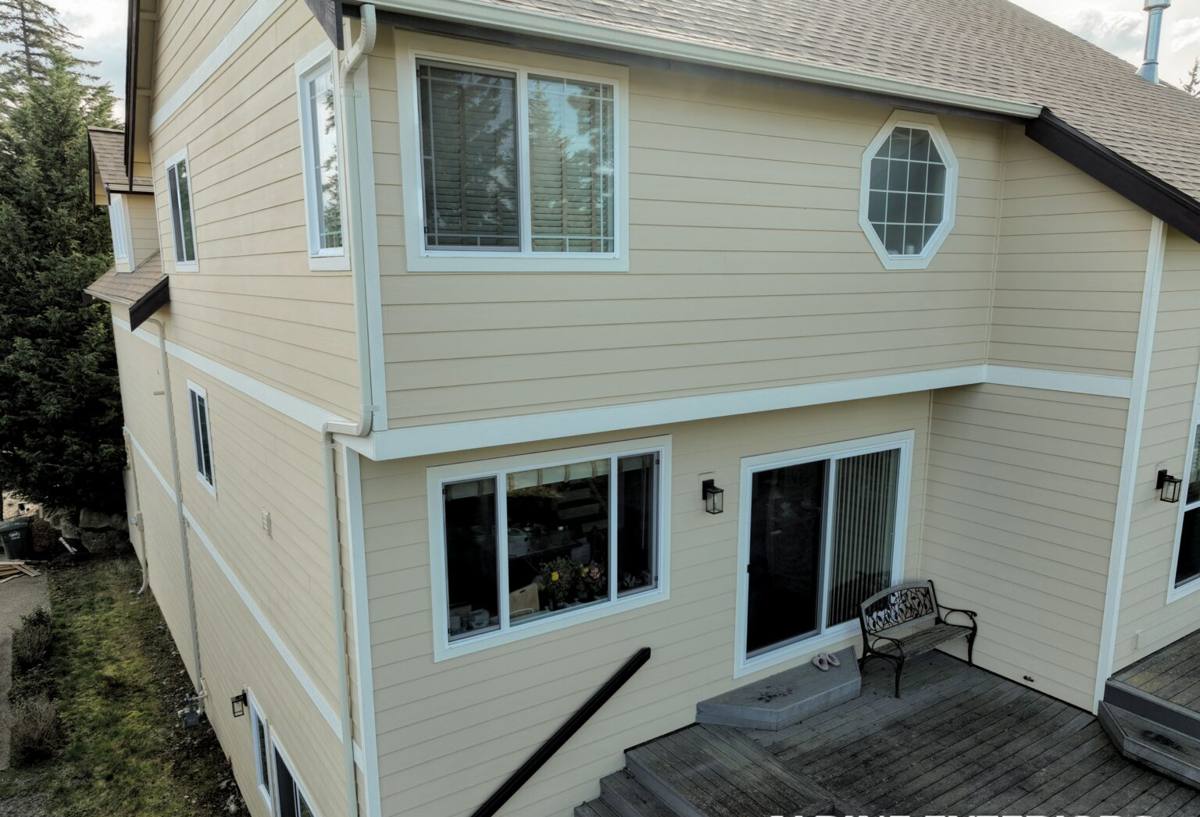
What Salt Air, Rain, and Moss Actually Do to a Deck
It helps to understand the specific ways a Sandy Point deck fails, because it changes what "quality" actually means for this job.
Salt Air and Corrosion
Airborne salt accelerates rust on any exposed metal — nails, screws, joist hangers, bolts. Standard electro-galvanized hardware that would be fine 20 miles inland can start showing surface rust within a couple of seasons this close to the water. Once fasteners weaken, the structural connections they hold — ledger to house, joist to beam — are the ones actually carrying the load.
Driving Rain and Wind-Driven Moisture
Rain here doesn't always fall straight down. Wind pushes it sideways and up under overhangs, into ledger connections, and behind poorly installed flashing. Wood that stays wet longer decays faster, and any water trapped against the house at the ledger board is one of the most common sources of hidden rot on older decks in this area.
Moss Season
Whatcom County's long wet season gives moss and algae plenty of time to establish on any deck surface that stays damp — low spots, tight board gaps, north-facing shaded sections. Beyond looking bad, moss holds moisture against the decking and makes surfaces slick and genuinely dangerous underfoot, especially on stairs.
Choosing Decking Material for a Sandy Point Site
There's no perfect material — every option is a trade-off between upfront cost, maintenance, and how it handles this specific climate. Here's how the common choices actually compare for a salt-air, high-moisture site.
| Material | Upfront Cost | Salt Air / Moisture Behavior | Moss & Algae Resistance | Maintenance |
|---|---|---|---|---|
| Pressure-treated lumber | Lowest | Good if properly sealed and re-sealed on schedule; end cuts and fastener holes need extra attention | Fair — needs periodic cleaning to stay ahead of it | Highest — annual inspection, periodic staining/sealing |
| Cedar | Mid | Naturally rot-resistant but still needs finish maintenance in this climate | Fair to good | Moderate — regular cleaning and refinishing to hold color and resist moss |
| Composite / capped composite | Highest | Very good — doesn't absorb moisture or rot the way wood does | Good — smoother, harder surface sheds moss more easily with basic washing | Lowest — periodic washing, no sealing or staining |
We're honest with homeowners about this table: composite costs more up front but removes most of the ongoing maintenance burden that this climate demands of wood. Wood costs less up front but only performs long-term if the maintenance actually happens on schedule. Neither choice is wrong — it depends on what you'd rather spend, money now or time later.
A Note on Metal and Cable Accents
Some homeowners want metal railing components or cable rail for the view. In a salt-air environment, the grade of stainless steel and the quality of the coating matter more than the look. We steer clients toward hardware rated for coastal exposure rather than standard interior-grade fittings, because the failure mode for the wrong hardware here isn't cosmetic — it's a railing that loosens over time.
Framing and Fasteners: The Part You Don't See
Most deck problems that show up years later start with decisions made in the framing stage, long before the decking boards go down. This is where a crew's experience with this specific coastal environment matters most.
- Ledger flashing — the connection to the house needs proper flashing and a water-shedding detail, not just caulk, since this is the single most common point of hidden rot on older decks.
- Fastener grade — stainless or high-corrosion-rated coated fasteners and hardware belong on a job this close to salt air; standard galvanized hardware corrodes faster than most homeowners expect.
- Post base connections — post bases that hold the post above standing water and allow drainage prevent the slow wicking rot that's common where posts sit directly on wet concrete.
- Joist hanger selection — matched to the fastener type and rated for the exposure, not just whatever is on the shelf.
- Beam and joist spacing — engineered to the actual span and load, not stretched to save a few boards.
None of this is visible once the decking is installed, which is exactly why it's worth asking a contractor directly what hardware and flashing details they use before work starts.
Drainage, Slope, and Moss Prevention by Design
You can't out-clean a deck that was built to hold water. The best moss defense is a deck that dries out on its own between rain events.
Board Gapping and Airflow
Proper spacing between boards lets water drain through instead of pooling on the surface, and lets air move underneath so the underside of the decking dries out between storms.
Substructure Ventilation
Skirting and enclosed areas under a deck need enough ventilation to let moisture escape, rather than trapping damp air against the framing — a common issue we find on older decks that were fully enclosed for looks without planning for airflow.
Grading Away from the House
Where a deck sits low to the ground, the ground beneath and around it should be graded so water moves away from the structure instead of sitting under it through the wet months.
Our Deck Building Process
- On-site assessment — we look at sun exposure, prevailing wind and rain direction, existing drainage, and how close the site is to salt spray.
- Design and material conversation — honest trade-offs between wood and composite, railing style, and layout, based on your budget and how much maintenance you want to take on.
- Permitting — we handle the permit application and inspections required for the project.
- Demo and site prep — removing any existing structure and preparing footings correctly for this soil and moisture condition.
- Framing — ledger flashing, corrosion-resistant hardware, and properly spanned joists and beams.
- Decking and railing installation — installed with the gapping and fastening approach appropriate to the material chosen.
- Final walkthrough — we go over basic care and what to watch for through the first wet season.
Permits and Code Considerations in Ferndale and Whatcom County
Most new decks and significant deck replacements require a building permit, and decks near the water or on certain lots may have additional setback or shoreline-related considerations depending on the specific property. Requirements can vary by exact location and lot, so we pull the permit and confirm what applies to your property rather than assuming a standard set of rules covers every Sandy Point lot the same way. This protects you at resale time too — unpermitted deck work is a common issue that surfaces during a home inspection or sale.
Maintenance Checklist for a Sandy Point Deck
Whatever material you choose, a little seasonal attention goes a long way against this climate. A practical yearly routine:
- Sweep off standing debris and check for pooling water after major storms
- Wash the surface at least once a year to remove salt residue, algae, and early moss before it establishes
- Check fastener heads and visible hardware for early rust or corrosion
- Inspect the ledger board area at the house connection for any signs of moisture or staining
- Re-seal or re-stain wood decking on the schedule the product actually calls for, not just when it looks faded
- Clear leaves and debris from under the deck and from any skirting vents so airflow stays open
- Look for slick, shaded spots on stairs and treads going into the wet months, since these are the highest-risk areas for moss
Why a Crew That Already Works Sandy Point Matters
A deck built to a generic regional standard will hold up fine somewhere dry and sheltered. Sandy Point isn't that kind of site. A crew that already builds decks in this specific stretch of Whatcom County knows which fastener grades actually hold up to salt air here, how the wind carries rain into ledger connections on homes exposed to the water, and where moss actually takes hold first on a deck in this microclimate — because we've seen it happen on decks that weren't built with these conditions in mind. That local pattern recognition is the difference between a deck that needs real attention in five years and one that's still solid in fifteen.
If you're planning a new deck or replacing one that's showing its age, we're happy to come take a look and talk through honest options for your property. Use the form below to request a free, no-pressure estimate — there's no obligation, just a straight answer on what your Sandy Point deck actually needs.