 Ferndale Window
 Decking on Sandy Point Is Its Own Job
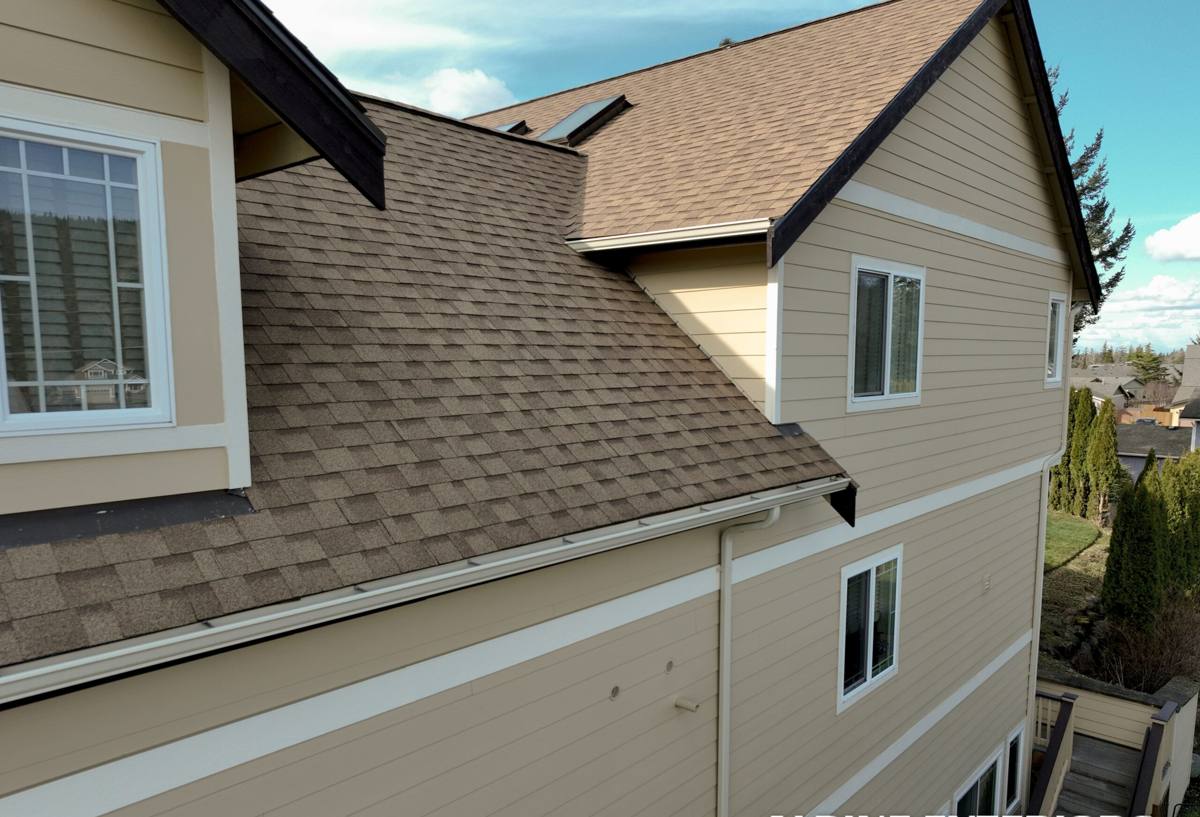
Sandy Point sits right up against the water on the edge of Whatcom County, and that location changes what a deck actually has to survive. A deck built the same way you'd build one ten miles inland, tucked behind a windbreak, won't hold up the same way out here. Salt-laden air moves through constantly, rain comes in sideways more often than it falls straight down, and shaded, damp corners of the yard grow moss for a good chunk of the year. None of that is exotic information to anyone who's lived out there a while — but it matters a lot when you're choosing decking material and deciding how it gets built.
This page is specifically about composite decking for Sandy Point properties. Not a general rundown of decking options, not a national manufacturer's sales pitch — what actually needs to happen so a composite deck holds up on this stretch of Ferndale waterfront, and what a correct installation looks like when the crew doing it already understands the site conditions.
Why the Local Climate Changes the Approach
Salt Air and Metal Hardware
Salt air is hard on anything metal. Standard fasteners, brackets, and hidden-fastener clips that would be perfectly fine a few miles inland can start showing corrosion within a couple of seasons this close to the water. This isn't a knock on any particular product — it's just physics. Every metal component in a Sandy Point deck, from the ledger board hardware down to the screws holding the fascia, needs to be rated for coastal exposure, not just treated-lumber compatible.
Driving Rain and Water Management
Rain that comes in at an angle gets under railings, behind fascia boards, and into any gap that wasn't sealed with that scenario in mind. A deck built for a calmer inland yard can get away with looser water management. A deck facing open water on a windy stretch of coastline can't. Flashing, ledger sealing, and drainage planning all have to assume water is going to hit the structure from more directions than straight down.
The Long Moss Season
Whatcom County's damp, mild winters mean moss and algae have a long window to establish themselves on any shaded or low-airflow surface, and a deck near the water tends to stay damp longer than one in full sun. Composite decking resists rot the way wood can't, but the surface can still grow a moss or algae film if the board's texture holds moisture and the substructure doesn't get enough airflow underneath.
What "Correct" Composite Decking Looks Like Here
A lot of decking problems people run into aren't a product failure — they're an installation shortcut that doesn't show up until a season or two later. For Sandy Point specifically, a correct composite deck build includes:
- Coastal-rated fasteners and hardware throughout — not just at the ledger connection, but every hidden clip, joist hanger, and screw
- Proper joist spacing for the specific composite board being used — composite has different span requirements than wood, and manufacturers vary
- Ventilation gaps under the deck surface and around the perimeter so damp air can move instead of sitting still
- Correct ledger flashing where the deck ties into the house, sealed against wind-driven rain, not just standard vertical rainfall
- Picture-framed or properly capped board ends so cut edges aren't left exposed to moisture over time
- Consistent board gapping that accounts for thermal movement and allows water to drain through rather than pool on the surface
Skip any one of these and the deck will probably still look fine the day it's finished. The difference shows up two, three, five years out — in fastener staining, soft spots at the ledger, or a surface that never quite dries out between rains.
Comparing Decking Materials for a Sandy Point Property
Homeowners near the water often ask us to walk through the real trade-offs between decking materials before committing. Here's an honest comparison based on how each performs specifically in a salt-air, high-rain environment — not a general national comparison.
| Material | Moisture Behavior | Maintenance Burden | Coastal Considerations |
|---|---|---|---|
| Pressure-treated wood | Absorbs moisture, prone to warping and checking near water | Regular sealing/staining, more frequent in salt air | Fasteners corrode faster; wood grain traps salt residue |
| Standard composite | Resists rot, low water absorption | Occasional cleaning, no sealing needed | Needs coastal-rated hardware and good ventilation to avoid surface algae |
| Capped composite / PVC-based | Best moisture resistance, sealed outer shell | Lowest ongoing maintenance | Higher upfront cost, best long-term fit for direct water exposure |
We install composite over uncapped wood-plastic blends in most Sandy Point projects because the capped surface handles standing moisture and salt spray with the least long-term maintenance. That's our professional recommendation based on how these materials behave in this specific environment, not a knock on every composite product on the market — there are legitimate budget and aesthetic reasons a homeowner might choose differently, and we'll walk through those trade-offs honestly rather than push one option.
Our Process for a Sandy Point Composite Deck
1. On-Site Assessment
We start by looking at the actual site — sun exposure, wind direction relative to the water, existing structure condition if this is a replacement, and how water currently drains around the footprint. A deck on the water side of a Sandy Point home needs a different water management plan than one tucked on a more sheltered side of the same house.
2. Substructure First
The framing underneath is where most of the long-term durability gets decided, and it's the part that's invisible once the decking boards go down. We use coastal-rated hardware throughout, set joist spacing to the manufacturer's spec for the board chosen, and build in ventilation so air can move under the deck year-round.
3. Ledger and Flashing Detail
Where the deck attaches to the house is the single most common source of long-term water damage on any deck, anywhere. We flash it correctly for wind-driven rain, not just standard runoff, because that's the rain this location actually gets.
4. Composite Installation
Boards go down with consistent gapping for drainage and thermal movement, hidden fastener systems where the product supports it for a clean surface, and picture-framed or capped edges at any cut ends. Railings and stair components get the same coastal-hardware treatment as the deck frame.
5. Final Walkthrough
We walk the finished deck with the homeowner, cover basic care specific to a waterfront composite deck, and make sure everything is sealed and secure before we consider the job done.
What Drives the Cost
Composite decking costs vary a fair amount project to project, and the honest answer is it depends on several factors more than square footage alone:
| Cost Factor | Why It Matters |
|---|---|
| Board tier (standard vs. capped composite) | Capped boards cost more upfront but need less long-term upkeep |
| Substructure condition | Replacing rotted or undersized framing adds cost but is not optional for a safe, lasting deck |
| Height and railing requirements | Elevated decks near the water often need code-compliant railings, which adds material and labor |
| Site access | Waterfront lots with tighter access can add time for material staging and equipment |
| Hardware spec | Coastal-rated fasteners and clips cost more than standard hardware but are non-negotiable this close to the water |
We'd rather give you a real number after seeing the site than a broad estimate that doesn't hold up once we're actually framing.
Maintaining a Composite Deck Near the Water
Composite decking is genuinely lower-maintenance than wood, but "low-maintenance" near saltwater still means some regular attention:
- Rinse the surface periodically to clear salt residue and airborne debris before it builds up
- Sweep leaves and organic debris out of corners and against railings where moss tends to start
- Check that gaps between boards stay clear so water keeps draining through rather than sitting on the surface
- Inspect visible hardware once or twice a year for early signs of corrosion
- Keep planters and other items that trap moisture from sitting directly on the deck surface long-term
- Address any moss or algae film early with a soft-bristle brush rather than letting it establish
None of this is heavy work, but skipping it entirely for years at a stretch is how a low-maintenance deck ends up needing attention sooner than it should.
Why a Crew That Already Works Sandy Point Matters
Decking crews that mostly work inland don't always think in terms of wind-driven rain and salt exposure by default — it's not part of their everyday conditions, so it's easy to build to a standard spec and miss the details that matter here. A crew that regularly works Sandy Point and the surrounding Ferndale waterfront already knows to spec coastal hardware without being asked, already builds in extra ventilation without treating it as an upgrade, and already understands how the wind off the water behaves on a given lot. That familiarity shows up in fewer surprises during the build and a deck that's actually built for the site it's sitting on, not a generic version of the same project.
Getting Started
If you're weighing a new composite deck or replacing an aging one on your Sandy Point property, we're happy to come take a look, talk through material options honestly, and give you a straightforward estimate — no pressure, no upsell script. Use the form below to get in touch and we'll set up a time to walk the site with you.