 Ferndale Window
 Why Custer's Climate Is Hard on Roofs
Custer sits in the part of Whatcom County where weather off the water meets a long, wet Pacific Northwest winter. Homes here deal with a combination most inland roofs never see: salt-laden air that speeds up corrosion on fasteners and metal flashing, driving rain that gets pushed sideways into laps and seams during winter storms, and a moss season that can run from early fall through late spring. Any one of those factors is manageable. All three together, year after year, is what actually shortens a roof's life in this area.
A roof that would coast along for 25 years in a dry, inland climate can start showing real trouble in 15 to 18 years out here if it wasn't detailed correctly the first time. That's not a knock on any particular material — it's just what happens when moisture has more chances to get in and less time to dry out between rain events. A roof replacement in Custer needs to be built with that reality in mind from the tear-off up, not patched together with whatever detailing works fine somewhere drier.
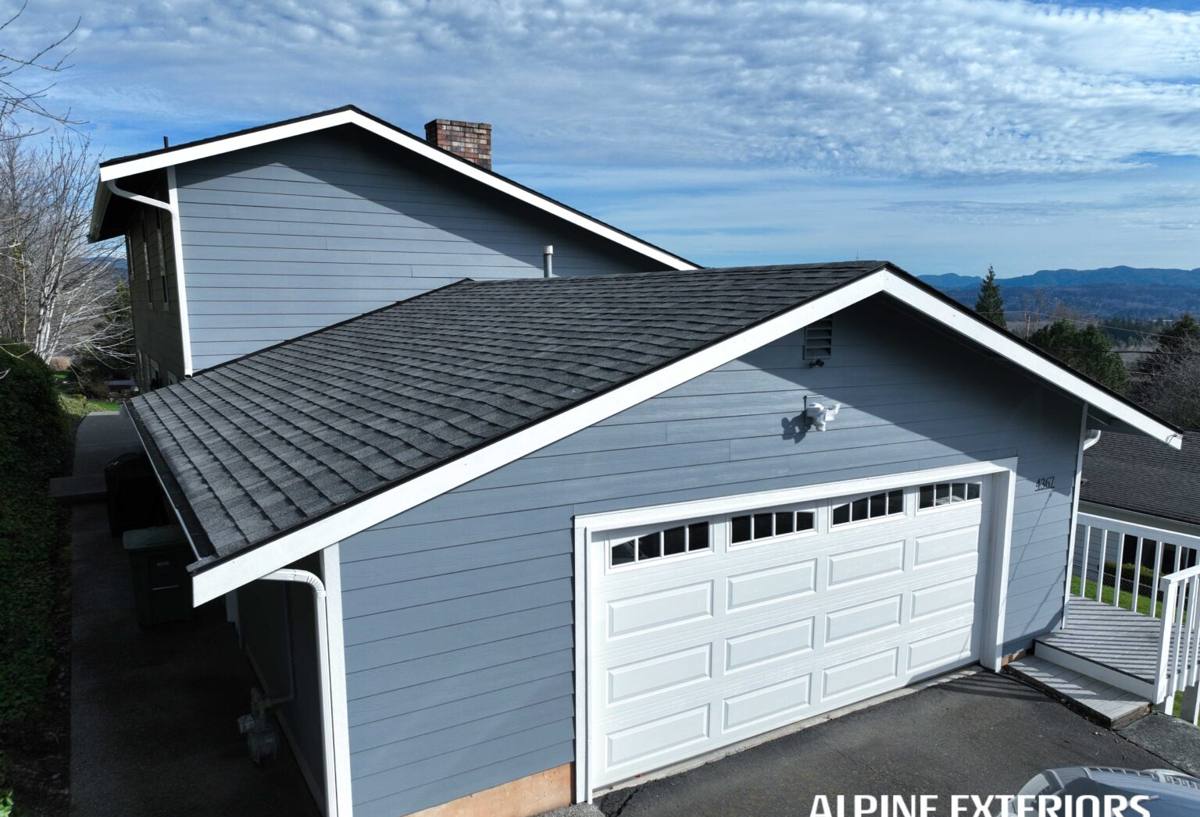
What a Correct Roof Replacement Actually Involves Here
Tear-Off and Deck Inspection
We don't install new roofing over old, and we don't recommend it in this climate. A full tear-off is the only way to actually see the roof deck — the plywood or OSB sheathing underneath — and check it for soft spots, delamination, or rot from long-term moisture intrusion. In a marine climate, hidden deck damage is common around old flashing, past leaks, and areas where moss has been holding water against the roof for years. Any damaged sheathing gets replaced before anything new goes down; skipping this step is the single most common reason a "new" roof fails early.
Underlayment and Ice-and-Water Barrier
Underlayment is the roof's real waterproofing layer — shingles or metal are the weather shield, but underlayment is what keeps water out if wind-driven rain gets past them. In Custer, we treat ice-and-water shield (a self-adhering waterproof membrane) as standard at eaves, valleys, and around every penetration — chimneys, vents, skylights — not just as an option. Given how often driving rain hits roofs sideways here, that extra membrane at vulnerable points is cheap insurance against the leaks that show up two winters later.
Flashing and Detail Work
Flashing failures, not worn-out shingles, cause the majority of roof leaks we see on replacement jobs. Step flashing at walls, counter-flashing at chimneys, and properly lapped valley flashing all have to be installed in the right order with the right materials — corrosion-resistant metal, given the salt content in the air this close to the water. A roof replacement is the one time all of this old flashing gets replaced rather than reused, which is exactly why doing the job right the first time matters more here than in a drier climate where a shortcut might not show up for a decade.
Choosing the Right Roofing Material for Custer
There's no single "best" roofing material for every home — it depends on your roof's pitch, your budget, and how much long-term maintenance you're willing to do. Here's how the common options actually perform in a wet, mossy, salt-air climate like ours:
| Material | Typical Lifespan Here | Moss & Moisture Behavior | Maintenance Needed |
|---|---|---|---|
| Architectural asphalt shingle | 20–30 years | Good when properly ventilated; algae-resistant granules help slow staining | Periodic moss removal, gutter clearing |
| Standing seam metal | 40–50+ years | Sheds water and resists moss growth better than any other option; needs coastal-rated fasteners | Low — occasional fastener and seam check |
| Cedar shake/shingle | 20–30 years with upkeep | Attractive but holds moisture longest; moss and rot risk is highest without diligent upkeep | High — regular treatment, cleaning, and inspection |
| Synthetic/composite shingle | 30–50 years | Doesn't absorb moisture; performs consistently in wet climates | Low to moderate |
We'll walk through these trade-offs honestly during your estimate rather than steering you toward whatever's easiest for us to install. Most Custer homeowners land on a well-ventilated architectural asphalt system or a metal roof, simply because both hold up to our rain-and-moss cycle with a reasonable amount of upkeep.
Ventilation and Moisture: The Long Game Against Moss
Moss doesn't grow because a roof is old — it grows because a roof surface stays damp and shaded long enough for spores to take hold, which is exactly the environment Custer's tree cover and long wet season create. Ventilation is the part of a roof replacement that has the biggest long-term effect on moss and it's also the part that's easiest to get wrong or skip, because it's invisible once the roof is finished.
A balanced system — intake at the eaves, exhaust at the ridge — keeps air moving underneath the roof deck, which helps the roof surface dry out faster between rain events and reduces the trapped moisture that moss and algae need to establish. Roofs that were vented poorly the first time around are often the ones that come back covered in moss within two or three years, no matter how good the shingles are. When we replace a roof, we check and correct ventilation as part of the job, not as an upsell after the fact.
Signs Your Custer Roof Needs Replacing, Not Patching
Not every roof problem means a full replacement — but in a climate like this, small issues left alone tend to compound quickly. Here's what tells us it's time to talk replacement rather than repair:
- Granule loss heavy enough that you can see bare, shiny patches on shingles
- Shingles that are curling, cupping, or cracking across large sections of the roof, not just one spot
- Moss growth that returns within a season or two of cleaning, even after treatment
- Soft or spongy spots in the roof deck when walked on, or visible sagging
- Daylight visible through the roof deck from inside the attic
- Repeated leaks in different locations rather than one recurring spot
- The roof is past 20–25 years old and has never had a full tear-off
If your roof only shows one or two of these and is otherwise sound, a targeted repair may genuinely be the right call — we'll tell you that during the estimate rather than push a full replacement you don't need yet.
Our Process, Start to Finish
- On-site inspection. We walk the roof and the attic, check the deck, flashing, and ventilation, and take photos of anything that affects the scope of work.
- Written estimate. You get a clear, itemized quote — material options, tear-off scope, and any deck repair we anticipate — with no pressure to decide on the spot.
- Scheduling around the weather. Given how much rain we get, we plan install days with a realistic weather window and stage materials so your home isn't left exposed overnight.
- Tear-off and deck repair. Old roofing comes off down to the deck, damaged sheathing is replaced, and the deck is prepped for underlayment.
- Underlayment, flashing, and installation. Ice-and-water membrane, synthetic underlayment, new flashing, and the roofing material go on in that order, with ventilation corrected as needed.
- Cleanup and walkthrough. We magnet-sweep for nails, clear debris, and walk the finished roof with you so you know exactly what was done and where.
Why Hiring a Crew That Already Works in Custer Matters
Roofing detail work that's correct in a dry climate isn't automatically correct here. A crew that mostly works inland jobs may not default to ice-and-water shield at every penetration, coastal-rated fasteners, or the ventilation corrections that matter most against moss — because in their usual conditions, those extras aren't as necessary. A crew that already works Whatcom County's coastal communities builds those details in as standard practice, not as an add-on you have to ask for.
There's also the practical side: local crews know how permitting and inspections typically go in this part of the county, can respond faster if weather causes an unexpected delay mid-project, and are around afterward if a warranty question comes up. That local presence matters more with roofing than almost any other exterior project, since a roof problem you don't catch early can turn into a much bigger repair inside the house.
What Roof Replacement Costs Depend On
We don't publish blanket per-square pricing because it genuinely varies by roof — but these are the factors that move the number most, in order of typical impact:
| Factor | Why It Matters in Custer |
|---|---|
| Roof size and pitch | Steeper roofs take longer and require more fall protection and staging |
| Deck condition | Rot or soft sheathing found during tear-off adds material and labor to replace it |
| Material choice | Asphalt, metal, and composite options have different upfront costs and lifespans |
| Number of penetrations | Chimneys, skylights, and vents each need individual flashing and waterproofing detail |
| Layers being removed | Roofs with more than one existing layer take longer to tear off and haul away |
| Ventilation corrections | Adding or fixing intake/exhaust venting affects both material and labor |
We'll break these out clearly in your estimate so you can see exactly where the cost is coming from, rather than getting a single number with no explanation behind it.
Warranty and Keeping a New Roof Moss-Free
Manufacturer warranties on shingles and underlayment typically cover material defects, and workmanship coverage on the installation itself is separate — we'll go over both plainly so you know what's actually covered and for how long, rather than leaving you to read the fine print alone. Warranty terms are only worth as much as the installation behind them, which is another reason correct flashing and ventilation matter more than the shingle brand itself.
After a proper replacement with good ventilation, moss growth slows down considerably, but Custer's climate means it rarely stops completely. Keeping gutters clear, trimming back overhanging branches where you can, and doing a gentle moss treatment every year or two will keep a new roof looking and performing the way it should for its full lifespan.
If your roof in Custer is showing its age or you just want an honest read on whether it needs repair or full replacement, we're happy to take a look. The estimate is free, there's no pressure, and you'll get a straight answer either way — just fill out the form below to get started.