 Ferndale Window
 Bellingham Roofs Face a Different Kind of Wear
A roof in Bellingham does more work than a roof in most parts of the country. It sits under a marine layer that keeps things damp for months at a time, takes on wind-driven rain rolling off Bellingham Bay, and spends a good chunk of the year growing moss whether anyone wants it to or not. None of that means a roof is doomed — it means the repairs need to account for conditions that a lot of national roofing guidance simply doesn't cover.
We do roof repair work for homes in and around Bellingham regularly, alongside our base in Ferndale. The failure patterns repeat: moss lifting shingle edges, flashing that's corroded faster than it should have, and leaks that show up nowhere near where the water actually got in. Understanding why those patterns happen is the first step to fixing them correctly instead of just patching the symptom.
Salt Air and Corrosion
Homes closer to the water pick up salt-laden air that speeds up corrosion on anything metal — nails, flashing, vent boots with metal collars, and fastener heads. A fastener that would last two decades inland can start weeping rust streaks and losing its grip years sooner near the bay. When we're diagnosing a leak on a Bellingham roof, corroded fasteners and flashing are on the short list of usual suspects, especially on homes within a few miles of the water.
Driving Rain and Wind-Driven Leaks
Whatcom County doesn't usually get the kind of downpours that overwhelm a roof outright. The bigger problem is sideways rain — wind pushing water uphill under shingle edges, into vent flashing, and through nail holes that would never leak in a straight-down rain. A repair that only addresses the spot where water is dripping into the attic, without accounting for wind direction and how the water actually traveled to get there, tends to fail again within a season or two.
The Long Moss Season
Between the shade from mature trees common in this area and months of overcast, damp weather, moss gets a long runway to establish itself on north-facing slopes and shaded valleys. Moss isn't just cosmetic — its root structure lifts shingle tabs, holds moisture against the roof deck, and creates channels for water to travel sideways under the shingle layer instead of running off. A roof that looks fine from the ground can have real moisture damage building underneath a moss mat.
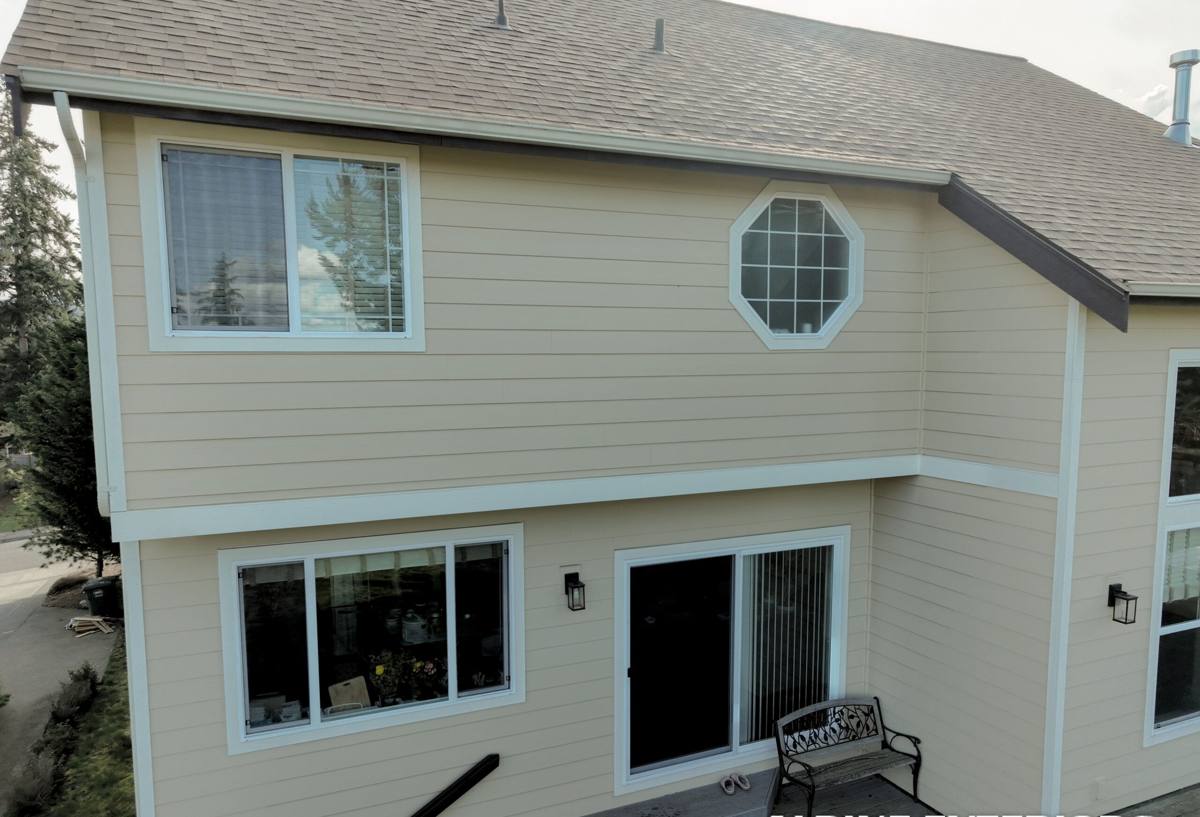
Common Repair Needs We See Around Bellingham
Most of the repair calls we get in this area fall into a handful of categories. Recognizing which one you're dealing with helps set expectations before a crew even shows up.
- Moss-related shingle lift — tabs curled or separated from moss growth, often with granule loss underneath
- Flashing failures — around chimneys, skylights, and roof-to-wall transitions where corrosion or original installation shortcuts let water in
- Valley leaks — water concentrating in roof valleys faster than aging materials can shed it
- Vent boot cracking — the rubber collars around plumbing vents drying out and splitting after years of UV and moisture cycling
- Gutter-driven damage — clogged or undersized gutters backing water up under the roof edge, especially during heavy fall rain
- Wind-lifted shingles — tabs cracked or torn loose after a storm, leaving fastener holes exposed
What a Correct Repair Actually Involves
Diagnosing the Real Source of a Leak
Water rarely enters a roof and drips straight down. It travels along the underlayment, follows a rafter, and shows up on a ceiling several feet from where it actually got in. A repair that starts by patching the visible stain instead of tracing the water's actual path is one of the most common reasons homeowners end up paying for the same leak twice. Our process starts on the roof itself, not the ceiling below it — checking flashing, fastener condition, shingle lift, and the underlayment where it's exposed before deciding on a fix.
Matching Materials and Techniques to the Existing Roof
A repair should blend into the existing roof system, not fight against it. That means matching shingle profile and, where possible, color; using flashing metal that won't set up galvanic corrosion against what's already there; and re-establishing proper water-shedding laps rather than relying on sealant to bridge a gap that should have been shingled correctly in the first place. Sealant has a place in roof repair, but it's a supporting material, not a substitute for correct flashing and lap technique.
Our Repair Process
- Inspection — a full look at the affected area and the roof generally, including attic access where available, to trace water paths and check for related issues nearby
- Diagnosis and explanation — we tell you what we found and why it's happening, in plain terms, before recommending a fix
- Written estimate — scope and cost laid out before any work starts, including what's repair-only versus what would need a broader fix
- The repair itself — removing damaged material back to solid decking and underlayment, correcting flashing and laps, and reinstalling matched materials
- Cleanup and check — site cleaned of debris and old material, and the repair area reviewed before we consider the job done
Repair vs. Replacement: How We Help You Decide
Not every roof problem needs a full replacement, and not every leak should be treated with a quick patch. The right call usually comes down to a few practical factors.
| Factor | Repair Usually Makes Sense | Replacement Is Usually Better |
|---|---|---|
| Roof age | Well within its expected service life | Nearing or past the material's typical lifespan |
| Damage extent | Localized — one section, valley, or flashing point | Spread across multiple slopes or recurring in different spots |
| Underlying deck | Solid, dry sheathing under the damaged area | Soft, delaminated, or water-stained decking found during inspection |
| Shingle condition elsewhere | Rest of the roof still has good granule coverage and flexibility | Granule loss, brittleness, or curling showing up roof-wide |
| History of repairs | First or second repair on this roof | Same area has already been patched more than once |
We'll always tell you honestly which category your roof falls into rather than defaulting to the bigger job. If a repair is the right answer, that's what we'll recommend.
Roofing Materials Common on Bellingham Homes
Composition Asphalt Shingle
The majority of homes we work on use standard three-tab or architectural asphalt shingles. These repair well when caught early, but granule loss and edge curling accelerate once moss or persistent moisture gets involved, so timing matters more here than on a drier climate roof.
Cedar Shake
Older homes in this area sometimes still have cedar shake roofs. Shake is naturally more moss-prone given its texture and organic material, and repairs require matching weathered shake tone and thickness, which takes more care than swapping asphalt shingles.
Metal Roofing
Metal roofs handle driving rain well and shed moss more easily than shingle roofs, but repairs center on fastener backouts, seam sealant failure, and flashing at penetrations rather than the shingle-level issues above.
A Seasonal Maintenance Checklist for Whatcom County Homeowners
A few habits go a long way toward catching small problems before they become repair calls, especially given how long the wet season runs here.
- Clear gutters and downspouts before the fall rains settle in, and again mid-winter if trees are nearby
- Look at north-facing and shaded roof slopes each spring for early moss growth rather than waiting until it's thick
- Check attic insulation and ventilation — trapped moisture from poor airflow accelerates deck rot from the inside
- After any significant windstorm, do a visual check from the ground for lifted or missing shingles
- Have flashing around chimneys and skylights inspected every few years, since these are the first points to fail
- Trim back branches that keep a section of roof shaded and damp longer than the rest
Why Local Experience Matters for This Kind of Work
A repair crew that only sees Bellingham roofs occasionally is guessing at things a local crew already knows — which slopes hold moss longest, how salt air near the bay changes fastener life, and which flashing details tend to fail first on homes built during a particular era in this area. That local pattern recognition shortens the diagnosis step and reduces the chance of a repair that solves the visible symptom but misses the underlying cause. Working out of Ferndale, we're on Bellingham roofs often enough that these patterns aren't theoretical to us.
If you've got a leak, a section of moss-damaged shingles, or flashing that's seen better days, we're happy to take a look and give you an honest read on what it actually needs. Reach out for a free, no-pressure estimate using the form below.