 Ferndale Window
 Windows in Point Roberts Work Harder Than Windows Almost Anywhere Else in Whatcom County
Point Roberts sits on its own peninsula, exposed to open water on three sides, which means homes there take a different kind of weather beating than a house tucked into town in Ferndale or Lynden. Salt-laden air corrodes hardware and dulls finishes faster. Wind off the Strait drives rain sideways into wall assemblies that were only ever designed to shed water falling straight down. And the long, wet Pacific Northwest shoulder seasons keep siding, trim, and window sills damp enough, long enough, for moss and algae to take hold and stay there most of the year.
None of that is a reason to avoid good windows in Point Roberts. It's a reason to be more careful about how they're installed. A window that's a perfectly fine product can still fail early if the flashing, sealant, and drainage details around it aren't built for this specific exposure. That's the piece homeowners often don't see until a window starts leaking, fogging, or sticking a few years in.
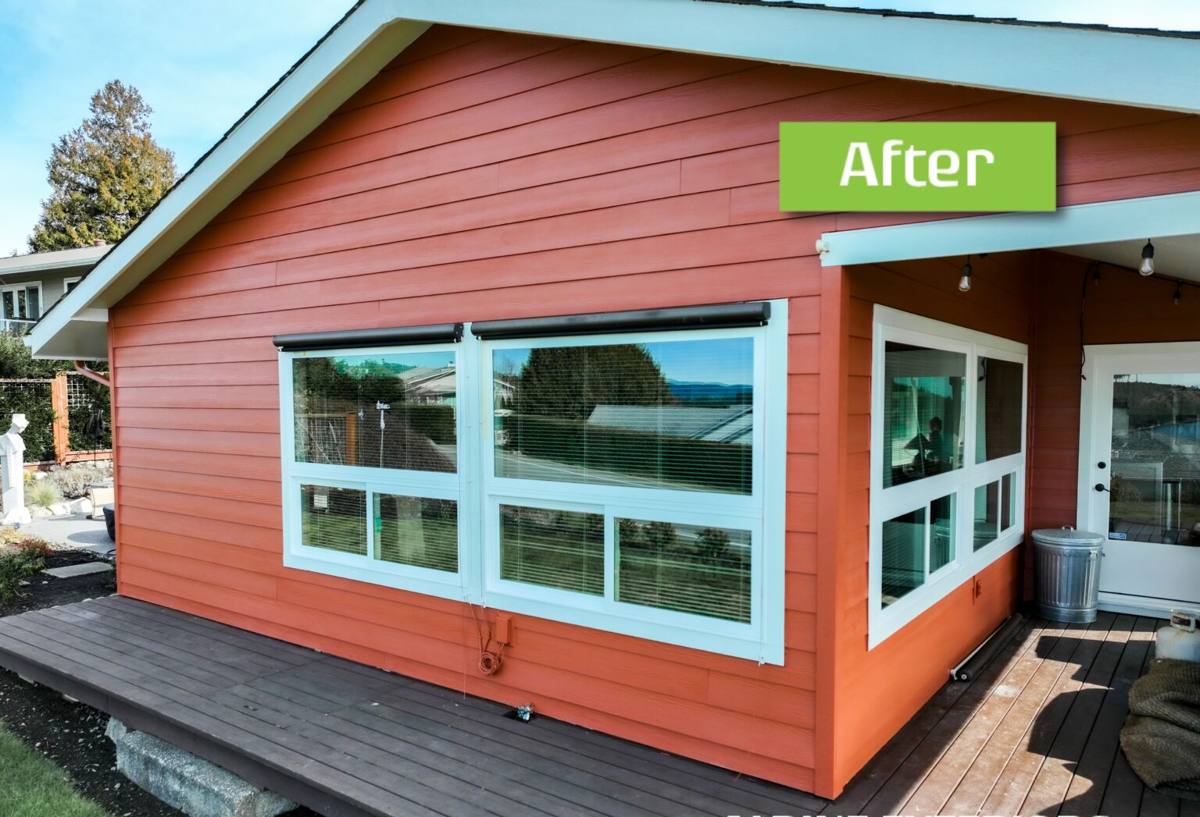
What Salt Air, Wind-Driven Rain, and Moss Actually Do to a Window System
Salt Air
Airborne salt settles on metal components — hinges, locks, screen frames, and especially aluminum cladding or hardware — and speeds up corrosion and pitting. Over years, that can mean stiff or failing locks and hardware that looks worn well before the glass itself has any problem.
Wind-Driven Rain
On an exposed peninsula, rain doesn't just fall on a window, it gets pushed into every seam and joint under wind pressure. If the flashing behind the trim and the sealant at the window's perimeter aren't installed correctly, water finds its way behind the frame and into the wall cavity, where it causes rot long before it ever shows up as a visible stain indoors.
Moss and Constant Moisture
Whatcom County's wet season runs long, and a shaded or north-facing wall in Point Roberts can stay damp for weeks at a stretch. Moss and algae growth on sills and trim hold moisture against wood and painted surfaces, which accelerates rot and finish failure around window openings that aren't detailed to drain and dry properly.
What a Correct Installation Involves Here
The window unit itself is only part of the job. The install details around it are what determine whether a window lasts 10 years or 30 in this environment. On every Point Roberts project we treat these as non-negotiable:
- Proper weather-resistive barrier integration, with the window flashed to shed water down and out over the barrier, not behind it
- Sill pan flashing under every window opening, so any water that does get past the outer seal drains back outside instead of soaking into the framing
- Corrosion-resistant fasteners and hardware appropriate for salt-air exposure, not standard interior-grade hardware
- Backer rod and a quality exterior sealant rated for UV and marine-type exposure at the window perimeter
- Correct shimming and squaring so the sash operates smoothly and the seal stays even under wind pressure
- Insulation in the gap between the rough opening and the window frame, to control both heat loss and condensation
Skip any one of these and the window can still look fine on install day. The problems show up later — usually as a leak, a soft spot in the trim, or a window that suddenly won't latch — and by then the fix costs more than doing it right the first time would have.
Frame Material Options for a Salt-Air, Wet-Climate Location
There's no single "correct" window material for Point Roberts, but each option has real trade-offs worth understanding before you choose, especially given the corrosion and moisture exposure here.
| Frame Material | How It Handles Salt Air | Moisture & Moss Behavior | Maintenance |
|---|---|---|---|
| Vinyl | Doesn't corrode; hardware is the main wear point | Won't rot; needs periodic rinsing to clear salt film and grime | Low — occasional cleaning |
| Fiberglass | Excellent — very stable, resists pitting and corrosion | Won't rot; holds paint or finish well over time | Low to moderate |
| Aluminum | Prone to pitting and oxidation without a marine-grade finish | Won't rot but can show corrosion streaking near sills | Moderate — finish needs monitoring |
| Wood / Wood-Clad | Cladding protects the exterior face; exposed wood needs upkeep | Most vulnerable to rot if any seal or paint fails | Highest — regular inspection and refinishing |
We don't install every product on that list on every project, and we'll tell you honestly when a material isn't a good fit for a given exposure — a wide-open, wind-facing wall calls for a different choice than a sheltered courtyard window, even on the same house.
What Actually Drives the Cost of a Window Installation Job
Two homes with the same number of windows can land at very different totals. The biggest variables we run into on Point Roberts jobs:
| Factor | Why It Matters |
|---|---|
| New construction vs. replacement | Replacing into an existing opening is usually simpler than reframing a wall |
| Wall exposure | Wind- and rain-facing walls need more robust flashing detail and take longer to do right |
| Existing damage | Rot found in the framing once the old window comes out adds repair work before the new one goes in |
| Frame material and glass package | Vinyl, fiberglass, and wood-clad options carry different material costs; double- vs. triple-pane glass changes price too |
| Number and size of openings | Larger or custom-sized units cost more and may need special ordering |
| Access and logistics | Point Roberts' location adds scheduling and delivery lead time compared to a job inside Ferndale |
We give a straight, itemized estimate before any work starts, so you know what you're paying for and why — not a vague number that gets revised once the crew opens up a wall.
Why Point Roberts Logistics Matter More Than People Expect
Point Roberts is a U.S. exclave — by land, it's reached through Canada, which means materials, equipment, and crew scheduling all take a bit more planning than a typical in-town job. A contractor who hasn't worked there before can underestimate lead times for window orders, get caught off guard at the crossing with a loaded trailer, or simply not budget enough time in the schedule, which turns into delays for the homeowner.
We plan Point Roberts projects around that reality from the start: ordering materials with enough lead time, scheduling crew days that account for the crossing, and having contingency plans for weather windows on an exposed coastal site. That's not a marketing point — it's the difference between a project that runs on schedule and one that stalls out because nobody accounted for how the location actually works.
Our Installation Process
- On-site assessment. We look at existing window condition, framing, exposure, and drainage around each opening before recommending anything.
- Honest product recommendation. We walk through material and glass options suited to that specific wall's exposure, with real trade-offs explained.
- Written estimate. Itemized pricing, timeline, and what's included — no surprises added later.
- Material ordering and scheduling. Built around realistic lead times, including Point Roberts logistics.
- Removal and inspection. Old windows come out carefully so we can check the framing underneath for hidden rot or moisture damage before it's covered back up.
- Installation with full flashing and sealant detail. Sill pan, weather barrier integration, shimming, insulation, and exterior sealant — done to hold up to wind-driven rain, not just pass a quick visual check.
- Final walkthrough. We test operation, check seals, and clean up the site before we call it done.
Signs Your Point Roberts Windows May Need Attention
- Fogging or condensation between panes, which means the seal on the insulated glass unit has failed
- Drafts you can feel near the frame even when the window is fully latched
- Soft or discolored trim and sill wood, especially on wind- or rain-facing walls
- Difficulty opening, closing, or locking — often a sign of hardware corrosion or a frame that's shifted
- Visible moss or persistent green staining on sills and surrounding trim
- Rising heating bills with no other obvious explanation
- Water stains on interior walls or sills below or beside the window
Any one of these is worth a look. A window with a failed seal or minor hardware issue is a straightforward fix; framing rot from years of unnoticed water intrusion is a much bigger job — catching it early is what keeps costs down.
Maintaining Windows in a Salt Air, Moss-Prone Environment
Good installation buys you a long service life, but a little upkeep protects that investment. Rinse sills and frames periodically to clear salt residue and grime, especially on walls facing open water. Keep gutters and nearby drainage clear so water isn't sheeting down across window openings. Check exterior sealant beads yearly for cracking or separation, since UV and salt exposure break down caulking faster here than in a more sheltered location. And keep an eye on moss or algae buildup on sills and trim — it's easier to remove early than after it's had a season or two to establish itself.
Why Hire a Crew That Already Works in Point Roberts
Installing windows correctly for a coastal, wind-exposed peninsula is a different job than installing the same windows on a sheltered lot a few miles inland. A crew that's done the work in Point Roberts already understands the exposure, has a realistic sense of scheduling and logistics for the location, and won't be guessing at flashing and sealant details that matter more here than in most of Whatcom County. That experience shows up in fewer callbacks and windows that are still performing well well past the point where a poorly detailed install would already be leaking.
If you're weighing a window replacement or a new install for a Point Roberts home, we're happy to take a look and put together a free, no-pressure estimate — just fill out the form below.