 Ferndale Window
 Point Roberts Siding: A Small Peninsula With Its Own Set of Problems
Point Roberts sits on the water on three sides, which means almost every home there is exposed to some combination of salt-laden air, wind-driven rain, and the kind of shaded, damp microclimates that grow moss faster than most homeowners expect. It's part of Whatcom County, but geographically it's its own animal — a small exclave separated from the rest of Washington by the Canadian border, reachable only by driving through British Columbia or by water. That isolation shapes everything from how materials get delivered to how often a homeowner can realistically get a contractor to come back and check on a warranty issue. Siding here has to be chosen and installed with that reality in mind, not treated like a generic Pacific Northwest job.
We're a Ferndale-based crew, and Point Roberts is part of our regular service area — not a one-off trip. That matters more here than it does in most towns, and we'll get into why later on. First, it's worth understanding what this specific stretch of coastline actually does to a house.
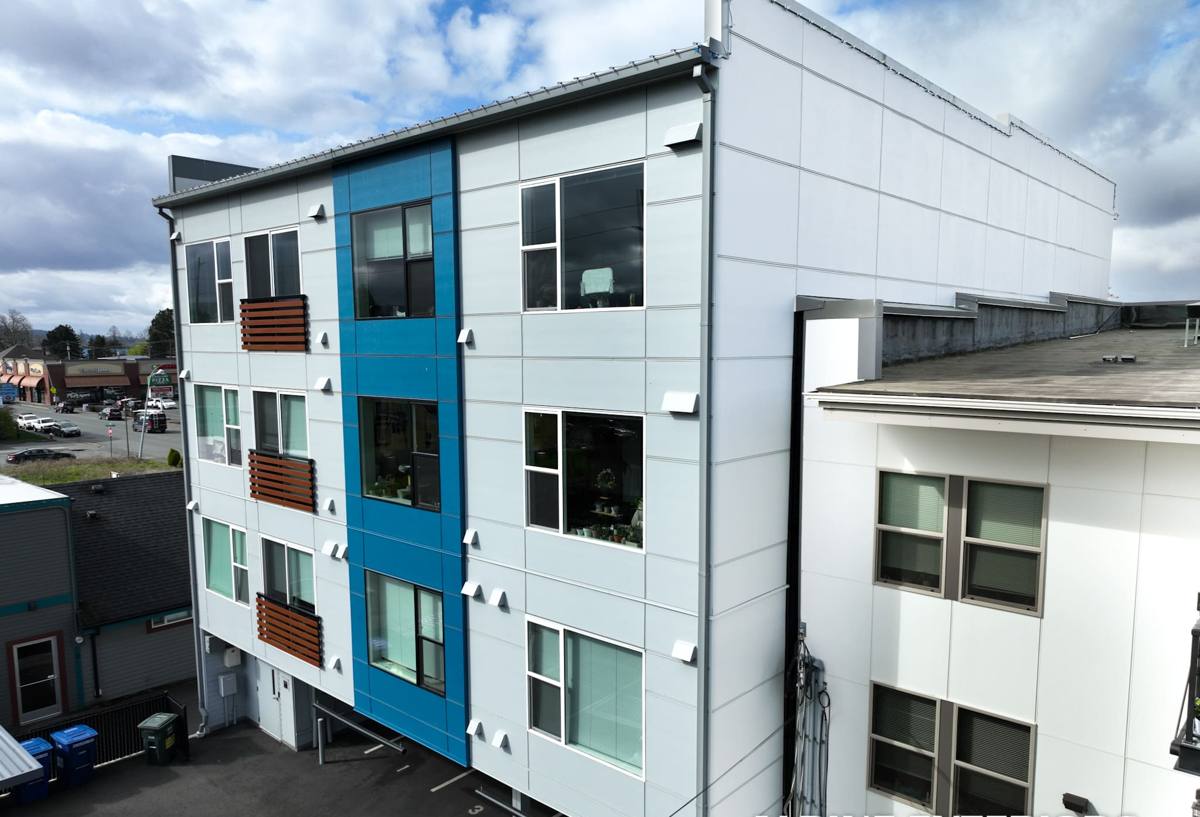
What Salt Air, Driving Rain, and Moss Season Do to Siding
Salt Air and Corrosion
Airborne salt doesn't just sit on the surface — it works into fasteners, trim seams, and any exposed metal flashing, accelerating corrosion in ways that inland Whatcom County homes never have to deal with. Fasteners that would last decades in Ferndale proper can start showing rust bleed years earlier on a Point Roberts home facing open water. Over time, that corrosion can stain the siding face, loosen fastener grip, and create small points of failure right where water wants to get in.
Driving Rain and Wind-Driven Moisture
Point Roberts catches wind off the water with little to break it up, which means rain doesn't just fall straight down — it gets pushed sideways into wall assemblies, lap joints, and window trim. A siding system that relies on face-sealing (caulk and paint alone doing the work of keeping water out) tends to fail faster in this kind of exposure. What holds up is a system with proper drainage behind it: a water-resistive barrier, correct flashing details, and siding material that doesn't swell, cup, or absorb the moisture that inevitably gets past the outer layer.
Moss Season
Shaded north and west walls, combined with the long wet stretch of fall through spring, give moss and algae plenty of time to establish themselves on any siding surface that holds moisture. Wood-based products are especially vulnerable because moss roots into the surface fibers and holds water against the wall long after the rain has stopped. Even where moss doesn't cause direct damage, the constant dampness underneath it keeps the wall assembly wetter, longer, which is exactly the condition that leads to rot, paint failure, and pest activity.
Why We Only Install James Hardie in This Climate
We install James Hardie fiber cement siding exclusively — we don't offer vinyl, LP SmartSide, Cemplank, Allura, primed spruce, or cedar. That's a deliberate standard, not a lack of options, and a coastal exposure like Point Roberts is a good example of why we hold to it.
Fiber cement is dimensionally stable and doesn't absorb moisture the way wood-based siding does, so it doesn't swell, cup, or delaminate when it takes on wind-driven rain. It's non-combustible, which matters for a peninsula community with limited emergency access. And Hardie's ColorPlus factory finish is baked on and warranted against fading and chipping in a way that field-applied paint or stain simply isn't — a real advantage on a coastline where UV and salt spray both work against a painted surface. We're not going to pretend every other product is worthless; vinyl is inexpensive and low-maintenance in mild conditions, and cedar has a look plenty of homeowners love. But in salt air, driving rain, and heavy moss exposure, we've seen those trade-offs consistently create more callbacks and shorter service life than fiber cement installed correctly.
Choosing the Right Hardie Product Line
James Hardie makes climate-engineered HZ product lines specifically because the same siding doesn't perform the same way in every region. For Point Roberts, that generally means HZ5 formulations, which are engineered for wetter, harsher coastal exposure rather than the standard HZ10 formulation used in warmer, drier climates. Getting this detail right at the ordering stage isn't cosmetic — it affects how the material handles moisture cycling over decades on the wall.
| Consideration | Why It Matters on Point Roberts |
|---|---|
| HZ5 vs. HZ10 formulation | HZ5 is engineered for cold, wet coastal climates; using the wrong formulation trades long-term performance for a marginal cost difference |
| ColorPlus factory finish | Resists fading and chipping from salt spray and UV better than field-applied paint, and carries its own finish warranty |
| Fastener selection | Corrosion-resistant fasteners matter more here than almost anywhere else in the county due to salt air exposure |
| Trim and flashing metal | Should match the corrosion resistance of the siding itself, or it becomes the weak point in the whole system |
| Panel vs. lap profile | Both perform well when detailed correctly; choice is mostly aesthetic, but joint and seam detailing still has to account for wind-driven rain |
What a Correct Installation Actually Involves
The material is only half the equation. James Hardie siding installed without attention to the details underneath it will still fail early in a wind-and-salt exposure like this one — and a lot of siding problems we get called out to look at trace back to installation shortcuts, not the product itself.
- A properly lapped and sealed water-resistive barrier behind the siding, not just house wrap stapled up and forgotten
- Correct starter strip and clearance from grade, decks, and roof lines so the bottom edge of the siding isn't sitting in standing water or splash-back
- Flashing at every window, door, and roof-to-wall intersection, installed to shed water outward rather than trap it behind the cladding
- Kickout flashing at roof-wall intersections, which is one of the most commonly missed details and one of the most common causes of hidden rot
- Fastener spacing and placement per Hardie's published installation specs, using fasteners rated for the exposure
- Properly caulked and backed joints where the manufacturer calls for sealant, and left open where it calls for a rainscreen gap instead
- Field-painted cut edges, since factory ColorPlus finish only protects the face and profile edges as manufactured — every cut needs sealing on site
Skipping any one of these doesn't usually show up as a problem in year one. It shows up in year eight or ten, as a stain, a soft spot, or a warranty claim that gets denied because the installation didn't meet Hardie's requirements. Correct installation is what actually delivers the performance and warranty coverage the product is engineered for.
Why a Crew That Already Works Point Roberts Matters
Point Roberts isn't a quick side trip for most Whatcom County contractors. Getting materials and crews there means routing through Canada, working around border crossing times, and planning deliveries so a job doesn't stall out waiting on a truck. A contractor who doesn't already build that logistics reality into their scheduling tends to either quote it inaccurately or treat it as a hassle they'd rather avoid — which shows up as delays, rushed work, or reluctance to come back for warranty follow-up.
Because we work in Point Roberts regularly, we plan material staging and crew scheduling around the border crossing as a normal part of the job, not an exception. We also know what this specific exposure does to a house because we've seen it firsthand on other Point Roberts projects — which walls take the worst of the wind-driven rain, where moss tends to establish first, and where salt corrosion shows up earliest. That local pattern recognition is hard to replace with a one-time site visit.
Our Process, Start to Finish
Assessment
We look at the existing siding and wall assembly, note any moisture damage, moss buildup, or flashing problems, and identify which walls face the worst of the wind and salt exposure.
Product Selection
We spec the correct HZ formulation, profile, and ColorPlus color for the home, and plan trim and flashing metal to match the corrosion resistance of the siding.
Prep and Installation
We address the water-resistive barrier and flashing details before a single piece of siding goes up, since that hidden work is what determines whether the visible siding actually lasts.
Final Detailing
Cut edges get sealed, joints get finished per manufacturer spec, and we walk the job before calling it done — checking the details that matter most in this exposure: clearance at grade, kickout flashing, and fastener placement.
Living With Fiber Cement Siding in a Salt Air Climate
Correctly installed James Hardie siding is low-maintenance, but "low-maintenance" doesn't mean "no attention needed," especially here. A periodic rinse to knock off salt residue and organic growth before it establishes goes a long way. Keeping gutters clear and vegetation trimmed back from walls reduces the shaded, damp conditions moss favors. And catching a chip or scratch early — touching it up before bare fiber cement is exposed to the weather — protects the ColorPlus finish's long-term performance far better than waiting until it's a visible problem.
If you're dealing with aging or failing siding on a Point Roberts home, or you're planning ahead for a replacement, we're happy to come take a look. We offer free, no-pressure estimates and can walk you through exactly what your home's exposure calls for — just fill out the form below to get started.