 Ferndale Window
 Nooksack's Climate and What It Does to Siding
Nooksack sits in a part of Whatcom County that gets more rain, more damp air, and more moss growth than most homeowners expect when they first move here. Between the marine-influenced air moving in off the Salish Sea and the moisture that settles into the Nooksack River valley, siding on homes in this area spends a large part of the year wet, shaded, or both. Add the driving rain that comes with fall and winter storms — rain that hits siding at an angle instead of falling straight down — and you have a climate that punishes any siding material or installation detail that isn't built to shed water fast and dry out completely between storms.
That combination is exactly why we install James Hardie fiber cement siding and nothing else. Wood-based products, vinyl, and lower-grade fiber cement alternatives each have a weak point somewhere in this cycle of wet-dry-wet, and Whatcom County's climate finds that weak point eventually.
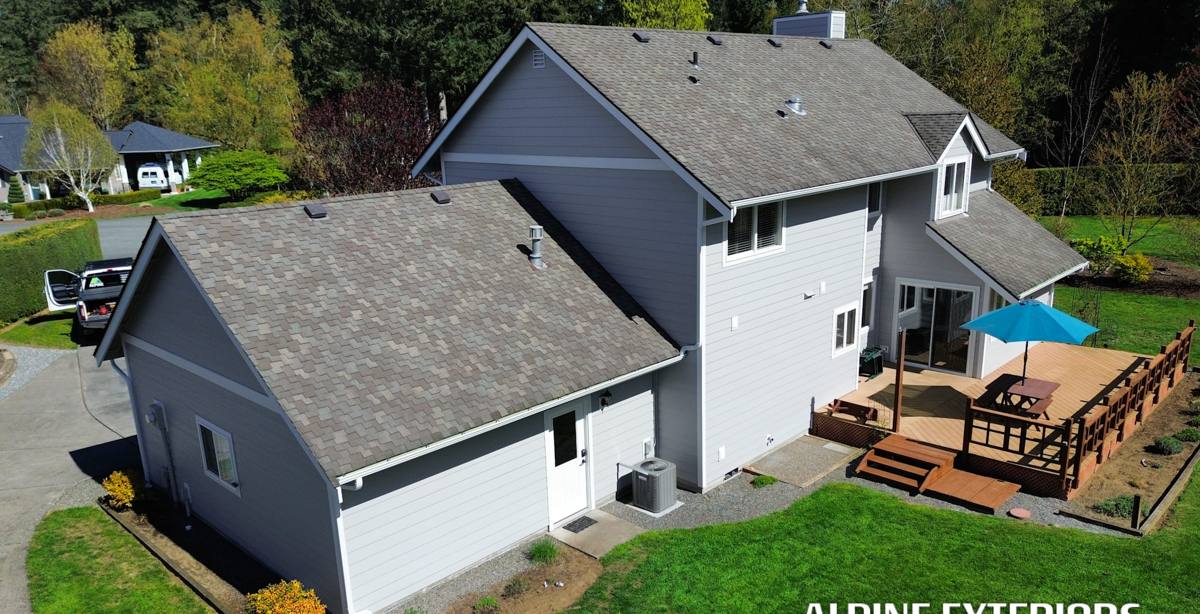
Why James Hardie Fiber Cement Fits This Environment
James Hardie siding is made from cement, sand, and cellulose fiber. It doesn't rot, it isn't a food source for moss or mildew growth to root into, and it doesn't swell or delaminate the way wood-based composite sidings can when they take on repeated moisture. In a region where moss colonizes anything organic left damp long enough — roofs, decks, fences, siding — starting with a material that moss can't feed on is a real advantage, not a marketing point.
Fiber cement also holds up to the cycle of rain, humidity, and occasional freeze that Whatcom County sees each winter. It doesn't crack under UV exposure the way vinyl can over the years, and it doesn't need the paint film maintenance that primed wood or spruce siding demands to keep water out. None of this means Hardie siding is maintenance-free — nothing exposed to a Pacific Northwest winter is — but it starts from a much stronger baseline than the alternatives.
What a Correct Installation Actually Involves
James Hardie siding performs the way it's rated to perform only when it's installed correctly. A large share of the siding failures we get called out to inspect in this region aren't material failures at all — they're installation shortcuts that let water in behind siding that otherwise looks fine from the street.
Flashing and Water Management
Every window, door, and horizontal trim break needs proper flashing and a drainage plane behind the siding so any water that does get past the surface has somewhere to go besides your wall sheathing. This matters more in Nooksack than in drier climates because the volume of rain your walls see over a winter is simply higher, and a small flashing gap that might go unnoticed for years in Eastern Washington can start causing rot within a season or two here.
Fastening and Clearances
James Hardie publishes specific fastening patterns, nail types, and minimum clearances between siding and grade, roof lines, decks, and other surfaces. Skipping the clearance requirements is one of the most common shortcuts we see on older installs — siding installed tight to a deck or buried too close to soil traps moisture against the bottom edge of the panel and accelerates wear right at the point where water pools longest.
Panel and Trim Selection
Not every Hardie product line is right for every application. Lap siding, panel siding, and trim boards each have proper uses, and mixing the wrong trim profile with the wrong siding line can create small gaps and water paths that are hard to spot until they've already caused damage underneath.
HZ5 Engineering and the ColorPlus Finish
James Hardie engineers its HZ product lines for different climate zones, and homes in Whatcom County fall into the zone built to handle higher moisture exposure and freeze-thaw cycling. Using the correctly rated product line for this region — rather than a general-purpose version — is part of what a proper installation means here, not an upsell.
We also install Hardie's ColorPlus factory-applied finish rather than field-painted siding wherever it fits the project. The finish is baked on in a controlled factory setting, which gives it more consistent coverage and better fade resistance than a site-applied paint job, and it comes with its own finish warranty separate from the substrate warranty. For a climate that puts UV exposure, rain, and humidity swings all in the same year, a factory finish holds up more predictably than paint applied on site.
How Local Material Choices Compare
| Material | Moisture Behavior in This Climate | Moss/Mildew Resistance | Typical Upkeep |
|---|---|---|---|
| James Hardie fiber cement | Does not rot or swell; sheds water when installed to spec | Not an organic food source | Periodic wash; touch-up caulking at trim joints |
| Vinyl siding | Handles moisture but can warp or crack with age and UV exposure | Can trap moisture behind panels if not vented properly | Low, but panels are hard to repair invisibly |
| Primed wood or spruce | Absorbs moisture; prone to swelling and rot if paint film fails | Organic material moss and mildew can root into | Repainting and caulk maintenance every few years |
| Cedar | Natural rot resistance but still absorbs water long-term | Susceptible to moss and mildew without regular treatment | Staining/sealing on a recurring cycle |
This is a general comparison, not a claim that every product in these categories fails — it's why, after years of installing and repairing exterior siding in this climate, we standardized on James Hardie as the only product we put on homes.
Our Installation Process
For a Nooksack-area project, our process generally looks like this:
- On-site assessment of existing siding, sheathing condition, and any moisture damage found during removal
- Repair or replacement of any compromised sheathing before new siding goes on — covering rot instead of fixing it is how future problems get sealed in
- Installation of a proper weather-resistive barrier and drainage plane behind the new siding
- Flashing at every window, door, and horizontal trim transition
- James Hardie panels and trim installed to manufacturer fastening and clearance specifications
- Final inspection of caulking, trim joints, and clearances before we consider the job complete
We don't shortcut the sheathing inspection step. In this climate, siding that gets installed over already-damp or damaged sheathing fails from the inside out, regardless of how good the siding itself is.
Signs Your Current Siding Is Failing
Homeowners in the Nooksack area should keep an eye out for these warning signs, especially on north-facing or shaded walls where moisture lingers longest:
- Soft spots or visible give when you press on siding near the bottom edge or around windows
- Persistent moss or dark streaking that comes back quickly after cleaning
- Paint that's bubbling, peeling, or repeatedly failing in the same spots
- Visible gaps or separation at trim joints and corners
- Warping, cupping, or panels that no longer sit flat against the wall
- Interior signs like musty smells or discoloration on walls that share an exterior with suspect siding
Any one of these is worth a professional look before it turns into a sheathing or framing repair rather than a siding repair.
Why a Crew That Already Works Nooksack Matters
Siding installation in this region isn't the same job as siding installation in a dry climate, and a crew that mostly works elsewhere doesn't always catch that. We work throughout Whatcom County, including Nooksack, Ferndale, and the surrounding communities, and that means we're used to building in extra attention to flashing details, drainage, and clearance around the specific moisture patterns this area produces year after year. We also know which sides of a home in this valley tend to hold moisture longest and where moss problems tend to start, which shapes how we sequence and detail a job before the first panel goes up.
Maintenance and Long-Term Care
James Hardie siding cuts down on maintenance compared to wood-based alternatives, but it isn't zero-maintenance in this climate. A yearly rinse to keep moss and organic buildup from taking hold, periodic checks of caulking at trim joints and penetrations, and prompt attention to any physical damage will keep a correctly installed system performing for decades. The biggest maintenance mistake we see locally is letting moss or debris build up against the lower courses of siding near grade or under decks — exactly the areas where proper clearance during installation matters most.
If your Nooksack home's siding is showing its age or you're planning ahead for a replacement, we're happy to take a look and walk you through what a correctly engineered James Hardie installation would involve for your specific home. Reach out for a free, no-pressure estimate using the form below.