 Ferndale Window
 Siding That Has to Work in the Nooksack Valley, Not Just Look Good
Homes around Nooksack sit in a part of Whatcom County where the weather doesn't let up for long. Moisture moves in off the Salish Sea and settles into the river valley, tree cover keeps walls shaded and damp longer than open lots, and winter brings months of driving rain broken up by only brief dry stretches. Add in the moss and algae that thrive in that kind of shade and humidity, and you have a climate that is genuinely hard on exterior siding. Products that perform fine in a dry inland climate can struggle here within a decade.
We install James Hardie fiber cement siding exclusively, and this page focuses on one thing: what that means specifically for a home in the Nooksack area, not siding in general. If you're weighing a siding replacement or new construction cladding, the details below are what actually matter for a house that has to shed water, resist moss, and hold its finish through another Whatcom County winter.
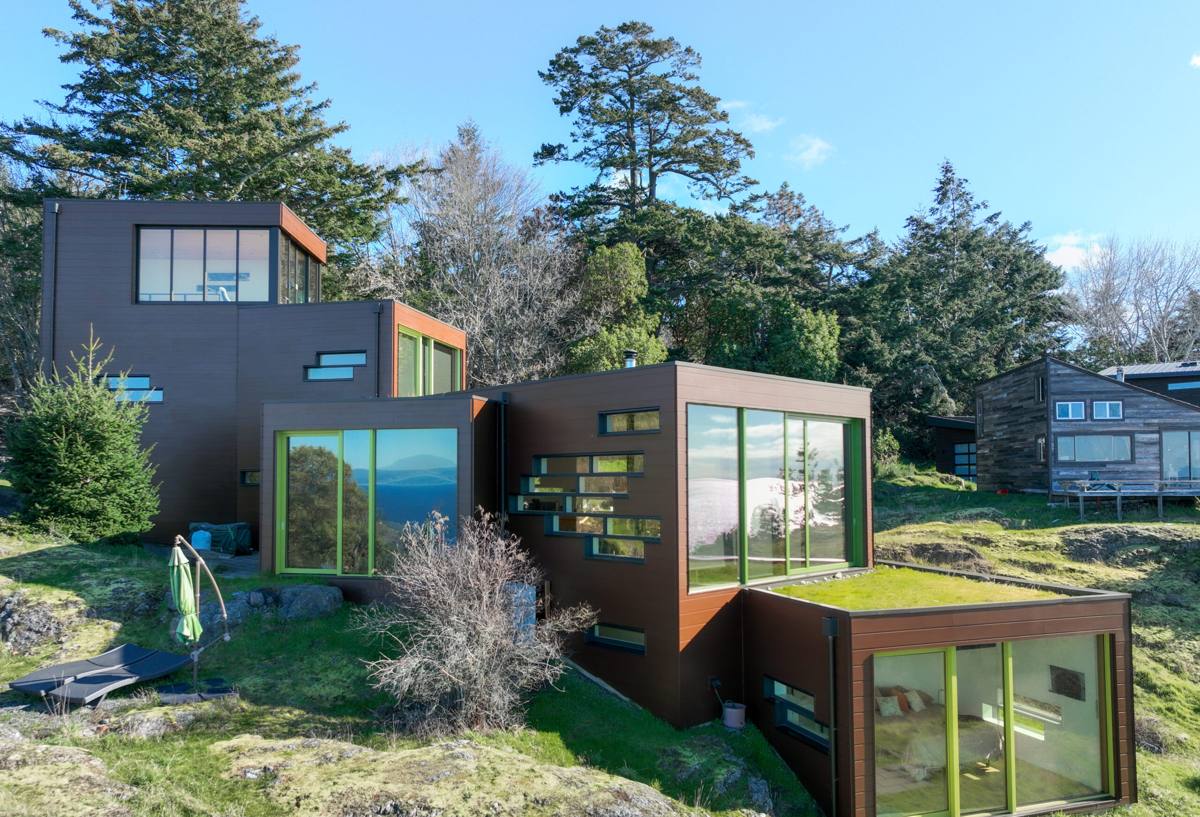
What This Climate Actually Does to a Wall Assembly
Constant low-grade moisture
It's rarely a single storm that damages siding here — it's months of damp air and intermittent rain that never fully dries between events. Any siding material that absorbs moisture, or any installation that traps it behind the cladding, ends up staying wet longer than it should. That's when rot, delamination, and paint failure start.
Moss and algae on shaded walls
North-facing and tree-shaded walls around Nooksack develop moss and algae growth faster than siding manufacturers' marketing photos ever show. This isn't just cosmetic — moss holds moisture against the wall surface, and on materials that aren't dimensionally stable, that sustained dampness accelerates deterioration.
Wind-driven rain at seams and penetrations
Rain here doesn't fall straight down. Wind pushes it sideways into laps, corners, and trim joints — exactly the spots where a sloppy install shows its weaknesses first. The material matters less at these points than the workmanship, but a material that's forgiving of minor imperfections still gives you a longer margin of error.
Why We Only Install James Hardie in This Area
Fiber cement isn't a single product — quality and formulation vary by manufacturer, and those differences show up over the life of the siding, especially in a wet climate. We standardized on James Hardie for a few specific reasons that matter here:
- HardieZone HZ5 engineering: Hardie formulates its siding for different climate zones, and the Pacific Northwest falls into a moisture-focused zone designation. That's not marketing — it changes the product's composition for wet-climate performance.
- Non-combustible core: Fiber cement doesn't feed a fire the way wood-based products can, which matters for insurance conversations as much as safety.
- ColorPlus factory finish: A baked-on finish applied under controlled conditions holds color and resists fading far better than field-applied paint, and it's backed by its own finish warranty separate from the product warranty.
- Track record in wet climates: Hardie has decades of real-world performance data in exactly this kind of weather, not just lab testing.
We don't install LP SmartSide, vinyl, Cemplank, Allura, or bare cedar and primed spruce siding — not because those products have no merits, but because after years of doing exterior work in this climate, we've made a professional call that Hardie gives homeowners the best combination of moisture resilience, finish durability, and warranty backing for what this area actually throws at a house.
Material Comparison for This Climate
| Material | Moisture Behavior | Moss/Algae Resistance | Finish Longevity |
|---|---|---|---|
| James Hardie fiber cement | Dimensionally stable, doesn't swell or rot from moisture exposure | Resists surface degradation from growth; can be cleaned without damaging the substrate | Factory ColorPlus finish, multi-year finish warranty |
| Vinyl siding | Doesn't absorb water but can warp, buckle, or crack in temperature swings | Moss/algae sit on the surface and can be harder to remove without damaging texture | Color is through-body but fades over time; can't be repainted well |
| LP SmartSide (engineered wood) | Wood-based core is more moisture-sensitive at cut edges and seams | Susceptible to surface growth if coating is compromised | Field or factory finish, shorter track record in constant-damp climates |
| Cedar / primed spruce | Natural wood absorbs and releases moisture, prone to swelling and checking | Requires regular treatment to resist moss and rot | Needs repainting or restaining on a recurring cycle |
What a Correct Installation Involves
The siding product is only part of the equation — how it's installed determines whether it actually performs the way it's rated to in a climate like this. On every Nooksack-area project, correct installation means:
- A properly detailed weather-resistive barrier behind the siding, with all penetrations and seams sealed before a single board goes up
- Rainscreen or drainage gap where the wall assembly calls for it, so any moisture that does get behind the cladding can drain and dry instead of sitting against the sheathing
- Correct fastener type, spacing, and placement per Hardie's published installation instructions — this is one of the most common places corners get cut
- Proper clearance between the siding's bottom edge and grade, decks, roofing, and hardscape, so splashback and standing water can't wick into the material
- Caulked and flashed trim, window, and door transitions — the exact spots where wind-driven rain finds a way in
- Factory-cut and factory-primed edges kept intact wherever possible, since field cuts need to be sealed to maintain the product's moisture resistance
Skipping any of these doesn't usually show up as a problem in year one. It shows up in year five or eight, as staining, soft spots, or paint failure at the seams — and by then it's a repair job instead of a five-minute fix during installation.
Signs Older Siding in This Area Is Failing
If your home already has siding and you're not sure whether it's holding up, a few warning signs are common on older houses around Nooksack and the surrounding valley:
- Persistent moss or dark streaking on shaded or north-facing walls that comes back quickly after cleaning
- Soft, spongy sections when pressed, especially near the bottom courses or around window trim
- Paint that's peeling or bubbling rather than just fading evenly
- Visible gaps, cupping, or warping at board seams
- Water stains or discoloration on interior walls near exterior corners after heavy rain
Any one of these is worth a look before it turns into a sheathing or framing repair, which costs considerably more than a siding replacement on its own.
Our Process for a Nooksack Siding Project
1. On-site assessment
We walk the exterior, check the current siding and trim condition, look at drainage and grading around the foundation, and note any moss, moisture, or rot issues before quoting anything.
2. Scope and product selection
We go over which Hardie product line and profile fit the home — lap, shingle-style panels, or board-and-batten — along with ColorPlus color options, and explain the trade-offs plainly.
3. Tear-off and inspection
Once old siding comes off, we inspect the sheathing and framing underneath. This is where hidden moisture damage from a prior installation often turns up, and we'll flag it honestly rather than sealing it up under new siding.
4. Weather barrier and drainage detailing
This is the step that determines long-term performance more than any other, and it's the one that's invisible once the job is done — which is exactly why we don't rush it.
5. Installation to Hardie spec
Fastening, spacing, flashing, and trim work follow manufacturer instructions to keep the product warranty intact.
6. Final walkthrough
We go over the finished work with you, including care and maintenance expectations for this climate specifically.
Cost Factors Worth Understanding
| Factor | Why It Affects Price |
|---|---|
| Tear-off and disposal of old siding | More labor and dump fees if multiple layers or damaged sheathing are found |
| Sheathing or framing repair | Hidden moisture damage found during tear-off adds scope beyond the siding itself |
| Siding profile and trim complexity | Board-and-batten, shingle-style panels, and detailed trim take more labor than plain lap siding |
| Home size and story count | More square footage and taller walls mean more material, labor, and equipment |
| Color and finish selection | Factory ColorPlus finish carries a different cost structure than field-primed for paint |
We don't publish blanket per-square-foot pricing because the tear-off and repair scope varies so much house to house — but we'll give you a clear, itemized number after the on-site assessment, not a vague estimate over the phone.
Why Hiring a Crew That Already Works This Area Matters
A siding crew that mostly works drier inland regions doesn't always think about drainage gaps, moss-prone shading, or the extra attention wind-driven rain demands at seams. Working regularly in Ferndale, Nooksack, and the rest of Whatcom County means those details aren't an afterthought — they're built into how we bid and install every job, because we've seen what happens to siding here when they're skipped.
If you're weighing a siding project for your Nooksack-area home, we're happy to take a look and walk you through what we'd recommend, with no pressure to sign anything on the spot. Reach out using the form below for a free estimate.