 Ferndale Window
 Deck Repair Built Around Nooksack's Weather, Not a Generic Checklist
Decks in the Nooksack area take a beating that homeowners in drier climates never have to think about. Between the driving rain that comes off the Sound, the long stretch of gray months when nothing on a wood surface fully dries out, and the moss that finds a foothold on anything horizontal, a deck out here ages differently than the same structure would in Spokane or Sacramento. We repair decks throughout the Ferndale area, and Nooksack properties get a specific kind of attention because the moisture load here is relentless and cumulative — it's rarely one bad storm that causes damage, it's years of small exposure adding up in the same spots.
A deck repair done right in this part of Whatcom County isn't just about swapping a rotten board for a new one. It means understanding where water actually travels once it's on the structure, which connections are most likely to trap it, and which materials and fastening methods hold up under repeated wet-dry cycling instead of just looking fine on install day.
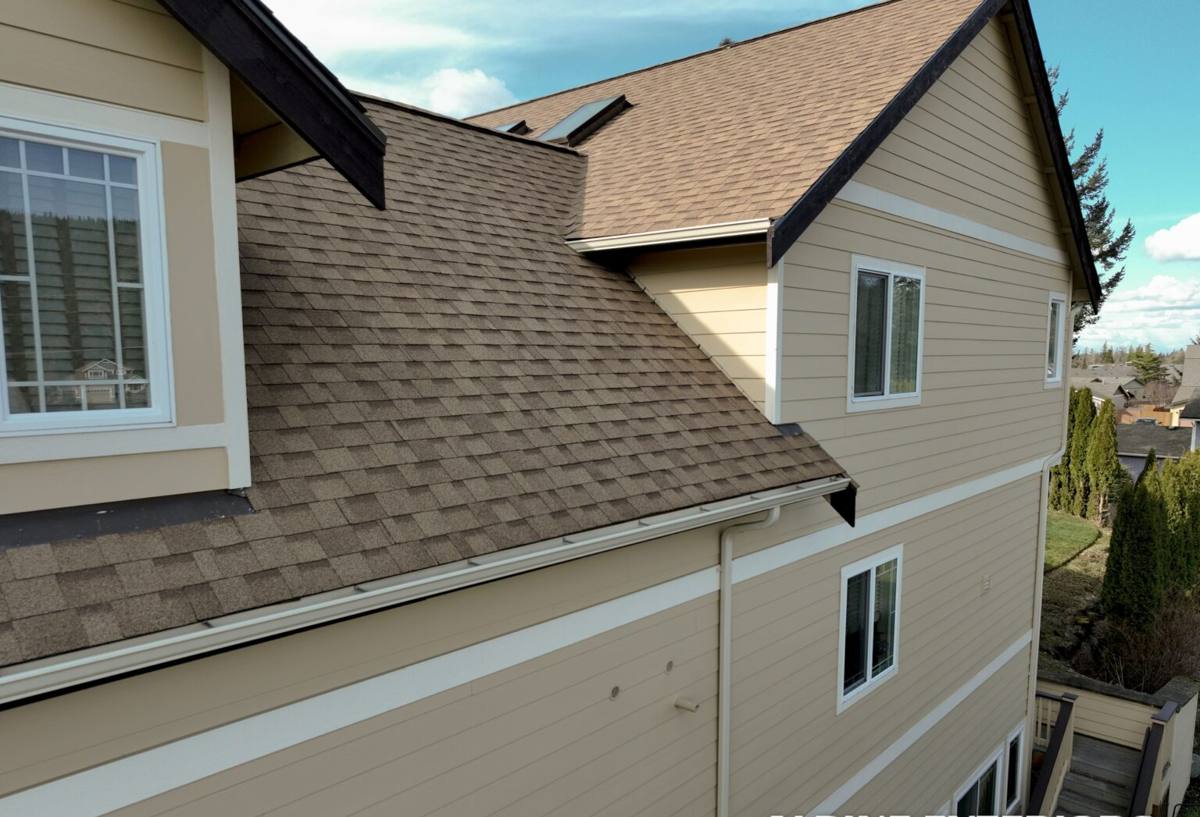
What Whatcom County Weather Actually Does to a Deck Over Time
Every deck failure we see traces back to one of three things: water getting into wood it shouldn't, metal hardware corroding faster than expected, or moss and organic growth holding moisture against a surface long enough for it to start breaking down. In the Ferndale and Nooksack area, all three are working at once, all year.
Driving rain and wind-blown moisture
Rain here rarely falls straight down. Wind-driven rain gets pushed sideways into ledger connections, under railing caps, and into any gap where flashing is missing or was never installed correctly. Once water gets behind a board or into a joist end, it doesn't evaporate quickly in our climate — it sits, and that's when rot starts.
Salt air and hardware corrosion
Whatcom County's proximity to Puget Sound means the air itself carries a fine salt content that speeds up corrosion on exposed metal — nails, screws, joist hangers, and structural connectors. A fastener rated for general outdoor use inland won't necessarily hold up the same number of years out here. We see corroded hardware fail well before the wood around it does, which is often the real reason a deck starts to feel loose or bouncy.
Moss, algae, and prolonged dampness
The long moss season in this region isn't just a cosmetic issue. Moss and algae hold water against the decking surface far longer than bare wood would dry on its own, and that constant dampness accelerates surface rot, makes boards slippery, and can work its way into joints and fastener holes over a few seasons.
Warning Signs a Nooksack-Area Deck Needs Repair
Most deck problems are visible well before they become a safety issue, if you know where to look. We recommend homeowners walk their deck a couple times a year and check for the following:
- Soft, spongy, or spring-y spots underfoot, especially near the house connection
- Boards that have visibly cupped, split, or developed dark staining along the edges
- Rust streaks below joist hangers, screws, or bolts
- Railings or posts that wiggle more than a firm push should allow
- Gaps opening up where the deck meets the house (the ledger board)
- Moss or green film building up faster than a simple rinse can remove
- Stair stringers that feel uneven or have visible cracking
- A musty smell coming from underneath the deck
None of these mean the whole deck needs to be torn out. But each one points to a specific area that needs a closer look before it spreads.
The Repairs We See Most Often in This Area
Ledger board and flashing failure
The ledger board — where the deck attaches to the house — is the single most common failure point we find on older decks in this region. If flashing was skipped or installed incorrectly when the deck was built, water works its way behind the board year after year. By the time it's visible, there's often rot in the rim joist behind it too, which turns what looks like a small repair into a structural one.
Joist and beam rot
Joists and beams underneath the decking are hidden from casual view, which is exactly why they're often further along in decay than homeowners expect. We check these directly rather than assuming the surface boards tell the whole story.
Post base and footing issues
Ground contact is another weak point. Posts set directly in soil, or footings that have shifted with freeze-thaw cycles and seasonal saturation, can undermine the whole structure even when the deck surface still looks fine.
Decking board wear
Cupping, splintering, and checking (surface cracking) on individual boards is common and usually the most straightforward repair — replacing boards in kind, or transitioning failing sections to a lower-maintenance material.
Railings and guards
Loose railings are a safety issue, not just a cosmetic one. Repairs here often involve re-anchoring posts to solid framing rather than just tightening what's there, since a loose railing is frequently a sign the post's base connection has already failed.
Fastener and hardware corrosion
We replace corroded nails, screws, and connectors with hardware rated for the exposure this climate delivers, rather than matching whatever was used originally if it wasn't holding up.
Repair or Replace? How We Make That Call
Not every deck problem needs a full rebuild, and not every deck is worth patching. The decision usually comes down to how much of the structural framing is still sound versus how much has been compromised by rot or corrosion.
| Situation | Usually Repairable | Usually Needs Replacement |
|---|---|---|
| Surface decking boards | Individual boards cupped, splintered, or stained | Widespread rot across most of the deck surface |
| Ledger board | Isolated rot caught early, flashing added or corrected | Rim joist behind ledger has extensive decay |
| Framing (joists/beams) | One or two members affected, accessible for sistering | Multiple structural members compromised |
| Posts and footings | Hardware corroded but posts themselves sound | Posts rotted at grade or footings shifted/heaved |
| Railings | Loose but framing behind them is solid | Posts pulling away from rotted rim or blocking |
| Overall age and design | Deck built to a reasonable standard, aging normally | Original build had chronic flashing or drainage flaws |
When we inspect a deck, we're honest about which column it falls into. A deck with isolated, caught-early damage is a good repair candidate. A deck where the same failure mode (usually water intrusion at the ledger) has been happening unaddressed for years is often more cost-effective to rebuild properly than to keep patching.
Our Deck Repair Process
- On-site inspection. We walk the deck top to bottom, check underneath, probe suspect wood, and look closely at the ledger connection and post bases — the areas most affected by this region's rain and moisture patterns.
- Honest assessment. We tell you what's structural versus cosmetic, what's urgent versus what can wait a season, and give you the repair-versus-replace picture in plain terms.
- Scope and estimate. You get a clear description of what's being repaired, what materials are involved, and an estimate before any work starts.
- Structural repairs first. Rot removal, framing repair or sistering, footing or post correction, and proper flashing installation happen before any cosmetic work.
- Surface and railing work. Decking boards and railings are repaired or replaced to match, with attention to drainage and airflow so water doesn't pool again in the same spots.
- Fastener and hardware upgrade. Corroded hardware is replaced with connectors and fasteners suited to salt-air, high-moisture exposure.
- Final walkthrough. We confirm the deck is solid, railings are secure, and go over any maintenance notes specific to your deck's materials and setup.
Material Choices When Repairing a Deck Out Here
What we use to repair a section of deck depends on what's already there and how it's held up. In general:
| Material | How It Performs in This Climate | Maintenance Reality |
|---|---|---|
| Pressure-treated lumber | Good rot resistance when properly sealed; still needs protection at cut ends and fastener holes | Needs re-sealing every couple of years to keep water out |
| Cedar | Naturally moisture- and insect-resistant, ages well but still needs finish maintenance | Periodic cleaning and refinishing to prevent graying and surface checking |
| Composite decking | Resists rot and doesn't need sealing, but the substructure underneath still needs to be sound and properly flashed | Low maintenance on the surface; requires occasional cleaning to prevent moss and algae buildup |
| Structural connectors/fasteners | Stainless or coated hardware rated for coastal exposure holds up far longer than standard galvanized | One-time upgrade, avoids repeat corrosion repairs |
When we're repairing rather than replacing, we match materials to what's there whenever it makes sense, but we won't use a fastener or connector that we know underperforms in this climate just because it matches the original build. That's a standard we hold regardless of what a deck originally shipped with — the goal is a repair that lasts, not one that matches perfectly and fails again in five years.
Permits, Code, and Safety Considerations
Deck repair work in Whatcom County can trigger permit requirements depending on the scope — particularly structural repairs to framing, footings, or anything affecting railing height and guard spacing. Current residential code generally expects guard rails at a minimum height with baluster spacing that prevents a small child from passing through, and stair stringers need to meet load and rise/run standards. If a repair touches these elements, we make sure the fix brings that section up to current safety standards, not just back to its original (sometimes outdated) condition. We handle the permit conversation as part of the process so there are no surprises.
Why Hire a Crew That Already Works in Nooksack
A contractor who only occasionally works this far into Whatcom County is guessing at what this climate does to a deck over ten or fifteen years. A crew that regularly works in and around Nooksack and Ferndale has already seen which builders' flashing details hold up, which fastener types keep failing early, and which parts of a deck tend to fail first given the specific rain exposure and moss growth patterns of this area. That local pattern recognition is the difference between a repair that addresses the actual cause and one that just replaces what's visibly damaged and leaves the underlying issue to resurface next season.
We also know the practical side of working here — the wetter stretches of the year when certain repairs need to be timed around drying conditions, and the reality that a deck built to a general national standard often needs some adjustment to actually perform well in this specific climate.
A Few Things Worth Checking Before You Call Anyone
- Ask whether the contractor inspects underneath the deck, not just the surface boards
- Ask what fastener and hardware grade they use, and whether it's rated for coastal/high-moisture exposure
- Ask how they handle the ledger board and flashing specifically — this is where most failures start
- Ask for a clear repair-versus-replace explanation, not just a quote for "deck work"
- Confirm whether permits are needed for the scope of work you're planning
If your deck in the Nooksack area is showing any of the warning signs above, or it's just been a few years since anyone took a close look underneath it, we're happy to come out, walk the whole structure, and give you a straight answer on what it needs. Estimates are free and there's no pressure — just a clear picture of what's going on and what it would take to fix it right.