 Ferndale Window
 Decks in the Nooksack Area Take a Different Kind of Beating
Homes around Nooksack, just outside Ferndale in Whatcom County, sit in a climate that's hard on outdoor structures in ways that don't show up in a glossy decking brochure. It's not one big storm that wrecks a deck out here — it's the slow, steady combination of moist Pacific air, salt carried inland off the Salish Sea, and long gray stretches where a deck surface almost never fully dries out. Add in the shade from mature trees common on rural and semi-rural Nooksack-area lots, and you get near-ideal conditions for moss, algae, and slow wood decay to take hold.
We've built and repaired decks throughout this stretch of Whatcom County long enough to know the failure patterns are predictable. The deck doesn't fail because someone used cheap lumber — it fails because a joint wasn't flashed right, a fastener wasn't rated for the exposure, or the framing underneath never got a chance to breathe. This page is about what a deck actually needs to hold up here, and how we build to that standard rather than to a generic national spec.
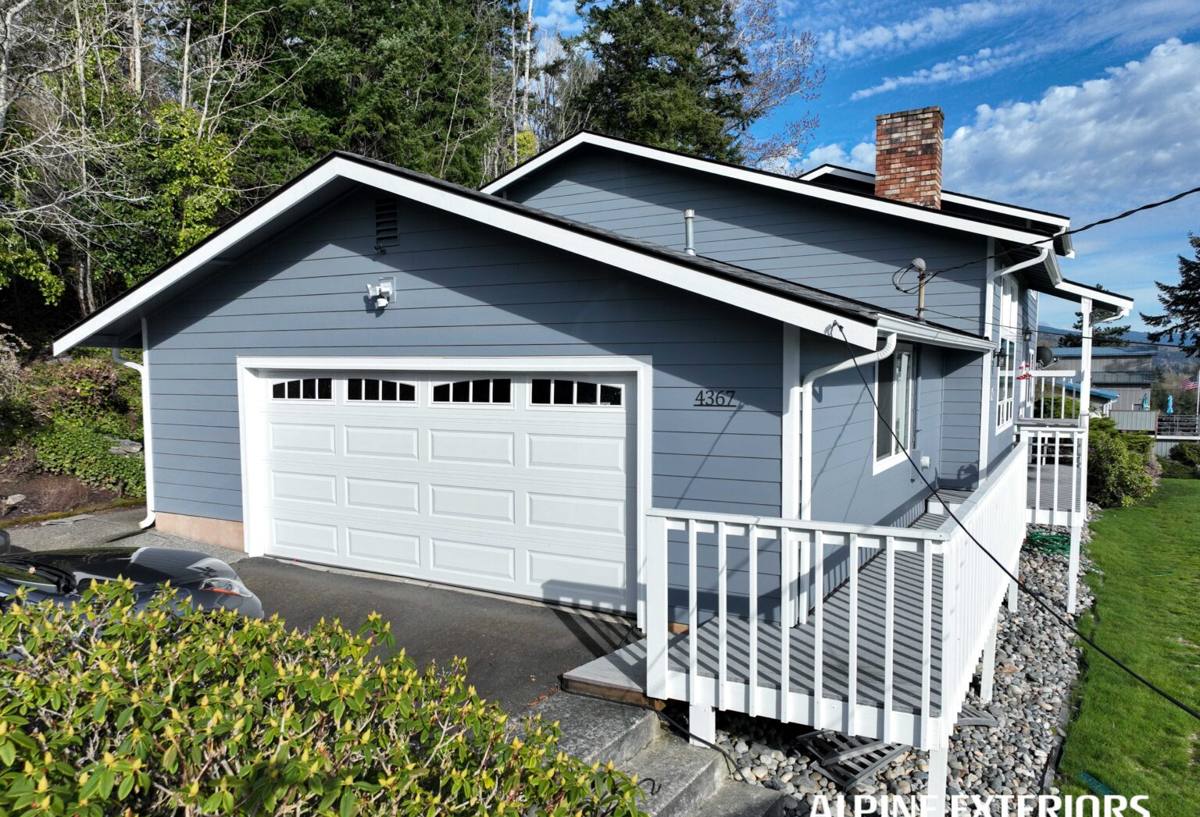
What This Climate Actually Demands From a Deck
A deck built for Arizona or even inland Washington doesn't need to solve the same problems as one built near Ferndale. Out here, the design has to account for:
- Near-constant moisture cycling — wood and composite decking swell and dry out repeatedly through the wet season, which stresses fasteners and joints over time.
- Moss and algae growth — shaded, north-facing, or tree-covered sections of a deck can stay damp for days after a storm, which is exactly what moss needs to establish.
- Salt-influenced air — even a few miles inland from the water, airborne salt accelerates corrosion on unprotected metal hardware, hinges, and fasteners.
- Limited UV, high humidity — coatings and sealants that are rated for sun exposure but not sustained dampness tend to fail here faster than their labels suggest.
None of this means a deck can't last for decades in Nooksack. It means the framing, fasteners, drainage, and material choices all need to be selected with these specific stresses in mind, not just picked from a catalog.
Framing and Structure: Where Most Deck Problems Actually Start
The Ledger Board Connection
If a deck is attached to the house, the ledger board — the piece bolted to the home's rim joist — is the single most common point of failure we see in this region. Water gets behind it, the flashing was skipped or installed wrong, and rot sets in where nobody looks until the deck starts to feel spongy near the house. A correct ledger connection uses proper flashing that directs water away from the house framing, a gap or drainage plane behind the board, and lag bolts or structural screws sized and spaced to code — not just deck screws driven in for convenience.
Footings and Post Bases
Footings need to be set below frost depth and sized for the soil conditions on the lot, which vary quite a bit across Nooksack's mix of rural, low-lying, and river-adjacent parcels. Post bases should hold the post above the concrete and above standing water, not embed wood directly into or against soil where it will wick moisture indefinitely.
Ventilation Underneath
Low decks built tight to the ground trap moisture underneath with nowhere to go. Proper joist spacing, gapped decking boards, and where possible some clearance and airflow beneath the structure make a measurable difference in how long the framing lasts before it needs attention.
Choosing a Decking Surface for This Climate
There's no single "best" decking material — there's a best material for a given budget, look, and how much upkeep the homeowner actually wants to do. Here's how the common options actually perform in a wet, moss-prone, salt-tinged environment like this one.
| Material | Moisture / Moss Behavior | Maintenance | Typical Lifespan Here |
|---|---|---|---|
| Pressure-treated lumber | Absorbs moisture readily; needs sealing to resist moss and graying | Annual cleaning, re-sealing every 1-2 years | 10-15 years with upkeep |
| Cedar | Naturally rot-resistant but still needs sealing in sustained damp shade | Cleaning and oil/sealant every 1-2 years | 15-20 years with upkeep |
| Composite decking | Doesn't absorb water like wood, but surface algae/moss can still grow on shaded boards | Periodic washing; no sealing required | 25-30+ years |
| PVC / capped composite | Fully moisture-resistant surface; least hospitable to moss | Occasional washing | 25-30+ years |
We don't push one product over another as a rule — we walk through the trade-offs honestly. Composite and PVC cost more up front and carry structured manufacturer warranties, but they remove most of the moisture-related maintenance that wood demands in this climate. Wood costs less initially and can look great, but it asks more of the homeowner every year to keep moss and rot at bay, especially on shaded portions of a lot.
Fasteners and Hardware: The Detail Most Decks Get Wrong
This is where salt air does its quiet damage. Standard galvanized fasteners can hold up fine further inland, but closer to the water, and especially on decks with any coastal exposure, corrosion-resistant stainless steel or heavy-duty coated fasteners are worth the modest upcoast in cost. Rust streaking down composite or painted decking is almost always a sign that the hardware wasn't matched to the environment. We spec fasteners, joist hangers, and structural connectors based on the actual exposure of the site, not the cheapest option that meets minimum code.
Our Process for a Nooksack-Area Deck Project
- On-site walkthrough — we look at drainage, sun/shade exposure, soil, and how the deck will connect to the house before we talk materials.
- Honest material conversation — we lay out the real maintenance and cost trade-offs between wood and composite/PVC for your specific site conditions, not a one-size-fits-all pitch.
- Design and permitting — we handle the structural layout and the permit process with Whatcom County or the relevant local jurisdiction so the footings, framing, and railings all meet current code.
- Build — footings, framing, ledger flashing, decking, and railings, in that order, with each stage checked before the next begins.
- Final walkthrough — we go over the finished deck with you, including what maintenance it will need and when, before we consider the job done.
Signs an Existing Deck Needs Attention
If you're not building new but wondering whether your current deck needs repair or replacement, a few warning signs come up constantly in this area:
- Soft, spongy, or springy spots in the decking or framing underfoot
- Persistent moss or black algae staining that comes back within weeks of cleaning
- Rust streaks running down from screws, bolts, or joist hangers
- Gaps or separation where the ledger board meets the house
- Railings or posts that wiggle more than a small amount when pushed
- Standing water or mud underneath the deck after normal rain
Any one of these on its own isn't necessarily an emergency, but a couple together usually means the framing is telling you something. It's worth having someone look before boards or joists fail outright.
What Ongoing Maintenance Actually Looks Like Here
Whatever material you choose, a Nooksack-area deck holds up longest with a modest, consistent maintenance routine rather than an occasional deep intervention. For most homeowners that means:
| Task | Wood Decks | Composite / PVC Decks |
|---|---|---|
| Surface cleaning / moss removal | 1-2 times per year, more in shaded spots | 1-2 times per year |
| Sealing or oiling | Every 1-2 years | Not required |
| Hardware inspection | Annually, check for rust or loosening | Annually |
| Ledger/flashing check | Every couple years, especially before wet season | Every couple years, especially before wet season |
The moss season around here is genuinely long — for a lot of the year, shaded and low-airflow deck sections are staying damp longer than most manufacturers assume when they write their care instructions. Cleaning before moss gets a real foothold is far easier than removing it once it's established.
Why It Matters That We Already Work in Nooksack and Ferndale
A crew that only occasionally works this area has to relearn the local conditions on every job — the microclimates that keep certain lots damp longer, which parts of Whatcom County have particular permitting quirks, and how the salt-tinged air off the Salish Sea actually behaves a few miles inland. We don't have to relearn that here. We've built and repaired enough decks in and around Ferndale and Nooksack to know which details actually matter on this ground, versus which ones are just boilerplate advice that doesn't fit the local conditions.
There's also a practical warranty benefit to hiring local: if something needs a look two or three years down the road, you're not waiting on a contractor who has to schedule a special trip out. We're already working in this area regularly.
Get a Straightforward Estimate
If you're planning a new deck near Nooksack or trying to figure out whether an existing one needs repair, replacement, or just a proper cleaning-and-sealing routine, we're glad to take a look. The estimate is free, there's no pressure, and we'll give you an honest read on what your specific site and materials actually need — use the form below to get started.