 Ferndale Window
 Building New in Sumas: Get the Windows Right the First Time
When you're building new, the windows only get installed once under ideal conditions — open walls, no existing finish work to protect, and a chance to do the flashing and water management exactly to spec. That's the good news. The bad news is that a mistake made during new construction gets buried behind siding and drywall, and it won't show up as a leak or a rot spot for years. By then it's an expensive repair instead of a five-minute fix during framing.
Ferndale Window Co works new-construction jobs in Sumas alongside builders and homeowners who want that first install to be the last time anyone has to think about it. This page covers what a correct new-construction window job actually involves in this part of Whatcom County, what tends to go wrong, and how we run the work from framing to final walkthrough.
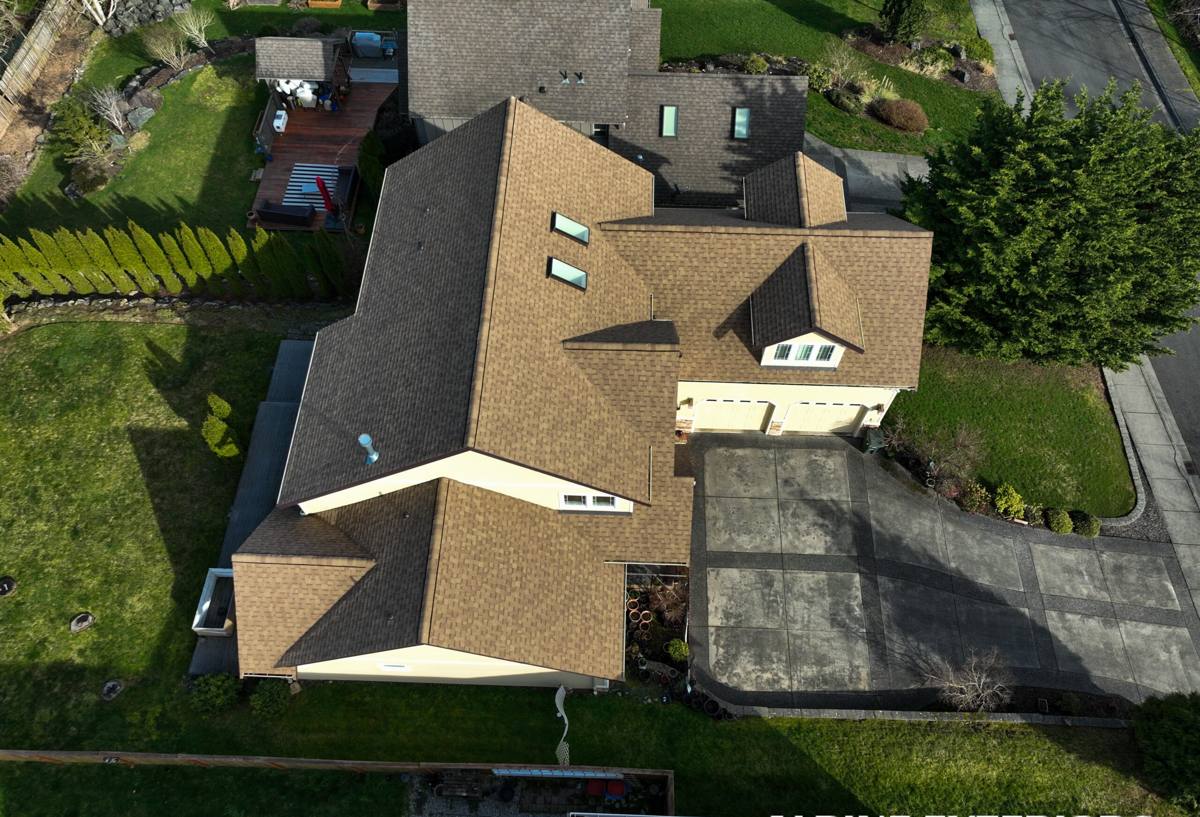
Whatcom County's Climate and What It Does to a New Window Opening
Whatcom County sits under a marine-influenced weather pattern — the same system that carries salt-laden air off the bay through Ferndale also pushes long stretches of driving, wind-driven rain and heavy moss growth further inland toward Sumas. It's not the kind of rain that falls straight down; it's rain that gets pushed sideways into wall assemblies and window openings, which is exactly the scenario new-construction flashing details are supposed to defend against.
Add a moss season that can run most of the year in shaded or north-facing areas, and you get two compounding problems: constant moisture load on exterior materials, and organic growth that holds that moisture against wood, trim, and sealant joints longer than a drier climate would. A window opening that's flashed correctly sheds that water outward and down. One that isn't will eventually let it track behind the siding and sit there.
Why This Matters More in New Construction
In a remodel, you're often working around window products and openings that have already proven themselves (or failed) for years. In new construction, there's no track record yet — the opening, the flashing, and the window all have to work together correctly from day one, because the whole point of building new is that it should hold up for decades without intervention.
New-Construction Windows vs. Replacement Windows: Not the Same Job
People sometimes assume "new-construction window" just means "new window," but it's a specific product type with a specific installation method — and mixing up the two approaches is one of the more common ways a new build ends up with water problems.
| Factor | New-Construction Window | Replacement (Insert) Window |
|---|---|---|
| Frame type | Nailing fin or flange around the perimeter | Flangeless, fits inside existing frame |
| When it's used | Open stud walls, before siding and interior finish | Existing structure, siding and trim already in place |
| Flashing method | Full sill pan, house-wrap integration, flashing tape over the fin | Sealant and existing exterior trim carry more of the load |
| Opening size | Sized to match rough opening exactly | Slightly smaller than the old window's frame |
| Best fit for Sumas builds | New homes, additions, garages converted to living space | Existing homes keeping their siding and trim |
Using a replacement-style window in a new-construction opening (or the reverse) is a shortcut some crews take to save a step. It's also the single most common reason a "new" window has a moisture problem within the first few years.
What a Correct New-Construction Installation Actually Involves
The window unit itself is rarely the weak point. The water management around it is where jobs succeed or fail. A correct install, in order, looks like this:
- Rough opening check — squared, plumb, and sized to the window manufacturer's tolerance, not "close enough."
- Sill pan flashing — a sloped, sealed pan at the bottom of the opening so any water that gets past the window has somewhere to go besides the framing.
- Weather-resistive barrier integration — house wrap cut and lapped so water sheds over the top of the flashing, never under it.
- Window set and fastened through the nailing fin per the manufacturer's schedule — not just wherever is convenient.
- Flashing tape over the fin, lapped correctly at the corners, tied into the house wrap above and at the sides.
- Shimming and squaring so the sash operates correctly for the life of the window, not just on install day.
- Insulation and air-sealing around the perimeter gap — not stuffed tight, not left empty.
- Interior and exterior trim that doesn't trap water against the frame.
Skip or rush any one of these steps and the window can look perfect for years while a problem builds behind the wall.
The Detail Most Often Rushed: Sill Pan Flashing
On a lot of framing schedules, window installation is squeezed between other trades, and sill pan flashing is the step most likely to get shortened. It's also the single most important detail in a climate with sustained, wind-driven rain, because it's the last line of defense if water ever does get past the window itself — which, over enough years and enough storms, it eventually will on any home.
Frame Materials and Glass for Whatcom County's Weather
New construction gives you a clean choice of frame material and glass package, since you're not constrained by an existing opening. For Sumas builds, the deciding factors are usually moisture tolerance, maintenance, and how the frame handles constant damp cycling rather than dry-summer heat.
- Vinyl — low maintenance, doesn't rot or need repainting, handles moisture cycling well. The most common choice for new builds in this area.
- Fiberglass — more dimensionally stable across temperature swings, higher upfront cost, holds paint well if a custom color is wanted.
- Wood and wood-clad — best appearance for some architectural styles, but requires ongoing maintenance and is more sensitive to the sustained moisture and moss exposure common here. We'll install it, but we're upfront that it's a higher-maintenance choice in this climate, not a maintenance-free one.
- Aluminum — durable but a poor insulator and prone to condensation in a cool, damp climate; we generally steer new builds away from it for living spaces.
On glass, double-pane with a low-E coating is the practical baseline for this climate — it manages heat loss and condensation risk better than single-pane or clear glass without a coating. Argon-filled units are a modest, worthwhile upgrade; triple-pane is available but rarely pays for itself in this specific climate compared to the cost difference.
How We Run a New-Construction Job in Sumas
Before Framing Is Even Closed In
We coordinate with the builder or general contractor to confirm rough opening sizes against the actual window order before drywall or siding schedules lock in. Catching a sizing mismatch here costs nothing; catching it after the wall is closed costs real money and time.
Install Day
We follow the same flashing sequence on every unit — sill pan, window, fin taping, house wrap lap — regardless of how many windows are on the schedule that day. It's a checklist, not a judgment call, because consistency is what prevents the one skipped step that causes a problem five years later.
Final Walkthrough
Every window gets checked for operation (smooth open, close, and lock), squareness, and a visual check of exterior trim and sealant lines before we consider the job finished. We'll also flag anything we see in the surrounding siding or trim work that could affect long-term water management, even if it's outside our scope, because a window's performance depends on what's around it too.
Mistakes We See on New Builds (and Build Our Process Around Avoiding)
- Nailing fins fastened at only a few points instead of the full manufacturer schedule
- House wrap taped in the wrong shingle order, directing water behind the barrier instead of over it
- No sill pan, or a flat one instead of a sloped one
- Rough openings cut oversized "to make it easier," then packed with extra shim and sealant instead of insulation
- Windows installed before the weather-resistive barrier is fully lapped and sealed above the opening
- Exterior trim installed tight against the frame with no drainage path for incidental moisture
None of these show up on install day. All of them show up eventually, usually as staining, soft trim, or a draft that wasn't there the first winter.
Why a Crew That Already Works Sumas Is Worth Choosing
New-construction window installation isn't exotic work, but it rewards a crew that's done it repeatedly under this specific climate — one that treats sill pan flashing and house-wrap sequencing as non-negotiable rather than optional, because they've seen what happens in Whatcom County's rain and moss when those steps get skipped. A crew that regularly works Sumas and the surrounding Ferndale area also knows the local building department's inspection expectations for window rough-ins, which keeps the schedule moving instead of triggering re-inspections.
We show up prepared for the wet-season scheduling realities of building here — sequencing work around active rain rather than installing into an open wall during a downpour, which is its own common source of new-construction problems.
If you're building new in Sumas and want windows installed the way they should be the first time, we're happy to walk the plans or the framed opening with you and give a straightforward, no-pressure estimate. There's a form below to get that started.