 Ferndale Window
 Windows Built for Marietta's Particular Kind of Weather
Marietta sits close enough to the water that homes here take on a different kind of wear than houses further inland in Whatcom County. The combination of salt-laden air off Bellingham Bay, near-constant driving rain through the fall and winter, and a moss season that can stretch six months or more puts real, ongoing stress on window frames, seals, and sills. Windows that would hold up fine in a drier, more sheltered part of the county often fail early here — not because they're bad windows, but because they were never matched to this specific environment.
If you own a home in the Marietta area and you're noticing drafts, fogged glass, or wood that's gone soft around your window frames, that's usually a sign the windows are losing a fight they were never properly equipped to win. Replacing them correctly — with the right materials, the right flashing details, and installation that accounts for wind-driven rain — is one of the most worthwhile improvements you can make to comfort, energy bills, and the long-term health of the wall assembly around each opening.
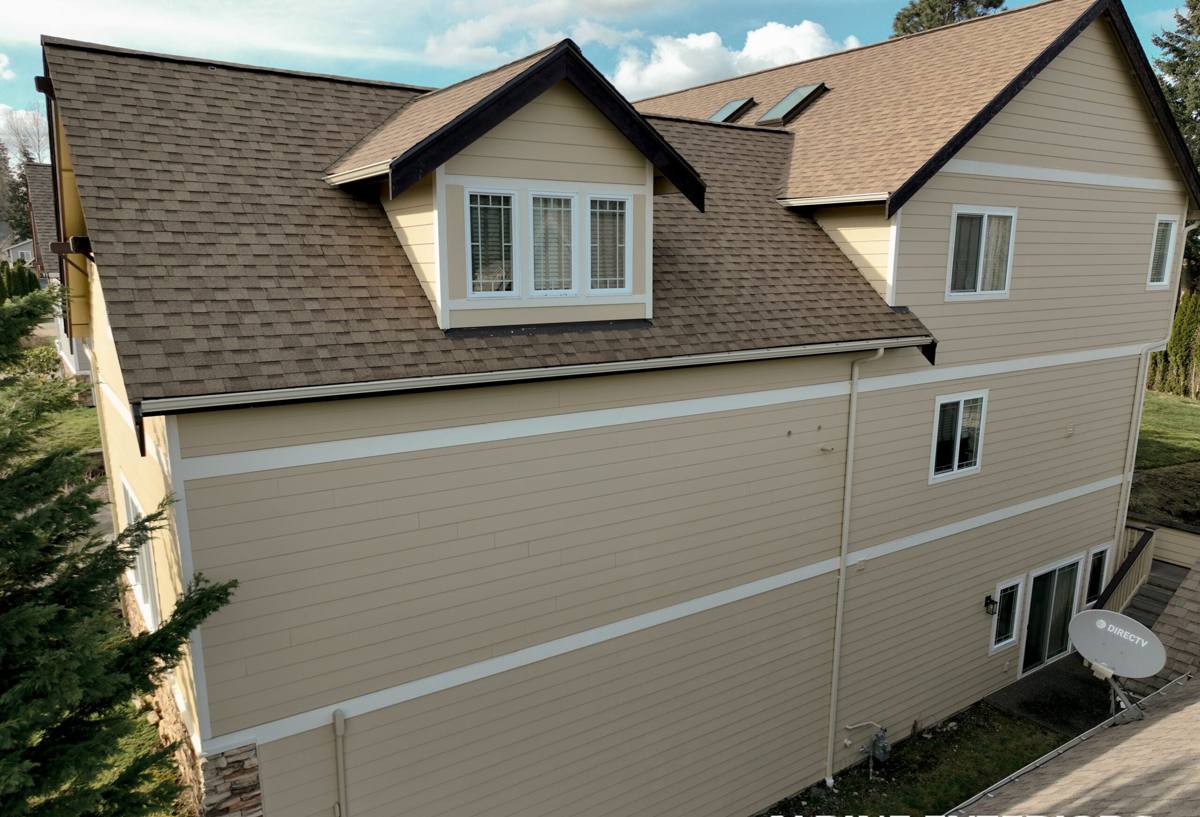
How Salt Air, Rain, and Moss Actually Damage Windows
Each of these three factors attacks a different part of the window system, and understanding how helps explain why the fix has to be more than just swapping glass.
Salt Air
Airborne salt is corrosive to exposed metal hardware — hinges, locks, balance mechanisms, and especially lower-grade aluminum components. Over years, it can pit finishes and cause fasteners to corrode from the outside in, long before the glass itself fails.
Driving Rain
Wind-driven rain doesn't just fall straight down — it gets pushed sideways into any gap in the exterior envelope. Windows facing prevailing weather take repeated water intrusion at the sill and side jambs. If flashing and sealant details weren't done right the first time, water works its way behind the trim and into the wall framing, where it can sit for months without being visible from inside.
Moss and Sustained Moisture
Whatcom County's long wet season keeps shaded siding, trim, and window sills damp for extended stretches. That moisture is exactly what moss and mildew need to take hold. Once moss establishes itself on a sill or in a corner joint, it holds water against the wood or composite material almost permanently, accelerating rot in spots that might otherwise dry out between storms.
Signs a Marietta Home Needs Window Replacement, Not Just a Repair
- Fogging or a hazy film between the panes of a double-pane window — the seal has failed and the gas fill is gone
- Soft, spongy, or darkened wood at the sill, corners, or bottom rail
- Visible moss or persistent green staining on the sill or lower frame
- A noticeable draft you can feel with your hand near the frame on a windy day
- Windows that are difficult to open, close, or lock — often a sign the frame has shifted or swollen
- Paint that keeps peeling or bubbling on the interior or exterior trim around the same window, year after year
- Visible daylight or gaps around the frame when viewed from outside
Any one of these on its own might be a minor repair. Several together, especially combined with an older window, usually mean the unit and its surrounding seal have reached the end of their useful life.
What a Correct Window Replacement Actually Involves
A window replacement done right is not simply "old window out, new window in." In a wet, wind-exposed area like Marietta, the installation details matter as much as the window itself.
Removing the Old Unit and Assessing the Opening
Once the old window is out, we check the rough opening for hidden rot, water staining, or compromised sheathing. This is often the first time anyone has been able to see what's actually happening behind the trim, and it's an important step — installing a new window over a damaged opening just traps the problem behind new material.
Sill Pan and Flashing
The sill pan is what directs any water that does get past the window down and out, rather than into the wall. Properly lapped flashing — installed in the correct order with housewrap and building paper — is the single biggest factor in whether a window stays dry over the next twenty years. This step gets skipped or rushed more often than homeowners realize, and it's usually invisible until a problem shows up.
Setting, Shimming, and Sealing
The window needs to be shimmed level and square, fastened per the manufacturer's specification, and sealed with the right sealant at the right joints — not everywhere, which can actually trap water. Interior and exterior trim is then reinstalled or replaced to match the home.
Final Check
Every new window should operate smoothly, lock securely, and show no gaps at the frame before the job is called finished.
Choosing a Frame Material for Marietta's Conditions
Frame material has a real impact on how a window holds up to salt air and sustained moisture. There's no single "best" option for every home — it depends on your budget, your home's style, and how exposed the window is to weather.
| Frame Material | How It Handles Salt Air & Moisture | Maintenance | Typical Fit |
|---|---|---|---|
| Vinyl | Won't corrode or rot; performs well in coastal-influenced climates | Low — occasional cleaning | Most homes, best value |
| Fiberglass | Very stable in moisture and temperature swings; strong, low expansion/contraction | Low | Homes wanting extra durability or larger openings |
| Wood (clad exterior) | Interior wood warmth with a protective exterior cladding shielding against rain and salt exposure | Moderate — exterior cladding reduces upkeep vs. solid wood | Homes prioritizing traditional interior look |
| Aluminum | Can be prone to corrosion and condensation in salt-air, high-moisture settings unless thermally broken and properly finished | Moderate to high | Specific architectural or commercial-style applications |
For most Marietta homes, we steer people toward vinyl or fiberglass for the simple reason that neither one gives salt air or standing moisture anything to work with. Solid wood frames can look great, but in a wall directly exposed to driving rain, the maintenance burden — repainting, re-caulking, watching for rot — is significant, and it's an honest trade-off worth thinking through before committing.
Glass Packages Worth Considering in This Climate
The glass itself matters almost as much as the frame. In a climate with long gray stretches and frequent temperature swings between a warm interior and a cold, wet exterior, a few features earn their keep:
- Dual-pane with argon fill: the current baseline for energy performance and noise reduction in this region
- Low-E coating: helps keep heat in during the winter and reduces solar gain in the rare stretch of summer sun
- Warm-edge spacers: reduce condensation risk at the edge of the glass, which matters in a humid climate where interior condensation is common
- Triple-pane: worth considering on north- or west-facing walls that take the brunt of storms, though it adds cost and weight
Condensation on the inside of glass in winter is common in this climate and is usually more about interior humidity and ventilation than the window itself — but an aging seal makes it worse, and a properly specified new window package can meaningfully cut it down.
Our Process for Marietta Window Replacement Projects
- On-site assessment: we look at each window individually — exposure, condition, and what's happening behind the trim where visible
- Honest recommendation: which windows genuinely need replacement now versus which can wait, and which material and glass package fits your home and budget
- Written estimate: clear scope, materials, and pricing before any work begins
- Careful removal and opening inspection: checking for hidden rot or water damage before anything new goes in
- Proper flashing and sealing: the step that determines whether the job lasts
- Installation and finish work: setting the window, trim, and final adjustments
- Walkthrough: confirming every window operates correctly and looks right before we consider the job done
What Affects the Cost of a Marietta Window Replacement
| Factor | Why It Matters |
|---|---|
| Number of windows | Per-window cost typically drops when several are done in the same visit |
| Frame material | Vinyl is generally the most budget-friendly; fiberglass and clad wood cost more upfront |
| Glass package | Triple-pane and specialty coatings add cost but can pay back in comfort and lower heating bills |
| Condition of the opening | Hidden rot or water damage found during removal adds repair scope before the new window goes in |
| Window size and type | Large picture windows, bays, or custom shapes cost more than standard double-hung or slider sizes |
| Trim and finish work | Matching existing interior or exterior trim can add labor depending on your home's details |
We know broad ranges are more useful than vague reassurance: a straightforward single-window replacement with standard vinyl and dual-pane glass tends to sit at the lower end of the cost spectrum, while a full-home replacement with upgraded materials or repair of water-damaged framing runs considerably higher. The only way to give you a real number is to look at your specific windows, which is what the estimate is for.
Why It Matters to Hire a Crew That Already Works in Marietta
Window replacement done by a crew unfamiliar with this specific stretch of Whatcom County can miss things that matter here. A crew that regularly works Marietta and the surrounding Ferndale area already knows which wall orientations take the worst of the driving rain, how moss tends to build up on north-facing sills, and what level of exposure to salt-influenced air is realistic to plan for. That local pattern recognition shows up in small decisions — sealant choice, flashing lap direction, which frame material to actually recommend rather than just sell — that add up to a window system that holds up rather than one that looks fine for a season and then starts failing.
It also means we're not guessing at local permitting or typical construction details common to Ferndale-area homes. We show up knowing the conditions your windows are actually up against.
Ready to Talk About Your Windows?
If your Marietta-area home has windows showing signs of wear from salt air, driving rain, or moss, we're glad to take a look and give you a straightforward, no-pressure assessment of what's going on and what it would take to fix it right. Use the form below to request a free estimate.