 Ferndale Window
 Roofing in a Waterfront Climate
Homes in and around Lummi Nation sit closer to open water than almost anywhere else in Whatcom County. That location is part of what makes the area special, but it's also what wears a roof out faster than a typical inland home in Ferndale or Bellingham. Salt-laden air off the Salish Sea, wind-driven rain that gets pushed sideways under shingle tabs, and heavy tree cover that keeps roof decks shaded and damp for months at a time — all three show up on roofs here in ways a generic replacement job doesn't account for.
A roof replacement done right in this area isn't just "put new shingles on." It's choosing materials and details that hold up to salt exposure, ventilating the attic so trapped moisture doesn't rot the deck from underneath, and installing the roof so moss has a harder time getting a foothold in the first place. That's the standard we build to on every Lummi Nation roof replacement we do.
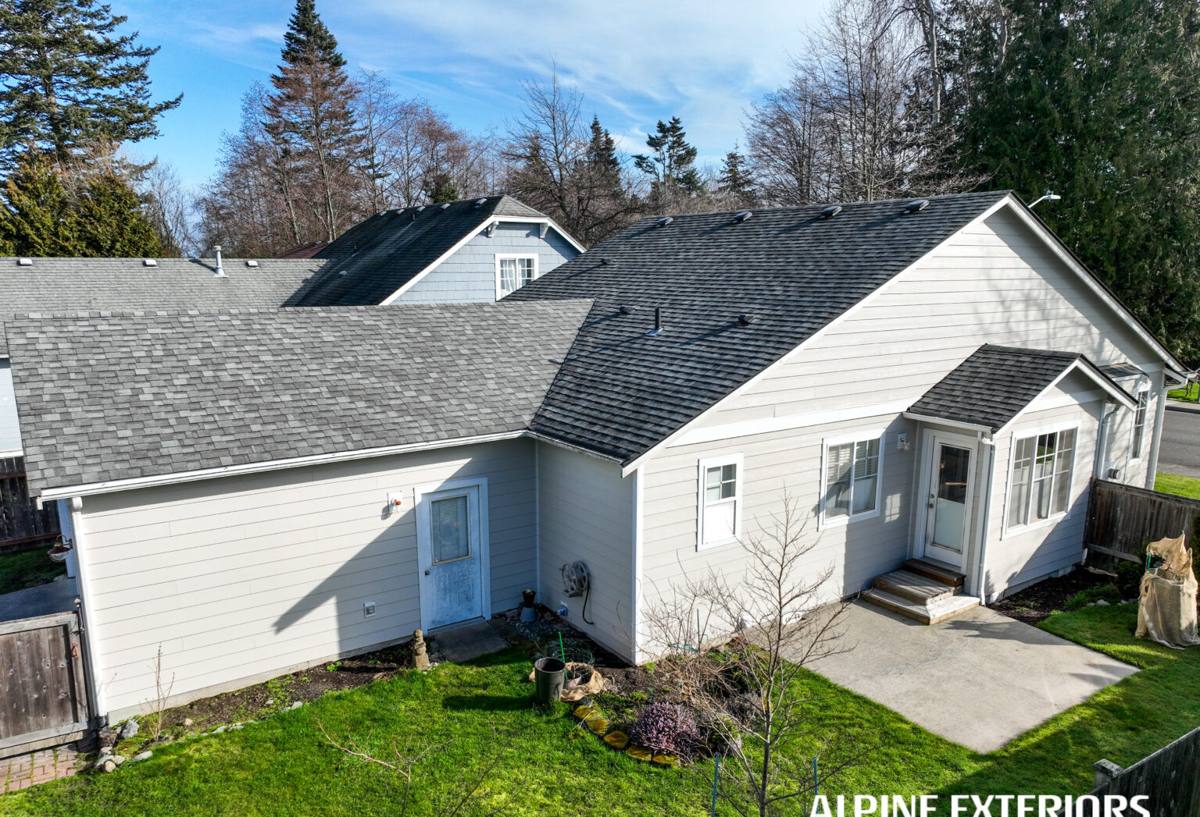
How Salt Air, Rain, and Moss Actually Damage a Roof
Salt Air
Airborne salt doesn't just sit on the surface — it works into metal flashing, fasteners, and vent components over years, accelerating corrosion far faster than the same materials would wear in a drier, inland location. Roofs closer to the water need corrosion-resistant metal at every flashing point, not just standard galvanized components that are fine fifteen miles inland but marginal here.
Driving Rain
Whatcom County gets plenty of straight-down rain, but the rain that does the real damage is the kind that comes in sideways during a windstorm off the water. That rain finds its way under poorly lapped shingles, around under-flashed penetrations, and into any gap in the underlayment. A roof built for this area needs tighter shingle exposure tolerances and fully sealed underlayment laps, not just a "good enough for most houses" installation.
Moss
Shade from mature trees plus near-constant moisture is a perfect moss environment. Moss doesn't just look bad — its root structure lifts shingle edges, holds water against the roof deck, and speeds up granule loss on asphalt shingles. Once moss gets established, it keeps coming back unless the roof is replaced with materials and details that slow its return, and the growth is managed on a schedule afterward.
Signs a Lummi Nation Roof Needs Replacement, Not Repair
- Granules collecting in gutters or at downspout outlets, especially after wind events
- Shingles that are cupping, curling at the edges, or visibly thinning in patches
- Moss or dark streaking that returns within a year or two of cleaning
- Soft spots in the roof deck when walked, or sagging visible from the ground
- Daylight or water stains visible in the attic near roof penetrations
- A roof original to the home and past 20-25 years old, regardless of surface appearance
- Repeated leaks around the same chimney, vent, or valley despite prior patch repairs
Any one of these on its own might still be a repair. Two or more together, especially on a roof already past the 20-year mark, usually means repair costs are chasing a problem that a full replacement solves once.
What a Correct Replacement Involves in This Climate
A roof replacement is really a system, not a single product. Every layer matters for how the roof performs against salt air, driving rain, and moss:
- Tear-off and deck inspection — removing the old roofing down to the deck and replacing any rotted or delaminated sheathing, which is common under long-term moss coverage
- Ice-and-water or synthetic underlayment — a fully sealed water barrier at eaves, valleys, and penetrations, not just felt paper stapled down
- Corrosion-resistant flashing — at chimneys, skylights, sidewalls, and valleys, sized and lapped to shed wind-driven rain
- Balanced attic ventilation — intake at the eaves and exhaust at the ridge, so moisture from daily living doesn't condense on the underside of the deck
- Moss-conscious install details — proper shingle exposure, clean valley construction, and where appropriate, zinc or copper strips near the ridge to slow moss regrowth
- Proper fastening — enough nails, placed correctly, to hold shingles through the wind gusts that come off the water
Skip any one of these and the new roof inherits the same weak point that shortened the life of the old one.
Material Choices for a Coastal Whatcom County Roof
There's no single "best" roofing material for every home — it depends on budget, roof pitch, and how much moss and salt exposure the specific site sees. Here's how the common options actually compare for this climate:
| Material | Moss & Moisture Resistance | Salt Air Durability | Typical Lifespan |
|---|---|---|---|
| Standard 3-tab asphalt shingle | Lower — flatter profile holds moisture, more prone to granule loss | Fair with proper flashing | 15-20 years in this climate |
| Architectural (laminate) shingle | Better — thicker profile sheds water faster, more algae-resistant options available | Good with corrosion-resistant flashing | 20-30 years in this climate |
| Standing seam metal | Excellent — smooth surface gives moss little to grip, sheds water quickly | Very good with marine-grade coatings and fasteners | 40-50+ years |
| Synthetic/composite shingle | Good — resists moisture absorption, some lines are algae-resistant | Good, varies by manufacturer coating | 30-40 years |
We don't push one product on every home. Steep, shaded roofs that fight moss year-round often do better with metal or a moss-resistant architectural shingle. Simpler, less-shaded roofs on a tighter budget can get a long service life out of a well-installed architectural shingle. We'll walk the specific roof with you before recommending anything.
Our Replacement Process
- On-site inspection — we walk the roof and attic, check the deck condition, and note ventilation, flashing, and moss patterns specific to the property
- Written estimate — material options, scope, and a clear price, no pressure to decide on the spot
- Scheduling around weather — we plan tear-off days around forecasted dry windows, since an open roof deck and a sudden squall off the water don't mix
- Tear-off and deck repair — old roofing removed, deck inspected board by board, any soft or rotted sheathing replaced before anything new goes down
- Underlayment, flashing, and ventilation install — the water-management layers that do the real work in this climate
- Roofing material installation — installed to manufacturer spec plus the tighter exposure and fastening details this area calls for
- Final walkthrough — gutters checked, debris cleared, and the completed roof reviewed with you before we consider the job done
What Drives the Cost of a Roof Replacement Here
| Factor | Why It Matters |
|---|---|
| Roof size and pitch | More surface area and steeper pitches mean more material, labor, and safety setup |
| Deck condition | Rotted sheathing under long-term moss coverage adds repair cost that's only visible once the old roof is off |
| Material choice | Metal and premium synthetic products cost more upfront but need less maintenance and last longer near the water |
| Number of penetrations | Chimneys, skylights, and multiple vents each need individual flashing work |
| Access and tree cover | Overhanging branches and limited equipment access can add setup time and, sometimes, trimming costs |
| Tear-off layers | Removing multiple existing roofing layers takes longer than a single-layer tear-off |
We'd rather give you a real number after walking the roof than a broad estimate that doesn't hold up once the tear-off starts. Every estimate we provide is written and itemized.
Why Local Experience in This Area Matters
Lummi Nation and the surrounding Ferndale area aren't like every roofing job in Whatcom County. Homes here deal with a specific combination of shoreline wind exposure, salt air, and heavy tree cover that inland neighborhoods simply don't see to the same degree. A crew that's replaced roofs in this specific area knows which flashing details actually hold up to the wind here, which slopes and tree lines cause moss to come back fastest, and how to schedule work around the area's weather patterns instead of guessing.
That familiarity also means straightforward communication — we're not learning the area's climate quirks on your roof for the first time. We show up knowing what this coastline does to a roof over the following two or three decades, and we build accordingly.
Keeping a New Roof Performing After Installation
A correctly installed roof still needs basic upkeep in this climate, especially the first few years while moss pressure is highest around shaded areas:
- Clear gutters and downspouts at least twice a year, more often under heavy tree cover
- Have moss growth gently removed before it spreads, rather than waiting until it's visible from the street
- Trim back branches that keep sections of the roof shaded and damp
- Check attic ventilation isn't blocked by insulation or debris
- Have flashing and sealant points inspected every few years, especially after major windstorms
None of this is complicated, but skipping it is the single fastest way to shorten the life of an otherwise well-installed roof in this climate.
Get a Straightforward Estimate
If your roof is showing granule loss, recurring moss, soft spots, or you're just past the point where repairs make sense, we're happy to take a look and walk you through honest options — no pressure, no inflated scare tactics. Fill out the form below for a free estimate on your Lummi Nation roof replacement.