 Ferndale Window
 Deck Building in Lummi Nation's Marine Climate
Homes near Lummi Nation sit close to the water — Bellingham Bay and the Strait of Georgia are never far away, and that proximity shapes everything about how a deck should be built here. Salt-laden air moves inland on the wind, rain comes in sideways more often than it falls straight down, and the tree cover and dampness that make this part of Whatcom County beautiful also make it one of the harder places in the state to keep a wood or composite structure looking good for the long haul. A deck built to a generic spec sheet, without accounting for any of that, tends to show its age within a few seasons. A deck built for this specific environment doesn't.
This page covers what actually goes into building a deck that holds up around Lummi Nation and the surrounding Ferndale area — the material choices, the structural details, the hardware, and the process — so you know what to look for whether you hire us or someone else.
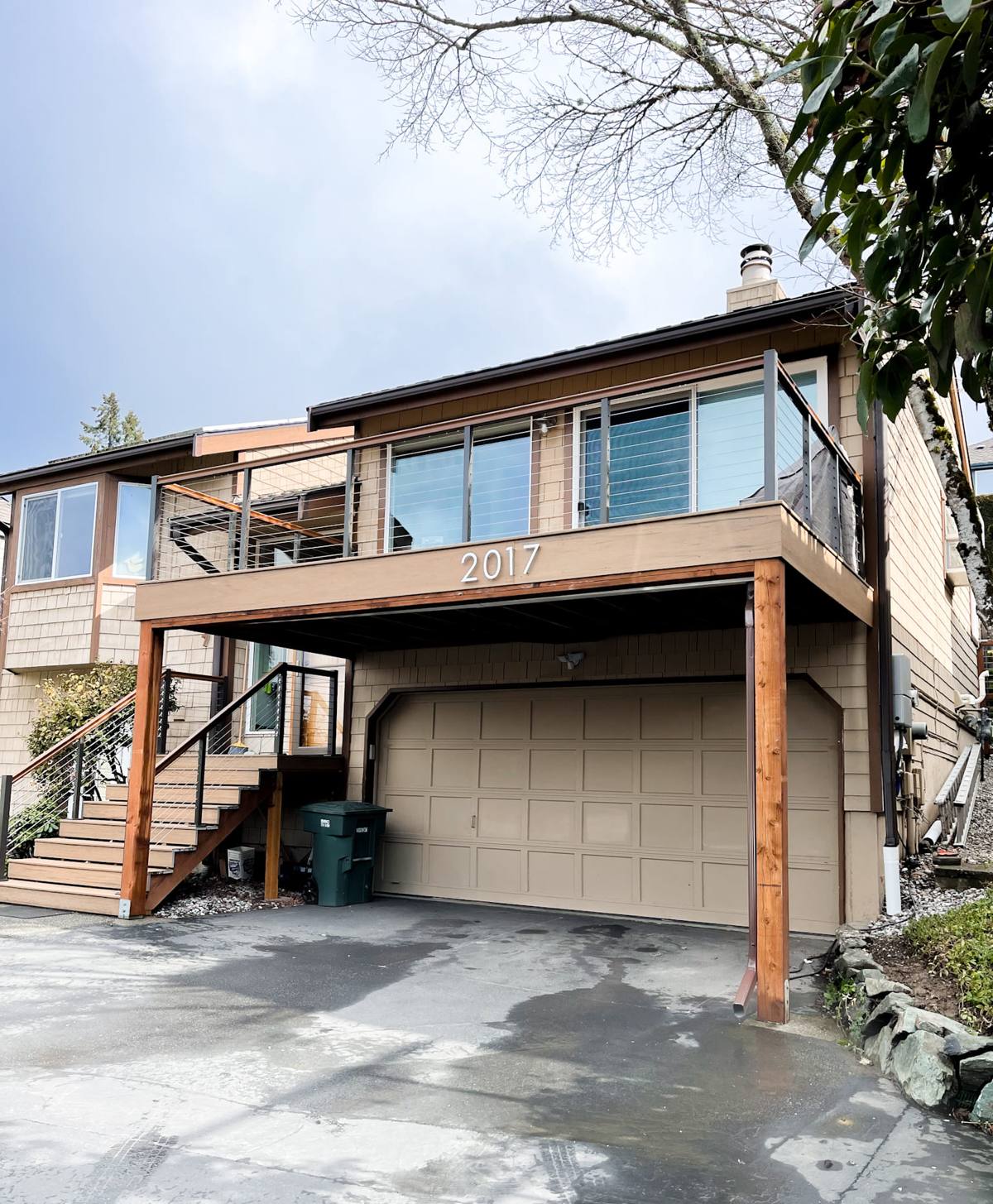
What Salt Air, Rain, and Moss Actually Do to a Deck
Salt Air and Metal Fatigue
Airborne salt is corrosive to unprotected or lightly coated metal. On a deck, that means fasteners, joist hangers, post bases, and railing brackets are all at risk if they're not rated for a marine or coastal environment. The failure is usually slow and invisible — a screw head rusting under a board, a hanger losing strength at the nail holes — until a board works loose or a railing feels soft underfoot. By the time it's visible, the damage has usually been building for a while.
Driving Rain and Hidden Moisture
Rain that comes in at an angle finds its way into places vertical-only rain never would: under rail caps, into end grain that isn't sealed, behind ledger boards that weren't flashed correctly, and into fastener holes that weren't pre-drilled and sealed. Wood doesn't need to be soaked to rot — it just needs to stay damp longer than it gets to dry out, and a shaded, rain-exposed deck near Lummi Nation often does exactly that for months at a stretch.
The Long Moss Season
Between the tree cover common in this area and a wet season that runs long, decks here grow moss and algae readily, especially on the north side of a house or under overhangs. Beyond the cosmetic issue, moss holds moisture against the decking surface and turns boards slick — a real slip hazard on stairs and near doorways, and one of the more common reasons we get called out to a deck that's only a few years old.
Choosing a Decking Material That Belongs Here
There's no single "right" decking material for every home — it depends on budget, how much upkeep you want to do, and how exposed the deck is to weather. Here's how the common options actually perform in this specific climate.
| Material | Moisture Resistance | Maintenance Load | Typical Lifespan Here |
|---|---|---|---|
| Pressure-treated wood | Good if sealed and re-sealed on schedule | Annual cleaning, periodic re-sealing | 15-20 years with upkeep |
| Cedar | Naturally moisture- and rot-resistant; still needs sealing | Regular cleaning, periodic oiling or sealing | 15-25 years with upkeep |
| Composite / PVC decking | Very good; doesn't absorb water like wood | Periodic washing to prevent surface algae | 25-30+ years, manufacturer-dependent |
Composite and PVC boards generally handle a wet, mossy climate with the least ongoing effort, since they don't take on moisture the way wood does — though they still need occasional washing, because algae will grow on any decking surface that stays damp and shaded. Wood, whether pressure-treated or cedar, can absolutely last in this climate, but it's an honest trade: lower material cost up front in exchange for a real maintenance commitment every year. We'll walk you through the trade-offs for your specific site rather than push one material as the automatic answer.
Framing and Structure: What's Underneath Matters More Than What's On Top
Decking boards get all the attention, but the framing underneath is what determines whether a deck is safe and long-lived. In a climate like this, a few structural details matter more than they would somewhere drier:
- Footings sized and set below frost depth, on soil that's been checked for drainage, not just tamped and poured
- Ledger boards flashed correctly where they attach to the house, so water is directed away from the wall rather than trapped behind it
- Joist tape or a comparable moisture barrier on top of framing lumber, so fasteners don't create a wicking point for water into the wood
- Proper spacing and slope so water sheds off the deck surface instead of pooling
- Adequate airflow underneath the structure, since a deck that can't dry out between rains stays wet longer than one that can
None of this is visible once the deck is finished, which is exactly why it's worth asking a contractor to walk you through it before the boards go down.
Fasteners, Hardware, and Flashing: Where Salt-Air Decks Actually Fail
If a deck near Lummi Nation is going to fail early, it's usually the hardware, not the decking, that goes first. Our standard is to use fasteners and structural connectors rated for exterior and coastal exposure — typically stainless steel or heavy hot-dip galvanized, depending on the application — rather than the lighter coated fasteners that are fine in a dry inland climate but corrode faster here. The same goes for joist hangers, post bases, and railing hardware. It costs more up front than using whatever's cheapest at the yard, but it's the difference between hardware that's still sound in twenty years and hardware that starts failing in five.
Flashing gets the same attention. Any place water can get behind a board, a post, or the ledger connection is a place we flash and seal deliberately, rather than relying on caulk alone to do that job over time.
Our Deck Building Process
The process is straightforward, but each step is where the details above actually get applied:
- Site assessment — we look at sun and shade exposure, drainage, soil, and how the deck will sit relative to prevailing wind and rain direction.
- Design and material selection — sizing, layout, and an honest conversation about which decking material fits your budget and your appetite for maintenance.
- Permitting — we handle the paperwork appropriate to the site and jurisdiction before any digging starts.
- Footings and framing — built to the structural details above, not just to the minimum code requirement.
- Decking, railing, and stairs — installed with the fastening and flashing approach suited to a coastal, high-rain climate.
- Final walkthrough — we go over care and maintenance specific to whatever material you chose, so there are no surprises the first wet winter.
Keeping a Lummi Nation Deck Ahead of Moss and Mildew
Whatever material a deck is built from, a little seasonal attention goes a long way in this climate. A basic maintenance checklist we give homeowners:
- Sweep debris and fallen needles off the deck regularly — trapped organic matter holds moisture and feeds moss
- Wash the deck surface at least once a year with a cleaner appropriate to the material, more often on shaded or north-facing sections
- Check and re-seal wood decking on the schedule recommended for the product, not just when it starts to look gray
- Inspect railing posts and stair connections annually for looseness, a common early sign of hardware corrosion
- Keep gutters and downspouts near the deck clear so runoff isn't dumping extra water onto or under the structure
Permits and Site Considerations Near Lummi Nation
Depending on exactly where a property sits, permitting can run through different channels near the reservation boundary than it does elsewhere in unincorporated Whatcom County. We confirm the correct jurisdiction and requirements for your specific parcel before design work starts, so there's no guesswork and no surprises partway through the project.
Why Hire a Crew That Already Works This Area
A deck built to a generic national spec will pass inspection almost anywhere. Whether it's still solid in ten years depends on whether the person building it understood the specific conditions it has to survive — the salt air off the bay, the sideways rain, the long stretch of wet, shaded months every year. We build decks in and around Ferndale and Lummi Nation regularly, which means the material choices, fastener grades, and framing details described here aren't theoretical for us — they're just how we build, because we've seen what happens to decks that skip them.
If you're planning a new deck or replacing one that hasn't held up, we're happy to take a look and give you a straightforward, no-pressure estimate. Use the form below to get started.