 Ferndale Window
 Siding Built for an Island Climate
Lummi Island sits out in the Salish Sea, and that location changes what a home's exterior has to deal with compared to a house a few miles inland. Salt-laden air off the water accelerates corrosion on fasteners, trim, and any siding product that isn't engineered to handle it. Wind-driven rain off Hale Passage and Rosario Strait doesn't just fall on a house, it gets pushed sideways into every seam, lap, and penetration. And the same marine humidity that makes the island beautiful also makes it a long-season breeding ground for moss and algae on north-facing and shaded walls.
None of that is unique to Lummi Island in the abstract sense — most of Whatcom County's coastal edge deals with some version of it. But the combination is more concentrated out here, and it shows up faster on a home that's sided with the wrong product or installed to a mainland-standard level of care. We install James Hardie fiber cement siding exclusively, and on island properties in particular, the reasons for that standard aren't theoretical — they're about what actually survives this environment with minimal drama for the owner.
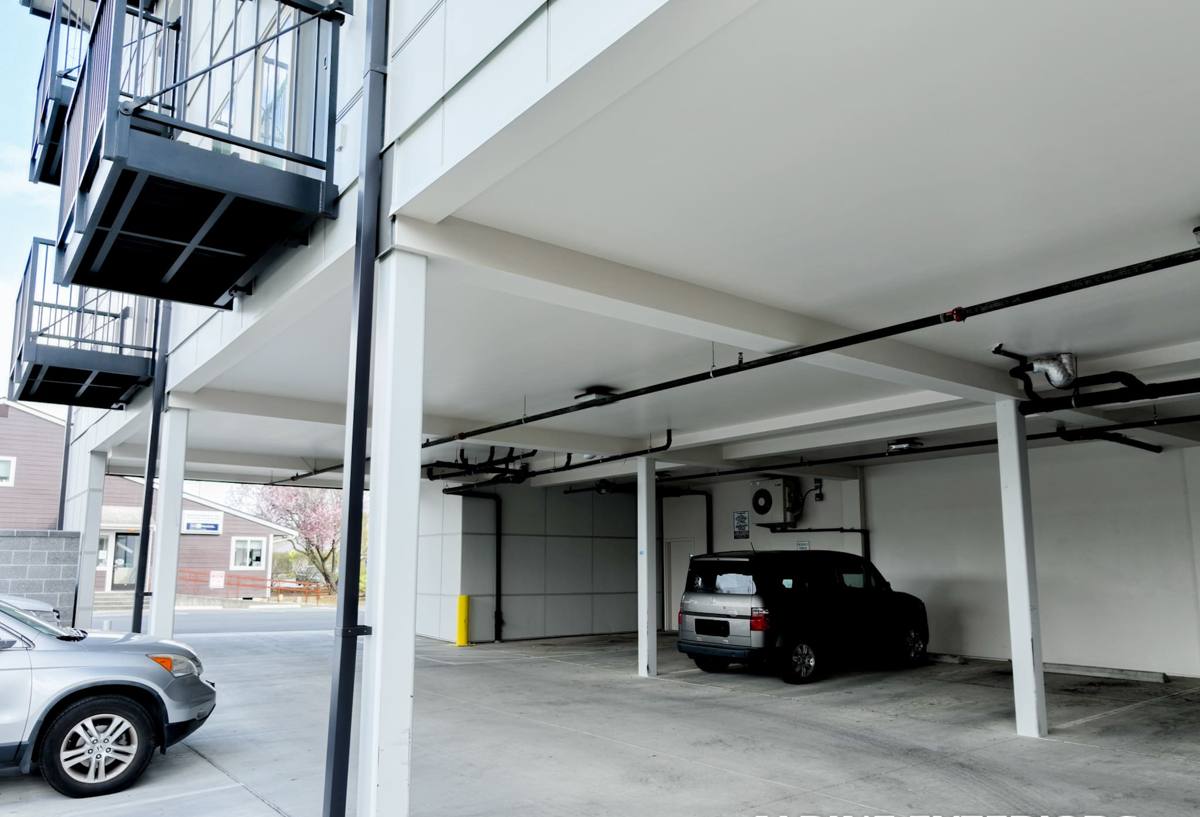
What Salt Air and Driving Rain Do to Siding Over Time
Three environmental stresses matter most for siding performance on Lummi Island:
- Salt exposure: airborne salt accelerates corrosion on metal fasteners, flashing, and hardware, and it can degrade certain finishes and caulks faster than the same products age inland.
- Wind-driven rain: water doesn't just run down a wall, it's pushed horizontally and upward under laps and around trim, which means every joint and penetration is a potential entry point if it isn't detailed correctly.
- Extended damp season: moss, algae, and mildew need moisture and shade to establish, and the Pacific Northwest's long wet season plus tree cover on many island lots gives them plenty of both.
Siding that isn't dimensionally stable, that absorbs moisture readily, or that relies on paint film alone for protection tends to show these effects first — cupping, swelling, panel edge softening, or color and texture changes on north- and west-facing walls. The fix isn't a different paint color. It's a siding system engineered to shed water and resist moisture intrusion at the material level, installed with the gaps, flashing, and fastening a marine climate actually requires.
Why We Don't Install Everything on the Market
We get asked about vinyl, engineered wood products, and other fiber cement brands regularly. Each has a place somewhere, but for island and coastal Whatcom County work specifically, we've standardized on James Hardie because it's non-combustible, dimensionally stable in wet-dry cycling, and backed by a manufacturer that engineers specific product lines for high-moisture climates. That's not brand loyalty — it's a decision based on what holds up out here with the least callback risk for the homeowner.
James Hardie's Climate-Engineered Fit for the Island
James Hardie makes region-specific HZ5 formulations designed for the Pacific Northwest's cool, wet weather profile — different from the HZ10 formulation used in hot, humid Southeast climates. That distinction matters because fiber cement performance depends on how the product is engineered to handle moisture cycling, not just its raw composition. For a Lummi Island home, that means siding formulated for exactly the freeze-thaw-adjacent, rain-heavy, moderate-temperature conditions the island actually experiences.
Beyond the base material, Hardie's ColorPlus factory finish is relevant here specifically because of salt air. A factory-baked, multi-coat finish with a stronger bond to the substrate holds up better against coastal weathering than field-applied paint, and it comes with its own finish warranty separate from the product warranty. On a home exposed to salt spray and constant damp, that finish durability is doing real work, not just cosmetic work.
| Factor | Why It Matters on Lummi Island |
|---|---|
| Non-combustible core | Wildfire risk exists island-wide same as the mainland; fiber cement doesn't contribute fuel to an exterior fire |
| HZ5 moisture engineering | Formulated for wet, moderate climates rather than hot-humid regions |
| ColorPlus factory finish | Baked-on finish resists salt-air fading and chalking better than field paint |
| Dimensional stability | Resists the swelling/cupping that shows up on lesser products after repeated wet-dry cycles |
| Transferable warranty | Protects resale value on island properties, which often turn over to second owners |
What a Correct Installation Actually Involves
The material only performs as designed if the installation respects a few non-negotiables. This is true anywhere, but it matters more on a site where callbacks mean an extra ferry trip and a longer wait for a fix.
Moisture Management Behind the Siding
A weather-resistant barrier and drainage plane behind the siding, not just at the seams, gives incidental moisture a way out instead of a place to sit. On a wind-driven-rain site, we don't treat the water barrier as an afterthought under the siding — it's the primary defense, with the siding as the second line.
Flashing at Every Penetration
Windows, doors, hose bibs, vents, and any other wall penetration are where wind-driven rain finds its way in. Correct step flashing, head flashing, and kick-out flashing at rooflines aren't optional details — they're the difference between a wall that sheds water and one that slowly saturates behind the cladding.
Proper Gapping and Fastening
Fiber cement needs specific gaps at butt joints and trim to allow for expansion and to keep water from wicking into end grain. Fasteners need to be corrosion-resistant and set to the manufacturer's specification — in a salt-air environment, using the wrong fastener is how you get streaking and failure points years before the siding itself would otherwise need attention.
Caulk Where It Belongs, Not Everywhere
Hardie's installation guidelines are specific about where sealant is appropriate and where a gap should be left open to drain. Over-caulking a joint that needs to breathe traps moisture instead of releasing it — a common mistake from crews used to other siding types.
How We Handle Island Logistics
Working on Lummi Island means planning around the ferry rather than just driving to the site whenever it's convenient. We schedule material deliveries and crew trips to minimize round trips, stage what we can in advance, and build the ferry schedule into the project timeline from the estimate stage rather than discovering it mid-job. That planning matters for cost and for keeping a project moving instead of stalling on unplanned extra crossings.
We also pay attention to weather windows more closely on island jobs. Wind-driven rain events that would just slow down a mainland job can make certain install steps — like fitting flashing or setting fresh caulk — a bad idea until conditions clear. We'd rather adjust the schedule than install anything in conditions that compromise the work.
Cost Factors for Lummi Island Siding Projects
Every project is different, but a few factors consistently move the number on island jobs specifically:
| Factor | Impact |
|---|---|
| Ferry access and scheduling | Adds logistics time versus a comparable mainland job |
| Home size and wall complexity | More corners, penetrations, and trim details increase labor |
| Existing siding removal | Tear-off and disposal of old material, especially if damage or rot is found underneath |
| Moisture damage remediation | Rot repair to sheathing or framing found once old siding comes off |
| Trim and finish selection | Corner treatments, trim boards, and color choice affect material cost |
Moss, Algae, and Ongoing Maintenance
No siding is maintenance-free in this climate, but the maintenance burden should be light. James Hardie's factory finish resists the buildup that gives moss and algae a foothold better than raw or field-painted surfaces, and the material itself doesn't feed fungal growth the way wood-based products can. Homeowners still benefit from an occasional gentle rinse on shaded, north-facing walls where moss pressure is highest — that's normal upkeep, not a sign of a problem.
Choosing a Contractor for Island Work
A few things worth checking before hiring anyone for siding work on Lummi Island specifically:
- Do they have direct experience with ferry-dependent scheduling, or will your project be their learning curve?
- Can they explain their flashing and moisture-barrier approach in plain terms, not just "we follow code"?
- Are they installing a single, climate-appropriate product line, or improvising with whatever's available?
- Do they carry proper licensing and insurance recognized in Washington State, and can they provide it without hesitation?
- Will they walk the property and explain what they see before quoting, rather than pricing from a phone call alone?
A crew that already works this island knows the ferry schedule, the wind exposure patterns by property orientation, and the moss-prone spots before they even walk the site. That familiarity translates into fewer surprises and a smoother project for you.
Get a Straight Answer for Your Home
If your Lummi Island home's siding is showing wear from salt air, moisture, or moss, or you're planning ahead for a full replacement, we're happy to take a look and give you an honest assessment — no pressure, no upsell. Use the form below to request a free estimate and we'll work around the ferry schedule to get you a clear answer on scope, timeline, and cost.