 Ferndale Window
 Lummi Island Puts Siding Through More Than People Realize
Lummi Island sits out in the Salish Sea, and that location changes what a home's exterior has to survive compared to a house a few miles inland in Ferndale. Homes here take on salt-laden air off the water, long stretches of wind-driven rain rolling in off the Pacific storm track, and a wet, shaded season that keeps moss and algae established on north- and west-facing walls far longer than drier, more sheltered lots. None of that is unique to any one house on the island — it's the baseline every exterior surface deals with here, siding included.
Wood-based sidings and lower-grade composite panels tend to show the wear first: swelling at seams, soft spots where moisture gets trapped behind poorly lapped boards, and moss taking hold in the grain itself. Paint film breaks down faster under sustained salt exposure too, which means more frequent repainting just to keep a wood or engineered-wood exterior looking presentable. None of this means Lummi Island homes need something exotic — they need a siding product and an installation that were actually built with this kind of climate in mind, put on correctly the first time.
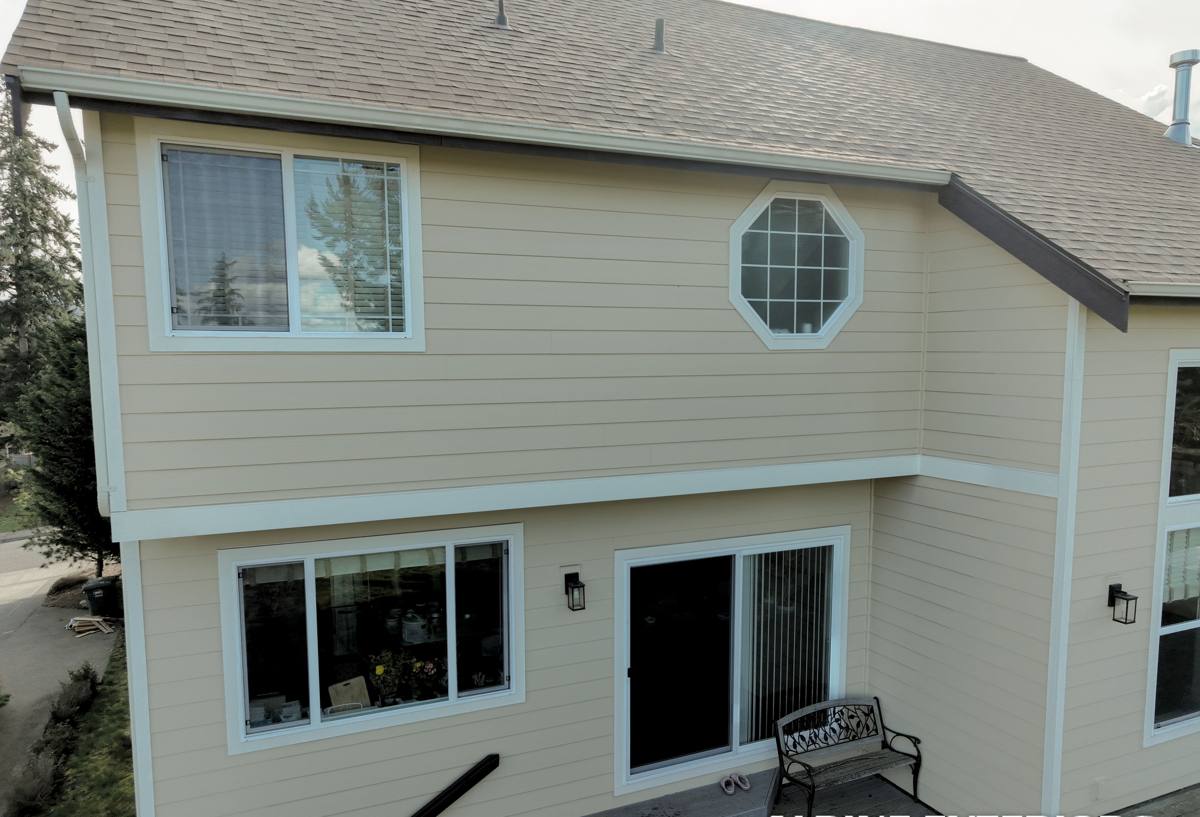
What Fiber Cement Needs to Do Right on This Kind of Site
Fiber cement itself is a cement, sand, and cellulose fiber composite — it doesn't rot, it doesn't feed mold or fungus the way wood fiber does, and it isn't a food source for moss the way bare wood or some engineered wood products can be over time. That's the right starting material for a marine climate. But the material alone doesn't guarantee a good outcome. Fiber cement siding fails prematurely almost exclusively because of installation mistakes, not because the product itself gave out — wrong fasteners, missing clearances, bad flashing, or caulking used where it shouldn't be.
On a site like Lummi Island, three things matter more than they would on a typical inland Ferndale lot:
Fastener Corrosion Resistance
Standard fasteners can corrode faster in salt-air environments than they would a few miles inland. Correct installation on the island means using fasteners rated for the exposure — stainless steel or hot-dip galvanized, per manufacturer requirements — not whatever fastener happens to be in the nail gun that day.
Drainage Behind the Cladding
Driving rain doesn't just hit siding — on exposed, wind-facing walls it gets pushed sideways and can work its way behind panels at seams and penetrations if the wall assembly isn't built to handle it. A properly detailed water-resistive barrier, correct flashing at every penetration, and drainage planning behind the siding (not just the siding itself) are what actually keep water out of the wall cavity.
Moss and Algae Resistance on Shaded Elevations
Fiber cement resists moss far better than wood, but a factory-applied finish that's engineered to shed grime and resist mildew growth performs noticeably better over the long run on shaded, damp elevations than a field-painted surface will.
Why We Install Only James Hardie
Ferndale Window Co installs James Hardie fiber cement siding exclusively. We don't install LP SmartSide, vinyl, Cemplank, Allura, primed spruce, or cedar. That's a deliberate standard, not a brand preference for its own sake, and homeowners on Lummi Island deserve to know why.
Hardie's fiber cement is non-combustible, which matters anywhere but carries extra weight for homes surrounded by dry vegetation for parts of the year. More relevant to this specific site, Hardie engineers its HZ5 product line specifically for climates like the Pacific Northwest's — wetter, milder, with different moisture and temperature cycling than a hot, dry climate would see. That's a meaningful distinction: siding engineered generically for "everywhere" makes compromises that a climate-specific formulation doesn't have to make.
Hardie's ColorPlus finish is baked on at the factory under controlled conditions, rather than applied on-site or left to the homeowner to maintain. In a salt-air environment, that factory finish holds its color and resists fading, chalking, and moisture intrusion at the surface far more consistently than field-applied paint, and it carries its own finish warranty separate from the substrate warranty. Combined with Hardie's transferable product warranty, that's a level of long-term backing that off-brand fiber cement and wood alternatives generally don't match.
We've seen enough Pacific Northwest exteriors — including plenty in exposed, moisture-heavy spots — to know that the product matters less than most homeowners assume, and the installation matters more. Hardie gives us a system we trust; the rest is on us to install correctly.
What a Correct Installation Actually Includes
A lot of siding jobs look fine the day they're finished and start showing problems within a few winters. The difference almost always comes down to details that aren't visible once the job is done. On Lummi Island, we treat these as non-negotiable:
- Fasteners rated for corrosion resistance in coastal and marine-exposure conditions, not standard-grade fasteners used out of convenience
- Correct nailing pattern and fastener placement per James Hardie's published installation instructions — not "close enough"
- Proper clearance between the bottom of the siding and grade, roofing, decks, and other horizontal surfaces to prevent wicking moisture
- A continuous, correctly lapped water-resistive barrier behind the siding, with flashing integrated at every window, door, and penetration
- Rainscreen or drainage gap detailing on wind- and rain-exposed elevations where it's warranted by the wall assembly
- Caulking used only where Hardie's specifications call for it — over-caulking traps moisture rather than keeping it out
- Factory-primed and ColorPlus-finished panels installed without damaging or exposing the cut edges to unfinished substrate
- Final inspection of every seam, corner, and penetration before we call the job done
Skipping any one of these doesn't necessarily cause an immediate problem — it causes a problem two, five, or ten winters from now, after the driving rain and salt air have had time to find the gap.
Cost Factors Specific to a Lummi Island Project
Every siding estimate depends on the size and complexity of the home, but a few factors come up specifically on island jobs that wouldn't apply the same way on a mainland Ferndale project:
| Factor | Why It Affects a Lummi Island Job |
|---|---|
| Ferry-based material and crew transport | Deliveries and crew travel are scheduled around ferry sailings, which affects job sequencing more than it would on the mainland |
| Wind and salt exposure of the specific lot | A waterfront-facing home needs more attention to fastener grade and flashing detail than a more sheltered, interior lot on the island |
| Condition of the existing wall assembly | Homes with hidden moisture damage behind old siding may need sheathing repair before new siding goes on |
| Trim and architectural detail | Corner boards, window trim, and multiple roof intersections all add labor and material beyond flat wall square footage |
| Moss and organic growth removal | Heavily shaded, long-moss-affected walls may need extra prep and cleaning before tear-off and install |
We walk through these factors on-site before giving a number — a real estimate has to account for the specific house, not a generic per-square-foot figure.
How the Job Actually Runs
- On-site assessment. We look at the existing siding, the wall assembly where accessible, moisture history, and the home's specific wind and rain exposure.
- Scope and estimate. We put together a clear scope covering tear-off, any sheathing or moisture repair, materials, and installation — including the logistics of getting materials to the island.
- Removal and prep. Old siding comes off, the wall is inspected for hidden damage, and any repairs happen before anything new goes up.
- Water management install. Water-resistive barrier, flashing, and drainage detailing go in first — this is the layer that does the real work of keeping the wall dry.
- Hardie siding installation. Panels or lap siding go on per manufacturer specification, with corrosion-resistant fasteners and correct clearances throughout.
- Trim and final detail. Corner boards, trim, and caulking (only where specified) finish the exterior.
- Final walkthrough. We inspect the completed exterior with the homeowner before considering the job finished.
Why Ferry Access Changes How This Job Should Be Planned
Lummi Island is reached by a county ferry, and that one fact affects a siding project more than most homeowners expect. Material deliveries, dumpster drop-off and pickup for tear-off debris, and crew scheduling all have to work around sailing times rather than around a normal mainland workday. A crew that hasn't planned an island job before can lose real time — and add real cost — to ferry waits, missed sailings, or trips that have to be repeated because the wrong materials or tools made the crossing.
A contractor who already works on Lummi Island plans the whole job around that constraint from the start: staging materials correctly, batching trips, and building the schedule so the crew isn't standing around waiting on a boat. That's not a minor convenience — on a multi-day siding job, poor ferry planning can turn a one-week project into two.
Maintenance After Installation
One of the real advantages of Hardie fiber cement with a factory ColorPlus finish is how little ongoing maintenance it asks for compared to wood or field-painted alternatives. That said, a few habits go a long way in this specific climate:
- Rinse siding periodically, especially shaded elevations where moss and algae are more likely to establish
- Keep gutters and downspouts clear so water isn't sheeting down the wall face during heavy rain
- Trim back vegetation that keeps a wall surface damp and shaded longer than it needs to be
- Have caulking and trim joints checked periodically — caulk is the one component that ages faster than the siding itself and is easy to touch up before it becomes a leak point
None of this is heavy upkeep — it's the kind of light attention any coastal exterior benefits from, fiber cement included.
Get a Straight Answer for Your Home
Every Lummi Island property faces the water, wind, and rain a little differently depending on its orientation and setting, so a real recommendation starts with actually looking at your home rather than guessing over the phone. If you're weighing a siding replacement or want a second opinion on a quote you've already gotten, we're glad to come take a look and give you a straightforward, no-pressure estimate — fill out the form below to get started.