 Ferndale Window
 Why Lummi Island Decks Wear Out Faster Than Mainland Decks
A deck on Lummi Island lives a harder life than one a few miles inland. The island sits fully exposed to Puget Sound air, which means salt-laden moisture settles on every horizontal surface, every fastener, and every joint almost daily. Add Whatcom County's long, wet winters and the shaded, damp conditions that let moss take hold on north-facing and tree-covered lots, and you get a combination that ages an ordinary deck well before its time.
None of that means a deck can't last on the island — it means the deck has to be built for those conditions from the start. A structure that would hold up fine in a dry inland yard can fail in half the time here if the wrong fasteners, the wrong decking material, or the wrong drainage detail were used.
The Three Forces Working Against Your Deck
- Salt air: corrodes standard fasteners, hinges, and hardware from the inside out, often before any surface rust is visible.
- Driving rain: pushes water sideways into ledger connections, stair stringers, and any gap where flashing was skipped or done poorly.
- Moss and shade: hold moisture against wood and composite decking far longer than sun-exposed surfaces, accelerating rot and making boards slick underfoot.
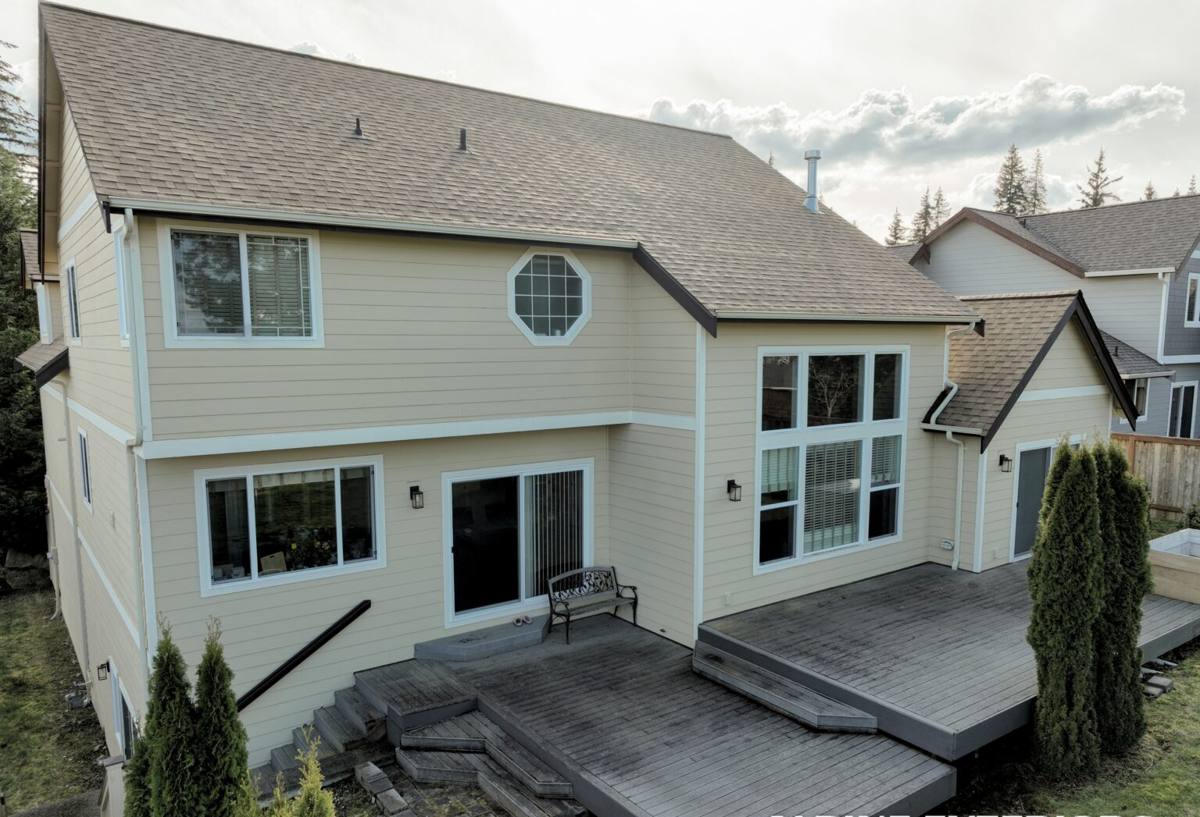
Signs a Deck Needs Replacement, Not Another Repair
We get calls from Lummi Island homeowners who've already had a board or two replaced, or had the railing re-tightened, and want to know if that's enough. Sometimes it is. Often it isn't — because the visible damage is usually the last thing to show up, not the first.
| What You See | What It Usually Means |
|---|---|
| Soft or spongy spots underfoot | Moisture has reached the framing, not just the surface boards |
| Rust streaks below fastener heads | Hardware is corroding and losing holding strength |
| Green or black film that returns after cleaning | Boards are staying wet longer than they can dry between rains |
| Railing posts that wiggle at the base | Post connections or the framing they're anchored to have started to rot |
| Gaps opening between ledger and house | Ledger board or flashing has failed — a structural, not cosmetic, issue |
Any one of the last two items on their own is usually enough to justify a full replacement rather than a repair, since both point to problems in the structural framing rather than the surface decking.
What a Correct Deck Replacement Involves
A deck replacement is not just pulling up old boards and screwing down new ones. On a site exposed to salt air and heavy rain, the parts nobody sees after the job is done matter more than the parts everybody sees.
Framing and Ledger Connection
The ledger board — where the deck attaches to the house — is the single most common failure point on any deck, and it's the one place water intrusion causes the most damage if it's wrong. A correct installation uses proper flashing integrated with the house's water-resistive barrier, not just caulk over the top of an old connection. We also check and replace joists, beams, and posts that show any softness, rather than building new decking on top of framing that's already compromised.
Fasteners and Hardware
This is where salt air does the most quiet damage. Standard zinc-coated screws and joist hangers corrode faster near open water than most homeowners expect, sometimes visibly rusting within a couple of seasons. For Lummi Island projects we use stainless steel or hot-dip galvanized fasteners and connectors rated for coastal exposure, matched to whatever decking material is going down, since mismatched metals can cause their own corrosion problems.
Footings and Drainage
Wet, shaded ground holds moisture around post bases longer here than on a typical inland lot. We set footings below frost depth per code, and we grade and drain the area under the deck so water isn't sitting against posts and framing between rains.
Board Spacing and Ventilation
Moss and mildew take hold where air can't move. Correct board spacing, along with keeping the underside of the deck ventilated rather than boxed in and sealed, gives wood and composite decking a real chance to dry out between wet spells instead of staying damp for weeks at a time.
Choosing Decking Material for Salt Air and Moss Conditions
There's no single "best" decking material for every home — it depends on your budget, how much upkeep you want to do, and how exposed your specific lot is. Here's how the common options actually perform under Lummi Island conditions.
| Material | How It Handles Salt Air & Moss | Maintenance Reality |
|---|---|---|
| Pressure-treated wood | Affordable and strong, but needs consistent sealing to resist moisture and moss staining | Annual cleaning and re-sealing recommended |
| Cedar | Naturally moisture- and insect-resistant, ages to a gray patina; still needs care in shaded, damp spots | Periodic cleaning; sealing optional but extends life |
| Composite decking | Resists moisture and rot well; some early-generation products held moisture against moss and mildew more than expected | Occasional washing; no staining or sealing |
| PVC/capped composite | Fully synthetic cap resists moisture, salt, and staining better than wood-based composites | Lowest upkeep; higher upfront cost |
Our standard recommendation for exposed, shaded, or waterfront-adjacent lots is a capped composite or PVC product, because the fully sealed surface doesn't give moss and mildew the same foothold that wood fibers can. That said, plenty of Lummi Island homeowners choose cedar or treated wood for the look and cost, and we'll build either correctly — we just want you making that call with the trade-offs in front of you, not after the fact.
Our Process for Lummi Island Projects
Working on an island changes how a project gets planned, even though the ferry ride itself isn't a big deal for us. We batch our material deliveries and crew trips so the job moves efficiently once we start, rather than making repeat runs for forgotten items — which keeps your timeline tighter and avoids the delays that come from a crew figuring out island logistics on the fly.
- On-site assessment of the existing deck, framing, and any water damage
- Written scope and estimate covering material options and what each includes
- Permit handling through Whatcom County — deck replacements typically require a permit, and properties near the shoreline can carry additional review, which we account for up front rather than discovering mid-project
- Full removal of the old deck and inspection of ledger, posts, and footings underneath
- Framing repair or replacement, correct flashing, and coastal-rated fasteners throughout
- Decking, railing, and stair installation to your chosen material
- Final walkthrough before we leave the island
What This Typically Costs
Every deck is different, but the biggest cost drivers on a Lummi Island replacement tend to be the same handful of factors. We'll always give you a firm, written number for your specific project — this is just to help you think through where your budget goes.
| Factor | Why It Moves the Price |
|---|---|
| Decking material | Treated wood is the lowest upfront cost; PVC/capped composite runs highest but needs the least upkeep |
| Deck size and shape | Multi-level decks, angles, and built-in features add labor beyond simple square footage |
| Framing condition | Rotted joists, beams, or posts found underneath the old decking add repair cost that's hard to know until demo starts |
| Railing style | Cable, glass, and custom railing systems cost more than standard baluster railing |
| Site access and logistics | Ferry scheduling and material staging on the island are factored into labor and delivery costs |
Maintenance Checklist for Salt Air and Moss Conditions
A properly built deck still needs some seasonal attention on Lummi Island. This is the short list we give every homeowner after a replacement:
- Sweep debris and standing leaves off the deck regularly, especially in shaded areas where moss takes hold fastest
- Rinse salt residue off the surface a few times a year, particularly after storms with wind off the water
- Check fastener heads and railing connections once a year for early corrosion or loosening
- Keep gutters and downspouts clear so roof runoff isn't draining directly onto or under the deck
- Re-seal wood decking on the manufacturer's recommended schedule — don't wait for visible graying to start
- Confirm under-deck ventilation hasn't been blocked by storage, planters, or added skirting
Why Hiring a Crew That Already Works Lummi Island Matters
A contractor who only occasionally makes it out to the island is learning the logistics on your dime — figuring out ferry timing, underestimating how salt exposure affects material choice, or treating the permit process the same as a mainland Ferndale job when shoreline-adjacent properties can involve extra steps. A crew that already works Lummi Island regularly has that figured out before your project starts, which shows up as fewer surprises, tighter scheduling, and a deck built with the right materials the first time instead of a callback two years later.
It also means we've seen how decks actually fail out here over time — which connections give out first, which materials hold up and which don't — and we build accordingly rather than defaulting to whatever's standard for a dry inland lot.
Get a Straightforward Estimate
If your deck is showing soft spots, corroded hardware, moss that won't stay gone, or you're just ready to replace it before those problems start, we're happy to take a look. Fill out the form below for a free, no-pressure estimate — we'll walk the deck, tell you honestly what shape it's in, and lay out your material and cost options clearly.