 Ferndale Window
 Composite Decking Built for Lummi Island's Marine Climate
Lummi Island sits out in the salt air off the Whatcom County mainland, and that changes what a deck has to survive. Wood decking on the island tends to gray, splinter, and rot faster than the same boards would inland, because the combination of salt spray, near-constant humidity, and a moss season that can run from October through May is a tough environment for any exterior wood product. Composite decking was developed largely to deal with exactly these conditions, and for island and shoreline properties around Ferndale and the surrounding water access communities, it's usually the material that makes the most sense over the long run.
This page focuses specifically on composite deck installation and replacement for Lummi Island homes. We're not going to give you a generic rundown of every decking material on the market. We're going to talk about what actually matters when you're building or replacing a deck on an island where the weather comes off the water and the moss doesn't take a season off.
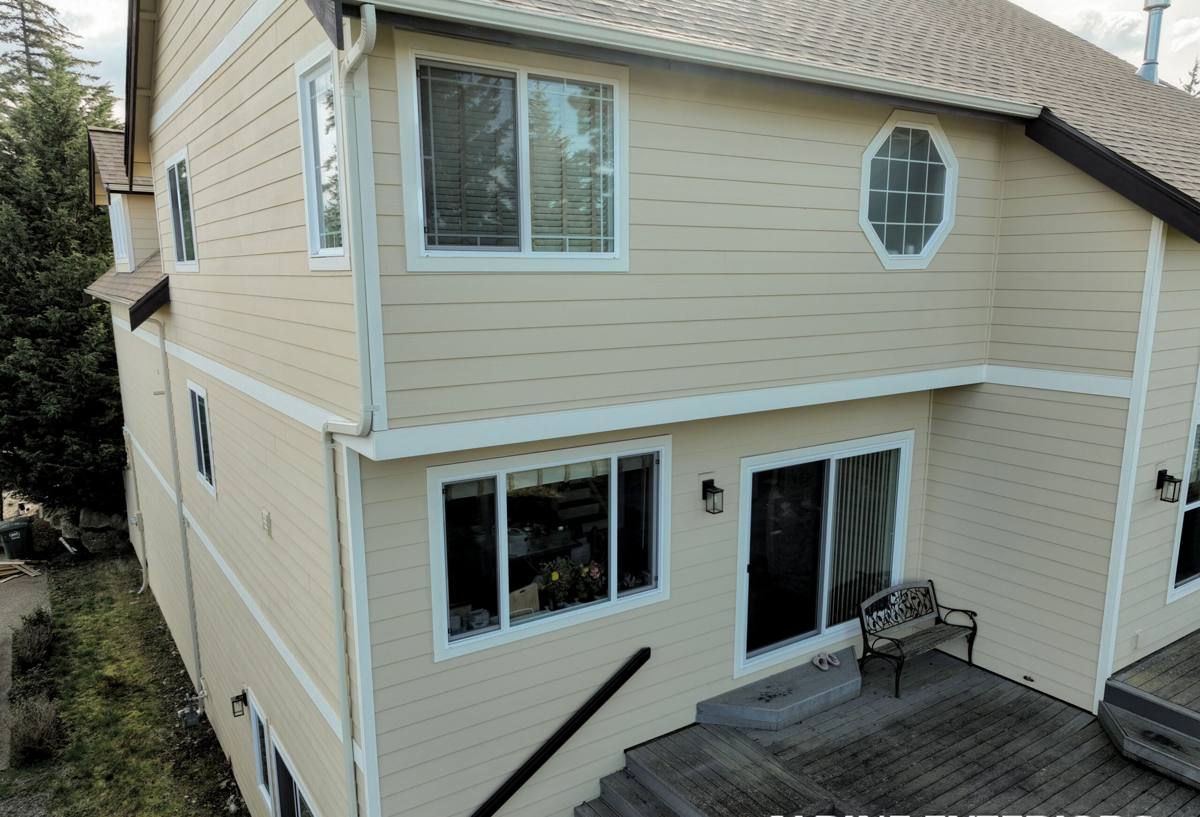
What Salt Air, Rain, and Moss Actually Do to a Deck
Homeowners who haven't dealt with a marine-exposure deck before are often surprised by how fast problems show up. It's worth understanding the specific mechanisms so you know what you're building against.
Salt Air and Metal Fasteners
Airborne salt accelerates corrosion on any fastener, flashing, or hardware that isn't rated for coastal exposure. Standard galvanized screws and brackets can start showing rust streaks within a couple of seasons on an exposed Lummi Island deck. Once a fastener corrodes, it weakens and can stain the decking around it, which is a cosmetic and structural problem at the same time.
Driving Rain and Water Intrusion
Rain that comes in sideways off the water doesn't just fall on the deck surface — it drives into board gaps, under rail posts, and into any end-grain that isn't sealed or capped. Wood soaks that moisture up. Composite boards resist it at the surface, but the substructure underneath (joists, beams, ledger boards) is still wood in most builds, and that's where a lot of long-term rot problems actually start if the framing isn't protected correctly.
Moss and Organic Growth
Lummi Island's shaded, damp conditions for much of the year give moss and algae a long runway. On a deck surface, moss holds moisture against the board, blocks the drainage grooves on grooved-edge composite boards, and creates a genuinely slippery walking surface. It's more than an appearance issue — a mossy deck is a fall hazard, especially on stairs.
Composite Decking vs. Other Materials for Island Conditions
There's no single "best" decking material for every situation, but for a Lummi Island property exposed to salt air and heavy rain, the trade-offs tend to favor composite. Here's an honest comparison based on how each material actually performs in this specific climate, not on marketing claims.
| Material | Salt air resistance | Moss/moisture behavior | Maintenance |
|---|---|---|---|
| Pressure-treated wood | Fasteners corrode faster; wood itself weathers and checks | Absorbs moisture, feeds moss and mildew growth | Annual cleaning, periodic staining/sealing |
| Cedar | Naturally rot-resistant but still weathers gray and can cup | Prone to moss in shaded, damp spots without upkeep | Regular sealing to hold color and resist checking |
| Composite decking | Board face doesn't corrode; hardware must still be coastal-rated | Surface sheds water; grooves need periodic clearing | Occasional wash-down, no staining or sealing |
| PVC decking | Very resistant, fully synthetic | Sheds water well but can feel slick when mossy/wet | Low, but limited color/texture range |
Composite lands in a good middle ground for most Lummi Island homeowners: it holds up to the salt and rain far better than wood without the upkeep wood demands, and it typically offers more natural wood-look texture and color range than straight PVC. It's not maintenance-free — nothing exposed to this climate is — but the maintenance is periodic cleaning rather than annual sealing and staining.
What a Correct Composite Deck Installation Actually Involves
Composite boards are only as good as what's underneath them. A lot of deck problems we get called out to fix on the island aren't board failures — they're substructure or fastening mistakes that let water get where it shouldn't. A correct install addresses each of these:
Joist and Framing Protection
Because most composite decking systems are still built on wood framing, every joist top and cut end should be protected — typically with a joist tape or flashing product designed to keep water off the wood framing underneath the boards. Skipping this is one of the most common shortcuts we see, and it's invisible until the framing starts failing years later.
Proper Board Spacing and Ventilation
Composite boards expand and contract with temperature, and correct gapping matters more in a wet climate, not less. Tight gapping traps moisture and debris between boards; correct spacing lets water drain through and air circulate underneath, which matters for keeping moss from taking hold on the framing itself, not just the surface.
Coastal-Rated Hardware
On an island property, we use fasteners, brackets, and hidden clip systems rated for coastal or marine exposure, not standard hardware. It costs more up front and is one of the easiest places to cut corners without a homeowner ever knowing — until the rust stains show up.
Ledger Board and House Connection
Where the deck ties into the house, flashing has to be done correctly to keep water from getting behind siding or into the rim joist. This connection point is one of the highest-risk spots for hidden rot on any deck, and it deserves more attention than it usually gets.
Drainage and Grading Underneath
Especially on lower or ground-level decks, water needs somewhere to go after it passes through board gaps. We look at grading and drainage under the deck as part of the plan, not as an afterthought.
Our Process, Start to Finish
Here's what working with us on a Lummi Island composite deck actually looks like:
- On-site assessment — We look at exposure (how much direct salt/wind/rain the deck sees), existing framing condition if it's a replacement, and how the deck will be used.
- Material and layout discussion — We walk through composite board options, color/texture choices, and railing systems that hold up to the local conditions, and lay out a board pattern that fits the space.
- Written estimate — Clear scope, materials, and price before any work starts. No surprise change orders for things we should have caught up front.
- Demo and framing (if needed) — Old decking removed, framing inspected and repaired or rebuilt as needed, joist protection installed.
- Composite board and rail installation — Installed to manufacturer spec for spacing, fastening, and expansion gaps, with coastal-rated hardware throughout.
- Final walkthrough — We go over the finished deck with you, including what maintenance to expect and how the warranty coverage works.
Choosing Boards, Colors, and Hardware for This Climate
Composite decking comes in a range of board profiles, colors, and price tiers, and the right choice depends on how the deck will be used and how much sun and salt exposure it gets.
Board Color and Heat
Darker composite boards absorb more heat and, in some product lines, can show more visible fading over time in high-sun exposure. On the water, where reflected light off the strait can add to sun exposure, lighter and mid-tone colors often hold up more evenly in appearance over the years.
Grooved vs. Solid-Edge Boards
Grooved-edge boards (used with hidden fastener clip systems) give a clean, screw-free surface, but the grooves can collect debris and moss in shaded, damp spots if they're not cleaned periodically. Solid-edge, face-screwed boards are easier to keep clear but show fastener heads. We'll talk through which fits your deck's exposure and how much upkeep you want to do.
Railing Systems
Railing hardware is exposed to the same salt air as deck fasteners, often more so since it's vertical and catches more direct wind-driven rain. We spec railing hardware the same way we spec deck fasteners — for coastal exposure, not standard interior-grade parts.
Maintenance Checklist to Get the Most Life Out of the Deck
Composite decking is low-maintenance, not no-maintenance, especially in this climate. A simple seasonal routine goes a long way:
- Sweep off leaves, needles, and debris regularly — trapped organic matter holds moisture and feeds moss
- Wash the deck surface with soap and water (or a composite-safe cleaner) at least once or twice a year, more often in shaded areas
- Check and clear drainage grooves on grooved-edge boards where moss or algae tends to build up
- Inspect railing posts and hardware annually for rust staining, which signals a fastener issue worth catching early
- Keep gutters and downspouts near the deck clear so runoff isn't dumping extra water onto or under the deck surface
- Trim back overhanging vegetation to cut down on shade and moisture buildup that encourages moss
- Avoid pressure washing at close range or high pressure, which can damage the composite surface finish
What Affects the Cost of a Composite Deck
Every deck is different, but these are the main factors that move the price up or down. We'll give you specifics for your project during the estimate rather than a number that doesn't account for your situation.
| Factor | Why it matters |
|---|---|
| Deck size and shape | More square footage and more cuts/angles increase material and labor |
| Framing condition | Rebuilding rotted or undersized framing adds cost but is not optional if it's failing |
| Board tier and color | Composite lines range from entry-level to premium capped boards with different price points |
| Railing system | Composite, metal cable, or glass rail systems vary widely in cost |
| Height and access | Elevated decks or difficult site access add labor time |
| Fastening system | Hidden clip systems typically cost more in labor than face-screwed installation |
Why Hire a Crew That Already Works on Lummi Island
Building a deck on an island isn't the same as building one a few miles inland. Material and equipment logistics take more planning, ferry scheduling affects timelines, and the exposure conditions genuinely are different from a sheltered lot on the mainland side of Whatcom County. A crew that has already worked island properties knows to plan deliveries around the ferry schedule, knows what hardware actually holds up out here, and isn't learning the local conditions on your project.
We also think it matters that the same crew handling your composite deck understands how it ties into the rest of the exterior of the house — flashing at the ledger board, drainage near the foundation, and how the deck interacts with siding and trim. A deck built in isolation from the rest of the building envelope is where a lot of hidden water problems start.
If you're planning a new composite deck or need to replace an aging wood deck on Lummi Island, we're happy to come take a look and walk the site with you. There's no pressure and no obligation — just a straightforward assessment and a clear estimate so you know what you're working with before you decide anything. Reach out using the form below to get started.