 Ferndale Window
 Building New in Kendall? The Windows Are Part of the Building Envelope, Not an Add-On
Kendall sits in the foothill country east of Ferndale, in a stretch of Whatcom County that sees a long, wet cool season and plenty of days where moisture just sits in the air. Whether your new build is a custom home, a shop-with-living-quarters, or an addition big enough to need its own window package, the windows you choose and how they're installed during framing will do more to determine your home's long-term dryness and comfort than almost any other single decision on the job site.
New-construction windows are different from a replacement job in one big way: the window is going into a rough opening that hasn't been weathered yet, alongside a water-resistive barrier (WRB), flashing tape, and sheathing that are all being installed at the same time. Get that sequence right and you've built a wall that sheds water for decades. Get it wrong — even with a good window — and you've built a slow leak into the frame of the house.
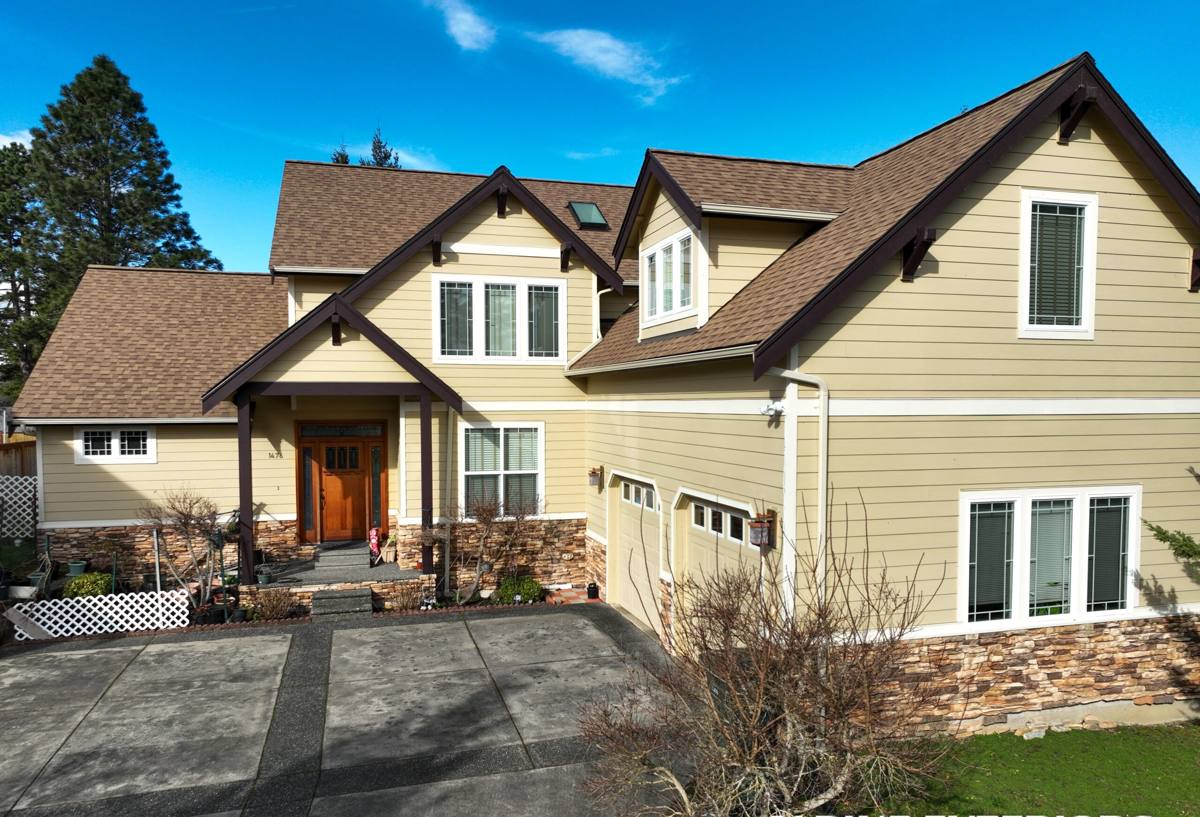
What Whatcom County Weather Demands From a New Window Install
A few things about our regional climate matter directly to how a new-construction window package should be built and installed:
- Driving rain, not just steady rain. Wind-driven storms push water sideways into wall assemblies, not just straight down. Flashing and sealant details have to account for wind-loaded water, not just gravity.
- Long wet seasons with slow drying windows. When a wall does take on a little moisture, it doesn't get much of a chance to dry out between storms for months at a time. That makes correct drainage planes and back-caulking non-negotiable — there's little margin for a shortcut.
- Moss and organic growth on north- and shade-facing walls. Anywhere moisture lingers, moss and algae will eventually follow, and trapped organic growth around a window frame accelerates sealant breakdown and wood decay over time.
- Marine-influenced air. Even away from the immediate shoreline, Whatcom County's air carries more moisture and salt-tinged humidity than a dry-climate build, which is harder on unprotected fasteners, sill pans, and lower-grade hardware.
None of this means a Kendall build needs anything exotic. It means the basics — proper WRB integration, correctly lapped flashing, a sloped sill pan, and quality sealant — have to be done in the right order, every time, with no shortcuts taken because "it's just one window."
What a Correct New-Construction Window Install Actually Involves
Sequencing With the Building Envelope
New-construction windows get installed after the WRB is on the wall but before the siding goes up. That means the window flashing has to integrate into the drainage plane correctly — sill flashing first, then the window, then jamb flashing, then head flashing lapped over the top so water is always directed outward and down, never trapped behind a lap that runs the wrong way.
Sill Pans
A sloped sill pan under the window is one of the cheapest insurance policies in the whole build. It gives any water that does get past the exterior seal somewhere to go besides straight into the framing. On a home that will sit through many wet Whatcom County winters, skipping the sill pan to save an hour of labor is a bad trade.
Fastening and Frame Attachment
New-construction (nail-fin) windows attach through the flange directly to the sheathing, which means the fastening schedule matters — under-fastened windows can rack out of square over time or let flashing tape lose its bond at the corners, which is exactly where most leaks start.
Sealant and Backer Rod
Interior and exterior sealant joints need the right joint width and a backer rod where the gap calls for it, not sealant smeared over a gap that's too wide or too narrow to actually flex with the building as it settles and the seasons change.
Energy Code Compliance
Washington's energy code sets minimum U-factor requirements for new construction, and those requirements are checked against the whole building's energy path, not window-by-window in isolation. We select and verify window specs against your project's energy compliance path before ordering, so there's no surprise at final inspection.
Choosing Windows for a Kendall New Build
For new construction, the frame material and glazing package matter, but so does how well a given product's flange and flashing detail plays with standard WRB and tape systems. Some product lines make correct field-flashing straightforward; others require extra steps or proprietary accessories to get a reliable seal. We'll walk you through the realistic options for your project rather than pushing one line for every job.
| Frame Material | Typical Strength | Trade-Off to Know |
|---|---|---|
| Vinyl | Cost-effective, low maintenance, good energy performance | Frame can expand/contract more with temperature swings; quality varies a lot by manufacturer |
| Fiberglass | Very stable dimensionally, strong, paintable | Higher upfront cost than vinyl |
| Wood-clad | Classic interior look, warm appearance | Exterior cladding and seals need to be detailed carefully to keep wood protected long-term in our wet climate |
| Aluminum | Strong, slim sightlines for larger openings | Conducts heat and cold more unless thermally broken — matters for energy code |
Glazing packages matter just as much as frame material here. Double-pane, low-E glass with an appropriate gas fill is the baseline for most Kendall builds; homes with larger west- or south-facing glass may benefit from a solar-control coating to manage summer heat gain without sacrificing the daylight that makes those windows worth having in the first place.
How We Work on New-Construction Jobs
1. Plan Review and Takeoff
We work from your architect's or builder's plans to confirm rough opening sizes, egress requirements, and energy code targets before anything is ordered.
2. Coordination With Your Builder or GC
Window install has to land at the right point in the framing schedule — after the WRB, before siding. We coordinate directly with your general contractor or builder so the sequence doesn't get out of order, which is one of the most common causes of poorly flashed new-construction windows.
3. Installation
Sill pan, flashing tape integration, window set and shimmed square and plumb, correct fastening schedule, then jamb and head flashing lapped correctly over the WRB.
4. Interior and Exterior Sealing
Exterior sealant joints and interior air sealing are both completed and checked — a window that's sealed outside but leaky on the interior air barrier still costs you energy and comfort.
5. Final Walkthrough
We walk every opening with you or your builder, confirming operation, hardware, and finish before the job is called done.
A Practical Checklist for Your Kendall Build
- Confirm your energy code compliance path before finalizing window U-factor and glazing selections
- Ask whether sloped sill pans are included at every opening, not just the larger ones
- Confirm the flashing sequence (sill, jamb, head) will be documented or photographed for your records
- Check that fastening schedules match manufacturer requirements for your wind exposure
- Ask how installation will be coordinated with your framer or GC's schedule
- Confirm warranty terms cover both the window unit and the installation work separately
Why Hire a Crew That Already Works This Area
New-construction window work isn't just about the window itself — it's about how that window interacts with the rest of the wall assembly in the specific conditions it has to survive. A crew that regularly works Ferndale and the surrounding Whatcom County area already knows how to detail flashing for driving rain, how much margin to build in for a slow-drying wet season, and which fastening and sealant approaches actually hold up over years of marine-influenced air rather than just passing inspection on install day. That local pattern recognition is hard to substitute with a generic installation checklist.
We also know how to work alongside builders and framers without slowing the job down, which matters when you're trying to keep a new-construction timeline on track through a Whatcom County winter.
What Homeowners and Builders Often Get Wrong
The most common mistake we see on new builds isn't a bad window — it's a good window installed out of sequence, with flashing lapped backward or sealant applied without a backer rod. The second most common mistake is treating window selection purely as a budget line item without checking it against the project's actual energy code path, which can force costly changes late in the build. Bringing in a window contractor early, alongside your builder, avoids both.
If you're planning a new build or a major addition in Kendall or elsewhere around Ferndale, we're glad to walk your plans, talk through window options for your specific project, and give you a free, no-pressure estimate — just fill out the form below to get started.