 Ferndale Window
 Roofing in Kendall: A Different Kind of Wear
Kendall sits back from the coastline compared to Ferndale proper, so homes here don't take the direct salt air that beats up metal fasteners and flashing closer to Bellingham Bay. What Kendall gets instead is shade, ground moisture, and rain that sits. Tall conifers line a lot of Kendall properties, which means roofs stay damp longer after a storm passes, and morning fog off the Nooksack valley can keep a north-facing slope wet well into the afternoon during the wetter months. Add in Whatcom County's driving rain events, where wind pushes water sideways under anything that isn't properly lapped and sealed, and you have a roof that's under near-constant moisture load for a good chunk of the year.
That combination is exactly what drives moss and algae growth. A shingle roof that would stay clean for a decade in a drier, more open part of the state can develop dark streaking or green patches in Kendall in under five years if it wasn't detailed with that reality in mind. This isn't about scare tactics — it's just what happens when you put a rain-shedding material under trees in a wet climate. The fix isn't a different climate. It's a correctly built roof and a maintenance rhythm that matches how Kendall actually behaves.
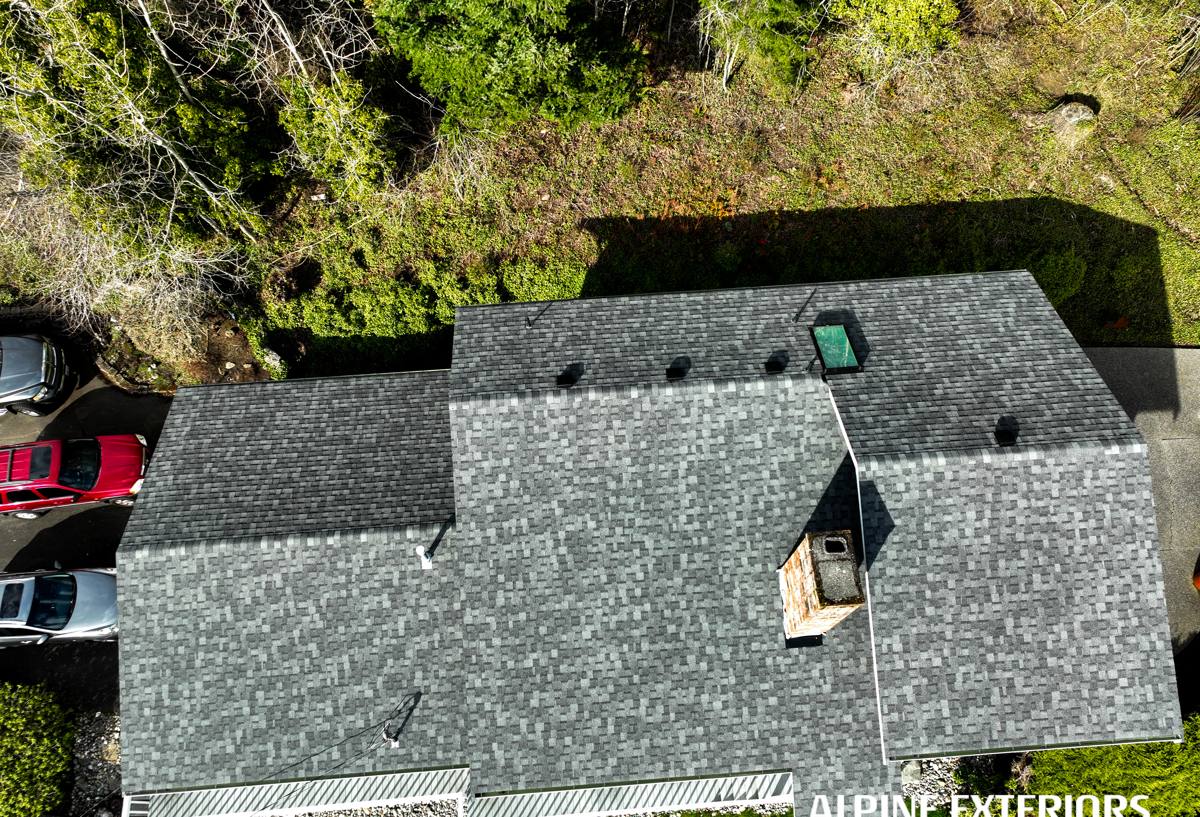
What a Correct Roof Has to Handle Here
Moss and Algae Growth
Moss doesn't just sit on top of shingles looking bad. As it grows, it lifts shingle tabs, holds water against the granule surface, and works its way under the shingle edge. Once moss gets a foothold under a shingle, it can hold moisture against the underlayment and decking for weeks at a time, which is how a cosmetic problem turns into a rot problem. Shaded, north-facing slopes and any valley or low-slope section where debris collects are the areas that need the most attention.
Wind-Driven Rain
Standard nailing patterns and standard flashing details are written for average conditions, not for storm-driven rain that hits a roof at an angle. Around chimneys, skylights, dormers, and wall-to-roof transitions, water pushed sideways by wind will find any gap in step flashing, counter-flashing, or sealant that a calm-weather install might get away with. This is where most of the leaks we get called out for actually start — not in the open field of the roof, but at a penetration or transition.
Debris and Gutter Backup
Conifer needles and leaf litter build up fast on a shaded roof. When gutters and valleys clog, water backs up under the shingle edge instead of running off, which is a slow but steady way to rot decking and fascia over a few seasons. This is a maintenance issue more than an installation issue, but it's one we flag with every Kendall customer because it's so preventable.
Signs a Kendall Roof Needs Attention
Most roofs don't fail all at once — they give warning signs first. Worth checking for, especially before and after the wet season:
- Dark streaking or green/black patches, especially on shaded or north-facing slopes
- Moss visibly lifting shingle tabs, not just sitting on the surface
- Granules collecting in gutters or at downspout outlets
- Shingles that look cupped, curled at the edges, or cracked
- Soft or discolored spots on interior ceilings, especially near chimneys or skylights
- Daylight visible through the roof deck from inside the attic
- Sagging in any section of the roofline
- Flashing that looks rusted, lifted, or gapped at joints
Any one of these on its own isn't necessarily an emergency, but they're worth a real inspection rather than a guess from the ground.
What a Correct Asphalt Shingle Installation Involves
A shingle roof is a system, not just a layer of shingles nailed to plywood. In a climate like Kendall's, every layer underneath the visible shingle matters as much as the shingle itself.
Deck Inspection and Prep
Before anything goes down, the decking gets checked for soft spots, delamination, or rot — usually found around old penetrations or in areas that had chronic moss. Any bad decking gets replaced before a new roof goes over it. Covering rotten decking with new shingles just hides the problem for a few years.
Ice-and-Water Barrier and Underlayment
Self-adhering waterproof membrane belongs at eaves, valleys, and around every penetration — the spots most exposed to wind-driven rain and ice damming. The rest of the roof gets a synthetic underlayment that sheds bulk water if a shingle is ever lifted by wind before it's replaced.
Flashing
Step flashing at walls, counter-flashing at chimneys, and proper flashing at skylights and dormers are where leaks actually start when they're done wrong. This is hand-formed, piece-by-piece work — not something that can be shortcut with sealant alone. Sealant is a backup, not the primary defense.
Ventilation
Balanced intake and exhaust ventilation keeps the underside of the roof deck at a stable temperature and moisture level. Without it, moisture from the house gets trapped in the attic, which shortens the life of both the decking and the shingles from underneath — a problem that has nothing to do with the shingle brand and everything to do with airflow.
Nailing and Fastening
Correct nail placement and nail count, matched to the shingle manufacturer's wind-rating requirements, is what keeps shingles attached during the gusty storm systems that come through Whatcom County. This is invisible once the roof is finished, which is exactly why it's easy for a rushed crew to shortcut.
Shingle Options for Kendall Homes
Most Kendall roofs we work on land in one of three tiers. None of these are wrong choices — the right one depends on budget, how long you plan to stay in the home, and how much of the roof is shaded.
| Shingle Type | Typical Lifespan | Moss/Algae Resistance | Wind Rating | Best For |
|---|---|---|---|---|
| Standard 3-tab | 15–20 years | Lower unless algae-resistant (AR) rated | Moderate | Budget-conscious re-roofs on less-shaded slopes |
| Architectural / laminate | 25–30 years | Good with AR granules | Higher, multi-layer construction | Most Kendall homes — the common middle ground |
| Impact-rated / heavier laminate | 30+ years | Good with AR granules | Highest available in shingle | Exposed rooflines or owners planning to stay long-term |
For a shaded, moss-prone property like most of Kendall, we push algae-resistant (AR) shingles regardless of tier. AR shingles use copper- or zinc-infused granules that slow algae and moss growth at the surface. It's not a permanent fix — nothing is — but it buys real years compared to standard granules on a shaded roof.
Cost Factors Worth Understanding
Broad ranges only, since every roof is different:
- Roof pitch and complexity (valleys, dormers, multiple planes) add labor time
- Deck repair, if rot is found, is priced separately once it's actually uncovered
- Tear-off versus overlay — we don't recommend overlaying a second layer of shingles, since it traps moisture and hides deck problems
- Shingle tier chosen from the table above
- Access — trees, steep driveways, and limited staging area around a lot all affect labor
We give a firm number after walking the actual roof, not a phone estimate, because guessing on pitch or deck condition helps no one.
How Our Process Works
- Walk the roof. We get on it, not just look from the ground, and check decking, flashing, ventilation, and moss/algae condition.
- Written estimate. A clear scope and price, including what we'd expect to find versus what we'll confirm once the old roofing is off.
- Tear-off and deck inspection. Old shingles come off, decking gets inspected board by board, and any soft or rotted sections are called out before covering them.
- Install the system. Ice-and-water barrier at eaves and valleys, underlayment, flashing, ventilation, then shingles — in that order, with nothing skipped to save a day.
- Cleanup and walkthrough. Magnetic sweep for nails, debris hauled off, and a walkthrough so you know what was done and what to watch for going forward.
Why a Crew That Already Works Kendall Matters
Roofing crews that mostly work drier, more open parts of the state don't always think about shade patterns, moss timing, and gutter debris the way a crew that works Whatcom County year-round does. A crew that's already worked roofs in and around Kendall knows which slopes on a given lot orientation stay wet longest, understands how fast moss comes back on a shaded valley, and doesn't need to be told twice about proper flashing at wall transitions — it's what wind-driven rain here demands every winter, not an edge case. That local pattern recognition doesn't replace a good inspection, but it does mean fewer surprises and a roof that's built for the way Kendall actually behaves, not for a generic weather assumption.
After Installation: Keeping a Kendall Roof Performing
A correctly installed shingle roof still benefits from basic upkeep in this climate:
- Clear gutters and valleys of needles and leaf litter at least twice a year
- Have moss physically removed (not pressure-washed, which damages granules) if it returns on shaded slopes
- Trim back overhanging branches that keep a section of roof shaded and damp longer than the rest
- Get a quick visual check after any major windstorm
None of this is complicated, but skipping it is the single biggest reason a well-installed roof underperforms its expected lifespan in a place like Kendall.
Get a Straightforward Estimate
If your Kendall roof is showing moss, streaking, or you're just not sure how much life is left in it, we're happy to take a look. The estimate is free, there's no pressure attached to it, and you'll get a straight answer about what the roof actually needs — not an upsell. Use the form below to get started.