 Ferndale Window
 Building Decks for Kendall's Wet, Wooded Setting
Kendall sits inland from Ferndale, closer to the Nooksack River and the foothills than to Bellingham Bay, but it shares the same Whatcom County weather pattern that wears down outdoor structures faster than most homeowners expect: long stretches of soaking rain, heavy tree cover that keeps decks shaded and damp, and a moss season that can run from October well into spring. Add in the region's driving rain — wind-blown moisture that gets pushed sideways under railings and into seams — and you have conditions that punish any deck built without moisture management as the top priority, not an afterthought.
A deck built to a generic spec sheet, without accounting for how much water Kendall's tree canopy and rainfall actually put on a structure, tends to show problems within a few seasons: soft spots near the house, green film on boards that never fully dry, and fasteners that streak and loosen before their time. A deck built for this specific setting handles water on purpose, at every layer, from the ledger board down to the footings.
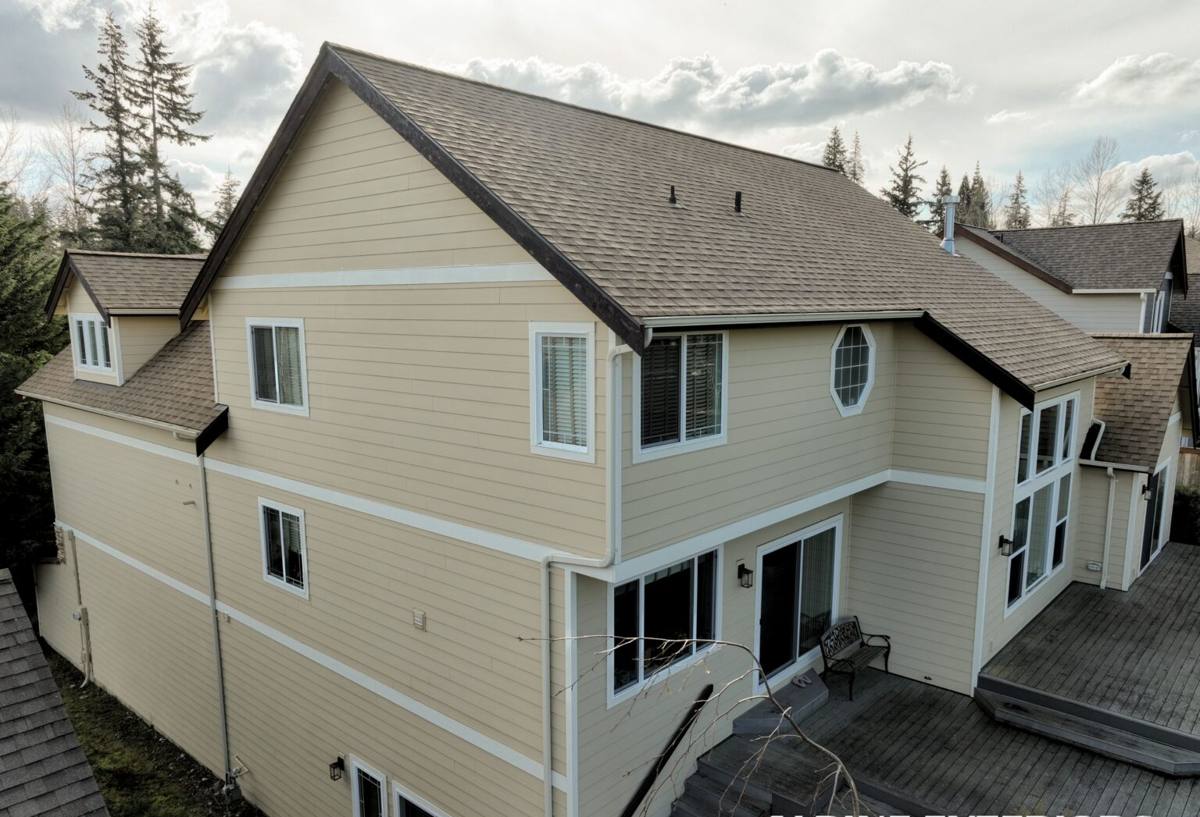
What a Kendall Deck Actually Needs to Hold Up
The difference between a deck that lasts and one that needs early repairs almost never comes down to the decking boards themselves — it comes down to what's underneath and behind them. In a climate like ours, three things matter more than they do in drier parts of the country:
- Ledger flashing — the point where the deck attaches to the house is the single most common failure point in the Pacific Northwest. Without proper flashing and a water-shedding detail, moisture works its way behind the ledger and into the house framing.
- Joist protection — top-cut joists that sit exposed to rain absorb water at every screw hole and cut edge. Protective tape or coating over exposed joist tops slows this down significantly.
- Airflow underneath — a deck built low to the ground, or shaded heavily by trees, dries slower after every rain. Framing height and gaps between boards need to account for that rather than assume Western Washington's occasional dry spell will keep up.
None of this is exotic. It's standard best practice — but it's also the first thing skipped when a deck is priced and built as fast, generic labor rather than work suited to how wet this part of Whatcom County actually gets.
Choosing the Right Decking Material
Pressure-Treated Lumber
Still the most common and most affordable decking material, and a reasonable choice when it's properly maintained. It needs periodic cleaning and re-sealing to resist the moss and mildew that build up under tree cover, and it will show wear faster in shaded areas than in open sun.
Composite Decking
Composite boards resist rot and don't need staining, which appeals to homeowners who want to spend less time on upkeep. The trade-off is that composite can still grow surface mildew in constantly shaded, damp spots — it just needs a wash rather than a re-seal — and it costs more up front.
Cedar
A traditional, attractive choice for this region, but it's the most maintenance-intensive of the common options. Left untreated, cedar grays and can develop moss quickly in a shaded, moist yard. It rewards homeowners who are willing to stay on top of cleaning and sealing on a regular schedule.
| Material | Upfront Cost | Maintenance | Moss/Moisture Resistance |
|---|---|---|---|
| Pressure-Treated Lumber | Lowest | Regular cleaning & re-sealing | Moderate — depends on upkeep |
| Cedar | Mid to High | Frequent cleaning & sealing | Fair — grays and mosses without upkeep |
| Composite | Highest | Occasional washing, no sealing | Good — resists rot, can surface-mildew in deep shade |
There's no single correct answer here — the right material depends on how much shade the site gets, how much upkeep the homeowner wants to do, and budget. Part of our job is walking through that trade-off honestly rather than steering every job toward whatever's easiest to install.
Framing and Structure: Where Decks Fail First
Most deck failures we get called out to inspect in this area aren't decking-board problems — they're structural problems that started small and went unnoticed under the boards. A few specifics worth understanding:
Footings and Frost Depth
Footings need to be set below the local frost line and bear on undisturbed, stable soil. In areas with poor drainage or heavy clay, footings that aren't sized and placed correctly can shift over time, which throws off the whole structure above them.
Ledger Attachment
The ledger board carries a significant share of the deck's load and is also the point most exposed to water intrusion against the house. It needs proper flashing, correct fastener spacing, and in many cases a code-required structural connection rather than just lag bolts into siding.
Guardrails and Stairs
Any deck more than a modest height off the ground needs code-compliant guardrails, and stair geometry (rise, run, and handrail height) is one of the most commonly failed items on inspection. Getting this right the first time avoids a return trip during permitting.
Our Deck Building Process
- On-site assessment — we look at the ground, drainage, existing structure (if replacing a deck), tree cover, and sun exposure before recommending materials or layout.
- Design and material selection — we walk through the material trade-offs above based on your budget and how much maintenance you want to take on.
- Permitting — we handle the permit application and inspection scheduling required for the project.
- Footings and framing — footings set to proper depth, ledger flashed and attached correctly, joists protected before decking goes down.
- Decking, railings, and stairs — installed to the spacing and fastening pattern appropriate for the material chosen.
- Final walkthrough — we go over basic care for whatever material was installed, so you know what upkeep actually looks like.
Permits and Code Requirements in Whatcom County
Most new decks and many deck replacements in unincorporated Whatcom County — which includes the Kendall area — require a building permit, particularly when the deck is attached to the house or elevated above a certain height. Requirements cover footing depth, structural attachment to the house, guardrail height, and stair dimensions. Skipping the permit process on a deck that requires one can create real problems later, from failed home inspections at resale to insurance complications after a structural issue. We handle the permit process as a standard part of the job rather than treating it as optional paperwork.
What Affects the Cost of a New Deck
Deck pricing varies by size, height off the ground, material, and site conditions, so we won't quote a number without seeing the site. What we can say honestly is which factors tend to move the price the most:
| Factor | Why It Matters |
|---|---|
| Height off grade | Taller decks need deeper footings, more framing, and code-required guardrails/stairs |
| Material choice | Composite costs more upfront than pressure-treated lumber; cedar falls in between |
| Site access and slope | Sloped or hard-to-access lots increase labor and sometimes require engineered footings |
| Ledger condition | Replacing rotted rim joist or siding behind an old ledger adds scope beyond the deck itself |
| Rail and stair complexity | Custom railing styles and multi-level stairs add labor beyond a simple straight run |
Maintenance That Actually Matters Here
Whatever material you choose, a few habits make the biggest difference in a climate with this much sustained moisture and moss pressure:
- Clear leaves and debris from between boards regularly — trapped organic matter holds moisture against the wood and feeds moss growth.
- Keep gutters and downspouts near the deck clear so runoff isn't dumping extra water onto or under the structure.
- Wash off moss and algae before it gets a foothold rather than after it's established — it's far easier to prevent than to remove.
- Re-seal pressure-treated or cedar decking on the schedule appropriate to the product, not just when it looks worn.
- Check the ledger flashing and any visible fasteners once a year for early signs of water staining or rust.
- Keep an eye on stair and railing connections — these see the most flexing and are usually the first thing to loosen.
Why a Crew That Already Works Kendall Matters
Kendall isn't downtown Ferndale, and it isn't Bellingham — it's its own setting, with its own mix of tree cover, drainage, and exposure that a crew needs to actually see and work in to build for correctly. A contractor who already works this part of Whatcom County knows what the ground does after a wet winter, how much shade a typical lot holds through the day, and where moss tends to take hold first on a new structure. That's not something you get from a generic spec sheet — it comes from building and maintaining decks in this specific area, season after season.
Working locally also means we're not driving in from out of the region for a warranty callback or a follow-up question after the job is done. If something needs attention down the road, we're already working in the area and can get to it without a long delay.
If you're planning a new deck or replacing an aging one in Kendall, we're happy to come take a look, walk through material options honestly, and put together a straightforward, no-pressure estimate using the form below.