 Ferndale Window
 Building Decks for Custer's Coastal Climate
Custer sits close enough to the water and open farmland north of Ferndale that decks here take a different kind of beating than decks twenty miles inland. Salt-laden air off the Strait, wind-driven rain that comes in sideways more often than straight down, and a moss season that can run from October through April all put real stress on outdoor structures. A deck built with generic, one-size-fits-all specs might look fine the day it's finished and start showing problems within two or three winters. A deck built for this specific stretch of Whatcom County holds up because every material and joint was chosen with that weather in mind.
We work Custer regularly, which matters more than it sounds like. We already know how the local soil drains after a wet November, which exposures get the worst moss buildup, and which fastener and flashing choices actually last out here versus which ones look fine in a showroom and fail in year four.
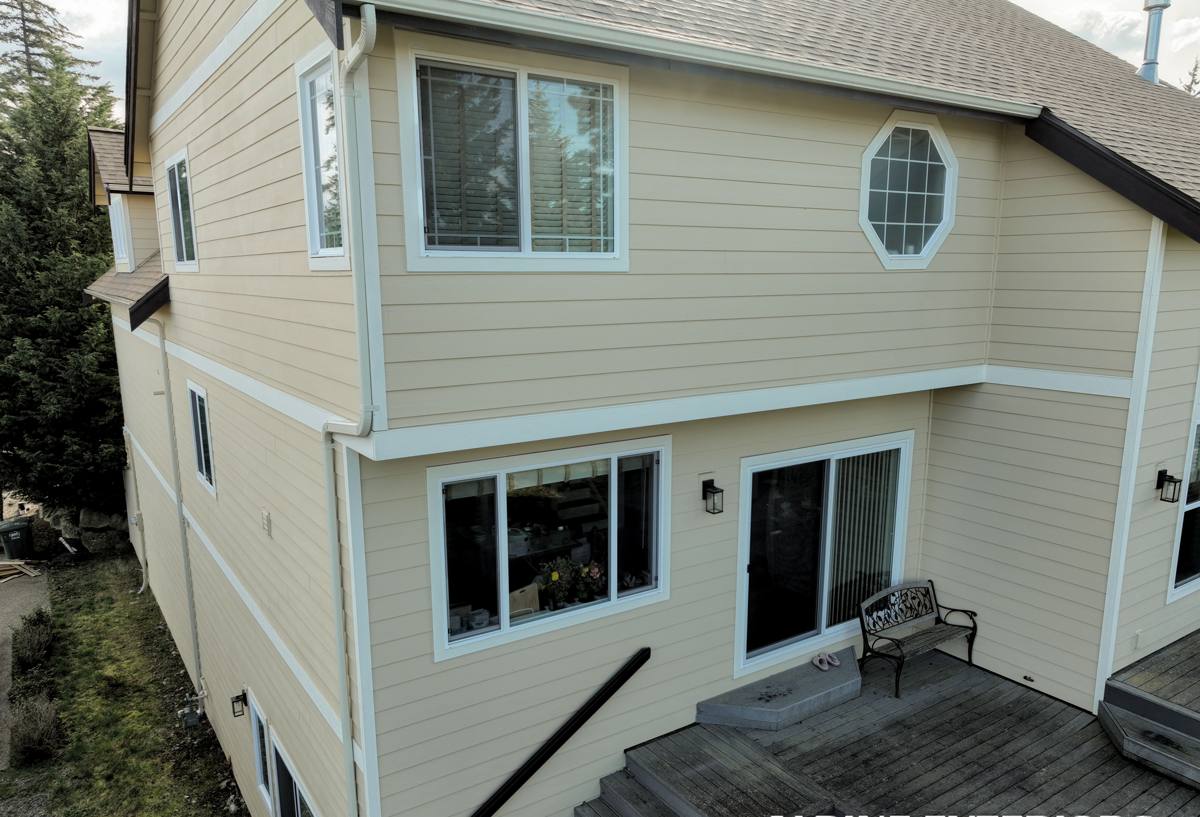
What Salt Air and Driving Rain Actually Do to a Deck
It helps to understand the failure modes before talking about how we prevent them.
Corrosion from Salt Exposure
Airborne salt accelerates corrosion on any exposed metal — fasteners, joist hangers, post bases, railing hardware. Standard electro-galvanized screws and connectors that might last for decades in a dry inland climate can start rusting and staining the wood around them within a few years this close to the coast. Once a fastener starts to corrode, it loses holding strength long before the rust is visible on the surface.
Driving Rain and Water Intrusion
Wind-driven rain doesn't just fall on a deck — it gets pushed sideways into ledger connections, under poorly lapped flashing, and into end grain at cut boards. Water that gets trapped rather than shed is the single biggest cause of rot in deck framing. The ledger board connection where a deck attaches to the house is the most common failure point we see, because it's the hardest area to keep water out of and the most damaging spot to get wrong.
Moss, Algae, and Surface Decay
A long, mild, wet moss season means shaded and low-airflow parts of a deck stay damp for months at a stretch. Moss and algae hold moisture against the decking surface, which accelerates wood decay, makes composite surfaces slick, and eats into the finish on any sealed wood far faster than most homeowners expect.
Material Choices That Make Sense for This Area
There's no single "best" decking material — the right choice depends on budget, maintenance tolerance, and how much sun or shade the site gets. Here's how the common options actually perform under Custer conditions.
| Material | How It Handles Local Climate | Maintenance | Typical Lifespan |
|---|---|---|---|
| Pressure-treated fir/hem-fir | Good rot resistance when properly sealed; needs reapplication to hold up against driving rain | Annual cleaning, refinish every 2-3 years | 15-20 years with upkeep |
| Cedar | Naturally decay-resistant, ages well in coastal air, but softer surface can show wear | Refinish or oil every 1-2 years to prevent graying and moss growth | 15-25 years with upkeep |
| Composite decking | Excellent moisture and rot resistance; some low-end boards can still get slick with algae in shaded spots | Periodic washing, no staining or sealing | 25-30+ years |
| PVC decking | Fully resists moisture intrusion and salt corrosion; performs consistently in wet, shaded areas | Occasional washing | 30+ years |
We don't push one product line as the answer for every yard. A sunny, open Custer lot with good airflow can do very well with a well-maintained cedar or treated deck. A shaded, low-airflow site tucked against trees or a north-facing wall is usually better served by composite or PVC, simply because it won't be realistic for most homeowners to keep up with the sealing schedule a wood deck needs in that kind of exposure.
Framing and Fastener Details We Won't Skip
The decking surface is what you see, but the framing underneath is what determines whether the deck is still safe and solid in fifteen years. In a salt-air, high-rain environment, we treat these details as non-negotiable rather than upgrades:
- Stainless steel or heavy hot-dip galvanized fasteners and joist hangers rated for coastal exposure, not standard electro-galvanized hardware
- Self-adhering flashing membrane at the ledger board, properly lapped to shed water away from the house rather than behind the siding
- A drainage gap or standoff behind the ledger where the deck meets the house, so water can't pool against the wall
- Composite or capped end grain on any cut boards exposed to weather, since raw end grain absorbs water fastest
- Proper joist spacing and blocking sized for the actual decking material chosen — composite and PVC often have tighter span requirements than solid wood
- Post bases set above grade with a gap for drainage, not embedded directly in soil or concrete where water collects
None of these add much to the cost of a deck relative to the whole project, but skipping them is exactly how a deck that looks great at handoff needs structural repair five years later.
Footings and Ground Conditions Around Custer
Whatcom County's building code sets minimum footing depth and frost line requirements, and local soil in and around Custer can hold water longer than sandier or more well-drained sites elsewhere in the county. Poorly placed or undersized footings in wetter ground are a common source of deck settling and post movement over time. We evaluate the specific site — drainage, soil type, slope — before finalizing footing placement rather than defaulting to a generic layout. Where a yard holds water after a heavy rain, that's a signal to plan drainage and footing depth accordingly, not something to address after the deck is built.
Design Choices Worth Thinking Through
Covered vs. Open Decks
A partial or full cover cuts down dramatically on how much direct rain and standing moisture the decking surface deals with, which extends the life of the finish and reduces moss buildup. It's a bigger up-front investment, but for homeowners planning to use the deck through the wetter months, it's often worth pricing out.
Railings and Hardware
Railing systems see the most direct salt and rain exposure of anything on the deck because they're fully vertical and unshielded. Powder-coated aluminum and stainless cable systems tend to outperform standard steel components here, both in appearance and in avoiding the rust streaks that plain steel hardware develops within a couple of seasons.
Airflow and Layout
Decks tucked tight against a home with minimal airflow underneath and around them are the ones that develop moss and mildew fastest. Where the layout allows it, we design for airflow under and around the structure — it's a simple thing that makes a real difference in how much upkeep the deck needs.
Our Process for a Custer Deck Project
- On-site assessment — we walk the yard, check drainage, sun exposure, and the ledger attachment point, and talk through how you actually plan to use the space
- Material and design consultation — honest trade-offs on wood versus composite versus PVC based on your site and maintenance preference, not a sales pitch for the highest-margin product
- Permitting — we handle the Whatcom County or applicable local permit and inspection process for the footing and structural work
- Framing and flashing — proper ledger flashing, coastal-rated fasteners, correctly spaced and sized joists
- Decking and railing installation — installed to the manufacturer's spec for your chosen material, including expansion gaps and fastening patterns that matter for composite and PVC products
- Final walkthrough — we go over basic maintenance for whatever material you chose, so you know what upkeep actually looks like season to season
Why a Local Crew Matters for This Specific Job
Deck-building expertise from a dry inland climate doesn't automatically transfer to a job in Custer. A crew that hasn't worked this stretch of Whatcom County might not think twice about standard fasteners or skip the extra flashing detail at the ledger, because in a lot of the country those shortcuts don't cause visible problems for years. Out here, they show up fast — rust streaks by year two, soft spots at the ledger by year four, moss coating a shaded corner by the first full winter. Working locally means we've already seen which details matter and which corners genuinely can't be cut, because we're the ones who get called back if a deck built the wrong way starts failing.
Maintenance That Actually Fits This Climate
Whatever material you choose, a few habits go a long way toward getting the full lifespan out of a Custer deck:
- Sweep and clear debris regularly, especially in fall when leaves and needles trap moisture against the surface
- Wash down shaded areas a couple of times a year to knock back moss and algae before it embeds in the surface
- Check and clear gaps between boards so water and debris don't build up and hold moisture against the framing
- Inspect railing hardware annually for early rust or loosening, especially on steel components
- Re-seal or refinish wood decking on the schedule the product actually needs in this climate — often shorter than the label suggests for coastal exposure
Get a Straight Answer for Your Yard
Every lot in Custer is a little different — sun exposure, drainage, how close you are to open water or wind — and that affects what deck build makes sense for your home. If you'd like an honest look at your options and a clear estimate with no pressure attached, the form below gets you a free consultation with a crew that already works this area.