 Ferndale Window
 Storm Damage Roof Repair Built for Custer's Weather
Custer sits in a stretch of Whatcom County that takes weather from two directions: cold fronts sweeping down from the Strait of Georgia and Canada, and wet southwesterly systems pushing in off the Pacific. Add the salt air drifting inland from the coast, the long stretch of gray, moss-friendly months, and the mix of open farmland and tree-lined rural lots typical of the area, and you get roofs that age differently than they would twenty miles inland. When a windstorm or heavy rain event damages a roof out here, the repair needs to account for all of that, not just patch what's visible from the ground.
We work on roofs throughout Ferndale and the surrounding Whatcom County communities, including Custer, and we see the same pattern again and again: storm damage that looks minor at first turns into a much bigger problem because the repair didn't address the moisture and wind exposure that caused it in the first place.
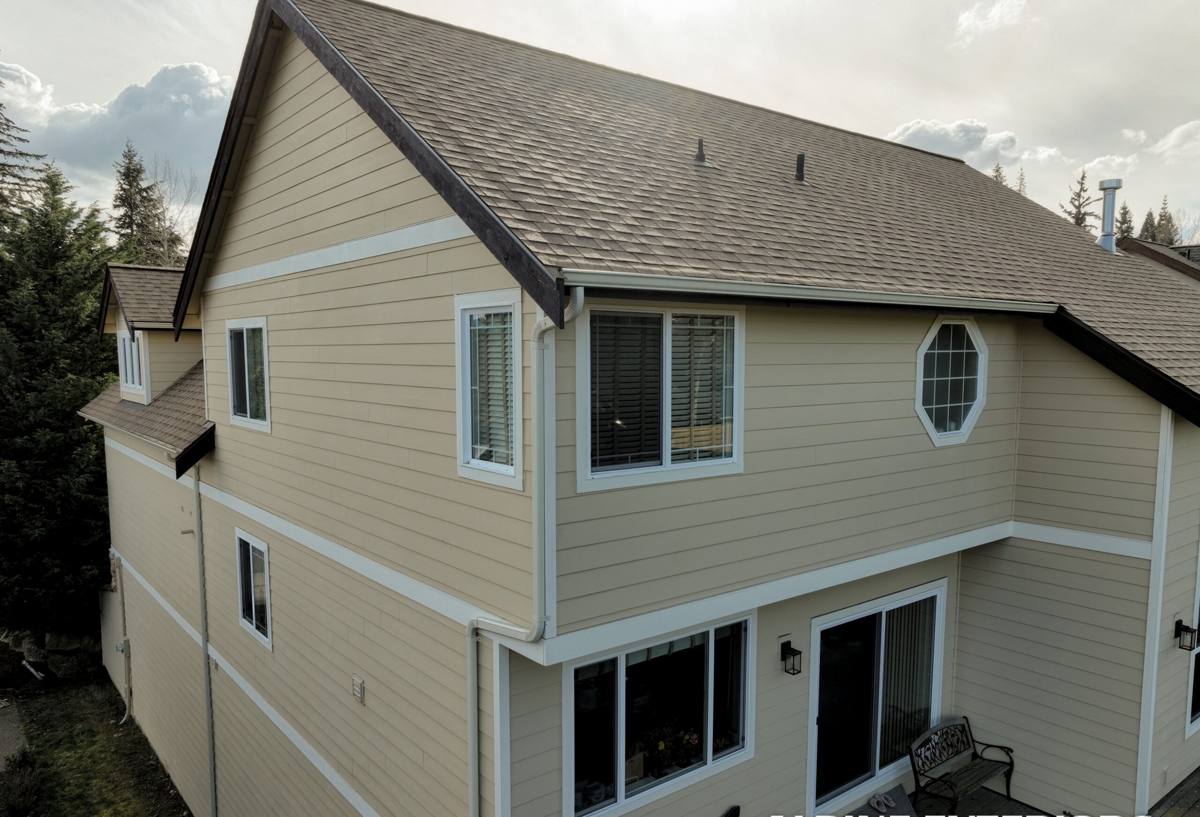
Why Storm Damage Hits Different in Custer
Wind-Driven Rain and Salt Exposure
Custer's proximity to open water and exposed farmland means wind doesn't just blow past a roof — it drives rain sideways into laps, seams, and fastener lines that were never designed to shed water horizontally. Over time, salt-laden air also accelerates corrosion on exposed metal fasteners, flashing, and drip edges, which is a big part of why storm damage in this area so often shows up first at metal components rather than the field of the roof itself.
Moss and Sustained Moisture
Whatcom County's long wet season keeps roofs damp for extended stretches, and shaded or north-facing slopes in Custer's tree-covered lots barely dry out between storms. Moss and organic growth take hold in that environment, working under shingle edges and holding moisture against the roof deck. A roof that's already carrying moss going into a windstorm is more vulnerable to wind uplift and shingle loss than a clean one, because the moss has already loosened the seal.
Wind Exposure on Open Lots
Many properties around Custer sit on larger, more open parcels than you'd find in denser parts of Ferndale. Less windbreak from neighboring structures means roofs take fuller wind loads during storms, which is why we pay close attention to ridge caps, hip lines, and eave edges — the areas most likely to catch and lift in an open-exposure setting.
What Correct Storm Damage Repair Actually Involves
A storm damage repair that's done right isn't just about replacing what blew off. It's about understanding why the damage happened and making sure the fix holds up the next time weather like it comes through.
- Full roof inspection, not just a look at the obvious damage — wind and rain rarely limit themselves to one spot
- Checking the roof deck underneath damaged areas for soft spots, rot, or water intrusion before any new material goes down
- Inspecting and, where needed, replacing flashing around chimneys, vents, and valleys — these are common failure points in wind-driven rain
- Matching shingle or roofing material as closely as possible so repairs blend in rather than creating a visible patchwork
- Checking fastener patterns and re-nailing where wind uplift has loosened shingles beyond the damaged area
- Clearing moss and debris from the surrounding roof area so the repair isn't immediately undermined by existing organic growth
- Documenting damage clearly, which matters if you're filing an insurance claim
Skipping any of these steps is how a homeowner ends up paying for the same repair twice. A shingle patch over a soft, water-damaged deck will fail again — often faster than the original damage took to happen.
Our Process for Custer Homeowners
1. Inspection and Honest Assessment
We start with a full inspection of the roof, not just the area you noticed damage on. Because Custer roofs deal with wind from multiple directions and sustained moisture, damage often extends beyond what's visible from the driveway or yard.
2. Clear Explanation of What We Find
You'll get a straightforward rundown of what's actually damaged, what's just cosmetic, and what needs attention now versus what can be monitored. We're not going to tell you the whole roof needs replacing when a targeted repair will do the job, and we're not going to undersell damage that's going to leak by winter.
3. A Written Estimate
You'll know the scope and the cost before any work starts. If insurance is involved, we'll provide documentation that supports your claim.
4. The Repair Itself
We repair the deck first if there's water damage, then rebuild flashing and roofing material to match the surrounding roof, and re-secure the surrounding field where wind has loosened material beyond the immediate damage zone.
5. Final Check
Before we call the job done, we walk the roof again to confirm the repair is sound and that nothing nearby was missed.
Repair vs. Full Replacement: How to Tell Which You Need
Not every storm-damaged roof needs to be replaced, and not every roof that looks fine after a storm actually is. The table below covers the general factors that separate a repair from a replacement — your actual situation will depend on the inspection.
| Factor | Usually Points to Repair | Usually Points to Replacement |
|---|---|---|
| Damage extent | Isolated to one section or slope | Spread across multiple slopes or the whole roof |
| Roof age | Under roughly two-thirds of expected lifespan | Near or past expected lifespan for the material |
| Deck condition | Solid, dry decking under the damaged area | Soft, rotted, or water-stained decking |
| Moss/organic growth | Light, surface-level growth | Heavy growth with visible shingle lifting |
| Prior repairs | Roof has no history of repeated patching | Roof already has multiple past repairs in different areas |
If you're not sure which category your roof falls into, that's exactly what the inspection is for. We'll give you a straight answer either way.
Insurance Claims for Storm Damage
Most storm damage roof repairs in Whatcom County involve an insurance claim, and the process goes smoother when the documentation is thorough from the start. We photograph and describe damage in a way that supports your claim, and we can walk you through what to expect, though we always recommend confirming coverage details directly with your insurance provider since every policy is different.
One thing worth knowing: insurance adjusters aren't always roofing specialists, and it's common for an initial claim estimate to miss secondary damage like a compromised roof deck or wind-loosened shingles outside the main damage area. A detailed inspection report from a roofing contractor can help make sure the claim reflects the actual scope of repair needed.
Preventing Repeat Damage
Once a Custer roof has taken storm damage, it's worth thinking about what will help it hold up next time.
- Trim back tree limbs that overhang the roof — they're a common source of both direct impact damage and shade that keeps moss thriving
- Keep gutters and valleys clear so wind-driven rain has somewhere to go instead of backing up under shingles
- Address moss growth before it works under shingle tabs and compromises the seal
- Have flashing checked periodically, especially around chimneys and vents, since salt air accelerates wear on exposed metal
- Don't ignore small issues like a single lifted shingle or a minor leak stain — in this climate, small gaps become bigger problems fast
Why Hire a Crew That Already Works in Custer
Roofing crews unfamiliar with this part of Whatcom County sometimes treat storm damage repair the same way they would in a drier, more sheltered inland area. That approach misses what actually matters here: the salt air's effect on metal components, the way sustained moisture and moss interact with wind damage, and the fuller wind exposure that open, rural lots around Custer see compared to more built-up neighborhoods. A crew that already understands those conditions is going to inspect more thoroughly, catch secondary damage an unfamiliar crew might miss, and use materials and techniques suited to this specific climate rather than a generic repair.
Get a Straightforward Look at Your Roof
If a recent storm left your Custer home with missing shingles, damaged flashing, or a leak you're not sure about, we're happy to come take an honest look. We'll tell you what's actually going on, walk you through your options, and give you a free, no-pressure estimate — no exaggerated damage reports, no pressure to replace a roof that just needs a repair. Reach out through the form below to get started.