 Ferndale Window
 Birch Bay's Coastal Climate Is Hard on Roofs
Birch Bay sits right on the water, and that location comes with a trade-off. The views are great, but the roof over your head takes a beating that homes a few miles inland in Ferndale simply don't see. Salt-laden air drifts off the bay and settles on every exposed surface, accelerating corrosion on nails, flashing, and metal fasteners long before a roof's shingles are actually worn out. Add in driving rain that comes in sideways during winter storms, and you've got water finding its way into gaps that would stay dry on a calmer, more sheltered roof.
Then there's moss. Whatcom County's damp, mild winters and heavy tree cover give moss a long growing season, and Birch Bay's persistent moisture and shade pockets make it worse in spots. Moss doesn't just look bad — it holds water against the roofing surface, lifts shingle edges, and works its way under laps and flashing over time. A roof repair here has to account for all three of these factors at once, not just patch a leak and move on.
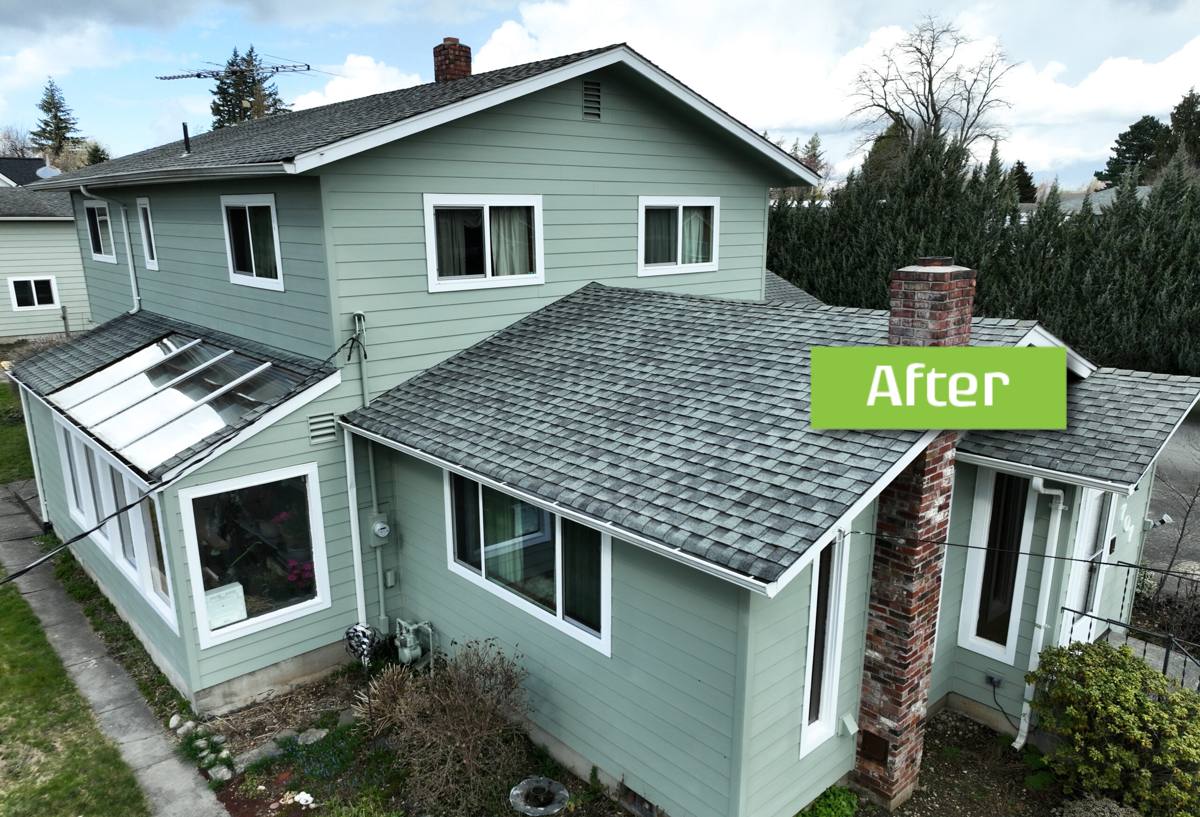
Signs Your Roof Needs Repair, Not a Full Tear-Off
Most roofs don't fail all at once. They show warning signs first, and catching them early is what keeps a repair a repair instead of a replacement. Look for these:
- Granules collecting in gutters or at downspout outlets — a sign shingles are wearing thin
- Shingles that are cupped, curled, or cracked, especially on slopes facing the water and prevailing wind
- Rusted, lifted, or missing flashing around chimneys, vents, and roof-to-wall transitions
- Thick moss mats or dark streaking concentrated in shaded or north-facing areas
- Soft or spongy spots when walked on, which usually means the decking underneath has taken on moisture
- Water stains on interior ceilings, especially after a wind-driven storm rather than a straight-down rain
- Daylight visible through the roof deck when viewed from inside the attic
Any one of these on its own is often a localized, affordable fix. Several at once, especially combined with soft decking, usually means it's worth talking through repair versus replacement honestly before spending money on a patch that won't hold.
What a Correct Repair Actually Involves
Diagnosis Before Patching
The most common mistake in roof repair isn't bad workmanship — it's fixing the spot where water showed up inside the house instead of where it's actually getting in. Water travels along rafters and sheathing before it drips, so a leak stain in a bedroom ceiling might trace back to a flashing failure several feet away. A correct repair starts with tracing the water path from the inside and confirming it on the roof surface itself, not guessing based on where the ceiling looks worst.
Flashing and Underlayment
In a coastal environment like Birch Bay, flashing is usually the real point of failure, not the field shingles. Step flashing, counter-flashing, and pipe boots corrode or pull loose from salt exposure and thermal movement well before the surrounding shingles wear out. A proper repair replaces the flashing itself, not just a bead of sealant over the top of it, and checks the underlayment underneath for saturation before closing anything back up.
Matching Materials
Shingle color lines fade and get discontinued, so a small patch can stand out if it's not handled carefully. On visible slopes, we'll talk through whether to source a close match, pull replacement shingles from a less visible slope, or address a wider section so the color transition reads intentionally rather than patchy.
Roofing Materials Common in Birch Bay Homes
The right repair approach depends heavily on what the roof is made of. Here's how the common types found around Ferndale and Birch Bay generally hold up and what repair typically involves for each:
| Material | Typical Lifespan | Salt Air / Moisture Sensitivity | Repair Notes |
|---|---|---|---|
| Asphalt composition shingle | 20-30 years | Moderate — moss and UV wear more of a factor than salt | Most common repair type; matching color and granule wear is the main challenge |
| Cedar shake/shingle | 25-30 years with upkeep | High — moss and moisture retention shorten life without maintenance | Individual shake replacement is possible but requires careful weaving into existing courses |
| Metal (standing seam/panel) | 40-60 years | High if fasteners and cut edges aren't properly coated or sealed | Repairs focus on fastener replacement, panel seams, and corrosion at cut edges |
| Low-slope/flat (torch-down, membrane) | 15-25 years | Moderate — ponding water and seam failure are bigger risks than salt itself | Seam and flashing repair; membrane patches must be heat- or adhesive-bonded correctly to hold |
Our Repair Process
We keep the process straightforward because a roof repair shouldn't be a mystery:
- Inspection — we get on the roof (weather permitting) and in the attic to trace the actual source of the problem
- Diagnosis and photos — we show you what we found and explain what's causing it in plain language
- Written estimate — a clear scope of work and price range before anything is touched
- The repair itself — flashing, decking, or shingle work completed to match the surrounding roof as closely as possible
- Cleanup and haul-away — old materials and debris removed from the property, not left in a pile
- Workmanship follow-up — we stand behind the repair we performed
What Affects the Cost of a Roof Repair
Every roof is different, but the same handful of factors drive most of the cost variation we see on repair jobs in this area:
| Factor | Why It Matters |
|---|---|
| Roof pitch and access | Steep slopes or roofs without easy ladder access take longer and require more safety setup |
| Extent of decking damage | A leak caught early may need one sheet of plywood; one caught late can mean replacing rafters |
| Material type | Metal and cedar repairs generally take more labor time per square foot than asphalt shingle |
| Flashing scope | Full flashing replacement around a chimney or skylight costs more than a shingle-only patch |
| Moss and debris removal | Heavy moss buildup often needs to be cleared before the actual repair area can even be assessed |
Simple, accessible shingle repairs are typically the least expensive category of roof work. Once flashing, decking, or steep/difficult access are involved, costs rise — we'll walk through exactly where your job lands during the estimate rather than quoting a number blind.
Moss, Algae, and Seasonal Maintenance
Because moss season runs long in Whatcom County, a one-time repair doesn't always stay fixed if the underlying moisture and moss conditions aren't addressed too. Where it makes sense, we'll talk through options like manual moss removal (rather than aggressive pressure washing, which can strip granules and shorten shingle life), zinc or copper strip installation near the ridge to slow regrowth, and keeping gutters clear so water isn't backing up under the eaves. None of these are upsells tacked onto a repair — they're the difference between a fix that lasts and one you're paying for again in two winters.
Why Local Experience in Birch Bay Matters
A roof repair crew that mostly works inland doesn't always think about salt exposure on fasteners, or how much worse moss gets on a shaded, water-adjacent lot compared to a sunny inland roof. Working around Ferndale and Birch Bay regularly means we're used to diagnosing these specific patterns — which flashing details tend to fail first in this environment, which slopes hold moss longest, and how wind-driven rain during a real Whatcom County winter storm behaves differently than a straight-down rain. That local pattern recognition often means a faster, more accurate diagnosis and a repair that's built for the conditions your roof actually faces, not generic conditions.
A Quick Homeowner Checklist
- Check gutters and downspouts for granule buildup after a hard rain
- Look for moss concentrated on shaded or north-facing slopes
- Scan attic rafters and sheathing for dark staining or dampness, especially after a windy storm
- Note any rusted or lifted flashing visible around chimneys or vent pipes from the ground
- Watch for ceiling stains that appear only during wind-driven rain, not calm rain
- Avoid walking on the roof yourself to inspect — leave that part to a professional
If you're noticing any of these signs on your Birch Bay home, it's worth getting a second set of eyes on it before a small issue becomes a bigger repair. We offer free, no-pressure estimates — fill out the form below and we'll take a look and give you an honest read on what your roof actually needs.