 Ferndale Window
 Deck Replacement in Birch Bay: Built for Where It Sits
A deck in Birch Bay does not age the way a deck fifteen miles inland does. The combination of salt-laden air off the bay, near-constant winter rain driving in sideways off the water, and a moss season that can stretch from October through April puts a different kind of stress on wood, fasteners, and footings. We've replaced decks up and down this stretch of Whatcom County long enough to know that a deck built to a generic spec, without accounting for that exposure, is going to need work again in half the time it should.
This page is about deck replacement specifically for Birch Bay homes — what the climate does to a deck over time, how to tell when repair stops making sense, what a correctly built replacement actually involves, and what our process looks like from first look to final walkthrough.
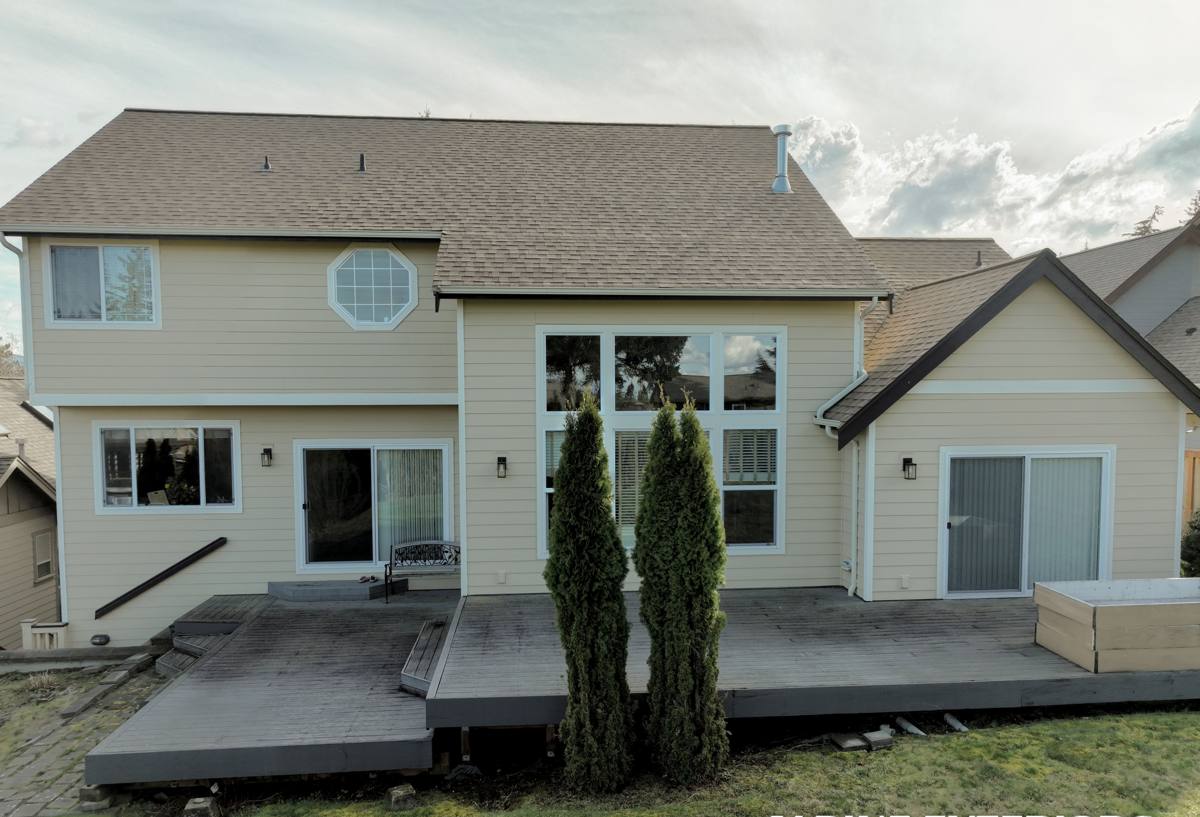
How Birch Bay's Climate Wears Down a Deck
Three things do most of the damage, and they compound each other.
Salt Air
Airborne salt from the bay accelerates corrosion on any exposed metal — nails, screws, joist hangers, structural brackets. Once a fastener starts to rust, it loses holding strength long before it looks obviously bad. On an older deck, corroded fasteners are one of the most common reasons a structure that looks fine on the surface is unsafe underneath.
Driving Rain
Birch Bay gets weather straight off the water, and rain here doesn't just fall straight down — wind pushes it under railings, behind fascia boards, and into any gap in the flashing. Water that gets trapped instead of shedding is the single biggest cause of rot in ledger boards, rim joists, and post bases.
Moss and Standing Moisture
A long, wet moss season means moss and algae take hold on decking boards that don't get much sun, especially on the north or west side of a house. Moss holds moisture against the wood surface for months at a time, which softens the wood, degrades the finish, and makes the boards slick and unsafe underfoot.
None of these are exotic problems — they're just the normal cost of being close to the water in western Washington. The point is that a deck built or repaired without them in mind will fail in predictable, avoidable ways.
Signs a Birch Bay Deck Needs Replacing, Not Just Patching
Homeowners often call us for a repair and end up needing a replacement once we're actually under the structure. Here's what tends to separate the two:
- Soft or spongy decking boards, especially near the house or in shaded areas
- Rust streaks running down from screw heads or joist hangers
- A ledger board that's separating from the house or shows staining/rot at the connection
- Posts that wobble, or visible rot at the base where wood meets concrete
- Railings that flex more than they should when leaned on
- A deck that's more than 20-25 years old and has never had the substructure inspected
- Persistent moss or dark staining that keeps coming back no matter how often it's cleaned
One or two of these can sometimes be repaired in place. Several at once, or any structural issue at the ledger or posts, usually means the framing has been compromised long enough that patching individual boards won't fix the underlying problem.
Repair vs. Replace: How We Help You Decide
| Factor | Repair Makes Sense | Replacement Makes Sense |
|---|---|---|
| Framing/joists | Solid, dry, no rot found on inspection | Soft spots, rot, or corrosion found at joists or ledger |
| Age of structure | Under 15 years, built to current code | 20+ years, or built before modern flashing standards |
| Fasteners | Isolated rust, easily replaced | Widespread corrosion on hangers and structural screws |
| Decking surface | A few damaged boards, rest sound | Widespread cupping, softness, or moss damage across the surface |
| Ledger connection | Properly flashed, dry, no staining | Missing or failed flashing, staining, or separation from the house |
We won't sell a full replacement when a repair will genuinely hold up — but we also won't patch over a structural problem just to keep the job smaller. Every assessment includes pulling a few boards to look at what's underneath, because that's the only way to know for sure.
Decking Material Options for a Marine Environment
Material choice matters more here than it does further inland, simply because the deck is exposed to more moisture and salt over its life. There's no single "best" material — it depends on budget, maintenance appetite, and how the deck is used.
| Material | Upfront Cost | Maintenance in This Climate | Realistic Lifespan Here |
|---|---|---|---|
| Pressure-treated wood | Lowest | Annual cleaning and re-sealing to fight moss and moisture | 15-20 years with consistent upkeep |
| Cedar | Mid-range | Regular sealing; naturally more rot-resistant but still needs care near the bay | 15-20 years |
| Composite decking | Higher | Occasional washing; no sealing or staining required | 25-30+ years, manufacturer-warrantied |
Composite has become the more common choice for homes right on the bay simply because it doesn't absorb moisture the way wood does, which takes moss and rot largely out of the equation. That said, composite is only as good as the framing underneath it — a composite deck built on undersized or poorly flashed framing will still develop structural problems, just without the visible warning signs wood gives you first.
What a Correct Deck Replacement Involves
A deck replacement is a structural project, not a surface-level upgrade. Done right, it includes:
- Full removal of the old decking, railings, and any framing that shows rot or corrosion damage
- Ledger board flashing that properly sheds water away from the house — this is the single most important detail on any deck attached to a home in a wet climate
- Correctly sized joists and beams for the deck's actual span and load, not just a match to what was there before
- Stainless steel or coated structural fasteners rated for exterior and coastal exposure
- Post bases set on proper footings, held above grade so wood doesn't sit in standing water
- Code-compliant railings and stair framing, sized and spaced to current Whatcom County building code
- Ventilation underneath so the structure can dry out between rain events instead of staying wet
Skipping any of these to save money up front is exactly how a deck ends up needing another full replacement in half its expected lifespan.
Our Process for a Birch Bay Deck Replacement
We keep the process straightforward because a deck project shouldn't be a mystery to the homeowner:
- On-site assessment. We inspect the existing deck, including pulling boards to check the framing, ledger, and posts underneath.
- Honest scope and options. We walk through what we found, what's driving the recommendation, and material options that fit the budget and the site.
- Permit and code check. Deck replacements of most sizes require a permit; we handle that so the finished structure is inspected and compliant.
- Demolition and disposal. Old decking and damaged framing are removed and hauled off — the site is left clean, not littered with debris.
- Framing and flashing first. The structural work is inspected and completed before a single decking board goes down, because that's the part nobody sees later but everything depends on.
- Decking, railings, and finish work. Final surface installed to spec, railings set and checked for code compliance, site cleaned up.
- Walkthrough. We go over the finished deck together before we consider the job done.
Maintaining a New Deck Through a Whatcom County Winter
Even a well-built deck needs some seasonal attention to get the lifespan it's designed for, especially with a wet season as long as ours. A short list that actually makes a difference:
- Sweep leaves and debris off the deck regularly in fall — trapped debris holds moisture against the surface
- Rinse off salt spray and grime a few times a year, more often if the deck faces the water directly
- Keep gutters and downspouts clear so runoff isn't dumping extra water onto or near the deck
- Check the ledger flashing area annually for staining, which is the earliest sign of a leak
- For wood decks, re-seal on the schedule the product calls for — don't stretch it another year to save money
- Address any moss growth early with a proper cleaner rather than letting it establish
- Have the substructure looked at every few years, even if the surface looks fine
Why Hire a Crew That Already Works in Birch Bay
Building a deck that holds up on the coast is a different job than building one twenty miles inland, even though the materials list looks similar on paper. A crew that works Birch Bay regularly already knows which details matter most here — how aggressive the salt exposure is on a given lot, where driving rain tends to find weak flashing, and which materials actually hold up through a full Whatcom County winter versus which ones just look good on installation day. That local experience shows up in the parts of the job that aren't visible once the deck is finished: the flashing detail, the fastener choice, the footing depth. Those are the decisions that determine whether a deck lasts fifteen years or thirty.
If your Birch Bay deck is showing its age, or you just want a straight answer on whether it needs repair or full replacement, we're happy to take a look. Request a free, no-pressure estimate using the form below and we'll get you a clear assessment and honest recommendation.