 Ferndale Window
 Window Replacement Built for Bellingham's Coastal Climate
Homes around Bellingham sit close enough to the Salish Sea, and far enough into the Pacific Northwest rain belt, that windows take a different kind of beating than they would inland. Salt-laden air off the water accelerates corrosion on hardware and metal components. Driving rain, pushed sideways by wind off Bellingham Bay, tests every seal and flashing detail a window has. And the long, damp moss season here — often stretching from fall through spring — keeps wood trim, sills, and surrounding siding wet for weeks at a time. None of that is dramatic on its own, but stacked together over years, it's exactly the combination that finds every weak point in a window installation.
We're a Ferndale-based crew that works this stretch of Whatcom County regularly, and this page is about one job specifically: replacing windows on Bellingham-area homes correctly, with the local climate accounted for from the first measurement to the final bead of sealant.
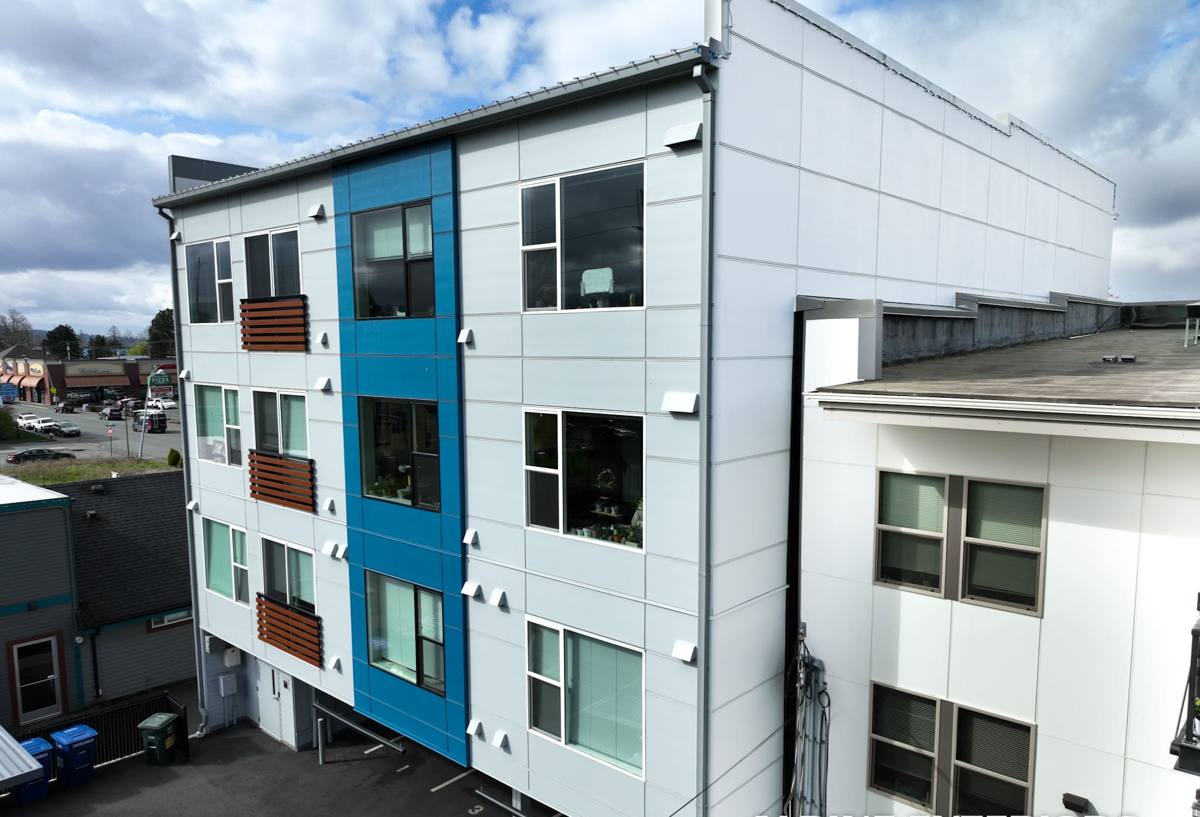
What Bellingham's Climate Actually Does to Windows
Salt Air and Hardware
You don't need to be waterfront to feel the effects of salt air — it travels inland on wind and settles on everything it touches. Over time it corrodes untreated or lower-grade window hardware: hinges, cranks, locks, and screws. Once hardware starts corroding, windows get harder to open and close properly, and a window that doesn't seat correctly can't seal correctly either. That's a maintenance issue that becomes a moisture issue.
Driving Rain and Wind-Driven Water
Bellingham gets a lot of rain, but the bigger issue for windows is wind-driven rain — water pushed horizontally against the building envelope during storms. This is where flashing, sill pans, and proper integration with the wall's weather-resistive barrier matter more than the window unit itself. A high-end window installed with poor flashing will leak. A modest window installed correctly usually won't.
The Long Moss Season
Extended damp periods keep exterior wood surfaces wet longer than in drier climates. Wood window sills, trim, and adjacent siding that don't get a chance to dry out are vulnerable to rot and moss growth, which holds even more moisture against the surface. This is less about the window glass and more about what's happening at the edges — the trim, the sill, and the wall assembly around the opening.
Signs a Bellingham-Area Home Needs Window Replacement
- Fogging or a persistent haze between panes — a sign the seal on a double-pane unit has failed
- Soft or spongy wood at the sill or lower corners of the frame
- Visible moss or dark staining collecting on horizontal trim or sills
- Windows that are difficult to open, close, or lock — often a hardware corrosion issue
- Noticeable drafts or cold spots near the window during windy weather
- Condensation forming on the inside of the glass regularly, especially in winter
- Visible daylight or gaps around the frame from outside
- Rising heating bills without another clear explanation
Any one of these on its own might just need a repair. Several at once, or wood damage at the sill, usually means replacement is the more honest recommendation.
What a Correct Window Replacement Involves
Window replacement done right is mostly about what happens around the window, not just the window itself. A quality unit installed poorly will fail faster than a mid-grade unit installed with attention to detail. For Bellingham-area homes specifically, we pay close attention to:
Sill Pan Flashing
A sloped, sealed sill pan under the window opening gives any water that gets past the exterior seal a way out, instead of a place to collect. This is standard practice, but it's frequently skipped or done poorly — and it's one of the most important details in a wet climate.
Integration With the Weather-Resistive Barrier
The window's flashing needs to be properly layered — shingle-style, top over bottom — with the house wrap or building paper already on the wall. Get this sequence wrong and water gets directed behind the barrier instead of over it.
Sealant Selection and Placement
Not every gap should be sealed solid. Weep holes and drainage paths need to stay open so water that does get in can get back out. We seal where sealant belongs and leave drainage paths clear where they need to be.
Insulation Around the Frame
The gap between the window frame and the rough opening needs low-expansion foam or backer rod and sealant — not gaps, and not packed so tight it bows the frame. Either mistake causes problems, from air leaks to windows that won't operate smoothly.
Material and Glass Options for This Climate
There's no single "best" window material — the right choice depends on the home, the budget, and how much maintenance the owner wants to take on. Here's how the common options hold up under Whatcom County's coastal, wet conditions:
| Material | Performance in Salt Air / Rain | Maintenance | Typical Fit |
|---|---|---|---|
| Vinyl | Doesn't corrode; handles moisture well | Low | Most common choice; good value |
| Fiberglass | Very stable, resists warping and corrosion | Low | Higher upfront cost, long service life |
| Aluminum-clad wood | Good exterior protection if detailing is precise | Moderate | Homes wanting a wood interior look |
| Solid wood | Needs consistent upkeep in this climate | High | Historic or period-specific homes only |
For most Bellingham-area homes, we steer people toward vinyl or fiberglass simply because they hold up with the least fuss in a climate that stays damp for months at a stretch. Where wood-look interiors matter, aluminum-clad wood can work well, but it depends more heavily on precise installation and ongoing care to keep the exterior cladding sealed.
Glass Considerations
Double-pane, low-E glass is the practical standard here — it cuts heat loss during our cool, wet winters and reduces solar gain in summer. Argon-filled units add a modest efficiency boost. We don't push glass upgrades homeowners don't need; for most single-family homes in this area, a quality double-pane low-E unit is the right balance of performance and cost.
Our Process
- On-site assessment. We look at each window opening individually, not just the glass — checking sill condition, existing flashing, and any signs of past water intrusion.
- Honest scope. We tell you plainly which windows need full replacement, which could be repaired, and why — including any wood or sheathing repair the opening needs before a new window goes in.
- Written estimate. Materials, labor, and any additional carpentry are itemized so you know what you're paying for.
- Removal and inspection. Once the old window is out, we inspect the rough opening for hidden rot or moisture damage before anything new goes in.
- Correct installation. Sill pan, flashing sequence, insulation, and sealant — done in the order that actually keeps water out.
- Final check. Every window is tested for smooth operation and a proper seal before we consider the job done.
Why a Local Crew Matters for This Job
Window replacement isn't a one-size-fits-all product — it's a job that has to account for how a specific house sits in a specific climate. A crew that already works Bellingham and the surrounding Ferndale area has seen how homes in this part of Whatcom County actually age: where moss tends to collect, which orientations take the worst of the wind-driven rain, and what corrosion looks like on hardware after a decade of salt air. That's not something you can fully substitute with a generic install checklist written for a different climate.
There's also a practical side to being local: we're not driving in from out of the area for a callback, a warranty question, or a follow-up on a detail you noticed after the job was done. We're already working in this area, regularly.
What Affects the Cost
| Factor | Why It Matters |
|---|---|
| Number of windows | Per-window cost typically drops with larger jobs due to shared setup time |
| Frame material | Vinyl is generally the most affordable; fiberglass and clad-wood cost more upfront |
| Opening condition | Rot or water damage found at the sill or framing adds repair time and material |
| Window size and type | Larger units, custom shapes, or specialty operating styles increase cost |
| Access and site conditions | Second-story windows or difficult access can add labor time |
Whole-home replacement generally runs from the mid four figures for a modest number of standard-size vinyl windows up to well into five figures for larger homes or higher-end materials. Exact numbers depend on what we find once we're on site — which is why we give written estimates rather than ballpark quotes over the phone.
Checklist Before You Hire
- Ask whether sill pan flashing is standard practice on every job, not an upsell
- Get a written estimate that itemizes materials, labor, and any carpentry repair
- Confirm licensing and insurance directly — don't just take a business card's word for it
- Ask how they handle rot or water damage discovered after removal, before it becomes a surprise change order
- Ask about warranty coverage on both the window product and the installation labor separately
- Find out if the crew doing the work is local to the area or subcontracted from elsewhere
Get a Free, No-Pressure Estimate
If your Bellingham-area home has windows showing their age — fogged glass, sticking sashes, soft sills, or drafts you can feel on a windy day — we're happy to take a look and give you a straight answer about what it needs. Use the form below to request a free estimate; there's no pressure and no obligation.