 Ferndale Window
 Bellingham's Climate Is Tougher on Decks Than It Looks
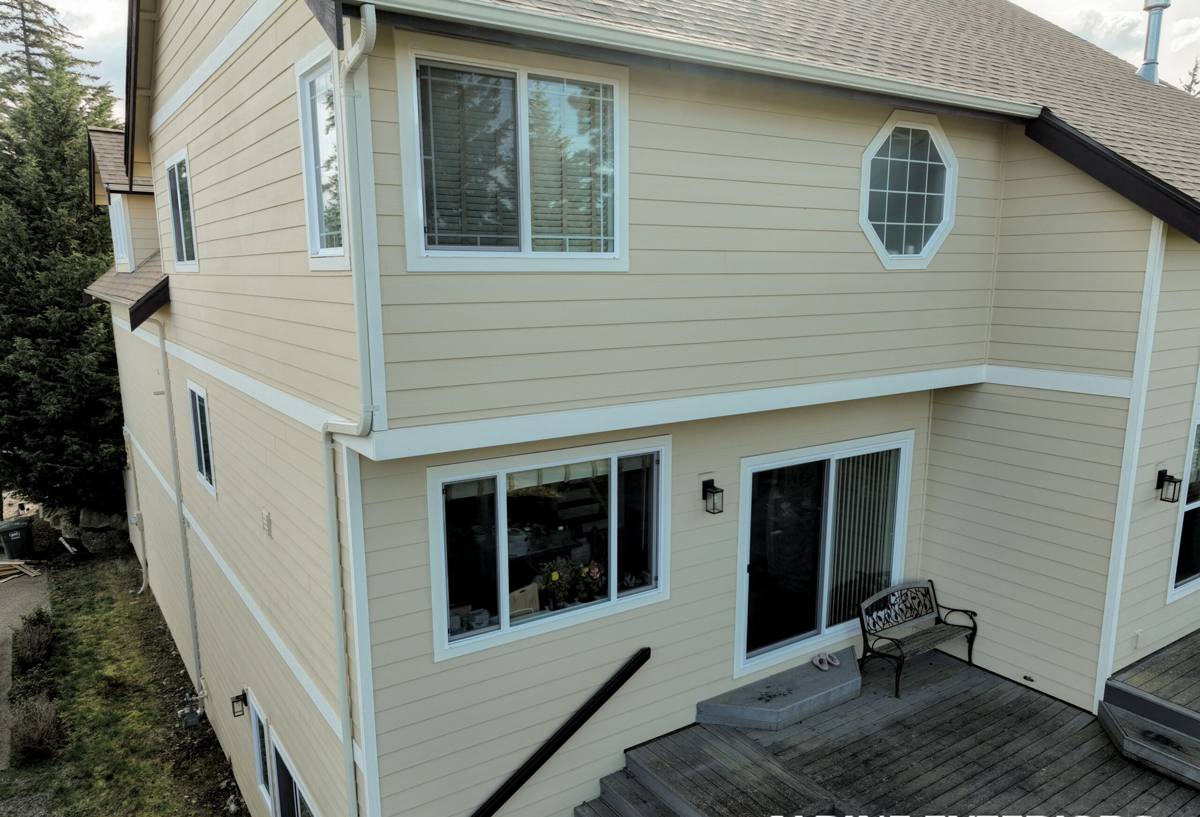
Bellingham sits right on the water, and that proximity to Bellingham Bay means homes here deal with a combination most inland decks never see: salt-laden air, long stretches of driving rain off the Sound, and a moss season that can run from late fall well into spring. Add in the shade from mature Douglas fir and cedar that cover a lot of Whatcom County lots, and you've got a recipe for decks that stay damp far longer than they should.
None of that is a reason to avoid a deck. It's a reason to build one correctly the first time. A lot of the deck problems we get called out to inspect in this area aren't material failures — they're installation shortcuts that didn't account for how much moisture this climate actually pushes at a structure over a year.
Why Composite Makes Sense Here
Composite decking was developed specifically to solve the problems wood struggles with in wet, marine climates: rot, splintering, and the endless cycle of sanding and re-staining. For a Bellingham property, the appeal isn't cosmetic — it's practical.
- Composite boards don't absorb water the way wood fibers do, so they hold up better through months of steady Pacific Northwest rain.
- Capped composite resists the kind of surface staining that salt air and organic debris (fir needles, cedar duff, algae) leave behind on wood.
- No annual sanding, staining, or sealing — which matters when the weather window for outdoor project work in this area is already narrow.
- Consistent color and texture over time, instead of the graying and checking that untreated or poorly sealed wood shows within a couple of seasons.
Composite isn't maintenance-free — nothing outdoors in this climate is — but it shifts the maintenance burden from structural upkeep to simple cleaning, which is a much better trade for most homeowners.
What a Correct Composite Deck Build Actually Involves
The composite boards themselves get most of the attention, but the board is only as good as what's underneath it. In a climate that delivers this much sustained moisture, the substructure and flashing details are what determine whether a deck lasts.
Substructure and Drainage
Joists need to be spaced and, ideally, taped or capped with a moisture barrier so water isn't wicking into the framing lumber underneath the composite boards. Board spacing has to allow for drainage and airflow — too tight and you trap moisture against the underside of the deck and the ground below it, which is exactly the environment moss and mildew need to take hold.
Ledger Board Flashing
Where the deck attaches to the house is the single most common source of hidden water damage we find on older decks in this area. Proper flashing at the ledger board keeps water from running behind the siding and into the wall structure. This is a step that's easy to rush and expensive to fix later, since problems here often aren't visible until there's already damage to the house framing.
Fasteners and Hardware
Salt air accelerates corrosion on standard fasteners. Hidden fastener systems and structural hardware rated for coastal or high-moisture exposure cost a little more up front but avoid the streaking and loosening that shows up within a few years when the wrong hardware is used near the water.
Post Footings
Whatcom County's clay-heavy soils in some areas hold water longer after our wet months, which affects how footings are set and how deep they need to go for frost and load stability. This is engineering, not guesswork — it should be sized to the specific site, not built to a generic minimum.
Choosing the Right Composite Board
Not all composite decking is built the same way, and the differences matter more in a wet, shaded climate than they would somewhere dry. The main distinction is whether the board is capped (a protective polymer shell around a wood-plastic core) or uncapped.
| Feature | Capped Composite | Uncapped Composite | Traditional Wood |
|---|---|---|---|
| Moisture resistance | High — sealed shell resists water intrusion | Moderate — core can absorb some moisture over time | Low — requires ongoing sealing to resist rot |
| Moss/mildew resistance | Good, especially with textured or streaked finishes | Fair — more prone to surface growth in shaded, damp spots | Poor without regular treatment |
| Maintenance | Periodic washing | Periodic washing, slightly more attention to cut ends | Annual sanding/staining/sealing |
| Upfront cost | Higher | Moderate | Lower |
| Long-term cost | Lower over the life of the deck | Moderate | Higher due to recurring upkeep |
For most Bellingham properties, especially anything with tree cover or a north-facing exposure that stays damp longer, we recommend capped composite. The extra cost up front is usually offset by not having to redo protective coatings every year in a climate that doesn't give you many dry weekends to do it in.
Our Process, Start to Finish
- On-site assessment. We look at drainage patterns, sun/shade exposure, existing structure (if replacing an old deck), and how the site sheds water during our wetter months.
- Design and material selection. We walk through board options, colors, and railing systems based on your home's exposure and how much upkeep you actually want to deal with.
- Permitting. Deck projects in the City of Bellingham and unincorporated Whatcom County typically require a permit depending on size and height — we handle that process as part of the job rather than leaving it to the homeowner.
- Substructure build. Framing, footings, ledger flashing, and joist protection go in first, and this is the stage where corners get cut on lesser jobs. We don't skip it.
- Decking and railing installation. Boards, fasteners, and railing systems installed to manufacturer spec so warranties stay intact.
- Final walkthrough. We go over care and cleaning so the deck actually gets the lifespan it's built for.
Living With Moss, Mildew, and Salt Air
Even the best composite deck in this region needs some basic seasonal attention. The goal is simple upkeep, not the constant maintenance wood demands.
- Sweep debris (fir needles, leaves, cedar duff) off the deck regularly — trapped organic matter is what feeds moss and mildew growth.
- Rinse or wash the surface a couple of times a year, more often in shaded or low-airflow areas of the deck.
- Keep gutters and downspouts near the deck clear so runoff isn't pooling against the structure.
- Check railing hardware periodically, especially on decks closer to the water, where salt air works on metal fasteners faster than it does further inland.
Cost Factors Homeowners Should Understand
Composite decking costs vary widely based on size, board tier, substructure condition, and railing choice. Rather than quote a number that won't reflect your actual project, here's what actually drives the price up or down.
| Factor | Impact on Cost |
|---|---|
| Deck size and shape | Larger and more complex shapes (multiple levels, curves, cutouts) increase material and labor |
| Board tier (capped vs. uncapped) | Capped composite costs more per square foot but reduces long-term upkeep |
| Existing substructure | Reusing sound framing lowers cost; replacing rotted or undersized framing adds cost but is non-negotiable for safety |
| Height and railing requirements | Elevated decks need code-compliant railing systems, which adds material and labor |
| Site access and soil conditions | Difficult access or soil that requires deeper or reinforced footings adds time |
| Permitting | Permit fees and any required engineering review are part of the total project cost |
Checklist: What to Ask Any Contractor Bidding Your Bellingham Deck
- Will you pull a permit for this project, and is that included in the bid?
- What's your plan for ledger board flashing and joist protection?
- What fastener and hardware grade are you using, given the salt air exposure this area gets?
- Is the composite board capped or uncapped, and why did you recommend it for this site?
- How is the footing depth and post spacing determined for this specific lot?
- What does the manufacturer's warranty require in terms of installation, and will your install meet those terms?
- Do you have experience building decks specifically in this climate, not just decks in general?
Why It Matters to Hire a Crew That Already Works in Bellingham
Composite decking is a well-engineered product, but it's still installed by hand, on a specific site, in a specific climate. A crew that hasn't worked much in Whatcom County's marine environment may not think twice about ledger flashing details, footing depth for local soil conditions, or board selection for a shaded, moss-prone yard — because those aren't universal concerns everywhere composite decking gets installed.
A crew that regularly works in and around Bellingham has already seen what happens when those details get skipped: the ledger leaks, the joists stay damp, the moss creeps in by year two. Building it right the first time costs less than fixing it later, and it means you're not troubleshooting a deck failure during the one stretch of good weather you had planned to use it.
If you're planning a new composite deck or replacing an aging wood deck, we're happy to walk the site with you and put together a straightforward, no-pressure estimate. Use the form below to get started.