 Ferndale Window
 Board & Batten Siding Built for Bellingham's Coastal Climate
Bellingham sits close enough to the water, and close enough to Ferndale, that its homes take on the same weather punishment as the rest of northern Whatcom County: salt-laden air off Bellingham Bay, long stretches of driving rain, and a moss season that can run most of the year on shaded north and west walls. Board and batten siding has become a popular choice here because of its clean, vertical look on farmhouse and craftsman-style homes — but that look only holds up if the siding underneath is built to handle what this climate actually does to a wall.
We install board and batten as a full siding system, not a decorative pattern nailed over the existing wall. That distinction matters more in Bellingham than in drier parts of the state, because a board and batten wall with the wrong materials or the wrong details behind it will trap moisture, grow moss in the vertical channels, and fail years before it should.
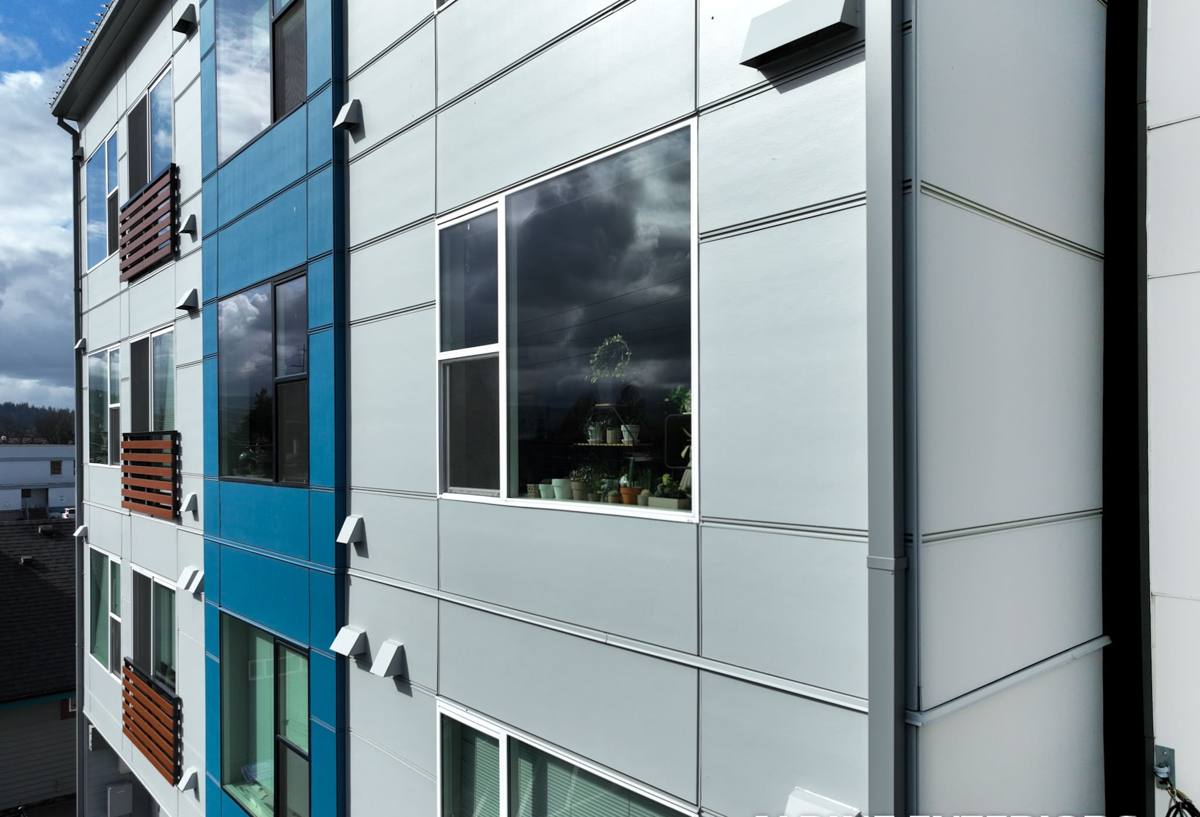
What Salt Air, Rain, and Moss Actually Do to a Board & Batten Wall
Vertical siding styles like board and batten have more horizontal seams and more places for water to catch than a standard lap pattern, especially at the top of each batten and around window and door trim. In a climate with steady, wind-driven rain off the bay, those seams take a beating. Add in salt air, which accelerates corrosion on fasteners and metal flashing, and you have a siding style that rewards good detailing and punishes shortcuts.
Moss is the other slow, quiet problem. On shaded elevations — common on tree-lined Bellingham lots — moss and algae take hold in the vertical grooves between boards and battens, holding moisture against the substrate long after a rain has passed. Over a few seasons, that trapped moisture is what causes rot at the bottom of boards, swelling, and paint failure, far more often than any single storm event.
- Wind-driven rain pushes water sideways into vertical seams, not just down the face of the wall
- Salt air speeds up corrosion on nails, screws, and flashing metal over time
- Shaded, low-airflow walls grow moss and algae in the channels between battens
- Freeze-thaw cycles in colder snaps can widen small cracks in inferior board materials
What a Correctly Installed Board & Batten Job Requires
A Real Drainage Gap
Board and batten should never be installed tight against the weather-resistive barrier. A proper rain screen gap lets any water that gets behind the boards drain and dry instead of sitting against the sheathing. In a climate with as much sustained rain as Whatcom County gets, skipping this gap is one of the most common — and most damaging — shortcuts we see on older installs.
Fastener and Flashing Choices
Salt air is hard on cheap fasteners. We use corrosion-resistant fastening rated for coastal exposure, and we flash every window, door, and horizontal transition so water is directed out and down, never behind the panel. Batten placement over panel seams has to be tight and consistent, both for weather performance and for the clean look board and batten is chosen for in the first place.
Bottom Clearance and Grade Details
Board and batten run vertically to the ground more often than lap siding does, which means the bottom edge needs proper clearance from grade, decks, and patios. Bellingham's wet falls and winters make this a non-negotiable detail — siding installed too close to grade will wick moisture no matter how good the material is.
Why We Install James Hardie Board & Batten — Nothing Else
We install James Hardie fiber cement exclusively, including for board and batten profiles, and we don't install vinyl, engineered wood (LP SmartSide), Cemplank, Allura, or primed cedar or spruce board and batten. That's not a marketing position — it's a standard we've held to because of how each of those materials actually performs over years of real coastal exposure.
Vinyl board and batten is affordable and low-maintenance in the short term, but it expands and contracts more than fiber cement, which can telegraph gaps at the battens over time, and it isn't rated to the same fire-resistance standard. Engineered wood products use wood fiber that, if a seal is ever compromised — at a scratch, a poorly caulked seam, or a fastener hole — can wick moisture and swell in a wet climate like ours. Primed solid wood board and batten looks great on day one but demands a repainting and recaulking schedule that most homeowners underestimate, especially with the moss and mildew pressure Bellingham's shaded lots create.
James Hardie fiber cement is non-combustible, dimensionally stable in wet-dry cycling, and available with a factory-applied ColorPlus finish that resists fading and chipping far longer than field-applied paint. For board and batten specifically, Hardie's engineered panel and batten systems hold their lines cleanly over time instead of shifting or gapping, which is exactly what you want from a siding style that depends on crisp, even vertical reveals to look right.
Our Board & Batten Process for Bellingham Homes
- On-site assessment — we look at wall orientation, shade exposure, existing moisture or moss damage, and grade clearance before recommending anything.
- Tear-off and sheathing check — old siding comes off and we inspect sheathing for hidden rot, especially on north and west walls where moss has been present.
- Weather barrier and rain screen installation — a new weather-resistive barrier and drainage gap go in before any siding is hung.
- Panel and batten installation — James Hardie panels go up first, followed by battens set to consistent spacing and properly fastened.
- Flashing and trim — windows, doors, and all horizontal transitions get flashed to direct water out and away from the wall assembly.
- Final finish and walkthrough — ColorPlus-finished boards mean no field painting is required in most cases; we walk the job with the homeowner before calling it complete.
Board & Batten vs. Other Siding Styles in This Climate
| Siding Style | Moisture Behavior Here | Moss/Algae Risk | Long-Term Look |
|---|---|---|---|
| Board & Batten (Hardie) | Strong when rain-screened and flashed correctly | Low with proper drainage gap | Holds crisp vertical lines for decades |
| Lap Siding (Hardie) | Excellent, fewer vertical seams | Low | Classic, very low-maintenance |
| Vinyl Board & Batten | Prone to gapping from expansion/contraction | Moderate in shaded areas | Can warp or fade over time |
| Primed Wood Board & Batten | Vulnerable if paint seal fails | High without regular maintenance | Needs repainting on a recurring cycle |
What Drives the Cost of a Board & Batten Project
| Factor | Why It Matters |
|---|---|
| Wall square footage and number of stories | More surface area and access complexity increase labor time |
| Existing sheathing condition | Hidden rot from prior moss or moisture damage adds repair scope |
| Trim and window/door count | Each opening needs individual flashing and trim detail work |
| Batten spacing and panel configuration | Tighter reveals and custom spacing take more layout time |
| Color selection | Standard ColorPlus colors vs. custom finishes affect material cost |
We give homeowners real numbers after an on-site look, not a phone estimate — the only way to price this accurately is to see the actual wall condition and access.
Maintenance Checklist for Bellingham Board & Batten Homes
- Rinse shaded and north-facing walls once or twice a year to slow moss buildup
- Keep gutters clear so overflow doesn't run directly down siding faces
- Trim back vegetation and tree cover that keeps walls damp and shaded
- Inspect caulking at window and door trim annually, especially after winter storms
- Check for any siding contact with grade, decks, or planting beds and correct it early
- Have flashing and batten seams checked if you notice any staining or soft spots
Why Hiring a Crew That Already Works in Bellingham Matters
Board and batten is less forgiving of installation mistakes than standard lap siding, and the mistakes that matter most — missing rain screens, poor flashing, wrong fastener choices — are invisible once the wall is finished. They only show up years later as moss staining, soft trim, or swollen boards. A crew that already works homes in and around Bellingham has seen how the salt air, rain patterns, and shade conditions on local lots actually play out over time, and builds the wall assembly accordingly rather than following a generic install sheet.
We stand behind our work with the strength of James Hardie's transferable warranty and our own installation standards, and we're straightforward about what a job actually needs — not the fastest or cheapest way to close it out.
If you're considering board and batten siding for a home in Bellingham, we're happy to take a look and give you a free, no-pressure estimate — just fill out the form below.