 Ferndale Window
 Roof Repair in Sumas: What Local Homes Are Up Against
Homes in and around Sumas take a steady beating from Whatcom County weather. Salt-laden air drifting in off the water accelerates corrosion on metal flashing, fasteners, and vent caps. Driving rain, especially in the fall and winter storm cycle, finds every weak seam and works it wider. And the long moss season that defines this part of the Pacific Northwest doesn't just make a roof look neglected — moss holds moisture against the roofing material for months at a time, which is exactly the condition that turns a small problem into a repair job, and eventually into a replacement.
None of this means a Sumas roof is doomed. It means the repairs need to account for how this specific climate behaves, not just patch what's visible on the surface. A repair that ignores moisture cycling, wind-driven rain, or moss regrowth tends to fail again within a season or two — which is often why homeowners call us after already paying someone else once.
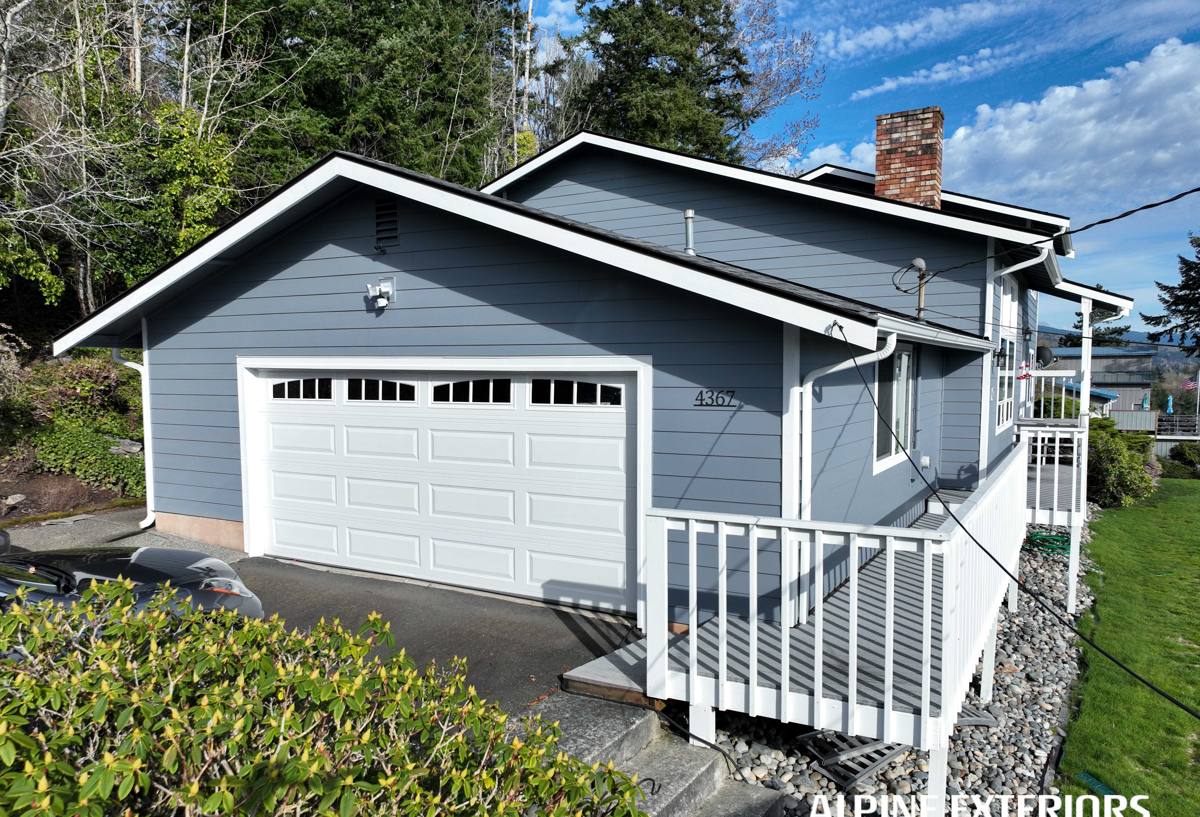
Signs Your Sumas Roof Needs Repair, Not Replacement
Most roofs don't fail all at once. They show warning signs first, and catching those signs early is usually the difference between a repair bill and a full replacement bill. We look at both what's visible from the ground and what's showing up inside the house.
Interior warning signs
Water doesn't always show up where the leak actually is — it travels along rafters and sheathing before it drips. A stain on a ceiling or a top-floor closet wall is often the first sign homeowners notice, sometimes well after the leak itself started.
Exterior warning signs
From the outside, we're checking for curled or cupped shingle edges, granule loss (visible as dark grit collecting in gutters), lifted or missing shingles after a windstorm, and moss or algae buildup concentrated on the shaded, north-facing slopes that stay damp longest.
- Water stains or discoloration on ceilings, especially near exterior walls or chimneys
- Shingles that are curling, cracking, or missing after a wind event
- Heavy granule loss visible in gutters or downspouts
- Moss or dark algae streaking concentrated on shaded roof slopes
- Daylight visible through roof boards when viewed from inside the attic
- Soft or spongy decking felt underfoot near valleys or roof edges
- Rusted, lifted, or gapped flashing around chimneys, vents, and skylights
- Sagging in any section of the roofline, viewed from the street
If what you're seeing is isolated — a section of flashing, a run of shingles near one vent pipe, a soft spot around a skylight — that's almost always a repair, not a tear-off. Widespread granule loss, multiple soft decking areas, or a roof already past its expected service life is a different conversation, and we'll tell you honestly which situation you're in.
What a Correct Roof Repair Actually Involves
A roof repair done right starts with figuring out where the water is actually getting in, not just where it's showing up. Those are frequently two different locations, since water follows the path of least resistance along the underlayment and framing before it becomes visible.
Diagnosis before demolition
We trace the leak back to its source — a cracked pipe boot, a nail hole, deteriorated flashing, a wind-lifted shingle tab — before opening anything up. Guessing wrong here means replacing material that wasn't the problem while the actual leak keeps running.
Matching materials, not improvising
Repairs should match the existing roof's material, profile, and where possible, color and age — a patch of mismatched shingles is a cosmetic problem now and a resale problem later. When an exact match isn't available because the original product has been discontinued, we'll tell you that upfront and walk through the closest reasonable option rather than quietly substituting something different.
Flashing and underlayment come first
Most roof leaks in this region trace back to flashing — around chimneys, skylights, vent pipes, and roof-to-wall transitions — rather than the field shingles themselves. A repair that replaces shingles but reuses old, corroded flashing or skips underlayment at the repair area is a repair that's built to leak again.
Common Roofing Materials in Sumas-Area Homes — Repair Considerations
What a roof repair involves changes depending on the roofing material. Here's how the main types found on area homes typically respond to this climate, and what that means for repair work.
| Roofing Material | How This Climate Affects It | Repair Considerations |
|---|---|---|
| Asphalt composition shingle | Granule loss from driving rain speeds aging; moss holds moisture under tabs | Most repairable material; matching age/color of existing shingles matters for appearance |
| Cedar shake / shingle | Prone to moisture retention and moss growth without airflow | Requires careful splicing to keep drainage paths intact; not every damaged shake needs a full section replaced |
| Metal roofing | Salt air accelerates corrosion at fasteners and cut edges | Repairs focus on fastener replacement and resealing seams; panel matching for color fade |
| Flat / low-slope (torch-down, TPO) | Ponding water from heavy rain stresses seams over time | Seam and membrane repair must restore proper drainage, not just patch the visible tear |
We work on all of the above, and the approach for each is different enough that a repair crew needs to know which material they're actually looking at before quoting or starting work.
Moss, Algae, and Salt Air: The Maintenance Side of Roof Repair
A repair fixes what's broken today. Moss and algae control is what keeps the same spot from breaking again next season. In Whatcom County's long wet stretch, moss doesn't just sit on top of shingles — its root structure lifts shingle edges and holds standing moisture underneath, which is a slow, steady way to void a roof's remaining lifespan.
We treat moss removal and prevention as part of a proper repair, not an upsell tacked onto it. That typically means careful removal (never aggressive pressure-washing, which strips granules and does its own damage), and zinc or copper strip installation at the ridge where appropriate, which lets rainwater carry a natural moss inhibitor down the roof slope over time.
Salt air is a slower, quieter problem — it shows up as corrosion at fastener heads, flashing seams, and any exposed metal edge before it shows up anywhere else. Part of an honest repair inspection is checking those points even when they aren't the reason you called.
Our Repair Process, Start to Finish
Homeowners generally want to know two things before they let a crew on their roof: what's actually wrong, and what it's going to cost to fix it correctly. Our process is built around answering both clearly before any work starts.
1. Inspection
We get on the roof (weather permitting) and in the attic where accessible, and document what we find — not just the obvious damage, but flashing condition, decking firmness, and moss/algae extent nearby.
2. Straight-talk estimate
You get a clear explanation of what needs to happen and why, in plain language — not a vague line item. If it's a repair, we say so. If we think you're better off planning for replacement soon, we say that too.
3. The repair itself
We replace only what needs replacing, match materials as closely as possible, and rebuild flashing and underlayment at the repair point to current standards rather than reusing failing components.
4. Cleanup and a final check
Debris and old material leave the site with us. We do a final walk-through so you know exactly what was done and where, and what (if anything) to keep an eye on going forward.
Cost Factors for Roof Repair in Sumas
Roof repair costs range widely because every roof and every problem is different. Rather than quote a number that won't mean much without seeing your roof, here are the factors that actually drive the price up or down.
| Factor | Why It Matters |
|---|---|
| Roof pitch and access | Steep or high roofs take longer and require more safety setup |
| Extent of decking damage | Rotted plywood or boards under the shingles add material and labor beyond surface repair |
| Material availability and match | Discontinued or specialty shingles/shakes/metal panels can take longer to source |
| Number of roof penetrations | Chimneys, skylights, and multiple vent pipes each add a flashing detail to redo correctly |
| Moss/algae extent | Heavier buildup means more cleanup time before the actual repair can begin |
| Urgency | An active leak needing a temporary tarp or emergency response is priced differently than scheduled repair work |
Broad strokes: a small, isolated flashing or shingle repair is typically a modest job measured in a few hundred dollars; repairs involving decking replacement or multiple penetration points climb from there. We'll always give you the real number for your roof after we've actually looked at it, not before.
Roof Repair vs. Full Replacement: Making the Right Call
Not every roof problem should end in a repair, and not every roof problem needs a full replacement either. The honest answer usually comes down to age, the extent of damage, and whether the problem is isolated or spread across the roof.
A roof with one bad flashing detail, a handful of wind-lifted shingles, or a single soft spot is a repair candidate almost regardless of age. A roof with widespread granule loss, multiple soft or spongy areas, or one that's already near the end of its expected service life is usually better served by planning a replacement — because repeated repairs on a roof that's failing broadly end up costing more over time than doing it once, correctly.
We'll tell you which category your roof falls into. If a repair is the right call, that's what we'll recommend and quote — we don't push replacements on roofs that don't need them.
Why Hire a Crew That Already Works in Sumas
Roof repair isn't a one-size-fits-all trade. A crew that regularly works roofs across Whatcom County has already seen how salt air, moss, and driving rain behave on the roofing materials common to this area — which flashing details tend to fail first, which slopes hold moss longest, and which repairs actually hold up through a full wet season rather than needing a second visit.
That familiarity matters more than it might seem. A repair crew unfamiliar with this climate might treat a Sumas roof the same way they'd treat one in a drier region — and miss the moisture-driven issues that are the actual root cause of the leak. Local experience isn't a marketing line here; it changes what gets inspected, what gets flagged, and how the repair is built.
If you're seeing any of the warning signs above, or just want a second opinion on a roof that's due for a look, we'll come out, inspect it honestly, and give you a straightforward, no-pressure estimate — with no obligation to move forward. Use the form below to get started.