 Ferndale Window
 A roof in this part of Whatcom County works harder than most people realize. Homes around Sumas sit under a weather pattern that mixes long, wet winters with damp marine air pushed in from the Salish Sea, and the result is a roof that's rarely given a chance to fully dry out between storms. Add in the shade from mature evergreens common on rural and semi-rural lots in this area, and you have the three conditions that shorten a roof's life faster than almost anything else: standing moisture, driving rain, and moss. A new roof installed here needs to be built with those specific conditions in mind, not just installed to a generic manufacturer spec.
Why Sumas Roofs Wear Differently Than Roofs Inland
Whatcom County's proximity to the water means homes here deal with salt-laden air, higher average humidity, and wind-driven rain that finds its way under poorly sealed edges, valleys, and penetrations. That combination accelerates corrosion on exposed metal fasteners and flashing, degrades adhesive seals on shingles faster than in a dry inland climate, and creates the damp, shaded conditions moss and algae need to take hold. A roof that would hold up fine in a drier region can show granule loss, moss colonies, and soft decking years ahead of schedule out here if it wasn't installed with the right underlayment, ventilation, and flashing details from day one.
None of this means a roof in Sumas is destined to fail early. It means the installation has to account for moisture management at every layer, not just the shingles on top.
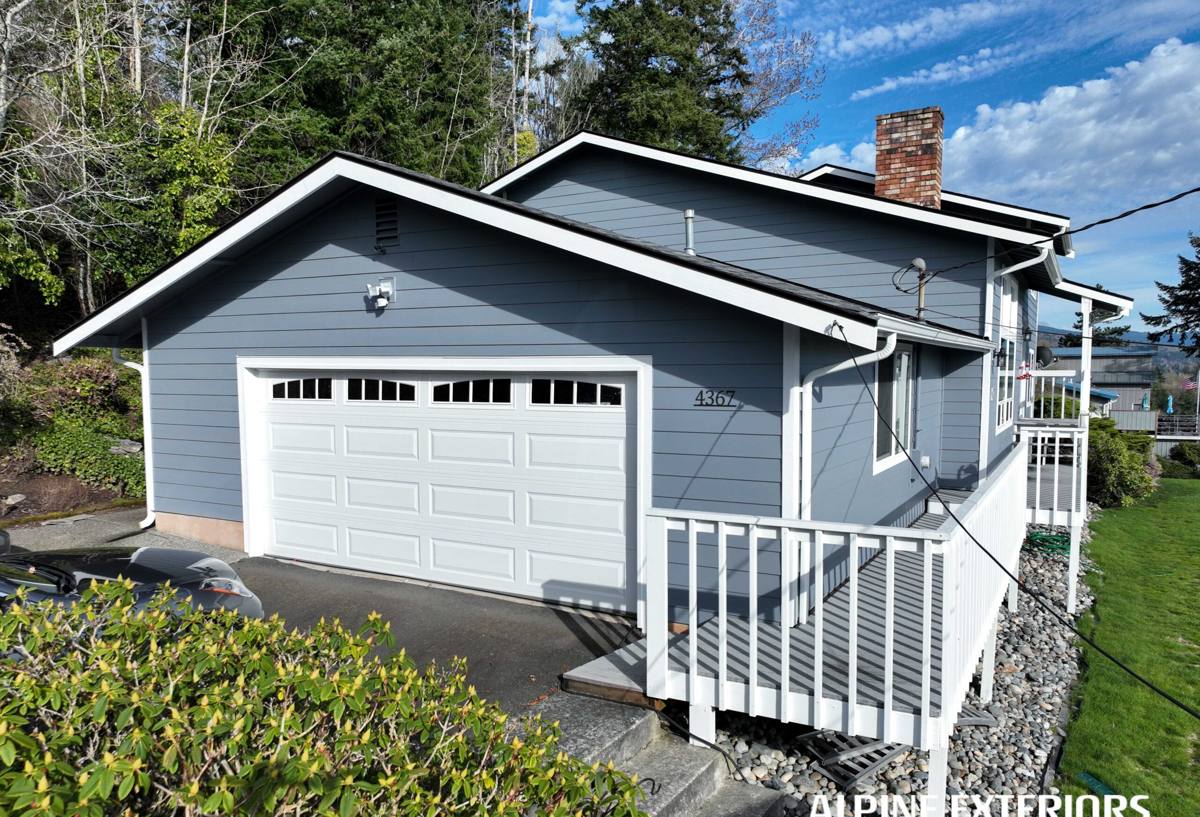
Signs a Sumas Home May Be Ready for a New Roof
Most homeowners don't think about their roof until something forces the issue. A few signs worth taking seriously, especially on a roof that's seen fifteen-plus wet seasons:
- Granules collecting in gutters or at downspout outlets
- Shingles that are curling, cupping, or visibly brittle
- Dark streaking or thick moss growth, particularly on north-facing slopes
- Soft spots or noticeable sagging when walking the attic or viewing the roof deck
- Daylight visible through the roof boards from inside the attic
- Water stains on ceilings or in the attic after heavy rain
- Missing, lifted, or cracked shingles after a windstorm
Any one of these on its own might just need a repair. Several at once, or a roof that's simply past its expected service life, usually means it's time to plan for a full replacement rather than keep patching a roof that's fighting the climate and losing.
What a Correct Roof Installation Actually Involves
A new roof is more than laying down new shingles over what's already there. In a climate like this, the layers underneath the visible surface do most of the work protecting the home.
Tear-Off and Deck Inspection
We remove the existing roofing down to the deck rather than layering over old material. That's the only way to actually see what's underneath — soft or rotted decking, hidden leaks, or old flashing that's been quietly failing for years. Any damaged sheathing gets replaced before anything new goes down. Skipping this step is one of the most common shortcuts in the roofing trade, and it's also the one most likely to cause problems five or ten years later.
Underlayment and Moisture Barrier
Given how much rain this region sees, the underlayment matters as much as the shingles themselves. We use ice-and-water shield or high-performance synthetic underlayment in the areas most exposed to wind-driven rain — eaves, valleys, and around penetrations — with the rest of the deck fully protected by a quality synthetic underlayment rated for our climate.
Ventilation
Poor attic ventilation traps moisture against the underside of the deck, which speeds up rot and can void a shingle warranty outright. We check intake and exhaust balance as part of every roof installation, not as an afterthought, and correct it where the existing setup is inadequate.
Flashing and Edge Details
Chimneys, skylights, wall intersections, and roof edges are where the vast majority of roof leaks actually start — not in the open field of shingles. We install new flashing at every penetration and transition rather than reusing old flashing, and we pay particular attention to valley and drip-edge details given how much water this region's roofs are asked to shed.
Choosing Roofing Materials for This Climate
There's no single "best" roofing material for every home — the right choice depends on budget, roof pitch, how much shade and moss pressure the roof will face, and how long you want the roof to last before the next replacement. Here's an honest comparison of the main options homeowners in this area consider:
| Material | Typical Lifespan | Moss/Algae Resistance | Upfront Cost | Maintenance Needs |
|---|---|---|---|---|
| Asphalt Composition Shingle | 20–30 years | Moderate; improves with algae-resistant granules | Lowest | Periodic moss removal, gutter care |
| Standing-Seam Metal | 40–60+ years | High — moss struggles to root on metal | Highest | Minimal; occasional fastener/seal check |
| Synthetic/Composite Shingle | 30–50 years | High when treated; class-leading impact resistance | Mid-to-high | Low; occasional debris clearing |
For homes on heavily shaded lots or with a history of persistent moss regrowth, metal or a treated synthetic often makes more long-term sense despite the higher upfront cost, simply because moss has a much harder time establishing on those surfaces. For homes with better sun exposure and a more typical moss history, a quality algae-resistant asphalt shingle is still a solid, cost-effective choice. We'll walk through the trade-offs for your specific roof rather than pushing one product line.
Our Installation Process, Start to Finish
- On-site inspection and estimate — we assess the current roof, deck condition, ventilation, and any problem areas before quoting anything.
- Material selection — we go over the trade-offs above based on your roof, budget, and how long you plan to stay in the home.
- Scheduling and prep — we coordinate around weather windows, since a proper tear-off shouldn't sit exposed to rain overnight.
- Tear-off and deck inspection — old roofing comes off, decking is inspected and repaired as needed.
- Underlayment, flashing, and ventilation work — the protective layers go in before a single new shingle is installed.
- New roof installation — installed to manufacturer spec, with attention to the exposure-prone details covered above.
- Cleanup and final walkthrough — site cleared of debris and nails, and we walk the finished roof with you.
Moss, Algae, and Salt Air: Keeping a New Roof Performing Long-Term
A well-installed roof still needs a little help staying that way in this climate. Moss and algae don't cause failure overnight, but left unchecked they hold moisture against the shingle surface and work their way under tabs and around fasteners over time. A few habits go a long way:
- Keep overhanging branches trimmed back to let light and air reach shaded roof sections
- Clear gutters and valleys of needles and debris before the wet season sets in
- Have moss physically removed rather than left to spread, and treated with a roof-safe method
- Check flashing and sealant at penetrations every couple of years, since salt air ages exposed metal and sealants faster than an inland climate
None of this replaces a correctly installed roof — it just protects the investment once it's in.
Why It Matters to Hire a Crew That Already Works in Sumas
Roofing code requirements, permitting expectations, and typical construction practices vary somewhat by jurisdiction, and Whatcom County has its own permitting process separate from what a crew based elsewhere might be used to. A crew that regularly works this part of the county already knows the permitting steps, has a feel for how local weather windows affect scheduling, and has seen firsthand how moss, salt air, and driving rain actually behave on roofs in this specific area — not just in a training manual. That local pattern recognition is what catches a marginal deck or a poorly vented attic before it becomes a callback.
Questions Worth Asking Before You Sign a Roofing Contract
- Is the quote based on a full tear-off, or is layering over the existing roof being proposed?
- What underlayment and ice-and-water shield are included, and where specifically will they be installed?
- Will attic ventilation be assessed and corrected if it's inadequate?
- Is all flashing being replaced, or is any of it being reused?
- What's the manufacturer's warranty, and does it require a certified installer to stay valid?
- Are permits included, and who's responsible for pulling them?
- What's the plan if rain moves in mid-tear-off?
If you're weighing a roof replacement for a home in the Sumas area, we're happy to take a look and give you a straightforward, no-pressure estimate — including an honest read on whether repair still makes sense or it's genuinely time for a new roof. Use the form below to get started.