 Ferndale Window
 Metal Roofing for Sumas, WA Homes
Sumas sits out at the edge of Whatcom County, in the flat farmland near the Canadian border, and the weather that moves through this part of the county doesn't treat a roof gently. Rain comes in sideways as often as it falls straight down. Whatcom County's marine-influenced air carries salt-tinged moisture inland that works on exposed metal over time, and the shaded, damp conditions that settle over low-lying valley properties keep a moss season going for much of the year. A roof out here needs to shed water fast, resist that long moss cycle, and hold its fasteners and seams together through repeated wet-dry and freeze-thaw swings. Metal roofing, installed correctly, does that better than almost any other option available to a Sumas homeowner.
This page covers metal roofing specifically for Sumas properties — what the local climate actually does to a roof, what separates a correct metal roof install from a rushed one, the systems worth considering, and how our process works from first look to final walkthrough.
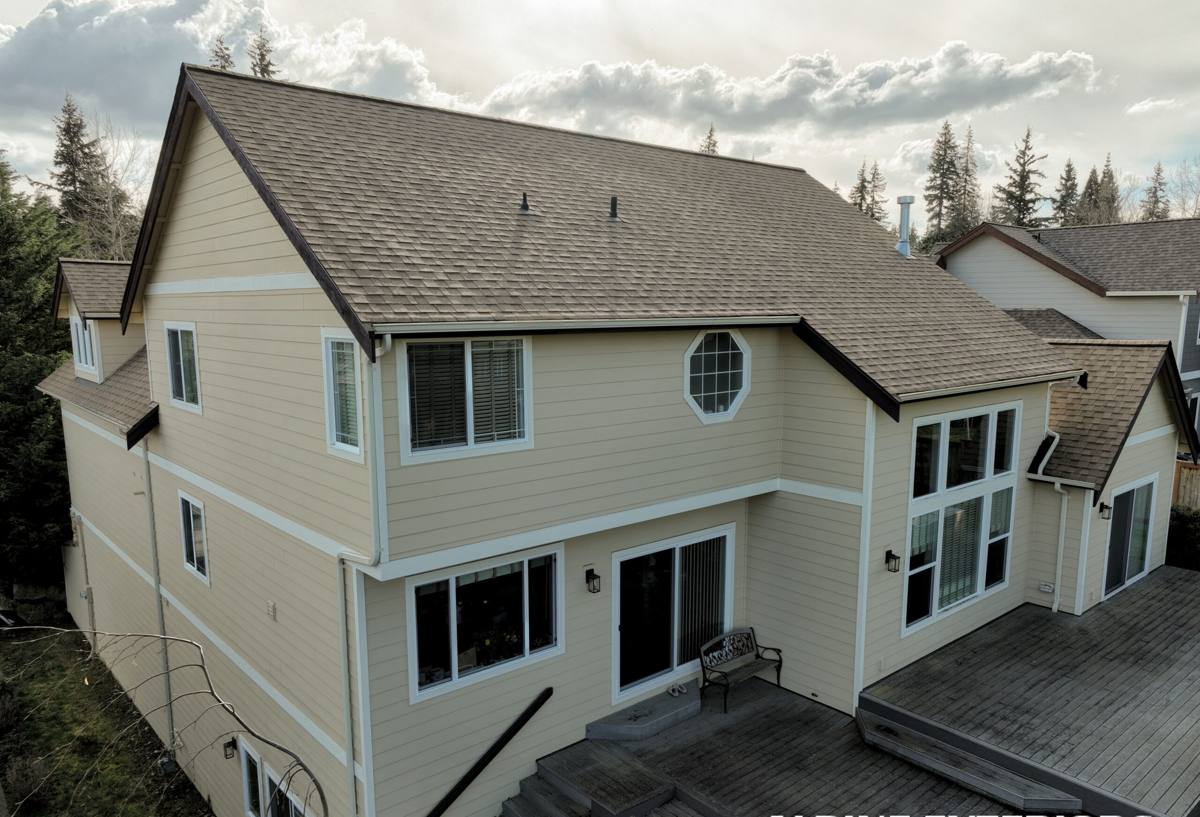
What Sumas Weather Does to a Roof
Driving Rain and a Low-Lying Valley Floor
Sumas sits low, in flat agricultural terrain near the Nooksack River system, and storms moving through this part of the county tend to push rain sideways rather than let it fall and run off cleanly. On a roof, that means water gets driven up under laps, into fastener penetrations, and against any flashing detail that isn't built to handle wind-driven moisture specifically. A roof that performs fine in a calmer, more sheltered part of Whatcom County can still leak here if it wasn't detailed for this kind of exposure.
Salt-Tinged Marine Air
Whatcom County's proximity to Bellingham Bay and the broader Salish Sea means salt-tinged air moves through the region more than people expect, even out toward Sumas' inland, near-border location. That air works slowly but steadily on exposed metal — fasteners, flashing, vent stacks, and any hardware that isn't rated for it. Cheap or undersized metal components are usually the first thing to show rust staining, and once corrosion starts at a fastener head or seam, it rarely stays cosmetic for long.
A Long Moss and Algae Season
Sustained regional dampness and mild temperatures add up to a moss season that runs longer here than in drier parts of the state. Shaded and north-facing roof planes are usually the first to show it, and it isn't just a cosmetic problem — moss holds moisture directly against roofing material and fasteners, which accelerates the exact corrosion and water intrusion problems the rest of this page is about. A smooth, non-porous metal roof surface gives moss far less to hold onto than a textured shingle does, which matters a lot on a property with real shade or tree cover.
Freeze-Thaw and Cold Outflow Wind
Because of its position near the head of the valley close to the border, Sumas sees more frequent hard frosts and occasional outflow wind events than milder coastal towns closer to the water. Those events bring sharp temperature swings and real wind load, and they test a roofing system's fastening, panel expansion allowance, and edge detailing harder than an average, more sheltered Whatcom County site would.
Why Metal Roofing Fits This Specific Climate
Metal roofing isn't automatically the right call for every home or every budget, and we'll say that plainly to any homeowner who asks. But for a Sumas property dealing with driving rain, salt-tinged air, and a long moss season all at once, the case for metal is strong.
- Sheds wind-driven rain efficiently: A metal roof's smooth surface and continuous panel runs give water fewer places to catch, pool, or work its way under a lap compared to a layered shingle surface.
- Resists moss and algae growth: Moss struggles to establish on a smooth, non-porous metal surface the way it does on textured asphalt shingle, which matters directly on shaded valley lots.
- Long service life: A correctly installed metal roof commonly outlasts two or more asphalt shingle roofs over the life of a home, which changes the math on total cost of ownership even with a higher upfront price.
- Handles wind load well: Properly fastened metal panels or standing seam systems perform well under the kind of outflow wind events Sumas sees more often than towns closer to the water.
- Low ongoing maintenance: Fewer granules to lose, less surface for organic growth to take hold on, and no shingle tabs to lift in a wind event.
The trade-offs are real too, and we'll walk through them honestly with any homeowner considering the switch: higher upfront material and labor cost than asphalt shingle, a different visual profile that isn't the right look for every home, and installation that's far less forgiving of shortcuts than shingle work. A metal roof done wrong fails in ways that are harder to patch quietly than a bad shingle job.
Choosing the Right Metal Roofing System for Sumas
| System | Best Use | Fit for Sumas Conditions |
|---|---|---|
| Standing seam | Most residential roofs, especially where a clean, modern profile is wanted | Concealed fasteners and raised seams shed wind-driven rain very well and hold up longest against salt-tinged air |
| Exposed-fastener corrugated or ribbed panel | Budget-conscious projects, outbuildings, some farmhouse-style homes | Solid performance and lower cost, but exposed fasteners need periodic checking and eventual re-tightening or replacement |
| Stone-coated steel | Homes wanting a traditional shingle or tile look with metal's durability | Textured surface holds slightly more debris and moisture than smooth panel, worth weighing against the appearance benefit |
| Metal shingle or shake panel | Homes matching a specific architectural style | Good moss resistance versus real wood shake, though more seams than a standing seam run |
For most Sumas homes dealing with sustained rain, wind exposure, and a long moss season, standing seam with concealed fasteners is usually the strongest match. Exposed-fastener panel systems remain a reasonable, more budget-friendly option, provided the installer understands that those fasteners need real attention over the life of the roof rather than being installed once and forgotten.
Finish and Coating Matter as Much as Panel Style
Two roofs using the same panel profile can perform very differently depending on the substrate metal and paint finish underneath. A PVDF-type factory finish holds its color and resists chalking far longer than a lower-grade polyester coating, and galvanized or aluminized steel substrates resist salt-influenced corrosion better than uncoated or thin-gauge material. On a property that sees real salt-tinged air moving through the valley, this is not a place to cut cost quietly — it's usually where a "cheap metal roof" quote is cutting corners the homeowner won't see until years later.
What a Correct Metal Roof Install Involves
Material choice only gets a Sumas roof halfway there. The rest comes down to installation detail, and metal roofing is far less forgiving of shortcuts than asphalt shingle.
Deck Inspection and Tear-Off
A full tear-off to the decking is the only reliable way to find hidden moisture damage, soft spots, or rot that's developed under old roofing — often invisible from inside the attic until it's advanced. This matters even more before a metal roof goes on, since panel systems need a sound, flat substrate to perform and look right.
Underlayment
A high-temperature synthetic or self-adhered underlayment beneath the metal panels provides a real secondary water barrier, which matters directly in a climate where wind-driven rain gets forced under laps and around fasteners rather than simply running off. Ice-and-water shield at eaves, valleys, and penetrations adds protection at the spots most likely to leak.
Panel Layout and Fastening
Panel spacing, clip spacing on standing seam systems, and fastener selection all need to account for thermal expansion and contraction, which is more pronounced in metal than in shingle. Panels installed without allowance for that movement can buckle, oil-can, or work fasteners loose over repeated seasonal cycles — exactly the kind of freeze-thaw and temperature swing Sumas sees more of than milder coastal towns.
Flashing at Valleys, Penetrations, and Walls
Most roof leaks in this region start at flashing details, not in the open field of the roof. Valleys, chimney and vent penetrations, and wall-to-roof transitions all need flashing that's properly formed, lapped, and integrated with the underlayment rather than sealed with caulk as an afterthought. On a metal roof, flashing has to be detailed for the specific panel profile being used, not treated as a generic add-on.
Edge, Trim, and Ventilation Detail
Drip edge, eave trim, and ridge cap all need to be formed and fastened correctly to prevent wind uplift at the roof's most exposed points, particularly relevant given how often outflow wind moves through this part of the county. Balanced attic ventilation underneath the roof deck keeps moisture from condensing against the underside of the panels, which protects both the roof structure and the metal itself over the long run.
Cost Factors for Metal Roofing in Sumas
Bids for what looks like the same metal roof can vary substantially, and the gap usually comes down to real differences in scope and material grade rather than one contractor simply charging more for identical work.
| Factor | What It Affects | Why It Matters Here |
|---|---|---|
| Panel system and gauge | Material cost and long-term durability | Heavier gauge and standing seam profiles resist wind load and salt-influenced corrosion better than thin, budget panel |
| Coating and finish grade | Long-term color retention and corrosion resistance | A stronger factory finish matters more where salt-tinged marine air reaches the property |
| Tear-off vs. overlay | Labor scope and substrate access | Tear-off reveals hidden moisture and rot damage common under older roofing in a damp valley climate |
| Flashing and trim scope | How thoroughly valleys, penetrations, and edges are addressed | Flashing quality drives leak risk more than panel choice does on most roofs |
| Roof complexity | Labor time and number of seams, valleys, and penetrations | Simple gable roofs cost less per square foot than roofs with multiple valleys and dormers |
| Site access | Staging, crane or lift needs, driveway length | Rural and agricultural Sumas properties can have longer driveways or different staging needs than in-town lots |
Exact costs depend on the specific roof and its exposure, which is why we walk the property in person and provide a detailed written estimate rather than quoting a flat number sight unseen.
Metal Roofing Readiness Checklist
Before recommending a full replacement, we look at the whole roof system, not just the surface material. A homeowner can start with a basic visual check:
- Rust staining at nail heads, flashing, vent stacks, or gutter hardware
- Moss or dark staining concentrated on shaded or north-facing roof planes
- Soft spots or sagging visible from the attic or along the roofline
- Loose, lifted, or missing shingles, or panel seams that look uneven from the ground
- Signs of water staining on interior ceilings, especially near valleys or chimneys
- Gutters that fill with granules or debris faster than they used to
- Attic ventilation that looks blocked, damaged, or insufficient for the roof's size
How Our Process Works
We keep the process straightforward, because a roof replacement is a significant investment and homeowners deserve to know what's happening at every stage.
- In-person inspection: We walk the roof and attic in person, not from a photo or a drive-by, and document existing condition, exposure, and any hidden damage.
- Honest recommendation: We'll tell you plainly whether metal roofing is the right fit for your home, budget, and timeline, or whether another approach makes more sense.
- Detailed written estimate: A clear scope covering panel system, underlayment, flashing, and trim, so you know exactly what's included before comparing any other bid.
- Tear-off and deck prep: Old roofing comes off, the deck gets inspected, and any rot or soft spots are repaired before anything new goes on.
- Underlayment and flashing installation: The water-resistant layers that do most of the real work go in first, with extra attention at valleys, penetrations, and wall transitions.
- Panel installation: Panels or seams go in with proper spacing, fastening, and expansion allowance for this climate's temperature swings.
- Final walkthrough: We review the finished roof with you, answer questions, and make sure you understand any maintenance the specific system calls for.
Why a Local Crew Matters in Sumas
A crew that works this part of Whatcom County regularly understands how driving rain, salt-tinged air, moss, and freeze-thaw cycling behave on real roofs here over a full year, not just how a panel system performs on a spec sheet. That experience shapes practical decisions on install day — where extra flashing attention pays off, which fastening details are worth the added time, and how a roof's ventilation needs to be balanced for a shaded, low-lying valley lot instead of a more open, sheltered site. Sumas sits far enough from the water and close enough to the border that its exposure looks a little different from the rest of our Ferndale-area service territory, and we treat that difference seriously rather than applying a one-size-fits-all approach built for a milder location.
We also handle windows, siding, and other exterior work, and we look at a Sumas property as one connected system exposed to the same weather rather than treating the roof in isolation. A roof leak that shows up as water staining near a window, or trim damage that traces back to a flashing gap at the roofline, is easier to catch and fix correctly when the same crew understands how those pieces interact.
Get an Honest Look at Your Sumas Roof
If your Sumas home needs a new roof, has an aging roof you're not sure about, or you just want an honest opinion on whether metal roofing makes sense for your situation, we're glad to take a look. Reach out using the form below to schedule a free, no-pressure estimate.