 Ferndale Window
 Sumas Homes Face a Specific Kind of Weather
Sumas sits far enough inland to escape some coastal extremes, but it still catches the same weather system that soaks the rest of Whatcom County: driving rain pushed sideways by wind, damp winters that never quite dry out, and a moss season that can run from late fall clear through spring. Add in the salt air that carries in off the Strait on a west wind, and you get a combination that's harder on exterior building materials than most homeowners realize until they're dealing with the damage.
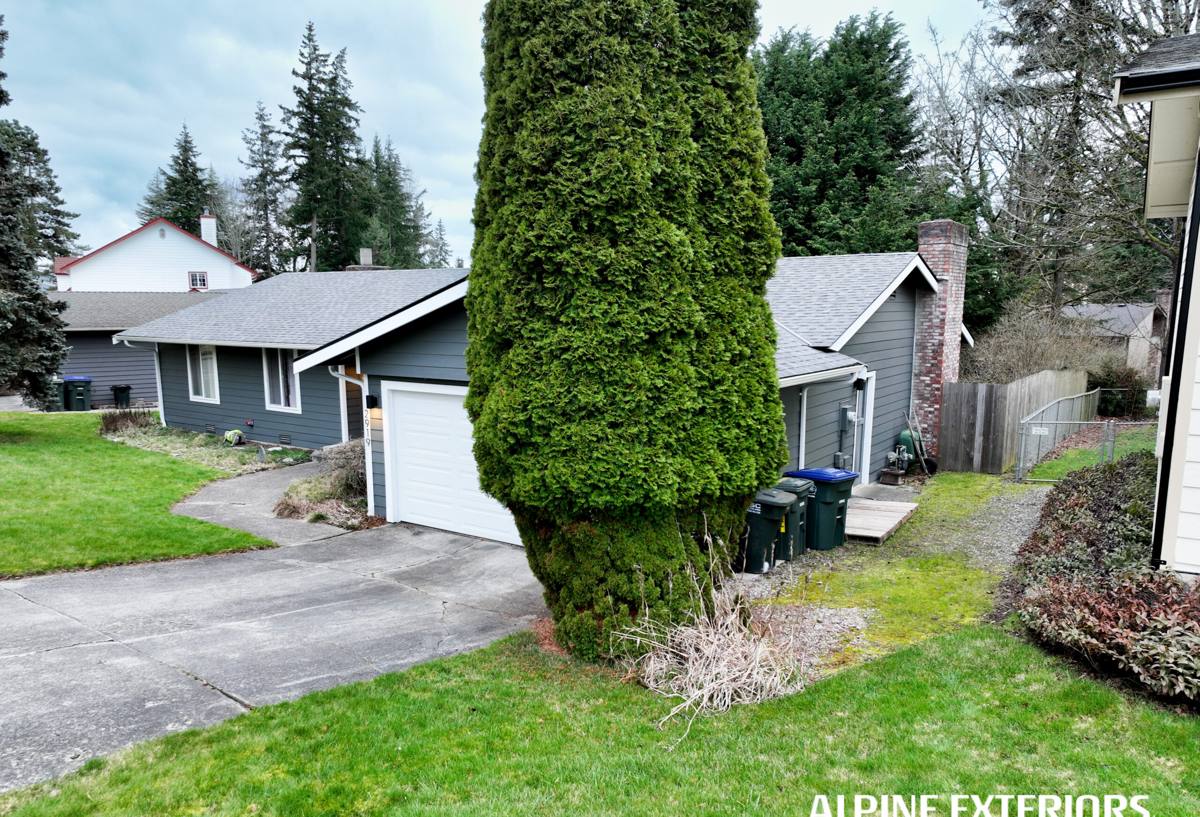
This page covers one job, done right, in one area: James Hardie fiber cement siding installed on a home in the Sumas area near Ferndale. We only install James Hardie products — not vinyl, not LP SmartSide, not primed wood, not cedar — and by the end of this page you'll understand why that's not a sales pitch, it's a standard we hold because of what this exact climate does to a wall over ten, twenty, and thirty years.
What Salt Air, Rain, and Moss Actually Do to Siding
Salt air
Airborne salt is corrosive to metal fasteners, flashing, and trim, and it's abrasive to painted and coated surfaces over time. Homes here get less direct exposure than a beachfront property, but Whatcom County winds still carry it further inland than most people expect. Siding systems that depend on exposed fasteners or coatings that weren't engineered for coastal-adjacent exposure show pitting, streaking, and premature fade years before a homeowner expects to be thinking about their siding again.
Driving rain
Rain that falls straight down is rarely the problem — it's rain pushed sideways under pressure during a windstorm that finds every gap, lap, and fastener hole. Siding materials that swell, warp, or absorb water at the cut edges and seams are the ones that fail first, because the damage happens behind the surface where you can't see it until paint is bubbling or a wall feels soft.
Moss and sustained moisture
Whatcom County's moss season isn't a cosmetic issue — it's a moisture issue. Moss holds water against a wall surface for extended periods, and siding materials that aren't dimensionally stable, or that rely on a paint film alone for protection, break down faster under that sustained dampness. North-facing walls, shaded elevations, and anything near mature trees see this first and worst.
Why This Is a Fiber Cement Job, Not a Vinyl or Wood Job
We get asked regularly why we don't offer vinyl or engineered wood siding as a lower-cost option. The honest answer is that both products have real strengths — vinyl is inexpensive and low-maintenance in mild climates, and engineered wood has a warmer, more traditional look — but neither one is the right match for what a Sumas-area home deals with every winter.
- Vinyl expands and contracts significantly with temperature swings, which opens gaps at laps and trim over time, and it doesn't hold up structurally against wind-driven debris the way fiber cement does. It also can't be painted a dark color in full sun exposure without risking warping.
- Engineered wood (LP SmartSide and similar products) uses a wood-strand core that resists moisture better than raw wood, but any wood-based core is still vulnerable at cut edges, fastener penetrations, and seams if caulking and flashing details aren't maintained exactly to spec — and in a climate with this much sustained dampness, that margin for error is thinner than most homeowners want to live with.
- Primed spruce and cedar require the most ongoing maintenance of any siding option — repainting, caulking, and moisture monitoring on a recurring schedule — which is a real cost most homeowners underestimate when they're comparing upfront prices.
James Hardie fiber cement is non-combustible, dimensionally stable across temperature and humidity swings, and doesn't have an organic core for moisture to break down. That's the difference that matters over the life of the siding, not just at installation.
The Hardie Product Line Built for This Region
James Hardie engineers its siding to different climate zones through what the company calls HZ formulations — the version manufactured for the Pacific Northwest is built to perform in high-moisture, high-humidity conditions like ours, as opposed to the drier formulation sold in the Southwest. When we quote a Sumas-area job, we're speccing the product line actually engineered for this weather, not a generic national product.
ColorPlus factory finish
Rather than field-painted siding, we install ColorPlus finish on the large majority of jobs — a baked-on, factory-applied finish that resists fading and chalking far better than a job-site paint job, and it's backed by its own finish warranty separate from the substrate warranty. In an area with this much moisture and UV cycling, factory-applied finish consistency matters more than it does in a milder climate.
Board profiles for this area
Lap siding, board-and-batten, and shingle profiles are all available, and profile choice affects moisture shedding as much as it affects appearance. Horizontal lap with a proper reveal and correct fastener placement sheds wind-driven rain more predictably than more decorative profiles, which is worth discussing during your estimate if you're weighing looks against long-term performance on more exposed elevations.
What a Correct Installation Actually Involves
Fiber cement siding is only as good as its installation. Hardie's own warranty terms require installation to their published specifications, and the details that get skipped on a rushed job are exactly the ones that matter most in this climate.
- Weather-resistant barrier installed and lapped correctly behind the siding, not just stapled up as an afterthought
- Proper flashing at every window, door, and horizontal trim transition — this is where driving rain gets in if it's done wrong
- Correct fastener type, spacing, and depth — fiber cement is unforgiving of overdriven or underdriven nails, both of which cause cracking or loosening over time
- Minimum clearance maintained between the bottom of the siding and grade, decks, patios, and roof lines, so moisture and moss don't get a direct path to sit against the board
- Butt joints and trim seams caulked with a product rated for the movement and exposure involved, not just whatever's on the truck
- Cut edges sealed before installation, since raw cut edges are the most vulnerable point on any fiber cement board
None of this is exotic. It's the manufacturer's spec, done consistently, board by board, on every elevation of the house — including the ones that are harder to reach and easier to rush.
How Our Process Works on a Sumas-Area Job
We treat every siding job the same way regardless of budget: assess first, then install to spec. A typical project moves through the following stages.
1. On-site assessment
We look at the existing siding and sheathing, check for moisture damage or rot around windows, doors, and penetrations, and evaluate which elevations take the worst weather exposure so we can plan flashing and detailing accordingly.
2. Product and color selection
We walk through board profile, ColorPlus color options, and trim choices, factoring in sun exposure on each elevation since that affects both appearance and long-term finish performance.
3. Tear-off and sheathing check
Old siding comes off, and we inspect the sheathing underneath before anything new goes up. Any moisture damage found at this stage gets addressed before the new weather-resistant barrier goes on — covering up a problem is not an option we'll take, even if it means a delay.
4. Installation to manufacturer spec
Barrier, flashing, fastening, clearances, and sealing are all done to Hardie's published requirements, which is also what keeps the manufacturer's warranty intact for you as the homeowner.
5. Final walkthrough
We walk the finished job with you, elevation by elevation, before we consider it done.
Why a Crew That Already Works in Sumas Matters
Local experience isn't a marketing phrase here — it changes real decisions on the job. A crew that regularly works the Sumas and Ferndale area already has a feel for which elevations on a typical local house take the worst wind-driven rain, how much moss buildup to expect on shaded and north-facing walls, and how moisture behaves on this side of the county through a full winter. That translates into better decisions on flashing details, clearance from grade, and where to spend extra attention during installation — the kind of judgment calls that don't show up on a spec sheet but show up in how the siding performs ten winters from now.
It also matters for warranty support. If a question comes up two, five, or fifteen years after installation, you want a contractor who's still local, still doing this work, and familiar with your specific job — not a crew that passed through once and moved on.
What Affects Cost on a Sumas-Area Hardie Job
Every home is different, and we'll give you a firm number after an on-site assessment, not a phone estimate. In general, these are the factors that move the price up or down on a fiber cement re-side in this area.
| Factor | Why it matters |
|---|---|
| Existing siding removal | Tear-off of old vinyl, wood, or aluminum siding adds labor versus installing over new construction sheathing |
| Sheathing or rot repair | Moisture damage found during tear-off has to be repaired before new siding and barrier go on |
| Home size and elevation count | Total square footage and the number of corners, gables, and dormers directly affects material and labor time |
| Board profile and trim complexity | Board-and-batten and shingle-style accents take more labor than straight lap siding runs |
| ColorPlus vs. field-applied finish | Factory ColorPlus finish costs more upfront but avoids future repainting and carries its own warranty |
| Access and site conditions | Tight lots, slopes, and landscaping close to the house can affect staging and labor time |
Maintaining Hardie Siding in This Climate
One of the practical advantages of fiber cement in a climate like this is how little ongoing maintenance it needs compared to wood or vinyl — but "low maintenance" isn't "no maintenance." A short annual routine keeps it performing the way it's designed to.
- Rinse the siding down once or twice a year, especially on shaded or north-facing walls where moss and mildew tend to establish first
- Keep gutters clear so overflow isn't running down the wall face during heavy storms
- Trim back vegetation and tree limbs that hold moisture against the siding or shade it enough to slow drying
- Check caulking at trim joints and penetrations every few years and re-caulk if it's cracked or pulling away
- Walk the exterior after major windstorms and check for any loose or damaged boards near ground level or roof transitions
If you're ready to talk about your home, we're happy to come take a look and walk the property with you. There's no pressure and no cost to get a straight answer about what your siding needs — just fill out the form below and we'll set up a time.