 Ferndale Window
 Siding Repair in Sudden Valley: A Different Set of Conditions
Sudden Valley sits in a pocket of Whatcom County where tree cover and lake proximity shape almost everything about how a house ages. Lots here tend to be shaded for a large part of the day, sightlines are wooded rather than open, and the air stays damp longer after a storm than it does on an unshaded lot a few miles away. Layer that on top of the region's normal weather pattern — driving rain off the water, long stretches of overcast, and salt-tinged air that moves inland during windier stretches near Bellingham Bay — and you get a siding environment that punishes anything that traps moisture or feeds algae growth.
Siding repair in a setting like this isn't just patch-and-paint. It's diagnosing why a section failed in the first place, because on a shaded, moisture-heavy lot, the same failure will come back within a season or two if the underlying cause isn't addressed.
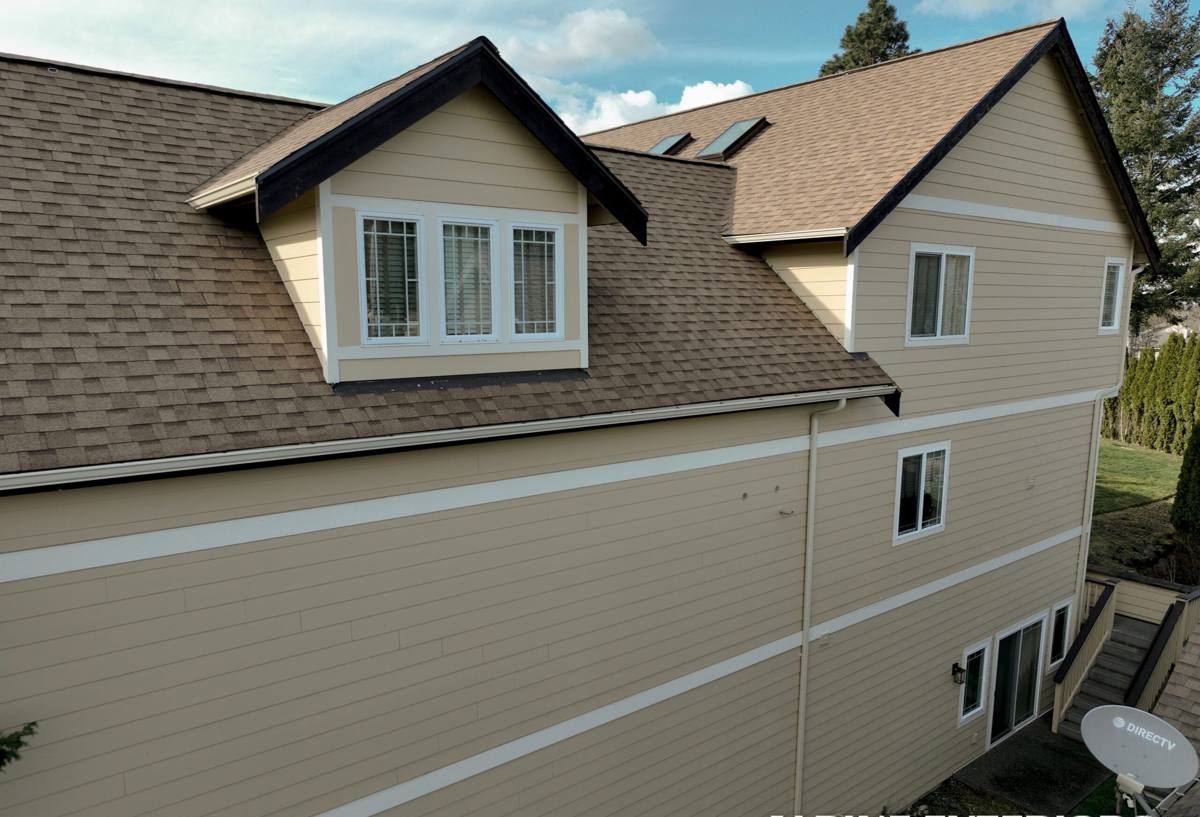
How to Tell Your Siding Needs Repair (Not Just a Cleaning)
A lot of siding problems in shaded, wooded settings look cosmetic from the ground but aren't. Before assuming a wash or a coat of paint will fix things, look for:
- Soft, spongy spots when you press on a board or panel, especially near the bottom courses or below windows
- Paint that's bubbling, peeling in sheets, or won't hold a fresh coat in the same spot repeatedly
- Dark streaking or staining below seams and nail heads, which usually points to water tracking behind the surface
- Persistent moss or algae growth that returns within weeks of cleaning, particularly on north-facing or heavily shaded walls
- Cracked, warped, or bowed boards, or panels that have visibly separated at the seams
- Gaps opening up around trim, corner boards, or window and door casings
- Any sign of insect activity — small holes, frass, or soft wood — behind or around siding panels
Any one of these can be isolated. Several at once, especially clustered on the same wall, usually means moisture has been getting behind the siding for a while.
What's Actually Causing the Damage
Moisture with nowhere to go
Shaded walls dry slower after rain. If the siding, flashing, or house wrap behind it isn't managing water correctly, that moisture sits against the material instead of shedding off, and it works its way into seams, fastener holes, and butt joints over time.
Shade and slow-drying surfaces
Moss and algae need two things to establish: moisture and low light. A heavily treed, lake-adjacent lot supplies both for a large part of the year. Left alone, moss holds water against the siding surface even longer, which accelerates whatever damage is already starting underneath.
Impact and settling
Falling branches, ladders, equipment, and normal house settling all take a toll on siding over the years. A cracked board that goes unrepaired becomes an entry point for the moisture problem above.
Original material and installation quality
A fair number of repair calls we get aren't really about damage — they're about material that was never well-suited to this climate to begin with, or installation that skipped clearances, flashing, or fastener spacing the manufacturer specified. Older hardboard siding, poorly detailed vinyl, and even fiber cement installed without proper gaps or caulking will all eventually show the same symptoms: staining, softness, and recurring moss.
Repair or Replace? How We Make That Call
Not every problem area needs a full re-side, and not every "small" repair should stay small. We look at scope, cause, and material condition before recommending either path.
| Situation | Repair Usually Makes Sense | Replacement Usually Makes Sense |
|---|---|---|
| Extent of damage | Isolated to one or two boards or a single wall section | Recurring across multiple walls or the whole shaded side of the house |
| Cause | Impact damage, a single failed caulk line, or a localized flashing gap | Systemic moisture intrusion reaching the sheathing or framing |
| Material | Sound James Hardie fiber cement with a clean, repairable section | Aging hardboard, brittle vinyl, or material at the end of its service life |
| Match availability | Profile and color can be matched closely | Discontinued profile, faded finish, or no reasonable match exists |
| Cost over time | Cost-effective fix for a contained problem | Repeated patch jobs are approaching the cost of doing it right once |
We'll always give you the honest read on which category your project falls into, in writing, before any work starts.
What a Correct Siding Repair Actually Involves
A repair that's done right addresses the cause, not just the symptom. That means:
- Diagnosing the moisture source first. Painting over a stain or caulking a crack without finding where water is actually getting in just delays the next failure.
- Pulling the damaged material, not covering it. We remove failed boards or panels rather than skinning over them, so we can see what's happening underneath.
- Inspecting the sheathing and water-resistive barrier. If water has reached the wall assembly behind the siding, that gets addressed before anything new goes back up — otherwise the repair is cosmetic.
- Reinstalling to manufacturer spec. Correct clearances off grade and roof lines, proper fastener placement, and flashing at every penetration and butt joint — the details that determine whether the repair lasts.
- Matching the finish. Whenever possible we match color and texture so the repair doesn't stand out as a patch.
Why We Patch and Rebuild with James Hardie Fiber Cement
We install James Hardie fiber cement exclusively — we don't work with LP SmartSide, vinyl, Cemplank, Allura, or unfinished wood siding, and that standard applies to repairs as much as full installs. When a repair calls for new material, whether it's a board, a section, or a full wall, we use Hardie for a few practical reasons: it's non-combustible, it holds up to sustained moisture exposure far better than wood-based composites, and its ColorPlus factory finish is engineered to weather evenly, which matters when you're trying to blend a patch into existing siding years later.
That's not a knock on every alternative product across the board — vinyl and engineered wood sidings have their place and their fans. But in a climate like this one, with heavy shade, standing moisture, and a long moss season working against a house year-round, we've seen firsthand which material holds its shape, its color, and its water resistance over time, and which ones need more frequent attention. We'd rather stand behind one system we trust completely than install several we have reservations about.
Our Sudden Valley Siding Repair Process
- Free on-site inspection. We walk the affected areas, check moisture levels where needed, and look at the whole exterior — not just the spot you called about — since shaded, wooded lots often have more than one problem area developing at once.
- Diagnose the root cause. We identify why the siding failed before quoting anything.
- Written scope and options. You get a clear repair-vs-replace recommendation with reasoning, not just a price.
- Site protection. We protect landscaping, decking, and walkways before removal begins.
- Removal and inspection. Damaged material comes off, and we check the sheathing and barrier underneath.
- Repair or rebuild. New James Hardie material goes in with correct flashing, fastening, and clearances.
- Finish matching. We color- and texture-match as closely as the existing siding allows.
- Final walk-through. We review the completed work with you before calling the job done.
After the Repair: Keeping Moss and Moisture From Coming Back
A good repair buys you years, but a shaded, lake-adjacent lot will keep testing your siding. A few habits go a long way:
- Keep branches and shrubs trimmed back at least a foot or two from siding to improve airflow and sun exposure
- Clean gutters at least twice a year so overflow doesn't run straight down the wall
- Rinse shaded or north-facing walls annually before moss gets a foothold, rather than after
- Check caulk lines around trim and penetrations yearly and re-caulk anything that's cracked or pulled away
- Address roof or gutter leaks promptly — they're one of the most common hidden causes of siding failure we find
- Avoid aiming a pressure washer directly into seams or up under panel edges, which can force water in rather than out
Why Hire a Crew That Already Works This Neighborhood
Repairing siding on a shaded, tree-covered, lake-adjacent property is a different job than repairing siding on an open lot across the county, and it shows in the details — where moss actually recurs, which walls dry slowest, how much clearance a repair needs to actually hold up. A crew that's already worked in settings like Sudden Valley isn't guessing at any of that. We also carry James Hardie material and colors regularly, which means a faster, closer match when we're patching into siding that's already a few years weathered rather than brand new.
If you've got a soft spot, a recurring moss patch, or siding that just doesn't look right anymore, we're happy to take a look. We'll give you a straight answer on what's actually going on and what it'll take to fix it — no pressure, no obligation. Reach out for a free estimate using the form below.